10 Times Doctor Who Well And Truly Crossed The Line

Even Time Lords can go too far.

It's amazing that, having been on the telly since 1963, Doctor Who rarely crosses the line. Us viewers have endured ropey storylines, some quite astoundingly poor special effects, quite a few awful monsters, questionable acting and the odd tale that risks putting the viewer into a coma (Underworld actually does all of the above). However, on the odd occasion, Doctor Who gets it wrong and produces a story or a moment that is just a little bit too much. Producer John Nathan-Turner in the 1980s famously said that he loved it when Mary Whitehouse, the formidable self-professed moral conscience of the nation, complained about the show's horror content as it added to his viewing figures but there have been times when the show - ostensibly a children's series whatever fans say - has overstepped the mark, going from providing thrills and scares to inducing sleepless nights and trauma. At other times, the show has overstepped the mark when it comes to plain good taste, displaying a cynicism that the show should never entertain or made light of real circumstances that show a distinct lack of sensitivity. At other times the show has stepped a little too far from the innuendo to the crass. Finally, Doctor Who has sometimes experimented with political satire and fallen flat on its face. Here follow 10 examples of when Doctor Who has well and truly crossed the timey-wimey line.


10. Series One Slapstick

Fans loved it when Doctor Who returned in 2005, complete with an edgy new Doctor - all bluff, leathered up and Northern - and a energetic new style. However, writer Russell T Davies must have been watching a bit too many bad comedy shows in between writing stints as some moments cross the line from comedy to embarrassment. So overjoyed were fans to have the Doctor back that they could probably forgive the appalling Plastic Mickey scene and maybe even forgive the Wheelie Bin burp but when you get to the first two-parter of the revival it gets more difficult to overlook. The Slitheen were the first big new monster of the revival and Davies decides it will be a jolly wheeze if they keep farting all the time? Sure, this may keep the five year olds in the audience laughing but the rest of the audience were staring wide-eyed. As political satire - politicans are flatulent - this is limp indeed and it also turns what should be a entertaining two-parter into an embarrassment for many. Much has been made of Chris Eccleston's departure, fuelled by recent interviews in which he talks of clashes with the producer. Being a serious thesp having to say 'do you mind not farting while I'm talking' probably didn't help.

9. Blink's Final Moments

Yes, yes, yes - Blink is widely regarded as possibly the best story of the revival and even arguably of the entire run but that doesn't make it immune from this list! As written by the Moff - from a tale he penned for an annual - and directed with real panache by Hettie McDonald, Blink is top-class Who at its best. Moffat excels at taking the stuff of children's nightmares and putting them on the screen and that is something Who has always done. The Weeping Angels, statues that move towards you when you blink, are a truly horrifying concept and one that has made them the most popular new monster. However, there's a fine line between presenting a horrifying concept and then deliberately trying to terrify children with it. For 40 odd minutes, Blink gets the balance just right and then, for some reason, they get it totally wrong in the last minute. Having the section where David Tennant speaks to camera warning you not to blink while having a montage of different types of statues that will be impossible for children to avoid was simply gratuitous.

8. The New Adventures

With the TV show effectively dead in 1989, Virgin Publishing stared producing novels that continued the adventures of the Seventh Doctor and Ace. Soon, as well as stalwarts such as Terrence Dicks, new voices came to Who fiction including Paul Cornell and Gareth Roberts. Popular companions such as Benny Summerfield and Roz Forrester were created and even future showrunner Russell T Davies contributed a story - Damaged Goods. Alas, in trying to be 'bigger and broader' than the TV version, the New Adventures novels often crossed the line. In an attempt to be more adult (but which came across as more teenage boy), many of the novels were 'sexed-up' giving companions a hitherto unseen libido and sex life. Benny Summerfield spend vast amounts of the adventures drunk or hungover. Poor Ace came off worse, however, given a plot that involved her suddenly dressing in fetish gear as a Dalek killer (actress Sophie Aldred even posed for a pervy photo shoot in said gear) and the reveal that she lost her virginity to Sabalom Glitz. However hard you try, once you picture that, no amount of hypnotherapy can erase it.

7. From Here To Obscurity

Doctor Who has always worked best when it ignores that it's been on for years. Continuity shouldn't get in the way of a good story (or a bad one - hello Underwater Menace and Time Monster!) and it should never be the basis for one. From The Three Doctors the show started an occasional flirtation with what went before but until the 1980s this was more of a gentle kiss to the past than a reason in itself. In the 1980s the show crossed the line from using continuity as occasional inspiration to an end in itself and thus crossed the line from popular show to diminishing cult. The rot set in when producer John Nathan-Turner and script editor Eric Saward started consulting a superfan and serving up tales that had no reason other than to please hard-core Whovians. Earthshock may be popular but it has no real reason to be other than to bring back the Cyberman. Resurrection of the Daleks is equally pointless. The real tipping point and the point that classic Who killed itself was Attack of the Cybermen. The plot revolved around details of 60s tales Tenth Planet and Tomb of the Cybermen that most viewers hadn't seen. Viewers scratched their heads and switched over to ITV.

6. Let's Kid About With Hitler

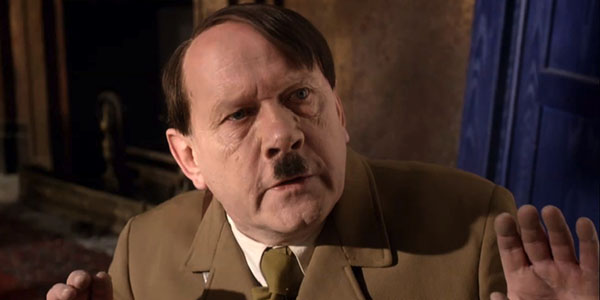
The Doctor has always met famous real life figures in his adventures, from Marco Polo in the fourth ever story to Richard the Lionheart. The new series has revived the famous celebrity historical, giving us brilliant portrayals of Dickens, Queen Victoria, Van Gogh and others. These tales have been fun but mindful of their famous guest star. And then there was Let's Kill Hitler. Having Hitler in Doctor Who was always going to be controversial, the figure looming so importantly throughout modern history. The show had already given its own take on the character with Davros obviously inspired by the pocket dictator. With such a moral character as the Doctor it was irresponsible of the production team not to have had the Time Lord put him in his place. Instead, Moffat decided it would be funny to just have him cameo and then have Rory punch him and stick him in a cupboard. Oh, how the nation laughed. Get this straight, Moff. Hitler isn't funny.

5. Satire Should Be Subtle

Doctor Who has always reflected the society it was made in. The Curse of Peladon is tinged with England's membership of the EU, its sequel reflecting union discontent. At other times, the show has been satirical of political and social events. Famously, Robert Holmes wrote The Sunmakers in protest at his tax bill with a corridor called P45. Russell T Davies had the Slitheen in Downing Street talking of alien weapons being only 45 minutes away from being able to destroy us. Subtle that, Russ. The Happiness Patrol crosses the line from clever satire to outright disaster. Viewed at the time, the people still watching (not many, granted) could be forgiven for thinking someone had put hallucinogenic drugs in the water supply. Possibly someone had put them in Andrew Cartmel's latte, which might explain why this awful and toothless critique of Thatcherism ever got made. Poor Sheila Hancock is stuck in a red wig while a bloke dressed as Bertie Bassett lumbers around a Candy Kitchen. It looks like a student revue and it is absolutely awful.

4. The Oral Adventures

Portraying sex is a tricky thing at the best times but especially in a show that is watched by a lot of children. Sat on a Saturday night, parents don't want to have to explain why that nice Amy is trying to take off the Doctor's clothes to an inquisitive six year old. In the modern era, it is inevitable that Doctor Who will be less chaste than the 1970s and 80s (and remember the furore when the Doctor kissed Grace in 1996 - how little the fans knew!) but, on occasion the show has crossed the line. While the Doctor getting some snog action is now the done thing (even Capaldi got some!) and the introduction of Captain Jack and his bisexuality is fitting in a world where children need to understand that sexuality isn't just mummies and daddies, having Matt Smith's Doctor increasingly perv over Clara in Season 7 and loll on a bed with Tasha Lem was a step too far. The Doctor is now regarded as having a romantic side yes, but he shouldn't be a player. However, the biggest crossing of the line is the throwaway gag in Love & Monsters when Elton's girlfriend is saved but only as a face coming out of a paving slab. The comment that they even have a sex life brings to mind images clean living Whovians should never entertain. It is also one of RTD's funniest gags. Perhaps 'gag' was the wrong word?

3. The Drowning

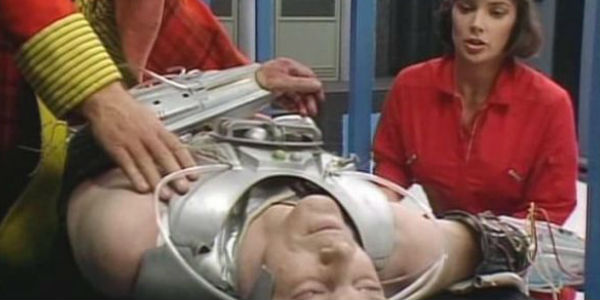
Under Philip Hinchcliffe and Robert Holmes, Doctor Who was probably as good as it's ever been. Their era produced classic after classic from Genesis of the Daleks and The Terror of the Zygons to Pyramids of Mars and The Robots of Death. However, the pair were united in their delight in 'giving the little buggers nightmares', using Hammer horror as a source of inspiration. The cosy Pertwee years had given way to shocking body horror, possession and brains falling out of jars. This incensed Mary Whitehouse and her organisation who complained frequently to the BBC. However, the BBC did uphold one of her complaints and told the team they have gone too far and crossed the line. This lead to a huge change for the show as new producer Graham Williams came in with the brief to tone the horror down. The scene in question is the cliffhanger to episode 3 of The Deadly Assassin. In the Matrix, the Doctor is fighting Chancellor Goth to the death. Goth seems to get the better of the Doc and the image freezes of him holding the Doctor's face underwater. It's a horrific and disturbing image.

2. Not So Plastic Fantastic

When the Third Doctor had debuted in Spearhead from Space, the Autons have proven very popular. When coming to plan their second season, Barry Letts and Terrence Dicks decided to bring them back, allied with the Master. However, Terror of the Autons got the team in trouble with their bosses after numerous complaints from parents and even the police. The team - using a script from Robert Holmes, he gets everywhere - were reprimanded for two big line crossings. First was the depiction of a toy troll that came to life and strangled a man. The team had made it as different looking to a teddy bear as they could but the youngsters still saw a toy come to life and kill someone. Many refused to go to bed with their cherished toy. Their other blunder was to have a policeman turn out to be an Auton, too. This led to the police complaining that children would be fearful of officers. Duly told off, the Letts era never went that dark again.

1. Season 22

Already mentioned on this list for the mind-numbing slaving to fan continuity, Season 22 also tops this list as the time Doctor Who crossed the line in a big way. Once again, Robert Holmes's fingerprints are all over this though he can't be blamed this time. Script editor Eric Saward had really taken to the veteran writer and considered The Caves of Androzani his masterpiece, so much so that he modelled Colin Baker's inaugural season on its darker, more amoral themes. However, Caves worked because it was an exception, not the rule, and also because Peter Davison's Doctor remained the moral constant. Robbed of that and Holmes's superior writing and Season 22 is a nasty, brutish affair, full of violence and pain and a pessimism that just isn't Who. The violence is objectionable, especially the crushing of Lytton's hands and the way the new Doctor seems to enjoy shooting things. Vengeance on Varos may be a clever commentary on screen violence but it has the Doctor pushing people into acid baths and making quips. Images of bloodied foes and people eating the heads off of rats have no place in a sci-fi show for children. The audience agreed, as did Michael Grade. This crossing of the line was the beginning of the end of classic Who, leading to its temporary cancellation and its eventual permanent one. https://www.youtube.com/watch?v=mWixzfIc-mU What did you think of this list? Are there any other examples of Doctor Who crossing the line that should've been included? Let us know in the comments section below...

In this post: 
Doctor Who
 
Posted On: 
Contributor
Contributor

Writer of The Blog of Delights, a review site covering film, TV, cult TV, books and audio. Fan of Dr Who, Bond, X-Men and Marvel. Also the writer of e-book 'Fictional Legends: Doctor Who - the TV Adventures' for Collca.