12 Main Character Deaths That Killed Great TV Shows
Things were really never the same again.
Death is an important part of television. Though shows like Friends prefer to milk their drama from the teat of interpersonal relationships, nothing generates a sense of jeopardy like knowing that a beloved cast member could be dispatched at any time. There's a reason Joss Whedon has picked up such a brutal reputation as a showrunner.
Then again, for every death that adds something to a show - every REDACTED, REDACTED, and REDACTED - there's another that comes across as cheap and exploitative. The ones that follow might not have, in all cases, quite derailed the shows they appeared in, but it's safe to say that none of them were ever quite as good afterwards.
And of course, SPOILERS WILL FOLLOW.
12. Dan Conner (Roseanne)
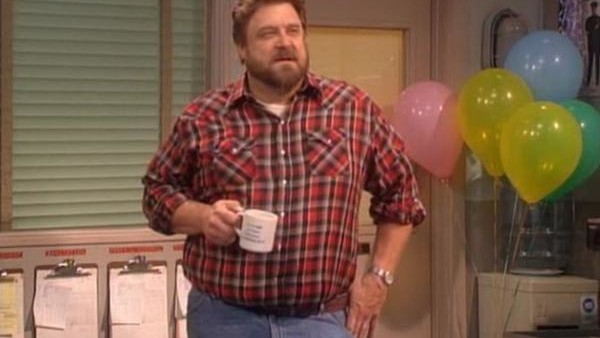
Episode Of Death: S02E24 - "Into That Good Night, Part 2" (technically S02E23 - "The Wedding")
It's pretty much certain that this unexpected passing would have killed the show were it not that the revelation of it came about in the final episode. Think of this more as a retroactive derailment.
John Goodman's Dan was always at the heart of Roseanne: a brash but loveable everyman, he was the perfect embodiment of the show's blue-collar ethos. Then, at the end of Season 8, Roseanne walked out on him. In the season that followed, Dan spent twelve of the twenty-four episodes absent or otherwise MIA.
This sad states of affairs apparently came about as a result of star Roseanne Barr's Diva-like behavior on the set - as the Wikipedia page says, the eponymous character, "bossy, loud, caustic", was based on Barr herself. On a less sensational note, Goodman may also have wanted to focus on his burgeoning film career.
In any case, returning for the Christmas episode, the faithful, dependable Dan that everyone knew and loved admitted to having an affair, resulting in his prompt ejection from the Conner family home. Adding insult to injury, an explanatory voice-over in the final scene of the final episode revealed that the whole ninth season had, in fact, been a work of fiction dreamed up by Roseanne herself to cope with the death of Dan...from a heart attack...all the way back in the pen-penultimate episode of season eight. The camera pans back to a seat in which Dan had been seated and all of a sudden he's not there anymore.
While this may have explained some unlikely developments, like Roseanne winning a $108 million lottery jackpot - as well as Dan's out-of-character infidelity - it smacked of emotional manipulation, and, more pressingly, the infamous Dallas shower scene. As with Scrubs, it's probably best to just pretend the show ended that one season earlier (say it with me, "There was no Season 9".)
11. Blake (Blake's 7)
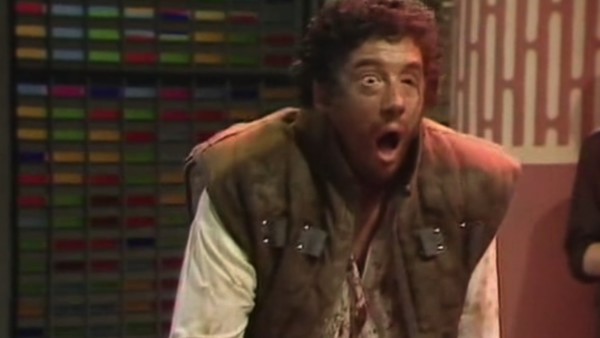
Episode Of "Death": C1 - "Aftermath" (technically D13 - "Blake")
Dispatching your title character halfway into your series' run? Really?
Now, Blake's 7 was hardly Masterpiece Theater - a team of escaped convicts travel the galaxy in an advanced alien spaceship, battling against the tyrannical Federation - but it did have Blake, a universal freedom fighter who risks everything time and again in the fight against injustice.
It's hard to believe the (somewhat more apathetic) Mal from Firefly could have existed without Blake's influence: somewhere between Robin Hood and The A-Team's Hannibal, Blake was the driving force behind the show (after all, they were his six).
Then, at the end of Season 2, Blake vanished and the self-interested Avon took over from him as captain of The Liberator. Now, other characters came and went - over the course of its run, Blake's 7 had 12 main cast members, including various iterations of AI - but Blake was, well, Blake.
More than simply being a knock off of Star Trek or Doctor Who (it was created by Terry Nation, the man behind the Daleks), Blake's 7 was a (space) operatic treatise on loyalty and betrayal, a formula that became markedly less interesting when the one character of undeniable moral integrity disappeared from our screens.
That is, right up until the series finale in which Blake returns. And promptly gets shot by Avon as a presumed traitor. And then everyone gets shot. Except the actual traitor. Bleak, guys; pretty, pretty bleak.
10. Fox Mulder (The X-Files)

Episode Of "Death": S07E22 "Requiem"
While The X-Files never technically "killed off" our favorite conspiracy-mad FBI agent, its on-again-off-again treatment of the character over the next two seasons sorta made us wish it had.
It was thought at one point that the Season 7 finale, Requiem, might well be the series finale; despite this, the writing staff perversely decided to throw in a whole bunch of cliffhangers. I'm not talking ambiguities and open-endings - like, was Tony Soprano shot and killed in the final moments of the finale, or will he live the rest of his life in fear? - but setting up whole new plot threads: The CSM dead?! Scully pregnant?!! Mulder sucked up into the sky by a UFO having just completed his life's work of discovering proof of alien intervention on Planet Earth?!!!
And then the series got renewed. Having ousted one half of its core duo, Robert Patrick was brought in as Special Agent John Doggett: serious, skeptical, he was everything his predecessor wasn't. For the next 41 episodes, though, the ghost of Mulder loomed large over the series, not helped by his periodic return: he appeared in half the episodes of Season 8 and only two in Season 9.
Content to effectively treat the character as dead when it was convenient to do so, Annabeth Gish joined the show as Monica Reyes and The X-Files continued to stagger on until The Truth.
In short: when your show's appeal is largely predicated on the male/female, believer/skeptic, will they/won't they sexual chemistry of your two leads, it's probably best not the split them up and bury one of them in a secret military facility. Just a thought.
9. Bobby Singer (Supernatural)

Episode Of Death: S07E10 - "Death's Door:
With great power comes great responsibility and with eight seasons on the air (three more than was ever intended) comes unnecessary character deaths.
After dealing with the loss of their father, Sam's death and resurrection, Dean's imprisonment in and escape from Hell, the destruction of the Roadhouse (and later all of its inhabitants), and finally with the The Devil, it seemed there wasn't much more that Supernatural could do, that it had no real stories left to tell.
As such, it makes sense that show-runner Eric Kripke intended the show's fifth season to be its last. However, just as ratings can kill a show, they can also keep it on the air long beyond its allotted life span and, with Season 9 quickly approaching, Supernatural is still ticking over.
However, it's difficult to generate a sense of tension when a show has effectively dispatched what should have been its primary antagonist, its Biggest Bad - Lucifer himself, as if X-Files had seen the defeat of the Colonists or if LOST, after its finale, the deaths of Jack and the Smoke Monster, the whole cast's ascension to "Heaven", had decided to just keep on going.
Because of this, the monsters the Winchesters have faced off against in recent years have had a distinct B-list vibe to them: Eve, Crowley, the Leviathans, Crowley (again - though Mark Shepherd is always entertaining). The mythology of the show has been stretched further than was ever intended - what with Purgatory and the Tablets - but no more is this in evidence than in its treatment of Bobby Singer, Sam and Dean's surrogate father.
The one person they could truly rely on, Bobby was there to pick up the phone and, when called upon, fraudulently confirm the boy's status as FBI agents. Gruff and curmudgeonly, Bobby managed to break free of a demon's control (more or less unprecedented in the show's run) and stab himself with a magical knife, leaving him paralyzed.
He suffered, he sold his soul, and then, in Season Seven, he got shot in the head for his troubles. Since then, we've had Ghost Bobby, Poltergeist Bobby; Bobby's been rescued from Hell (par for the course) and ascended to Heaven (no inverted commas here), and yet the show just keeps on bringing him back: Jim Beaver, Bobby's actor, is due to appear in the upcoming Season 9.
Which just goes to show, you can keep a good man down (or is that up?) and that, after the second or third resurrection, the stakes just sort of go out of the whole thing. Bunch of eejits.
8. Curtis (Misfits)
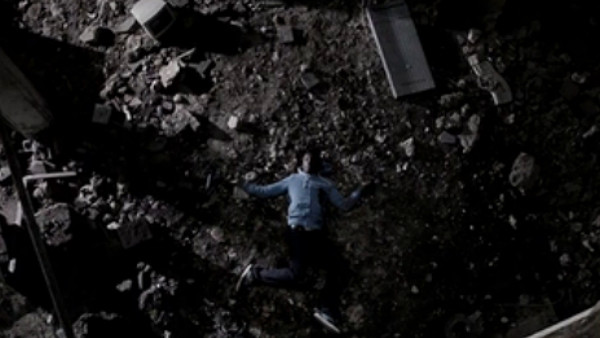
Episode Of Death: S04E04 - "Series 4, Episode 4"
What is it about British shows and rotating casts? Sure, Game of Thrones might have an ensemble of, what, thirty, and not be afraid of trimming their numbers down, but it never pulled a Misfits: killing off or sending away the whole original lineup.
Nathan - imprisoned; Simon - dead; Alisha - dead; Kelly - abroad.
By the time Series 4 rolled around, the only one remaining from the pilot was Curtis, a former athlete turned time manipulator turned ressurector. It's arguable that Curtis, out of the first cast, never really found his niche: Nathan had his cheeky charm, Simon and Alisha had each other, even Kelly had something resembling an arc.
Unlike Being Human, though, the new breed that have replaced his former comrades haven't entirely been up to scratch: the lovably obnoxious Rudy aside, Jess, Finn and Abbey are yet to really make their mark on the show.
As such, saying goodbye to Curtis in Episode Four of the previous series carried a lot more weight than it might otherwise had done. Not only was it (brutally) well-executed - forcing Curtis to account for his zombie-based mistakes in taking his own life - but it marked the last time that we were likely to see Nathan Stewart-Jarrett or any of the original cast again.
It was, in effect, the end of an era. Howard Overman's scripts are just as good, the concepts just as dark and offbeat, but the people who drew us to the show are now gone. Misfits worked because it was about those particular misfits, that particular set of personalities; the new cast do their best but it's just not the same.
The TV show Heroes originally intended to do the same - cycle cast members in and out on a season-by-season basis, but perhaps Tim Kring and co. realized that it could only work to diminishing returns. Lucky that show dodged the bullet, huh? Oh...
7. Nate Fisher (Six Feet Under)
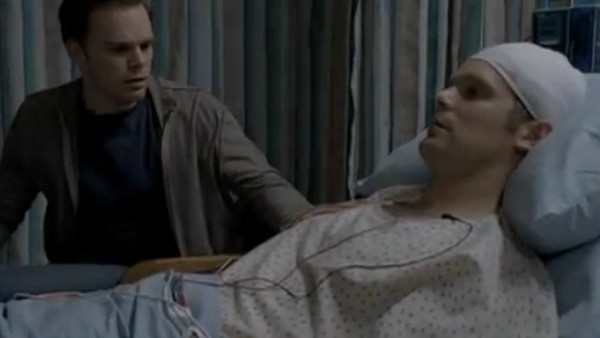
Episode Of Death: S05E09 - "Ecotone"
When your show's unofficial tagline is "Everything. Everyone. Everywhere. Ends.", you've got to expect a fair amount of collateral damage. That being said, we never imagined the show would go so far as to kill off its de facto protagonist.
Entering its final run of episodes, it makes sense that Six Feet Under would try to do something unexpected. When Nathaniel Fisher Sr. got creamed by a transit bus in the pilot episode, it began setting up its credentials as the greatest show to deal with the cultural effects of grief: the start of each episode would feature the death of whatever poor soul would end up on the slab of Fisher & Sons' Funeral Home. While the youngest brother, the closeted, up-tight David, went from self-loathing homosexual to a (mostly) happy family man over the course of five season run, Nate followed a less traditional character arc.
Manager of "the largest food co-op in Seattle", Nate fell into being a funeral director after his father's death, as he did with almost every other aspect of his life. A one-off hookup with a former childhood genius in an airport toilet led to a protracted affair and his first of two marriages; his diagnosis with a rare, likely fatal brain condition led to him confronting his fear of death.
Every character on the show followed something of a convoluted path, but none was wobblier than Nate's. As such, his unexpected death in hospital, recovering from a brain haemorrhage, as David dreamed beside him, especially given we were just three episodes from the show's end.
Nate's inclusion on this list may be a bit of a cheat - it was a valid, indeed inspired dramatic moment, arguably the next logical step for a show that confronted the taboo of how we meet our ends - but, even so, from the moment that heart monitor flat-lined, we knew the show was more or less over.
6. Christopher Moltisanti (The Sopranos)
Episode Of Death: S06E18 - "Kennedy and Heidi"
Sometimes a show gets a character death just right - it's justified dramatically, it moves the plot forward, it does everything that killing off a cast member is supposed to achieve - and yet it alters the show's dynamic in such a way that things aren't ever quite the same.
Fortunately for The Sopranos, the demise of Christopher Moltisanti came just three episodes from the show's conclusion. After struggling with drugs and alcohol, being shot, his conscience, and generally just being a bit of an a**hole, Chris finally met his end behind the wheel a crashed truck.
With his nephew begging him to help avoid losing his license, unaware of the (fortunately empty) baby carrier impaled by a tree branch in the back seat, Tony finally rid himself of a worry and a burden and suffocated the injured Christopher. Though Tony's sociopathic tendencies had always been a big part of the show - his psychiatrist, Dr. Melfi, came to fear she was enabling him - they were never more evident than when he effectively murdered a member of family.
Like so many characters in The Sopranos, Chris had always been capable of evoking both sympathy and repugnance, full of rage and insecurity. His relationship with Adriana arguably brought the best out in him, fraught with tension and betrayal though it was. After Adriana's death at the hands of Soprano consigliere Silvio Dante (she'd been planning to turn state's evidence), it seemed unlikely that Chris would recover, only for him to settle down with a wife and kid.
Chris' character arc was arguably the most turbulent in the show's run, full of highs and lows - appropriate for a recurring addict - and then he was gone. Of all of Tony's associates doomed not to live out their natural span, Chris' passing was, perhaps, the least painful, the most "natural", and, some might argue, more than he deserved.
It also served as a confirmation that - as with Adriana, Tony Blundetto, and scores of others before him - anyone on the show could die, foreshadowing, perhaps, Tony's own possible demise in the final moments of the series finale. However, after Chris' passing, there was nothing left to surprise us.
Silvio left in a coma? Okay. Phil Leotardo having his head crushed at a petrol station? Why not? Bobby Baccalieri gunned down in a toy store? It was probably inevitable. With Chris' death, it began to feel that, after six seasons, The Sopranos was beginning to wind up. Good TV, sure - great even - but from the instant Chris stopped breathing, there was a sense of inevitability to all of it.
Chris' murder, the murder of family (lower and capital letter) - not out of mercy as with Tony B. or necessity as with Adriana, but for the sake of convenience - wasn't necessarily "worse" than anything Tony had done before, but it reminded us of what he was capable and that his own end might well be fast approaching.
Don't Stop Believing, indeed.
5. Ianto Jones (Torchwood)
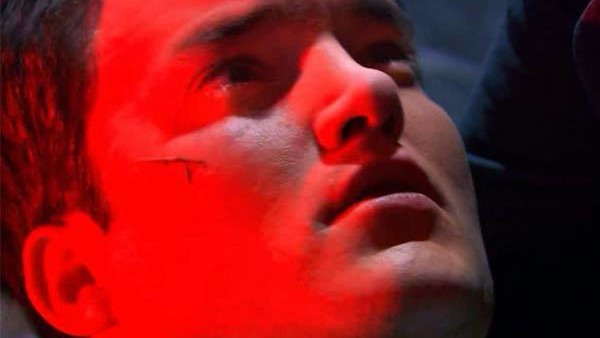
Episode Of Death: S03E04 - "Day Four"
Of all the deaths on the list, this one, perhaps, caused the most long-standing angst.
Straight-laced and sarcastic, tea boy and love of Captain Jack's life, it was clear there'd be a backlash, but no one could predict the depth of angst, both from the fans and the wider LGBT community that would surround the passing of Ianto Jones. Meeting his end at the hands (claws? tendrils?) of the 456 in Episode 4 of Torchwood: Children of Earth, Ianto's death was pure poetry, expiring in the arms of his immortal lover who promised never to forget him.
The dramatic purpose it served was undeniable - to reinforce the villains' threat and leave Jack desperate and isolated - yet the episode's writer, James Moran, received thousands of Twitter messages, many of which accused him of trying to deliberately hurt them and/or of homophobia.
Though Russell T. Davies played it down - "It's a few people posting online and getting fans upset" - there were death threats: nothing like the writing off of a beloved character to bring the crazies out of the woodwork. Some portrayed Ianto's death in terms of the destruction of a gay role model in which case the question remains as to why the loss of Owen and Tosh in the second season - if not explicitly gay then at least ostensibly bi - didn't elicit the same reaction.
When it comes down to it, though, the fact is that Ianto, unlike Owen, was simply lovable. Some have chosen to view Ianto's death in terms of Greek tragedy, others as the reactionary if not homophobic punishment - again probably unlikely given the involvement of both Davies and John Barrowman - but for most it was just sad.
In severing Jack's deepest remaining connection with humanity, it enabled him to commit the necessary/unforgivable deed at the series end, sending him wandering off into the universe in time for a family friendly cameo in Doctor Who New Year's Special, The End of Time. Of course, all good things must be drawn out in perpetuity and when Jack returned to Earth in Torchwood: Miracle Day things just weren't the same.
More touching but perhaps less compelling than Owen raging his way into oblivion, Ianto's death meant many things for many people, but, while it made for a cracking hour of television, it left Torchwood with very little dramatic ground left to cover.
As important as Owen and Rhys are to the show, does anyone really care about them as characters?
4. The Kwons (Lost)
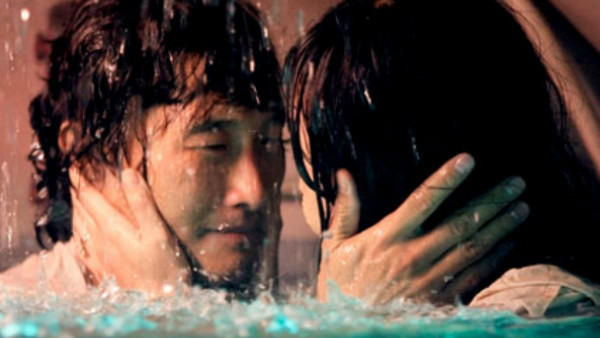
Episode Of Death: S06E14 - "The Candidate"
For a show that was never afraid to kill off its regulars, it was, perhaps, amazing that its longest-lasting couple made it to the end of Season 6; given which, however, their eventual fate seemed all the more brutal.
Having been kept apart for near enough two seasons - with Sun back in the real world and Jin apparently lost at sea - their reunion was always going to make for tearful viewing. Sun left their baby with her mother and traveled halfway around the world, back to The Island from which she'd spent so long trying to escape, on the possibility that Jin was alive, an event made all the more tragic by his desperate attempts to keep her away, to give her and their child a chance at a normal life: "This place is death!"
Jin's reasoning was proven true when the two of them lost their lives when the Dharma submarine flooded, Jin remaining behind to stay with his trapped wife, so shortly after they had been reunited. Though their death provided a sufficiently tragic way into the series finale, as well as fueling Jack with the grief and rage he needed to take on the Man in Black, the sense of tragedy within the show was mingled with the audience's anger that two such pivotal characters had been thrown away, "Charlie"'d (to coin a term). With Sayid having been killed in the very explosion that sunk the submarine, LOST had, in one fell swoop, killed off the few minority members of the cast that still remained.
Admittedly, it wasn't like our separation from them was permanent: Sun and Jin were still alive and well in the sideways timeline, albeit in the same emotional state in which we'd found them, with Jin as an emotionally withholding traditionalist and Sun seeking a way out. Their recovery of their memories from The Island was a resurrection of sorts, but it sort of got lost in the flood of people undergoing similar experiences, such as Sawyer's reunion with Juliet.
Say what you want about Damon Lindelof and Carlton Cuse's "forget about the mysterious, love conquers all" approach, but it's hard not to feel that certain characters came out the worse for it, not least Sun and Jin.
3. Batiatus (Spartacus)
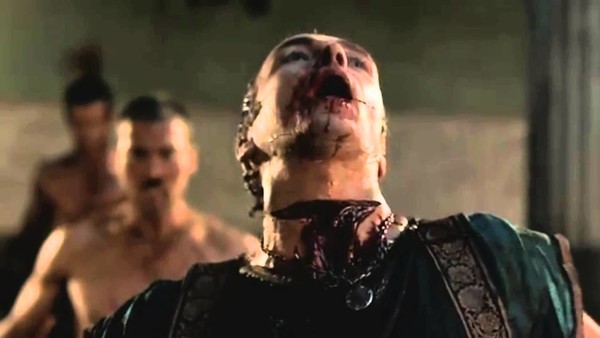
Episode Of Death: S01E13 - "Kill Them All"
Like Ben Linus in the previous show, Batiatus, played by John Hannah, was one of those villains that you just love to hate. Or hate to love. Or any variation thereof. The important thing was that his presence in Spartacus made the show better.
Moving seamlessly from joviality to ruthlessness and back again, Batiatus comes from the Joffrey school of power, ordering the deaths of women and children at whim, but, unlike Joffrey, our insight into the deeper, more complex nature of Quintus Lentulus Batiatus made the proposition of his death a tricky matter.
From his upbringing by a domineering father to his relationship with his equally conniving wife, Lucretia, Batiatus made his plans and took his beatings. By the time we first meet him in Spartacus: Blood and Sand, Batiatus has been a trader and trainer of gladiators for many years. Inured to cruelty and ambition, he seeks to shape his new acquisition, Spartacus, into a perfect tool for the arena; even going so far as to have Spartacus' wife murdered to remove any distractions.
What Batiatus couldn't have predicted was Spartacus' indomitable spirit, and, of course, the role he was destined to play in the Third Servile War. Leading an uprising, Spartacus comes for his former master. Batiatus meets his end with his usual foul-mouthed determination: his home drowning in blood, his wife lying wounded at his feet, fearful but unbowed, he defiantly offers his neck, justifying his actions with his dying breath. It's the mark of a good villain that the writers feel unafraid to let him speak. Peter Ustinov may have won the Academy Award for Best Supporting Actor playing a version of the character in Stanley Kubrick's Spartacus, but Hannah's Batiatus is arguably the most dynamic, the definitive.
It's telling that the show's producers chose to give Hannah's character his own prequel/spinoff, Spartacus: Gods of the Arena, when the show's lead, Andy Whitfield, was diagnosed with non-Hodgkin's Lymphoma (which would eventually lead to his death). Liam McIntyre took over the role of Spartacus for season two, Vengeance, but the show was never the same, not only because of Whitfield's absence but the lack of an antagonist the caliber of Batiatus.
Spartacus is more or less certain to dispatch each of the series' villains one by one before meeting his own historical demise at the end of next season, Spartacus: War of the Damned, but, while many pose more of a physical threat to him, none of his adversaries can get under his skin the way Batiatus did.
As thrilling as hyper-adrenalized and high-def goats of arterial blood might be, there's no substitute for compelling characters. Spartacus is a suitably heroic impressive figure, but, as he rampages his way across the Roman Empire, we can't help but wish that Batiatus had managed to worm his way out of it.
2. Rita Bennett (Dexter)

Episode Of Death: s04E13 - "The Getaway"
This particular character death in itself arguably represents the artistic high point of the whole show. After it, however...
Rita Bennett, lovely, innocent Rita, a single mother whose abusive deadbeat ex is locked up and who, as if things weren't already hard enough, inadvertently ends up hooking up with a serial killer. Though she and her kids, Astor and Cody, may have started off as a cover for our favorite homicidal sociopath, Dexter, a way for him to blend in, to seem normal, he came, in time, to have honest feelings for her.
They got married, had a child of their own, then in the Season 4 finale, Rita was found in the bath by Dexter, having been brutally murdered by the Trinity Killer and Harrison, their infant son, left wailing amidst the gore.
As a threat, John Lithgow's Arthur AKA The Trinity Killer in many ways paralleled Dexter's own development. To the world outside an unassuming family man, Arthur's monstrosity extended, behind closed doors, to his treatment of his wife and kids, leading Dexter to wonder if it was possible for men like him and Trinity to ever live a normal life.
Tragically, Dexter's fascination with Trinity - which prevented him from killing Arthur outright - led to Rita's murder, the eventual shipping off of Cody and Astor to their grandparents, and the breakdown of the family unit that Dexter had tried to hard to construct. And with it went the emotional heart of the show.
The only person left to whom Dexter has an emotional connection, apart from his now preschool son (often fobbed off on the nanny, Jamie, for the sake of plot convenience), is his step-sister, Debra. For the last four seasons, half of the show's whole run, Dexter has struggled to fill the void left by Rita with a would-be disciple (Season 5 - Lumen), with an attempt at faith (Season 6 - Brother Sam), and with a new love (Season 7 - Hannah).
Now his condition's been revealed to Debra, and, three or so episodes from the show's final conclusion, she seems to have accepted it. There seems to be no dramatic ground left to cover.
Though Season 7 was arguably a peak for Dexter after the lackluster Season 5 and terrible Season 6, it's difficult not to feel that the show has, for some time, just been playing out the clock.
1. Curtis Manning (24)

Episode Of Death: S06E04 - "Day 6, 9:00am-10:00am"
24 more or less had to appear on this list at some point: a show that makes LOST look pacifist by comparison, the Wiki for 24's list of the dead numbers literally in the hundreds. Jack Bauer loses more people on a daily basis than most of us will ever know, but none of those losses was more grueling than that of Curtis Manning, the cool-as-ice Director of Field Operations for the Los Angeles CTU.
A bad-ass man of action - think Jack without the propensity for violent freakouts - the show seemed to be grooming Curtis as Jack's potential successor. He'd survived two seasons - most characters on 24 barely survive two episodes - before he made the fatal decision of, you know, following his conscience.
Unwilling to let terrorist Hamri Assad walk away with a pardon when he was responsible for the beheading of two of Curtis' former army buddies, Curtis took Assad hostage, forcing Jack to respond rationally and without use of lethal... oh, who am I kidding: he shot Curtis in the freaking neck, killing him almost instantly.
After having been shot on both his previous days working with Jack, it seemed an unbelievable turn of fate that Jack himself would be responsible for the death of his right-hand man, as well as a touch hypocritical (because Christ knows Jack never executed anyone in cold blood *cough Dana cough Nina cough*).
The show doesn't even give us a chance to mourn the fallen Curtis as a nuclear device detonates in the heart of L.A. 24: the show that kills one of its primary characters, then immediately overshadows that death with a literal mushroom cloud.
Curtis Manning appeared in the most episodes of 24 out of any character killed by Jack Bauer, as opposed to one of the show's villains, someone who'd deserve it. There's a lot to be said for forcing your characters into difficult positions, quite another to have them start bumping each other off for the sake of dramatic convenience: "Oops, looks like no one important's died in the last few hours, time to start taking out the fan favourites".
If it sounds like I have some bitterness surrounding this particular installment, it's because it represents a cheap, throwaway bid for attention that no other episode on this list sunk to. At their worst, they, at least had a purpose, an intent, however wrong-headed or short-sighted; Curtis' death is just gratuitous.
If the death of Ryan Chappelle at the end of Day 2 represented one of 24's highlights - Jack having been forced into an impossible position by a terrorist's demands - then the death of Curtis Manning, four days later, is arguably its nadir. When a show does a death right, you get Tara in Buffy - a clean arc, an emotional payoff - when it does one wrong, all you do is p*ss people off.
But what do you think? Did any of the deaths above make their respective shows better in the long run (if there was a long run)? Would you have elected another candidate, such as, for instance, Kareem Said from Oz? Let us know in the comments below.