20 TV Storylines We Can't Believe Are Real
Who thought making a cartoon about He-Man without He-Man was a good idea?

Watching a television series isn't always just a hobby, but it can also be a major commitment. After following characters through their day-to-day lives and life-altering conflicts for years on end, it's easy to form a deep bond with them, even though they're fictional.
Like any relationship, even the best shows have their ups and downs. When a sitcom, cartoon, or drama runs for decades, churns out hundreds of episodes, and has a revolving door of writers, a few weak storylines are bound to slip through. Even then, you can normally forgive a couple of missteps here and there, especially if it's understandable what the showrunners were trying to achieve.
But other times, the writers devise a plot so indefensible that it's hard to believe none of the producers or actors questioned the absurdity of it all. When a series starts retconning established lore, reviving characters for no logical reason, or expanding unnecessary subplots that go nowhere, it's usually a sign that things have gone off the rails.
Crafting compelling television week after week is no easy task, but that's no excuse for how these TV storylines turned out.
20. Quicksilver Fakeout - WandaVision

Phase 4 of the Marvel Cinematic Universe may have been uneven, but there's no question that WandaVision was among the most innovative projects to come out of it.
Structuring each episode around a different decade of sitcom tropes was imaginative and beautifully executed, and the costume and production design were so meticulous that every episode felt like a product of its respective era. And just when it seemed like WandaVision's ambition had peaked, Wanda's brother, Pietro, returns from the dead.
But instead of Aaron-Taylor Johnson reprising the role from Avengers: Age of Ultron, the silver-haired speedster is played by Evan Peters.
Peters has previously portrayed Pietro in the X-Men films, heavily implying that Fox's Marvel universe was merging with the MCU. This was a major bombshell for comic book readers, since it meant other Fox properties like Blade and the Fantastic Four could be integrated into the MCU as well (which didn't happen until years later).
That excitement soon collapsed, though, when "Pietro" is revealed to be Ralph Bohner (pronounced "Boner"), a struggling actor hired by a vengeful witch to manipulate Wanda.
Honestly, it's hard to say what's more infuriating: that Marvel teased a massive crossover or that they threw it away for a boner gag.
19. Where's He-Man? - Masters Of The Universe: Revelation

Masters of the Universe: Revelation wasn't just another He-Man adaptation but a direct continuation of the 1983 cartoon. After watching the sensational teaser, fans were ecstatic about seeing Eternia's greatest champion duking it out once more with Skeletor, voiced by Mark Hamill.
Which is why it was so bizarre to see the hero and villain killed off in the first episode before shifting the story around to He-Man's ally, Teela. While He-Man does appear throughout, it's mostly in flashback.
To the surprise of nobody, Revelation sparked outcry, since it had been marketed as a He-Man-centred story.
Things only got more frustrating from there, as when He-Man and Skeletor are revived at the halfway point, it felt like the show would finally deliver what was promised. Instead, He-Man is mortally wounded moments later, causing him to revert to his mortal form, Prince Adam, and just to really piss everybody off, Skeletor's second-in-command, Evil-Lyn, suddenly becomes the primary antagonist.
Why the creators were keen to implement He-Man and Skeletor only to sideline them is a mystery.
Although the follow-up series, Masters of the Universe: Revolution, is closer to what Revelation should've been, most of the fanbase skipped it entirely.
18. The Mind Link - Mr. Mercedes
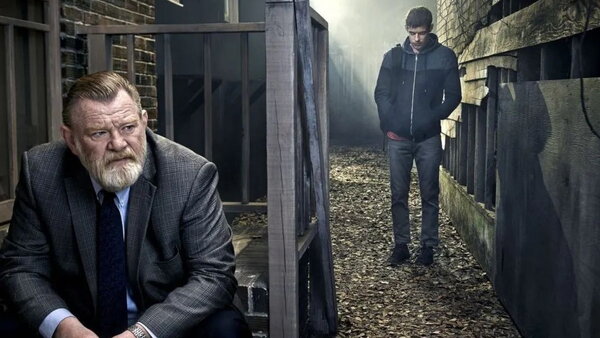
In this Stephen King adaptation, retired detective Bill Hodges (Brendan Gleeson) finds himself caught in a tense cat-and-mouse game with a sadistic serial killer, Brady Hartsfield.
Mr. Mercedes starts as a nerve-wracking drama, punctuated by Gleeson, who conveys Hodges with gravitas and relatability. The first season is nail-biting right up until the end when Brady is left in a coma.
Although the Brady case seemed to be closed, viewers half-expected him to resurface, since he wasn't killed off. However, nobody anticipated what came next. After being injected with an experimental drug, the comatose Brady develops the ability to link with the minds of others, forcing them to carry out crimes on his behalf.
This twist is supposed to be jaw-dropping, but bringing in psychic powers clashes with the grounded first season. Stranger still, the source material plays out like a realistic crime drama, so there's no rational explanation why Brady's telepathy was inserted into the plot.
Playing devil's advocate, this idea might've worked if it were foreshadowed earlier. But since this plot point was dumped into the second season with zero warning, it's just dumb.
17. Ed Gein's Love Interests - Monster
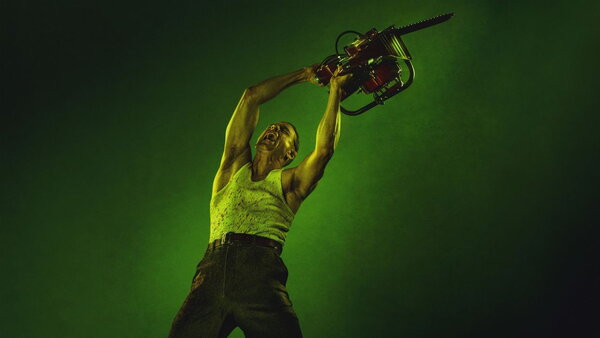
The third season of Monster tells the story of Ed Gein, a Wisconsin farmer who slaughtered, mutilated, and defiled numerous locals for a decade.
While biographical dramas regularly embellish details for effect, there's little to no incentive to exaggerate Gein's sickening crimes. After all, this maniac turned his victims' remains into lampshades, belts, and corsets, among other disturbing acts we dare not detail here. Even with the strictest historical accuracy imaginable, this sicko's actions would be challenging to believe (and even harder to stomach).
And yet, the season takes monstrous liberties, cramming in a subplot in which Gein's girlfriend, Adeline Watkins, becomes his willing accomplice. Her involvement is so nonsensical that viewers may assume Adeline's behaviour stems from one of Gein's delusions - it doesn't - and it feels like this storyline was designed to humanise Gein and add a romantic angle, which is profoundly inappropriate.
One entire episode is even devoted to Ed Gein conversing with the Nazi war criminal who inspired his crimes, Ilsa Koch, despite the fact that no such conversation took place.
These additions aren't just misleading and needless, but disrespectful to Ed Gein's victims.
16. Going Warp 10 - Star Trek: Voyager

While Star Trek has maintained a lasting legacy, it's also produced its share of schlock. Given the franchise is constantly exploring ethical quandaries and metaphysical concepts, it's no surprise to learn some ideas work in theory, but not in practice.
That said, it's hard to fathom what the writers of Star Trek: Voyager were thinking with the Threshold episode.
The story begins with Lieutenant Paris discovering a way for the Voyager to reach an unprecedented Warp 10. Simulations for this speed have been disastrous, suggesting something terrible will occur when Paris attempts Warp 10 in a test craft.
Now, there are plenty of directions this premise could've taken. Would the craft be flung into another time or universe? Will Paris' craft suffer irreparable damage? What if he gets lost and can't make his way back to the Voyager?
However, what happens next is... unhinged.
Travelling at Warp 10 destabilises Paris' DNA, mutating him into an amphibian. After abducting Captain Janeway, the two end up on a swampy world, where they devolve into salamanders.
It's possible to defend many bad Star Trek episodes by trying to understand what the writers were aiming for, but with Threshold, it looked like it was written by a collection of Mad Libs.
15. I Am Your Father - The X-Files
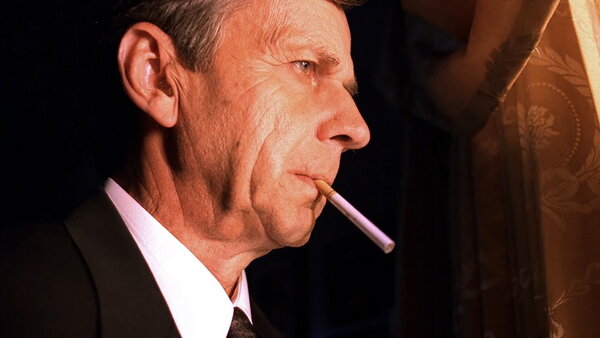
Though the Cigarette Smoking Man was originally intended to play a minor role in The X-Files, he was subtly and effectively elevated into the main villain. While Fox Mulder and Dana Scully try to expose the global alien conspiracy, the Smoking Man repeatedly undermines their efforts in order to secure control over the colonisation.
The Smoking Man is an amazing villain, embodying humanity's darkest impulses, including greed, control, and an insatiable hunger for power. William B. Davis portrays the character with chilling calmness, contrasting with the chaos unfolding around him. He also serves as a constant thorn in Mulder and Scully's side, poking his nose in nearly every conspiracy they uncover.
However, the mystique surrounding The Smoking Man is deflated when he's unveiled as Mulder's father. While the writers likely made this decision to deepen the emotional stakes, it reduced the enigmatic mastermind into a soap-opera villain. Also, the idea that the conspirator Mulder has been chasing for years happens to be his own dad is incredulous.
The Smoking Man felt like a perfect villain prior to this revelation, so there was no need to pull an Empire Strikes Back.
14. The Mic Operator - The Office

Though Michael Scott's absence in The Office after Season 7 is noticeable, the mockumentary still functioned reasonably well without him.
With that said, there is one subplot that came dangerously close to messing everything up. In the last season, Jim and Pam begin to experience martial problems, culminating in Pam having a breakdown. Her vulnerability leads to the boom mic operator, Brian, stepping in and comforting her for the next few episodes.
While this was an ambitious narrative choice, it disrupts the established tone of The Office. The documentary crew remained invisible for most of the series, so it breaks the fourth wall to give a crewmember a speaking role and a character arc.
Additionally, injecting romantic tension this late in the story is contrived and undermines Jim and Pam's relationship, which has been an emotional anchor since the beginning. What was supposed to add depth to the show instead ends up weakening it.
After Jim and Pam reconcile, Brian was written out of The Office immediately after. In hindsight, his entire arc feels like an unwanted and unwelcome detour.
13. Rhodey's True Identity - Secret Invasion

Loosely based on the comic book event of the same name, Secret Invasion opens with Nick Fury learning that shapeshifting Skrull aliens have infiltrated Earth, posing as S.H.I.E.L.D. agents, political figures, and superheroes for years. This bombshell should've been monumental, since it could re-contextualise key moments and character choices throughout the Marvel Cinematic Universe and set up major long-term consequences.
But looking back, it's easy to see why Secret Invasion is the lowest-rated MCU show on Rotten Tomatoes. Unlike its source material, this adaptation is low-stakes, uneven, and paradoxically rushed and sluggish at the same time. Also, fan-favourite Maria Hill had an insultingly anticlimactic death. On top of that, the only important character exposed as a Skrull is James Rhodes, aka War Machine.
Rather than being an earth-shattering twist, this reveal left viewers scratching their heads, as it implies that the Rhodey from Avengers: Endgame was an imposter all along. Retconning the identity of a main character in the MCU's biggest project wasn't just inane, but insulting. It's such a flagrant misstep that Marvel advocates struggle to accept it as canon.
Despite the strong premise, Secret Invasion fumbled the execution big-time, particularly with Rhodey.
12. H - Line Of Duty

Line of Duty spent years forging a sprawling storyline around a corrupt officer called H, who'd been orchestrating organised crime within the force. The British crime drama was filled with clues and complex conspiracies, which led to all sorts of fan theories. The narrative builds H up as a Moriarty-like mastermind, planning ten steps ahead of everybody else and having contingencies for every possible setback.
Which is why the reveal of Ian Buckells as H is simply laughable. From the beginning, Buckells is portrayed as incompetent, bumbling, and easily manipulated. Retconning the oafish officer into an evil genius stretches credibility to the breaking point, especially since earlier seasons never hinted that he possesses that level of intelligence.
Obviously, Buckells was putting on an act, but it comes across like the writers picked him as H because it's unexpected rather than it makes sense. There's no logical way to deduce Buckells was the big bad, since every hint surrounding H's identity was a red herring.
In the end, the twist proved disappointing because it replaced a gripping mystery with an answer that neither fits the narrative nor satisfies expectations.
11. A - Pretty Little Liars

Yes, this list features yet another absurd twist centring around a mysterious mastermind with a single-letter alias. What are the odds?
In Pretty Little Liars, Spencer and her friends are terrorised by A, an anonymous figure who threatens to expose their darkest secrets.
Across 160 episodes, Pretty Little Liars stretches this mystery to its limit, using elaborate misdirection, double-crossings, triple-crossings, and endless dead ends. Just when it feels like the truth is within reach, the ensemble finds themselves back to square one.
Annoyingly, fans had to wait until the last episode for the penny to drop. Not only that, Pretty Little Liars culminates with the laziest twist imaginable, since A is revealed to be (get ready for this) Spencer's long-lost evil twin, Alex.
The "secret evil twin" trope is so overused that it's been parodied in a multitude of TV shows. As a result, seeing a modern drama play this cliche completely straight is bewildering, especially when there wasn't an ounce of foreshadowing.
Most viewers didn't expect A's true identity to live up to expectations, but few could've predicted the unveiling would be this poorly handled.
10. The Doctor Was Never A Time Lord - Doctor Who

Time and time again, Doctor Who has reinvented itself to stay fresh. Although rewriting or subverting established lore can be thrilling, there's always a risk that new ideas will alienate purists. And few retcons prove this notion better than The Timeless Children.
Even though the Doctor has been classified as a Time Lord from Gallifrey since the 1960s, this episode flips the script. Suddenly, the Doctor is revised into a Timeless Child, whose regenerative powers were harvested to create the Time Lords. It reframes the Doctor as a chosen one rather than a rogue, making the character feel less relatable.
Then there's the delivery. Instead of unfolding naturally, the twist arrives via a massive exposition dump.
Not only does this epiphany bulldoze decades of mythology, but it leaves a trail of plotholes and contradictions across earlier episodes. Sure, Doctor Who has had weaker outings (Love and Monsters springs to mind), but those episodes were disposable filler, untied to the bigger picture.
The Timeless Children, on the other hand, achieved the impossible by killing a whopping 60 years of continuity in 60 minutes.
9. Somehow, Grogu Returned - The Mandalorian
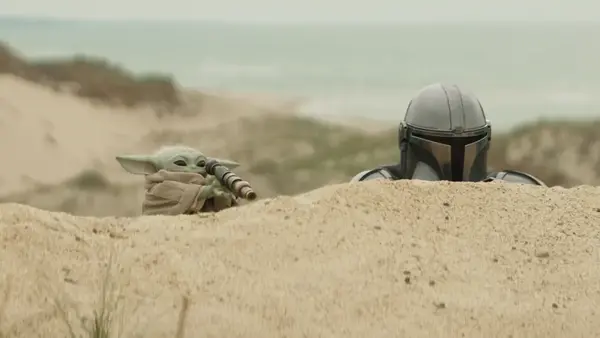
The second season of The Mandalorian finishes on a powerful note, with Luke Skywalker taking Grogu away to train him in the Jedi arts. Watching Din Djarin say goodbye to his surrogate son hit us all in the feels, but it felt like a suitable conclusion to their story.
Unfortunately, Season 3 undercuts the tear-jerking farewell immediately by bringing Grogu back. But what's worse is that the return of the Force-sensitive critter is barely explained in the show. He’s just... there from the get-go.
To find out what happened, viewers have to watch a different show, The Book of Boba Fett. To be fair, most Star Wars fans were probably going to check out this mini-series anyway. Having said that, needing to watch a separate show to understand an inconsistency in The Mandalorian's plot is sloppy storytelling.
Also, The Book of Boba Fett's episodes focusing on Mando and Grogu feel disconnected from everything else going on, and Boba only appears for a few seconds in these episodes.
The Mandalorian's third season was let down by filler, weak storylines, and distracting cameos, which made Grogu's return even more anticlimactic.
8. A Living Hell - Invincible

Season 4 of Invincible builds towards the inevitable Viltrumite War, which is sure to determine humanity's fate.
As Mark Grayson prepares, he's suddenly dragged to Hell by Damien Darkblood and tasked with restoring his master, Satan, to the throne.
Though this storyline wasn't in the comics, creator Robert Kirkman toyed with the idea. For this reason, it's commendable how the showrunners incorporated Kirkman's idea into the series.
Sadly, it doesn't come together. Although filler episodes can work if they're entertaining, this storyline lingers on Damien's dilemma for far too long, to the point where it feels like a backdoor pilot for a spin-off.
Mark disappears for a solid stretch, so there are times when it comes across as a different show altogether. Furthermore, the exposition-heavy demon lore comes across as disjointed in a series fixated on costumed villains, kaiju, and alien threats.
Fortunately, Invincible snaps back to its core conflict in the next episode, delivering one of the most intense and gruelling chapters yet. However, this compounds the argument that the Invincible in Hell storyline can be mostly skipped without missing anything important.
7. Sarah Is Alive - Prison Break
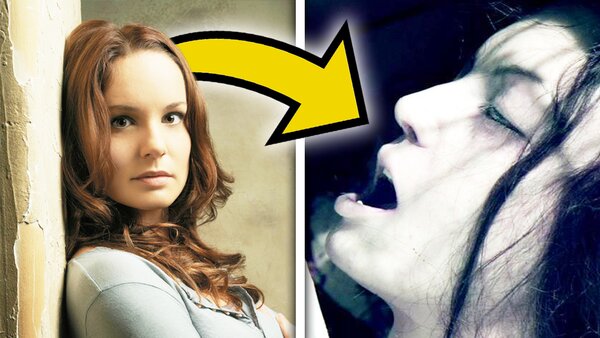
Prison Break is absolutely mesmerising so long as viewers are willing to suspend their disbelief... a lot.
Protagonist Michael Schofield is a genius at escaping prisons and outsmarting authorities, but his schemes often hinge on sheer luck as much as skill. Of course, the crime drama has so many plot twists that you have to accept the far-fetched moments to enjoy it.
But there are times when Prison Break goes too far.
After crossing an evil syndicate called The Company one too many times, Michael is forced to pay the price. In Season 3, he's sent a box containing the severed head of his girlfriend, Sarah, implying The Company has executed her. But Season 4 reveals Sarah is alive, meaning the head in the box was a fake.
Although Sarah's return should've been a relief, it dilutes one of Prison Break's most defining emotional beats. It cheapens Michael's arc and erodes trust with the audience, since it suggests any harrowing moment could be undone.
The fact that Michael died in Season 4, only to return in Season 5, strengthens this argument further.
6. Family Reunion - Sherlock

Throughout Sherlock, the eponymous detective is locked in a battle with the nefarious Jim Moriarty. Though Moriarty blew his own brains out in Season 2, the Season 3 finale suggests the criminal mastermind is still alive. After all, if Sherlock can fake his death, why can't his arch-nemesis?
The show was set to conclude after four seasons, so it seemed fitting that the master of deduction would square off once again with his greatest enemy.
Instead, the last episode dealt with a threat that was beyond ludicrous. Out of nowhere, it's revealed that Sherlock has a secret sister called Eurus, who hated her brother because he wouldn't play with her when they were children; that is literally her motivation. Driven by jealousy, she fakes Moriarty's resurrection before trapping Sherlock, Watson, and Mycroft inside a prison, where they're forced into life-or-death games for her own amusement. Rather than being a riveting climax, it plays out like a bizarre mash-up of Saw and the British gameshow, The Crystal Maze.
Sherlock had some astounding episodes, particularly The Reichenbach Fall, so it was disappointing to see the showrunners couldn't cook up a better ending.
5. Meeting Kali - Stranger Things

Although it's refreshing for a TV series to step away from the main narrative every now and again, it can result in a subplot that's unnecessary and jarring.
Plenty of shows have succumbed to this trap, but Stranger Things is among the worst offenders. In The Lost Sister episode, Eleven encounters a teenager called Kali, who was given superpowers from the same government experiments as Eleven. After joining Kali's gang of outcasts, Eleven is tempted to embrace their revenge-driven mission.
On paper, it's obvious this episode is meant to explore Eleven's origins and create a new inner conflict. It's a compelling idea, but it falls flat. None of the core ensemble appears, save for Eleven, nor does the story take place in the established setting of Hawkins. Instead of maintaining the sci-fi horror qualities Stranger Things is renowned for, the episode leans into a gritty, angsty vibe, closer to the X-Men rather than Stranger Things.
Worse still, The Lost Sister doesn't hold up on its own, as the pacing drags and most of the new characters are forgettable.
Although Stranger Things attempts to course-correct by bringing Kali back in the final season, it doesn't make up for this filler episode.
4. Foggy Is Immediately Killed - Daredevil: Born Again
Daredevil was a breakout hit, giving the Man Without Fear the visceral edge that was lacking in the Marvel Cinematic Universe. Drew Goddard's action drama stood out as one of Marvel's strongest projects in years, making its abrupt cancellation all the more crushing.
Rumours of a revival circulated for years, but never seemed to materialise. Then, in 2021, Daredevil: Born Again got the green light.
Despite a rocky production, excitement surged when it was announced that many key players would return, including Matt Murdock, Karen Page, and Foggy Nelson.
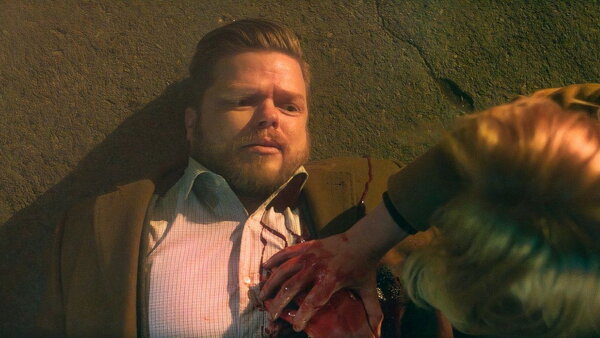
Unfortunately, the central trio barely shared the screen before Foggy was gunned down. Rather than saving this moment for the climax, Foggy's assassination occurs in the opening scene of that first episode, almost like the creators couldn't wait to get rid of him.
It's shocking, for sure, but for all the wrong reasons. Foggy played an integral role in Matt's life, serving as his business partner, confidante, alibi, moral compass, and best friend. Because of this, it would've been fascinating to see the pair's relationship expand and evolve over the course of this new show.
Too bad we'll never see it since Foggy popped his clogs within five minutes.
3. Brian Dies - Family Guy

There are certain TV deaths nobody is expected to ever get over. Glenn from The Walking Dead, Opie from Sons of Anarchy, and Ben from Scrubs all hit hard because their departures reshaped the story and the characters around them. With this in mind, the deaths of these characters wouldn't work if they didn't serve a meaningful purpose.
Which brings us to the Family Guy episode, The Life of Brian.
While playing with Stewie, Brian is hit by a car with no build-up whatsoever. He's taken to the vet, says goodbye to Peter Griffin's family before quietly dying. In their grief, the Griffins decide to adopt another dog, Vinny.
Despite the fact that Brian never shuts up about his terrible novel, Faster Than the Speed of Love, he's been a beloved character in Family Guy since the pilot. As such, it feels like he was killed off for shock value.
Adding gas to the fire, Stewie time-travels and brings Brian back several episodes later, retroactively erasing the whole storyline.
Although Seth MacFarlane's writing team intended Brian's death to be temporary, that's no reason for them to play with fans' emotions.
2. Rescue Team Versus Space Debris - 9-1-1
It goes without saying that 9-1-1 deals with high-stakes situations, considering the procedural drama centres around first responders in Los Angeles. With that in mind, nearly every episode deals with some sort of calamity, like a fire, mudslide, or an earthquake.
As is often the case, the storylines in the later episodes got bigger and more outlandish.
However, Season 9 is borderline cartoonish, kicking off with a CEO getting stuck inside a whale. And that's not the most ridiculous part, as after being saved by the 118, the CEO rewards them with a free trip in his private space station.
Although it seems like the show is already spiralling, it's only getting warmed up.
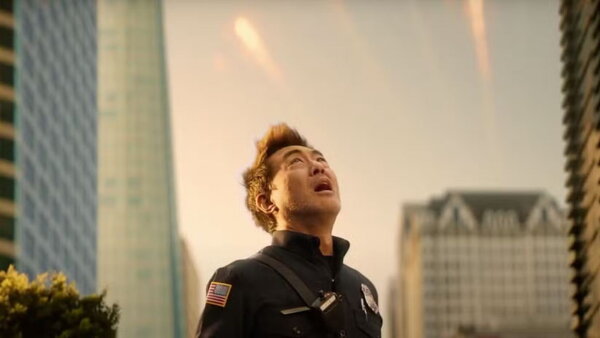
A geomagnetic storm suddenly hits the station, causing it to drift off-course and leading space debris to rain down on LA. While the responders save civilians from fiery space fragments, viewers have to remind themselves that 9-1-1 started off as a down-to-earth drama. Although the rescue team dealt with extreme emergencies on many occasions, it came across as feasible (for the most part). But while watching these scenes out-of-context, it feels more like a sci-fi series.
1. The Real Skinner - The Simpsons

When a great TV show gradually declines in quality, it can be difficult to identify when exactly it lost its core audience. However, long-time Simpsons watchers can pinpoint the precise moment the iconic cartoon jumped the shark.
In The Principal and the Pauper, a mysterious figure appears at Springfield Elementary School, claiming he is Seymour Skinner. Despite being dismissed by the crowd, Principal Skinner confirms the shocking claim, stating, "That man is the real Seymour Skinner."
It's ultimately revealed that the principal was actually a "no-good street punk" called Armin Tamzarian, who met Skinner while in the army. When Skinner seemingly died, Armin took his place to avoid breaking his mother's heart.
Viewers were furious about this revelation since it discarded Skinner's character development over the previous eight years for the sake of a preposterous twist. Armin's true identity has rarely been acknowledged since, making this entire situation pretty much redundant.
While The Simpsons has had a long and well-documented decline over the last few decades, The Principal and the Pauper single-handedly ended the series' golden age.
It's still baffling that this story made it to air, especially since it's been criticised by Simpsons creator Matt Groening and Skinner, sorry, Armin Tamarian voice-actor Harry Shearer.