5 Reasons Californication Is Really Hank Moody's Imagination

Come on, do we really think Hank could pull that many unbelievable women?

Showtime recently announced that the upcoming seventh season of Californication will be the show's last. The series has gotten a lot of attention over the years for its graphic sex, David Duchovny's fantastic performance and for toeing the line of comedy and drama better than most other programs. Some feel Californication fell in quality after the first season. The show can be loud, crude, outrageous, unbelievable, stereotypical, etc. However, the writing is always sharp which is why it has such a loyal following. The theory that explains Californication's sometimes unbelievably out there sexual encounters as well as the show's oftentimes stereotypical characters is that what we have been watching for six seasons has been Hank Moody's imagination. In other words, we have not been watching events in real time. We have been watching events as Hank Moody (David Duchovny) has written them in a quasi memoir/ novel theme a la Charles Bukowski through his auto-biographical character of Henry Chinaski. Let's take a look at why the seasons of Californication have merely been books by Hank Moody rather than real time events.

5. Explains Why We Almost Never See Hank Moody Writing

Despite being a show about a writer, Californication almost never shows Hank Moody writing. We once saw him leave L.A. for two weeks only to return with a completed novel. We also see him write an entire biography in one night (he writes a screenplay in a single night as well). Its this kind of extremism in Hank's talents which suggest that the show is not in real time or, for that matter, entirely real. Hank wouldn't write about himself or his character writing in his books because how pretentious would that be? How often did Henry Chinaski really sit down and write in Bukowski's novels (an author creator Tom Kapinos has said Moody is based off of). Hank is a writer that doesn't write or he simply creates magic in unbelievably short bursts. This can be explained by the theory that these seasons are actually his memoirish novels. Hank's talents would be be played up in his own writing and he also wouldn't spend much time writing about his character writing even if he was writing about a writer (try and get your head around that sentence).

4. Becca And Karen's Virtual Sainthood
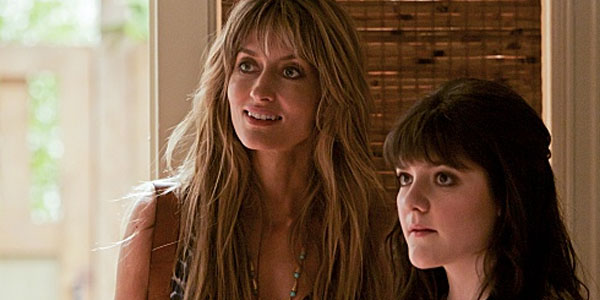
Tom Kapinos is fantastic at creating compelling characters. That should be first and foremost. However, his characters do all fit into boxes. That's really the point of the show. Everyone fits into certain boxes and it's Hank that really needs to get out of his box and fix his behavior to have the life he wants with Becca and Karen. The writing of a novel is distinctly different from the writing of a film or television show. Novels often need characters to represent specific feelings or they need a character to behave in a set way to make points when it comes to the large picture of the story. In television and film there is a lot more room to breathe because you can bring across whatever artistic points you wish with other techniques that may be technical or visual. Californication, on the other hand, is written more in the vein of a novel. Karen and Becca exist as virtual saints in the series. They almost never make mistakes and the few they do make often lead back to Hank. This played up goodness of character would be very much explained by the show being Hank's novels because the writing would be influenced by point of view (as television and film many times aren't). Hank sees Karen and Becca as his almost godly saviors and that's how they are portrayed. Meanwhile, Hank's flaws of drinking, screwing around, laziness, etc. are played up in the show in the same way that a character like Henry Chinaski's bad behaviors were in books like Post Office and Women. Hank is a hard character to love sometimes. Hank's flaws being overplayed and Karen and Becca's good features being overplayed would be explained if the show was really a series of books by Hank Moody. Novels have no choice but to have point of view and Hank's self loathing point of view explains the way these characters are shown and portrayed on the show.

3. Stereotypes Of L.A.

If there's one thing that is true about Californication, it is this: the show has a love-hate relationship with the city of L.A. Nearly everyone living in L.A. in the show fits a stereotype. Whether it's the pretentious artist, the psycho/ self-obsessed rapper, the lonely housewife or the desperate model, L.A. is a wasteland of paper thin characters that feed into Hank's worst personality features. It works for the show because it helps us understand the affect the nature of the city has had on Hank and his career. Meanwhile, anytime New York City is shown in the series we see Hank as mostly calm and usually happy as well as his career being on the right track (he's written two books there on the show). The stark contrast between these cities and the stereotypical nature of L.A. in Californication can again be explained by author's point of view which comes across stronger in novels as opposed to scriptwriting. Hank's life is portrayed as falling apart the second the Hollywood machine and California sun tempt him and this is the way the man would write his novels. He would play up the stereotypes and create a very easy to see contrast between L.A. and New York City. The point of view of his "Californication" novels would easily explain this obvious theme.

2. He's Already Been Writing The Seasons

One of the simplest explanations of this theory is that we've already seen Hank writing the seasons of Californication. Nearly everything he has written on the show has been based off of events we have already seen. This could be Tom Kapinos dropping hints that what we are really seeing are adaptations of the very books we keep seeing pop up that cover previous events we watched unfold over other seasons. Hank wrote a book titled F!@#ing and Punching about his experience with young Mia and he also wrote a book titled Californication about many of his experiences in the crazy town that gave him more one movie contract. It would be no surprise then to the series end with Hank promoting a book about everything we've seen since his last book, Californication, which was released somewhere between seasons 4 and 5. The show has already been presenting us with the books it's based off of and it is entirely possible that what we are seeing are the stories from those books rather than being real time events.

1. Explains The Many, Many, Many Women

Californication has always gotten heat about the endless promiscuous sex and wonderful debauchery it has to offer. It's also been criticized for the fact that Hank Moody seems to be a literal girl magnet as has sex with almost every female he encounters. Actors and producers have described the show as a "male fantasy" in the past which would make sense if we were watching the adaptations of Moody's writing as opposed to his completely true encounters with countless amounts of women. If Hank Moody were writing about falling into the depths of human depression while in California, he would be including as much sex as Bukowski included in all of his books combined. Hank's sexual nature is overplayed because it's not supposed to be realistic. We are supposed to understand his plight and choice between innocent family life or a life of endless women and beautiful admirers. To make this choice clearer, Hank Moody would overplay his own sexual encounters and make it seem like every beautiful woman in L.A. wanted to sleep with him. The fantasy amount of women would also be explained by the events being books by Hank because they create an exploitative sexual energy and nature no writer could avoid if they were writing about their own Hollywood experiences and sexual escapades while living in California. What do you think Californication fans? With the final season upon us, does this theory hold any validity? Sound off in the comments below!

Contributor
Contributor

Jon Manson hasn't written a bio just yet, but if they had... it would appear here.