When Did Vulcans Become Jerks?
Star Trek's Vulcans were once mysterious, wise and dignified...has 'jerk' really become shorthand for 'Vulcan'?
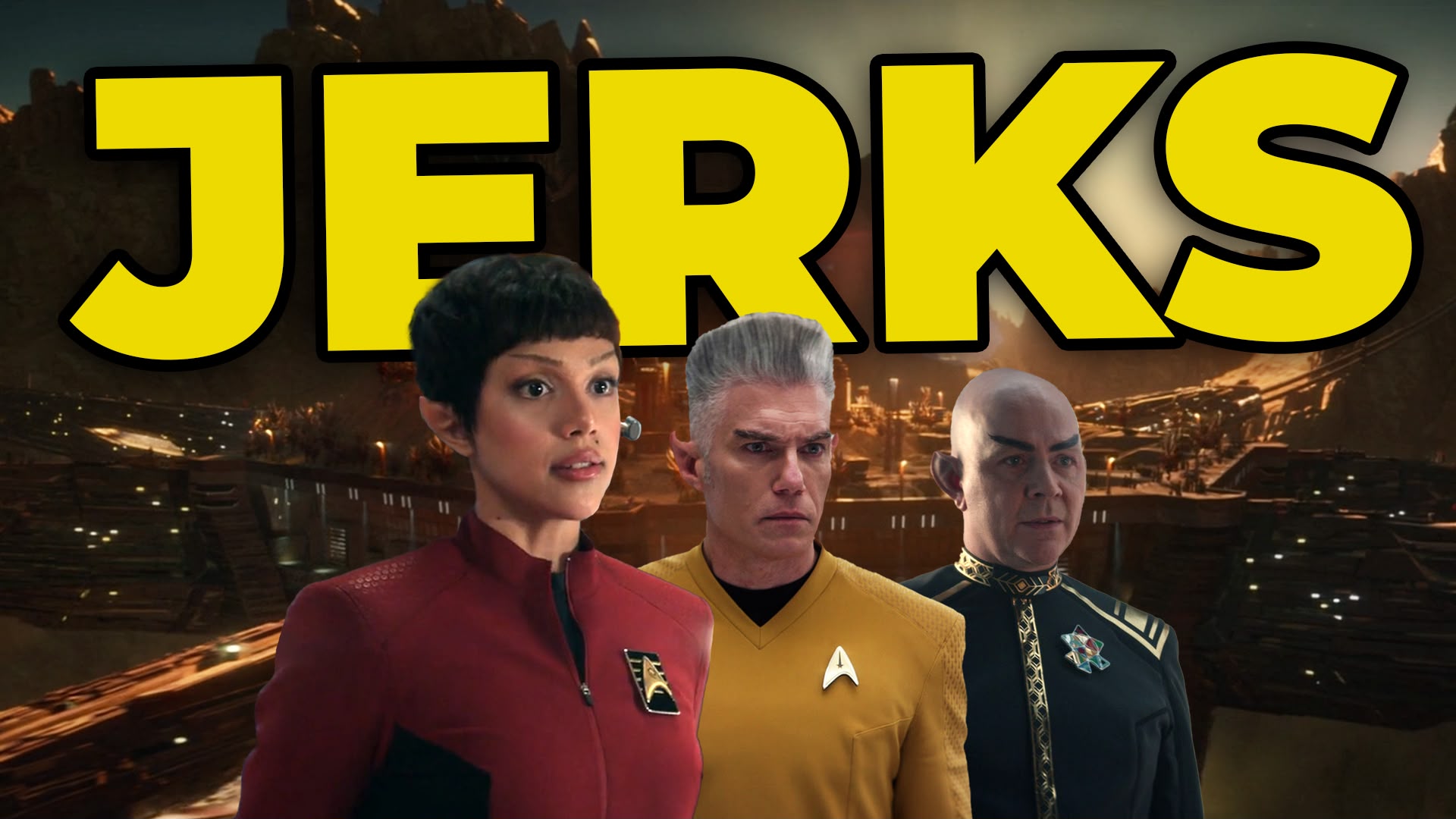
Vulcans have always been complex, utterly literal and even difficult on occasion. They represent the head without the heart, a dedication to logic over instinct. The problem is, modern Star Trek increasingly mistakes resolve for rudeness, stoicism for disdain and capability for arrogance.
Cinefantastique reported that Gene Roddenberry had this to say in 1974:
I think that everyone was so smitten with Mr. Spock because he stood for loyalty and reliability. As I created him, I said to myself, 'If I could just get rid of the emotions that plague me and work things out logically...ah, the things I could do!'
There's no doubt that sixty years of growing pains have led to some changes in Vulcans, but there's no reason the core pillars of wisdom, strength and tenacity shouldn't remain intact.
So why is Strange New Worlds full of Vulcans who could win a gold medal in verbal sniping? Did we blink and miss a major storyline that gave Vulcans a mutated jerk gene? If so, it skipped Spock and T'Pring; all in all, they're still pretty chill. But the others? They're not our Vulcans.
How on Ni'Var did we get from Sarek and T'Pol to Vulcan guest roles that feel like the smug butt of the joke?
Where It All Began
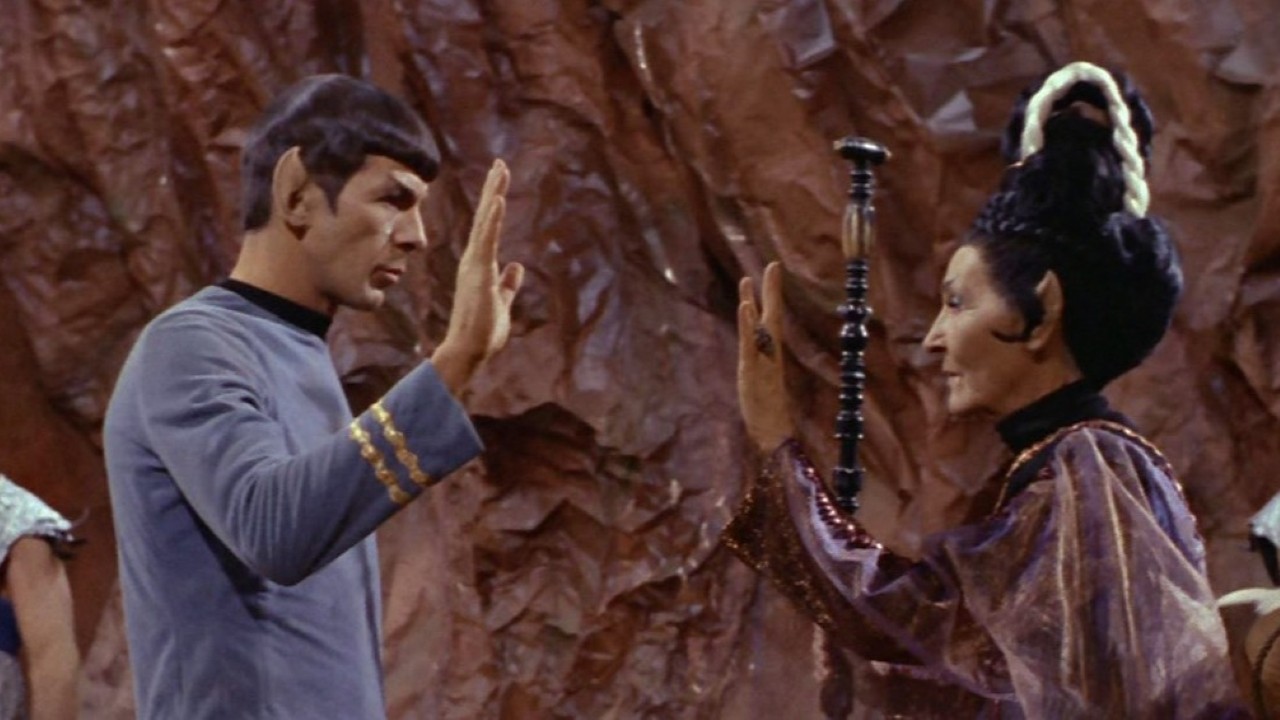
Spock was almost not a Vulcan at all. In the original pitch, the captain's 'right-hand man' was simply described as 'probably half Martian'. Perhaps in the alternate universe where that happened, this article is about when Martians became jerks.
Spock famously almost didn't make it past the pilot either, with the network demanding that Roddenberry get rid of the woman and the guy with the pointed ears. Luckily for us, he fought to keep 'the ears', and we were able to enjoy the triumphant return of 'the woman' in Strange New Worlds.
In those early episodes of The Original Series, you can see everyone adjusting to how Spock should be portrayed. There's a bit more emotion here, a shade more severity there, but eventually, they found their groove and Spock became the iconic Vulcan who would serve as the archetype for decades to come.
Of course, there is a complication with Spock being only half Vulcan. That idea that he grew up feeling like he never quite fit with either culture created an immediate tension, whether it was intended or not. Add to that the occasional comment about how the Vulcan children treated him when he was a kid, and there is the slightest whiff of jerkery in the air. Although, at this point, it reads more as 'playgrounds are the worst, no matter the species' rather than 'Vulcans are the worst'.
The Original Series Vulcans are steeped in dignity and surrounded by an air of mystery. While Dr. McCoy may have mistrusted Spock's cold logic without heart, we see Kirk continuously show respect for his culture and customs. While McCoy's comments could border on racist at points, Spock was able to push back in his own logical way, and the push and pull between the pair still ripples through the wider fan-content community to this day...
But despite the personal friction, there doesn't really seem to be any animosity between Vulcans and humans at this point. In Amok Time, the great leader T'Pau shows nothing but respect for Kirk, despite his being an off-worlder gate-crashing a highly private ritual.
When Spock's father, Sarek, arrives on the Enterprise in Journey to Babel, he's broadly polite to the humans involved. Blunt, yes, with clear boundaries, absolutely, but polite. It's only his son that he snubs. And even here, rather than being presented as Sarek looking down on Spock for working with humans, it leans more towards disappointment that his son hasn't embraced Vulcan opportunities. It's a small but important nuance.
In fact, Sarek is another example of a Vulcan who's the very model of a...well...Vulcan. Yes, he's emotionless and ruled by logic, but he's weighted with gravitas. The reverence other characters show him, even through to The Next Generation, indicates that he's considered to be a great man.
So, all things considered, we'll need to look further to figure out where suppressing emotion turned Vulcans into the catty clique.
Welcome To The 90s
With a lack of principal Vulcan roles in The Next Generation and Deep Space Nine, 90s Trek gets off to a slow start where Vulcans are concerned. Of course, there are some sparkling guest appearances, including the one and only Sarek in a devastatingly beautiful episode that shows the effects of dementia on such a disciplined mind.
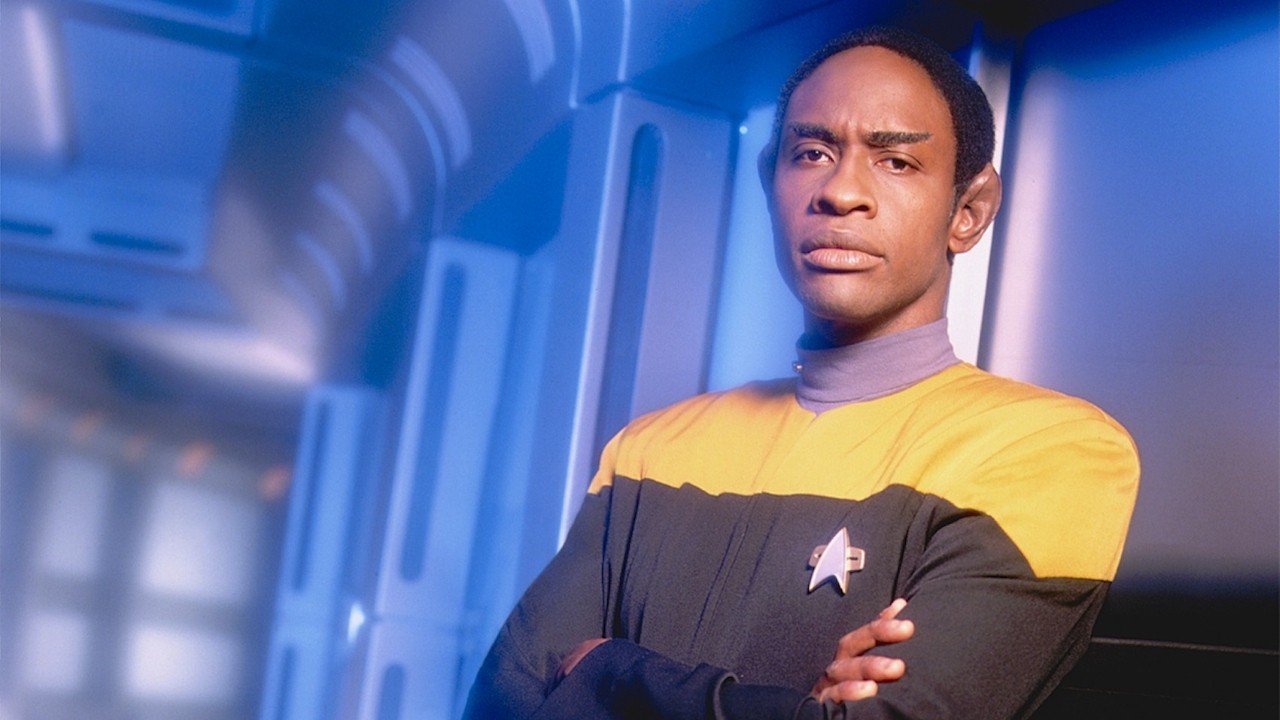
So we have to look to Voyager for the iconic Vulcan of the 90s. Lieutenant Tuvok.
The Star Trek: Voyager Bible, created for the very first season, shows the initial concept for his character:
The Vulcan Tactical/Security Officer is getting on in years -- he's 160 (about 60 in humàn terms), but is as fit as people half his age. He is a powerful combination of maturity, wisdom, experience -- and vitality. His Vulcan equanimity and patience serve him well in his role as the ship's peace-keeper, but it is his unofficial role which most binds him to the other crew members. His grandfatherly presence is comforting to many -- particularly the young and head-strong B'Elanna -- and his age is seen as a virtue; many of the crew turn to him for advice and counsel, and are rarely disappointed.
While the Tuvok that made it to screen differed from the original vision, it's an important glimpse into how the creators saw the Vulcan presence on the bridge. It's pure gravitas.
And by the time they updated the character description in the Star Trek: Voyager Writers'-Directors' Guide for year 2, it was almost identical, save for references to his age and grandchildren. It shows that despite Neelix's needling and the crew's teasing, wisdom is at the heart of Voyager's Vulcan.
Of course, Tuvok's love language is humour. We wouldn't be surprised if he kept a tally of his best quips, purely for meditation purposes, of course. And there's a tiny clue as to where that might have stemmed from in the episode Flashback, which sees Tuvok as a young, uptight and humourless officer serving under Captain Sulu. When Tuvok takes one of Sulu's jokes far too literally, the iconic Captain tells him:
Mister Tuvok, if you're going to remain on my ship, you're going to have to learn how to appreciate a joke.
And boy, did Tuvok learn. By the time we meet Tuvok in Voyager, he's been serving in Starfleet for decades. It's not a stretch to imagine that, over time, he learnt that he might not be able to bond emotionally with his crewmates, but he could connect through humour...even if it was as dry as the Sahara Desert. Sulu really did know what he was talking about.
Just like The Original Series Spock before him, the audience didn't need to rely on emotional outbursts, hugs and ornamental speeches to convince us just how much his crewmates meant to Tuvok. It's shown in the way he puts their safety first, how he's always willing to help, and so often offers a pointed ear and a word of advice.
In short, Tuvok might be sassy, but a jerk he ain't.
However, there is another Vulcan we need to visit before we move on.
Captain Solok.
He appears only in the Deep Space Nine episode Take Me Out to the Holosuite, but oh...he makes an impression. A tormentor from Sisko's past, Solok's smugness surfaces almost immediately when he humblebrags about his medals. His superiority complex, bordering on racism, is made clear by his all-Vulcan crew and the multiple papers he's written about Vulcan supremacy. And his Mean Girl streak is defined by his immature, continual baiting of Sisko since the Academy. By the end of the episode, you wouldn't be sad if he accidentally took a baseball to the face.
There's absolutely no denying it. Solok is a jerk. And we have to wonder if this depiction of a Vulcan stuck in the minds of those who would go on to create more recent Star Trek shows. But the crucial fact remains: Solok is just one Vulcan.
Did one jerk accidentally become the archetype of Vulcans to come?
It's Been A Long Road...
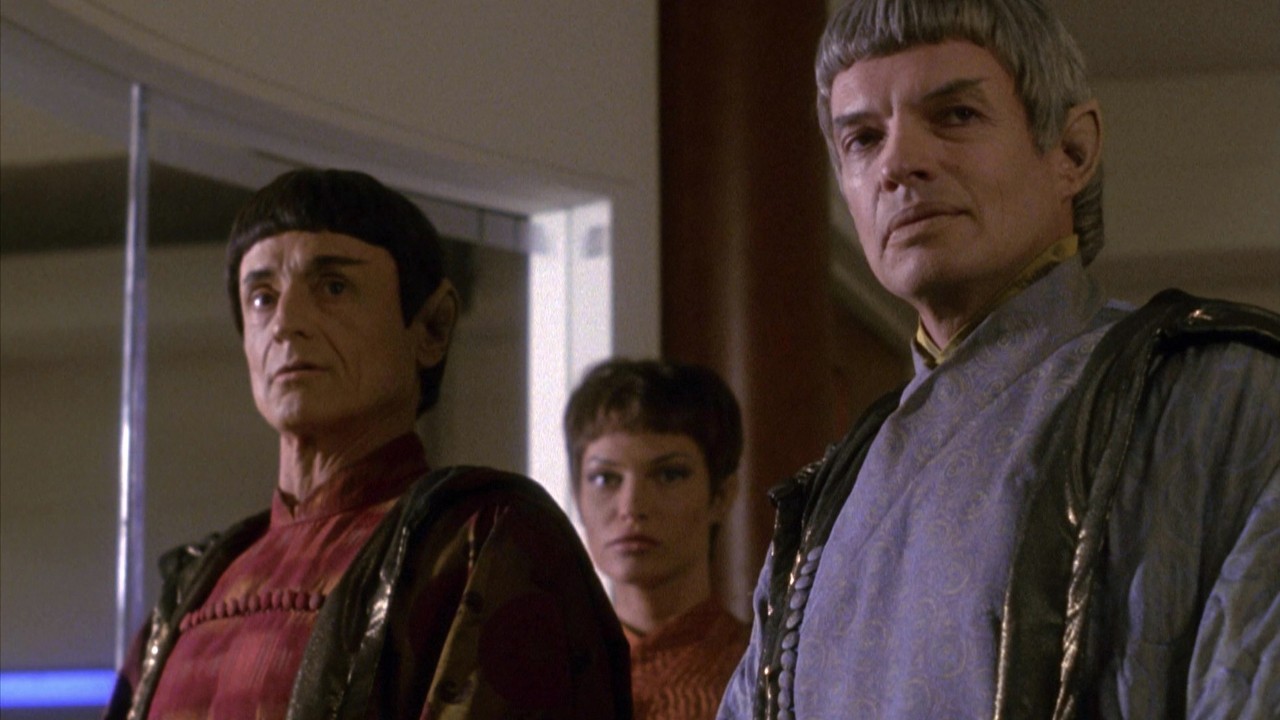
Enterprise is perhaps the most likely suspect when pinpointing where Vulcans (in general) start to be depicted as jerks.
However, there is a key context here.
Were the Vulcans in Enterprise patronising? Yes. But did they have reason to be? Maybe.
They see humans as brash and unprepared for the big, wide universe. In fact, one of the early scenes in Enterprise's premiere episode demonstrates that beautifully. A Klingon is critically injured on Earth. The Vulcans see it as another reason to delay the launch of humanity's first real foray into outer space. But Archer is keen to deliver the wounded Klingon back to his people as part of their first mission.
The Vulcans argue that it would be a great dishonour for the Klingon to be seen in such a state, as an honourable death in battle is enormously important to them...but Archer insists on applying his human ethics to the situation.
Both have valid points, and neither is entirely wrong.
And indeed, we see the Federation move closer towards the Vulcan attitude of respecting other cultures' traditions over the following centuries.
And that Vulcan concern over whether humanity is ready for diplomacy in the great unknown is crucial to understanding their more patronising and superior stance towards humans in this particular show.
By Season 4, things have mellowed on a personal level if not a political one. Ambassador Soval opens up about concerns over what humans might achieve, while Admiral Forrest assures him that humanity only wants to work with them and be their partners. That's already light years ahead of the sniping in Season 1.
Then begins the epic arc of the Vulcan Reformation, which helps purge the corruption of the Vulcan regime, tighten the bond between Vulcan and human allies, and set them on the path to becoming the Vulcans we fell for in The Original Series.
In a 2002 interview with Star Trek: The Magazine, Brannon Braga explained that one of their goals was to make Vulcans 'interesting' again, believing they'd been taken for granted, and that their complicated and paradoxical nature made them good antagonists.
So even as early as Enterprise, it seems there may have been concerns about Vulcan fatigue. And while many viewers didn't enjoy seeing their beloved Vulcans become the antagonists, at least there was a narrative reason for the shift.
It allowed Enterprise to explore the friction between two cultures that didn't really know each other, but still had to work together. Humans and Vulcans genuinely misunderstand each other...and the tension is mutual. But Enterprise would go on to show the positive changes each culture brought out in the other. And, most importantly, it created a rich story arc, allowing both the relationship and the cultures themselves to develop.
Yes, Vulcan arrogance undeniably shows up for the party, but Enterprise eventually moves beyond it. It's arguably a situational trait, not a species one.
Looking back at the smug Vulcans in Enterprise's early seasons, this may well have been where many seeds of Vulcan jerkery were planted. But there's a huge difference between using conflict with Vulcans to develop cultures and relationships, and simply shorthanding that into 'Vulcan = smug obstacle'.
We also have to keep in mind that Enterprise is a prequel. The Vulcans' initial attitude is specific to humanity's lack of experience as spacefarers. And we've already looked at how the relationship appears to have strengthened by The Original Series. Carrying this kind of Vulcan attitude into Strange New Worlds feels outdated when it sits closer to The Original Series in the timeline than Enterprise.
So it might be easy to make the connection between Enterprise's arrogant Vulcans and modern Vulcan snobs, but it's still, for lack of a better word, illogical.
Strange New Vulcans
So that brings us to the current era of Star Trek...and the elephant in the room.
Because the truth is, when you look at the bigger picture, insufferable Vulcans aren't really a modern Trek issue. The finger points directly to Strange New Worlds.
To start with, both Picard and Starfleet Academy sidestepped the problem by not featuring any major Vulcan characters. And when you look at the animated shows, Lower Decks and Prodigy, they actually present a couple of truly engaging Vulcan characters.
Lower Decks' T'Lyn is witty, smart, and inevitably fascinated by everything. Yes, she's pushed into Starfleet for being the wild child on her Vulcan vessel (wanting to improve the ship's scanners and trusting her instincts, totally bombastic). And although she initially sees it as a punishment, she realises it suits her down to the ground. It's the perfect place for her Vulcan talents, instincts, and out-of-the-box thinking to fuse and flourish.
Maj'el from Prodigy is teased as an antagonist, but nothing could be further from the truth. Her initial elitist attitude comes just as much from her position in Nova Squadron as her species. And her interference in Dal and company's fanciful plan comes from a place of wariness and a sense of duty. It doesn't take long for her to become part of the gang and bond with her new friends. Some more than others...cough...Zero...cough...
Discovery delves a little further into Vulcan territory, considering that the human protagonist, Burnham, was raised by the daddy of all Vulcans, Sarek. It creates a bit of an awkward family dynamic, but on the whole, nothing about it really points to that shift towards mean Vulcans.
On the contrary, Burnham's appreciation and willingness to embrace their culture suggest they can't be all that terrible. Sarek is portrayed particularly well, with a performance that manages to channel the original without becoming a caricature. In fact, the Vulcans shown decrying humanity and the Federation are very clearly labelled as extremists. This is not a normal Vulcan attitude.
So that leaves us with...Strange New Worlds. Yes, no one is surprised.
The truth is, between T'Pring's awful mother, Batel's outrageous boss, Cadet A'Sha's rudeness, Four-and-a-Half Vulcans, and Spock's frequently revisited trauma surrounding his half-Vulcan heritage, there's no getting away from the Vulcan jerkery on display in Strange New Worlds.
But are they really all that different from Vulcans of old? And if they are, does it really matter?
From Sassy To Punchline
It's easy to point at the Tuvok era and say that's where the combination of Vulcans and humour crystallised. But there's a huge difference between Vulcans delivering a punchline and being the punchline.
We looked earlier at how important gravitas and wisdom were to the character of Tuvok. Yes, he has some of the best one-liners in Star Trek history, and he's fully capable of dialling the sass up to eleven, but the balance is key. Getting a laugh out of the audience wasn't his purpose on the bridge...bringing his experience and knowledge was.
For every sassy line of dialogue Tuvok delivered, there were just as many pearls of wisdom. For each occasion Neelix tormented him about smiling, there was a moment when he became a mentor to his fellow crewmates. He may have had some genuinely funny lines, but they weren't his sole reason for being, or the most important part of his personality. It was simply his communication style, underpinned by decades of Starfleet experience, his stature as a father, and his ability to use logic to offer solutions in even the most chaotic circumstances.
Comparing the way humour on the bridge is used in Voyager versus Strange New Worlds helps bring the difference into focus.
In The Haunting of Deck Twelve, Tom says a nebula is creepy looking, like something out of Edgar Allan Poe, and Harry adds that it looks like a vampire bat before asking what Tuvok sees. His response:
Two Starfleet officers with juvenile imaginations.
There's no doubting Tom and Harry will need a hypospray for that burn, but it doesn't step over the line into outright rudeness. For one, it's true, considering two fully grown men are trying to spook each other out on the bridge. We also see Tom and Harry chuckling at his response, showing this is clearly banter. Plus, this takes place in season 6, meaning these officers know each other well. In all, Tuvok's walking that sassy line, but it's not out-and-out mean.
Compare this to Valles Marineris when Uhura tries to welcome a new cadet. The scene is set up with Uhura telling us how much effort she's put into preparing for her arrival. But when Uhura speaks to her in Vulcan, the cadet cuts her down with:
Please do not speak Vulcan. Your accent is...improper.
She then continues to list all the reasons why they have nothing in common. The delivery, over-the-top facial expressions and even the music all indicate this is meant to be funny...but it just feels rude. Yes, there may well be truth in what she's saying, but the way she goes on and on is where it crosses the line. Uhura is also clearly not having a good time, and seeing as there are no funny lines in the dialogue itself, the punchline is seemingly just 'Vulcans are the worst'.
Even looking at how a sharp tongue is utilised within a scene set up for friction is eye-opening. In Scientific Method, Janeway is at the end of her tether due to stress caused by secret medical experiments. She snaps at Tuvok, demanding he straighten the crew out, and his withering response is:
Shall I flog them as well?
This is an absolute zinger, but it's also highly calculated. This isn't just the writers trying to get a giggle from the audience. Tuvok uses the sharp barb to puncture Janeway's anger and make her see how unreasonable she's being. And crucially, once she calms down, he takes time to sit with her and listen to her struggles, tempering his use of sarcasm.
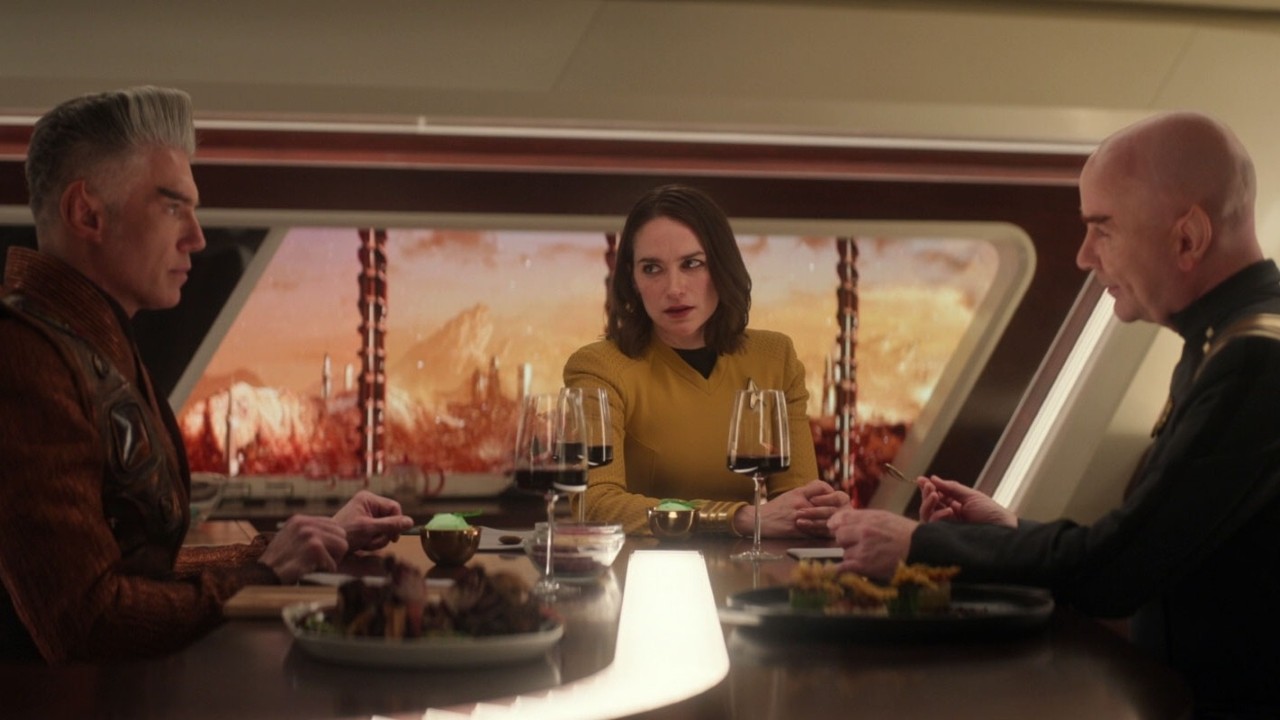
Compare that with Four-and-a-Half Vulcans, where Marie Batel hosts a dinner for Vice Admiral Pasalk, complicated by Pike having been transformed into a Vulcan himself. The two Vulcans discuss the merits of their cuisine while casting aspersions on salt, at which point Batel tries to steer the conversation towards her return to the Starfleet Judicial Department. But Vulcan Pike admonishes her like a child:
Marie, this is a time for dining, not business.
And Pasalk follows up with:
She never was able to read a room.
Despite the best efforts of the sitcom-style musical beats in the score, it's just not funny. Watching these two men gang up on her is uncomfortable, whichever way you look at it. Again, the dialogue itself isn't funny. It's just insulting, and this time, it's not even true. We've seen plenty of examples of Batel being a perceptive and capable officer. She eventually throws them both out after a good telling off, which the audience can get behind...but only because of that same punchline: 'You tell 'em, Batel. Those Vulcans are jerks'.
And the joke just continues to run throughout the series. T'Pring's parents' meeting with Spock is meant to have that awkward kind of humour bubbling through it...because her domineering mother is the worst (extra points for adding the dated stereotype of the battle-axe wife). And it's clearly meant to be funny watching human crew members living as Vulcans...because it turns them into jerks.
It feels as if there's been a compression: some Vulcans deliver sick burns...the library is now open...therefore, Vulcans are jerks. And this compression from Vulcans delivering the joke to becoming the joke is damaging in more ways than one. Vulcans are beloved by so many fans, and this depiction can easily become off-putting. But worse, it shifts the balance of power. When humans are the majority species on a ship, taking the power of the punchline away from the minority alien and making them its target instead can become uneasy viewing.
The Barclay Problem
There was another character who was sometimes 'othered', albeit with less bite.
Reginald Barclay was introduced in The Next Generation as the anxious, socially awkward officer who retreats into fantasy worlds on the holodeck when the real world gets too much. And anyone who struggles with the workplace or social functions will likely sympathise with his plight.
There are times when the way the bridge crew talk about Barclay becomes uncomfortable. Many characters frame his awkward behaviour as 'weird' or complain about him, and Picard even calls him by his demeaning nickname, Broccoli, on the bridge. But what they really mean is that Barclay's 'awkward' demeanour makes them uncomfortable, and they treat that as his failing.
It's a horrible vicious circle that many people will be familiar with. Barclay behaves differently...people make him feel unwelcome...so Barclay retreats...and people use that as 'proof' that Barclay is the problem, rather than their reaction to him. It's only when he becomes more comfortable and at ease on the ship...more 'normal'...that the others start to warm to him.
But there is an important difference between what happened with Barclay and what's happening with Vulcans in Strange New Worlds.
When we had a Barclay episode, we would often see parts of the story from his point of view. This helped us empathise with him and understand the difficulties he was having being part of a crew...and that it wasn't from a lack of trying. On the contrary, we could see the strain that trying to fit in was having on him. This helped endear him to so many viewers who knew exactly what that felt like.
Skip ahead to Strange New Worlds, and Vulcans seem to be 'othered' in much the same way, but without the depth of character and reverse POV needed for balance and empathy.
We've shifted from the idea planted in Enterprise that Vulcans and humans experience the world differently, to 'being around Vulcans is exhausting because they're weird, uptight and rude'.
Strange New Worlds has embraced diversity in so many other ways, so it's such a shame to have Vulcans portrayed in an unpleasant, two-dimensional way. It almost makes it feel like difference is celebrated, so long as the person who's different is comfortable for humans.
Which is where we tie back to Barclay...and the problem. Because Barclay was given plenty of opportunity to develop as a character, helping us see more than just the behaviour others found uncomfortable. But when Vulcan characters are continually depicted as 'difficult', without even exploring the other aspects of their nature, that's when it becomes uneasy viewing.
There are two exceptions, of course, but they only seem to prove the point further. Spock, who is also half human, and T'Pring, who is intimately connected to the more humanised Spock...and both are portrayed in a much more sympathetic light.
When we first meet Spock in The Original Series, he's more Vulcan than human. As time goes on, it's fair to say that softens a little, into the idea that he is both human and Vulcan, and while those aspects might not always live together in harmony, neither should be erased by the other. He's just...Spock.
But in Strange New Worlds, the ongoing exploration of Spock's half-Vulcan trauma, alongside the depiction of Vulcans as jerks, has a problematic implication: Vulcan traits make Spock's relationships difficult...human traits save Spock from being unpalatable.
The friction between humans and Vulcans in Enterprise felt more like two cultures misunderstanding each other, with both having work to do to fix that. But Strange New Worlds can sometimes feel like it's saying that Vulcans are difficult; thank goodness Spock is half human. And that's so sad in a show that's famous for celebrating diversity.
Reg Barclay was once Star Trek's uncomfortable reminder that sometimes the 'othered' person in the room isn't the problem...people's reaction to them is. Strange New Worlds sometimes feels like it's forgotten that lesson when it comes to Vulcans.
When The Mystery Becomes Mundane
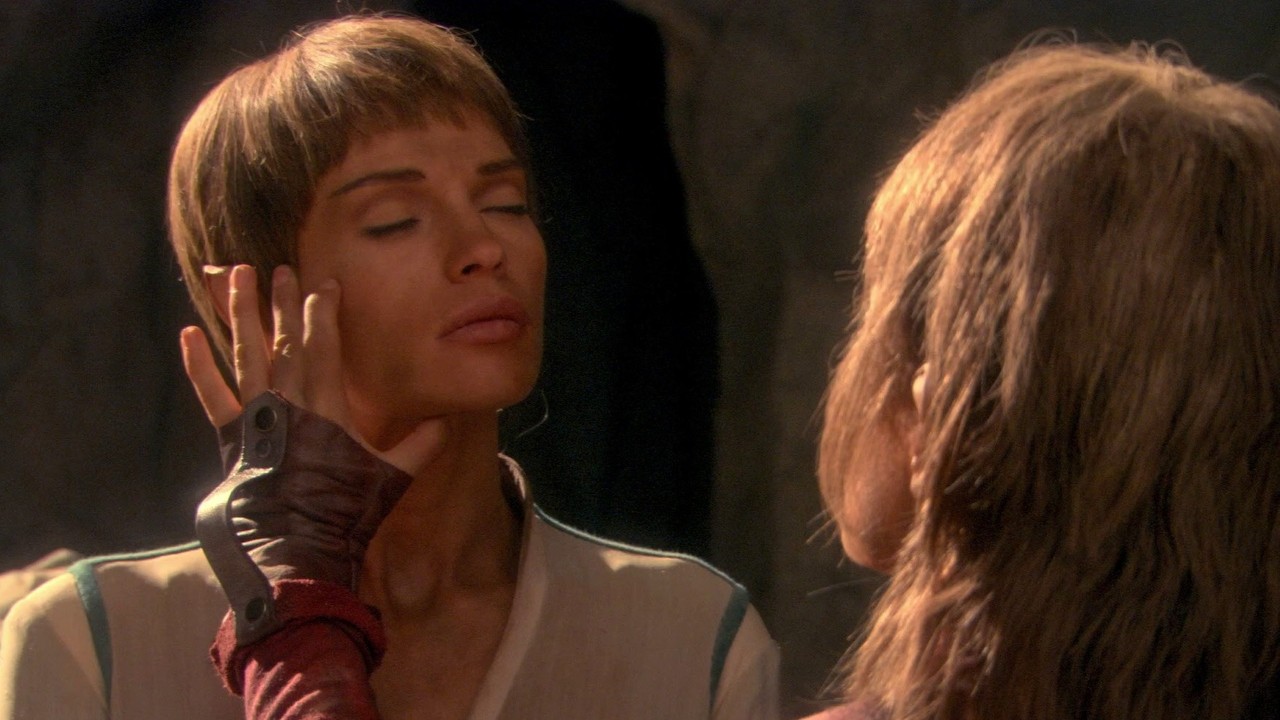
Perhaps one of the problems is that Vulcans have lost their shroud of mystery.
Six decades of Star Trek have allowed for plenty of exploration into Vulcan culture. And of course, if there's anything we fans love, it's more lore to feast upon.
But with that comes a familiarity with Vulcans that might have led to a bit of the flippancy we're seeing in Strange New Worlds. Think of it like that moment you realise your teacher's name is Bob rather than Sir.
Take Amok Time from The Original Series as an example. Spock's destabilising behaviour is treated like a delicious Vulcan mystery. It invites the audience to unwrap the Vulcan enigma. This culminates in the dramatic revelation of Pon Farr and a Vulcan ritual that feels grand, ancient and compelling. There might be an awful lot of bell shaking, but even a foray into Vulcan passion is approached with dignity.
Meanwhile, the Strange New Worlds episode Charades shows the V'Shal ritual engagement dinner in a very different light. A lot of the evening is meant to be funny: T'Pring's mother being a handful, Spock trying to hide his transformation into a full human, and Pike handing out canapés like a student earning extra cash in the summer holidays. While there are some touching moments along the way, on the whole, it's presented as a farce.
Maybe audiences are now so familiar with Vulcan culture that it's lost its gravitas, making writers more comfortable with playing it for laughs. But when the humour doesn't quite land, it starts to feel a bit like an awkward sitcom.
Mind melds are a great example to track the Vulcan slide into the mundane.
The Star Trek Guide for The Original Series writers includes this in Spock's character description:
He also has a strange Vulcan "ESP" ability to merge his mind with another intelligence, read the thoughts there. He dislikes doing so since it deprives him of his proud stoic mannerisms and reveals too much of his inner self. Also, the physical and emotional cost of this is quite high.
Clearly, the mind meld was supposed to be an almost mystical ability, used sparingly. An experience that was uncomfortably intimate for a Vulcan. In other words, when Spock pulls it out of his bag of tricks, the audience should go 'ooo'. However, we've seen the mind meld used so often over the years, and for increasingly run-of-the-mill situations...it's lost some of that pizazz.
Of course, there are plenty of examples of Vulcan powers and traits being used frivolously in older Star Trek (looking at you, whale-whisperer Spock). But with hundreds of hours in the archive, that damage was diluted. Whereas newer Star Trek has far fewer episodes, meaning any flippant uses become much more condensed...Picard showing an android mind-melding with a human, or Strange New Worlds using a mind-meld to synchronise starships, for example.
Mind-melds have undoubtedly evolved from sacred rituals, acts of healing and ground-breaking communication to darker moments of violation, social taboo and stigma in Enterprise. It used to feel like we were catching a peek of something intimate and unique. And now, as we move into the modern Star Trek era, we have...mind melding with plants.
The journey of the mind meld is an example of the more recent blasé attitude to Vulcans. It's not necessarily deliberate, but the more familiar writers and audiences become with them, the less special they seem. And that makes it tempting to strip away some Vulcan nuance in favour of pace and punch, which in turn could be leading to a more simplistic portrayal of some modern Vulcans.
Because the less awe-inspiring Vulcans become, the more aura Vulcans lose. Which certainly doesn't help the Vulcans in Strange New Worlds. And dialling up the respect and admiration human characters have for the full Vulcan experience might well help the audience regain their sense of wonder too.
So Where Does That Leave Us?
Or more to the point, where does that leave Vulcans?
To be absolutely clear, there is a lot to enjoy about Strange New Worlds. And no criticism is levelled at the actors portraying more recent Vulcans in any way, shape or form. On the contrary, they're delivering 100% on their assignment. It's the assignment they're being given that we object to.
But our love for Strange New Worlds is precisely why this small but grating misjudgement is so frustrating.
The Original Series presented Vulcans to us in the context of friction. Spock is our lens for the Vulcans, but as a half-human, he never fit fully in either world, causing occasional inner conflict. And intentional or not, that left many audience members side-eyeing the Vulcans. But that was soothed by the meticulous worldbuilding and character development that followed, leaving us wanting more.
But now, that balance is looking precarious. Spock's trauma has become more pronounced in Strange New Worlds. And that's a perfectly valid choice, but that makes it even more important to show us the appealing side of Vulcans, rather than doubling down on the catty Vulcan personas.
An easy win here would be to reignite curiosity about Vulcans, beyond Spock and his fiancé...ex-fiancé...it's complicated. Present nuanced Vulcan characters instead of defaulting to an arrogant Vulcan stereotype. Let the Vulcan deliver the joke instead of being the joke. And create an air of awe around the things that once made Vulcans remarkable.
By the 32nd century, it would be much more understandable for people to be underwhelmed by the mysteries of Vulcan culture. But Strange New Worlds sits in the sweet spot; past the growing pains of Enterprise and before some of those Vulcan mysteries are unravelled in The Original Series. This should be the golden age of exploration between humans and Vulcans, and yet, more often than not, the Vulcan simply becomes the weird jerk in the room.