Doctor Who: 5 Possible Storylines For The War Doctor Novels
 John Hurt's spectacular turn as a war-wearied disowned incarnation of the Doctor was the jewel in Doctor Who's 50th anniversary crown. Though people may balk at the clumsy retcon or the fact that Paul McGann's Doctor was once again brushed aside, nobody seems unhappy with John Hurt's involvement. Though, sadly, we'll likely never see him reprise the role on screen (he's a busy man, not to mention pricey) the adventures of his incarnation will be realised in book form. The BBC has announced Engines of War - a novel set during the Time War featuring the War Doctor - as the start of what, we expect, will be an ongoing series. Depicting the Time War onscreen was always going to be tricky, and ultimately disappointing, with the budget and visual effect limitations of a television show. In book form, the only constraint is the writer's imagination. Adding to the Who mythos with a fresh new incarnation is a great opportunity for those contributing writers to build their own version of the Doctor. Whilst the Eighth Doctor also exists mostly in book and audio form, his tenure as one of the most overexposed incarnations (ironically) means that his nature and personality is quite firmly established. Whereas the War Doctor is an almost completely blank slate. Though it's not yet certain if Engines of War will kick-off a series (which may depend on the success of the first book), this setup has a lot of potential to tell new stories of the Doctor unlike anything before it. So here's five possible story elements they could work into these novels.
5. A Doctor By Any Other Name
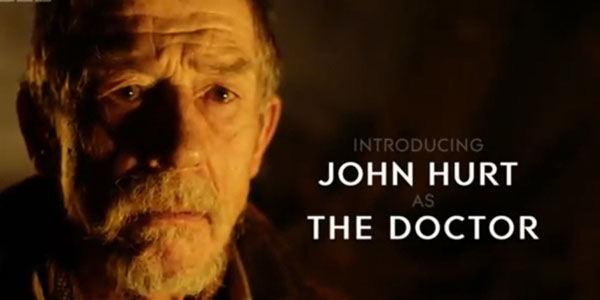 There's no denying that retconning the Doctor's timeline to shoehorn in the War Doctor was a bit forced, since he openly admits to having had no choice but committing double-genocide and destroying his home planet, even while refusing to acknowledge the incarnation that did it. There has to be more of a reason to disown the War Doctor, we have to see what atrocities he committed to understand why later Doctors are only willing to give their name to his final one. The War Doctor seemed to be hopeless and exhausted by the time we saw him, not the callous warrior that he seemed to be regarded as. Since Rassilon refers to him as the Doctor when learning that he's stolen the Moment, perhaps this action was the first Doctor-like thing this incarnation had done, ending the insanity of the War and himself rather than continue to be an aggressor. Later incarnations recognise that he had no choice in destroying Gallifrey (even willing to do it again in The Day of the Doctor), but it's everything leading up to that point they can't forgive. Moreover, if he's renounced the name of the Doctor, what does he go by now? The obvious answer is that he reassumed his birth name, the one that he abandoned when he first fled Gallifrey, and performed the heinous acts he's credited with under that name. However, the mystery of the Doctor's name is one that the franchise will never truly explore, since it's much more effective than to give him some moniker with only in-universe significance. It's likely this will be a mere technicality and the narrator (we don't yet know from whose perspective the novels will be told) will refer to him as the Doctor for simplicity's sake, but it may still be worth exploring.
4. The Early Days Of The War Doctor
 In Night of the Doctor, some deftly applied stills of John Hurt from 1975 horror The Ghoul indicates that the War Doctor started life as a physically young man but the events of the Time War has visibly aged him. Whilst the cover art for Engines of War shows John Hurt as the elder statesman that he is, there's no reason that the book series can't follow the War Doctor during his early days. Specifically, it would be interesting to see what happened immediately after he declared himself "Doctor No More". Typically, regenerations have always been traumatic for the Time Lord and this chemically-altered one, specifically designed to manipulate his personality, must have been jarring. Having only just excised an incarnation who tried thanklessly to stay out of the conflict, would his better nature fight back against his newly-strengthened impulses to anger and violence? How does he silence the voices of his past selves telling him to stop? Even if the Doctor regenerated into a form with stronger predilections to warfare, he's still the same man - with all the experience and knowledge and intense morality built up over centuries. Rather than just declaring this incarnation to be dark and renouncing his name, this would be a great opportunity to show the character's gradual slide into the moral grey. It'd also deepen the tragedy of the War Doctor, showing how even a man who "never would" can be driven "without choice" to commit atrocities "in the name of peace and sanity".
3. Reconciling All The Time Wars
 Just as Doctor Who returned to television, the Eighth Doctor Adventures books were wrapping up a long-running storyline that saw the destruction of Gallifrey after a war with a group of dissident time travellers. When the Ninth Doctor obliquely referred to a war that destroyed his home planet against an initially-unspecified enemy, fans of the books were delighted to think that their dedication to the expanded canon had not been in vain. However, it soon became apparent that the two suspiciously similar conflicts were entirely different events in Who lore. Russell T. Davies made the distinction between the two explicit, suggesting that the Eighth Doctor restored Gallifrey (which is implied by the end of the last novel in that series, The Gallifrey Chronicles) only to see it destroyed again by the Daleks like it's the planetary equivalent of Rory Williams. Davies has also suggested that the Time War started way back in the Fourth Doctor's tenure, with Genesis of the Daleks being the first strike, and that every battle for Gallifrey since was one part of the overall Last Great Time War. Since the War Doctor arc is bound to fall into the same category of expanded canon, only loosely recognised by the ongoing TV series, this could be a chance to reconcile the modern timeline with the continuity of the books released during the hiatus. The idea of Gallifrey being destroyed and restored repeatedly over the course of a temporal conflict fits quite nicely into the current timey-wimey style of Moffat's stories. Plus, the War Doctor seeing his planet burn many times over may be what traumatises him into action.
2. A Spin-Off Featuring Jacobi's Master
As John Hurt's appearance proves, Doctor Who has a history of tempting over the world's greatest actors for criminally short-lived appearances. One of the biggest tragedies of New Who is that Derek Jacobi was only afforded only one episode to play the Master, and spends most of it as a docile and somewhat bumbling scientist. Jacobi's two-minute turn as the Master, with calculated menace thinly masking a deep-seated rage, stands as one of the best moments in New Who so far. Since we know the basics of the Master's involvement in the Time War, this is a great chance for a one-shot story that expands on it. The Tenth Doctor didn't even know the Master had been resurrected, let alone fled and survived the Time War, so this probably wouldn't cross over with the War Doctor - unless they want to mess with continuity, which is fine if used to tell a good story. But an event so cataclysmic that it caused even the Master to flee in terror, one that we've only heard referenced vaguely, should not be overlooked. Though the Master would revel in warfare and bloodshed, he (like the Doctor) is loathe to follow the directives of the Time Lord High Council. So what were the conditions of his resurrection? How did the Time Lords get him fighting on their side? How did he orchestrate his escape? Of course, it'll be a shame not to see it played out on television with Derek Jacobi reprising his role. But if a good writer is hired and can capture Jacobi's cadence just right, this will be a worthy substitute.1. Don't Bring A Police Box To A Time War
 When we saw the War Doctor's TARDIS console room on-screen, it was clearly in the midst of a renovation. We still had a sterile white walls and the "round things" of the pre-War days, but there was obvious signs that the coral theme was creeping in as well. Since this was at the tail-end of the War Doctor's life, it makes sense that the TARDIS would be transitioning to how we saw it under the Ninth Doctor. However, this ramshackle interior seems ill-suited to battling a Time War, which probably involves a lot of timey-wimey antics for which a precise and maneuverable TARDIS is essential. The Doctor also seems to have much more control over the ship now than he did in the classic series, so a big overhaul during the interim would make sense. The idea of a Battle TARDIS has been explored in spin-off media before, but the Type 40 used in the show is evidently intended for travel only. It's not likely the War Doctor (or the BBC) would ditch the iconic Police Box, even in a novel, but he could decide to upgrade the ship's systems to more combat-ready form. Showing a disregard for sentimentality when gutting and souping-up his rickety old TARDIS would be a great way to distinguish the War Doctor from other incarnations and put him at odds with the ship itself. Since the TARDIS is sentient and has a strong connection to the Doctor (as seen in The Doctor's Wife), how would it react going from a life of exploration and saving worlds to one of combat and destruction? Having the TARDIS clash with "Captain Grumpy" could be a fun subplot to weave into the series, particularly if (as we suspect) the War Doctor is to spend his days sans-companion. At times, it could be used for comic relief and at others it could be a way to show how quick the War Doctor is to anger. If nothing else, it would be a sounding board for the Doctor to say his thoughts aloud and reduce the need for internal monologues of exposition. It may not be enough to spend an entire book focused on, but it'd certainly be a new take on the relationship between the two.