7 Terrifying Episodes Hidden In Unscary TV Shows
Unexpected armchair scares.
TV horror has been on a hot streak over the past few years. Charlie Brooker has delivered slick sci-fi scares in Black Mirror, one of the finest ensembles in TV history has finely freaked us out in American Horror Story, and even historical and high-minded literary outings like Chernobyl, The Terror and Haunting of Hill House/Bly Manor have delivered righteous chills.
All of the above have one downside in common, however: we know they’re gonna spook us. Horror thrives on the unknown and unexpected. Sitting down to a streaming session you know will include a haunted house or fanciful cannibal can dull the fine edge of fear.
No, the nastiest scares often lurk in otherwise innocuous fare. Here follows seven instances of true horror in TV nobody could have seen coming.
7. A Whole World Out There - Constantine
In theory, Constantine was a horror show. The titular Liverpudlian occult detective has been feeding DC Comics fans’ darkest proclivities for decades in Hellblazer and Justice League Dark. Try the Haunted or Son of Man arcs for unpleasant dreams.
Alas, Constantine made the same mistakes as Keanu’s painfully American PG-13 film, favoring Buffy/Supernatural quips and jumpscares over the real red krovvy. Like the film, the show suffered for it, receiving low ratings, mixed reviews and unceremonious cancellation after 1 season.
In 13 episodes, Constantine managed one (1) proper horror story. A Whole World Out There was a tight, vicious paranormal slasher despite TV runtime and pre-watershed gore.
Acting was never Constantine’s problem. Matt Ryan, Angelica Celaya and the standout Charles Halford all delivered, and Jeremy Davies dropped in for a typically excellent guest performance between winning an Emmy for Justified and back-to-back godhood as Jesus Prime in American Gods and the BAFTA-winning Baldur in God of War.
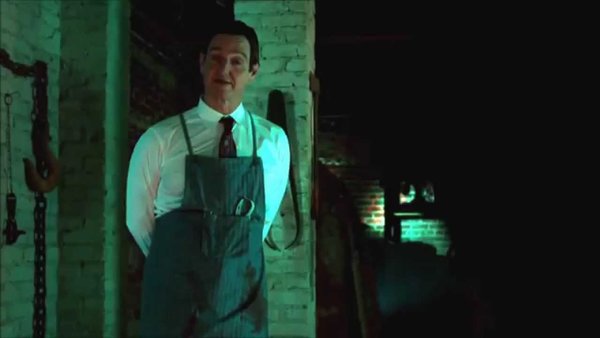
The laurels, however, go to William Mapother as Jacob Shaw. Dear God. Mapother is a confirmed That Guy of American TV, specializing in white-collar Walter Peck assholes and sad sack criminals. None of his previous work suggested anything like Jacob Shaw, a sadistic wizard torturing teens in his own private universe. Mapother’s performance – horror blasphemy time – out-Pinheads Pinhead, replacing Doug Bradley’s cerebral Cenobite with a pure suburban nightmare, the man next door with the too-wide smile and all those tools that look so very sharp. He’ll have you triple-checking your locks for days.
6. Are You Now Or Have You Ever Been - Angel
Buffy the Vampire Slayer and its followers pioneered the genre of horror without horror. Both the Buffyverse and its inheritors in Charmed and Supernatural have managed a righteous scare or two – shoutout to Doug Jones and his freaky fairy-tale Gentlemen – but the focus has always been on character beats, well-written banter and plenty of interpersonal drama. Nothing wrong with that, as millions of fans and a genuinely startling corpus of fanfic can attest.
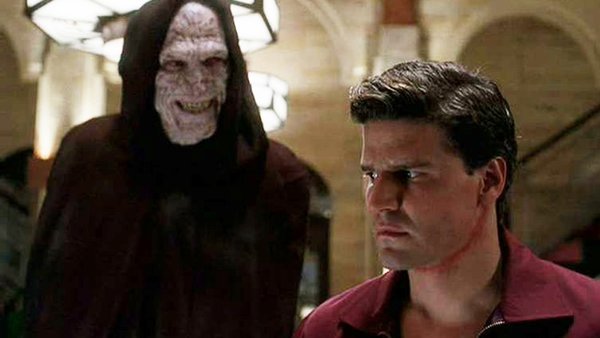
It was Angel, however, the slept-on Buffy spinoff, that gave us the idiom’s best straight horror story. Are You Now or Have You Ever Been is '50s horror worthy of Twilight Zone, with flawless period aesthetic, claustrophobic chills and an inescapable moral core. Every element cranks the tension, from the tight confines of the hotel setting to the immaculate sound design to its unflinching look at the worst of humanity: prejudice, hypocrisy and take-him-not-me moral cowardice.
David Boreanaz deserves a special shoutout. Often accused, not without reason, of dullness and flat affect, Boreanaz flips the script here, no longer the Tortured Hero™ but a disinterested immortal bearing witness to humans playing out their petty, predictable sins one more soul-destroying time. His final act, which could be taken as classic horror punishment for moral transgression, feels more like sheer apathy, with Our nominal Hero simply not caring enough to save the flawed and broken humans around him. Horror at its best is either moralist or nihilist. Are You Now or Have You Ever Been? contrives to be both.
5. Freaky Fred - Courage The Cowardly Dog
Only '90s kids remember! Really, between streaming reruns and creepypasta-fueled revival online, fans of all ages can revisit the classic cartoons of the '90s and 2000s and thereby acquire f*cking brain damage. Apparently back in the day every cartoon was contractually required to have at least one episode of WTF nightmare fuel, presumably as some sort of conspiracy with the nightlight and rubber bedsheet industry. '90s kids and retro fans alike have been traumatized by everything from an assault on Ren’s exposed dental nerves (really) in Ren’s Toothache to Spongebob going straight-up slasher film (really! It was f*cked up!) in Graveyard Shift.
A standout in that regard was Courage the Cowardly Dog. Courage got pretty dark pretty often, using its easily frightened protagonist to explore childhood fears. In theory, that could be therapeutic!
In practice, Freaky Fred.
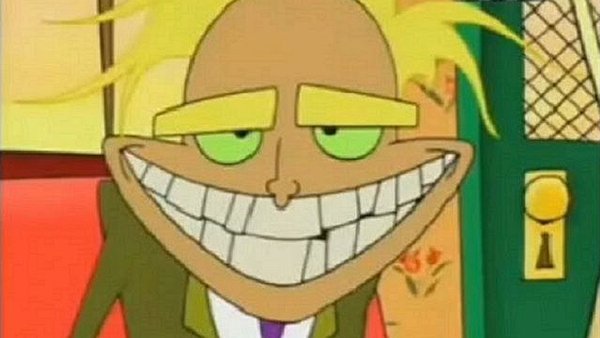
Freaky Fred, you see, was freaky. He liked to be… naughty. He spoke in rhyme about being… naughty. He was naughty to his fiancée in a way that got him committed to an asylum. On his vacation (there aren’t vacations from an asylum… there aren’t vacations from an asylum!) he holed up in Courage’s house, very… naughty. In a Karloff-worthy voice from Paul Schoeffler, Fred muses throughout his appearance about his desire to be… naughty with Courage. Against Courage’s will, he succeeds.
He shaves all his fur off. Fred is a barber.
Why? Were you thinking of something else?
Of course you were. You have a working subconscious. What the Hell, Cartoon Network?
4. The Mombasa Cartel - The Blacklist
For a police procedural, The Blacklist can deliver the darksome goods. The core premise of a list of anonymous master criminals offers a wide spectrum of very human Monsters of the Week, and the cast, anchored by James Spader in his sinister and stylish element, is unafraid to commit to the scares.
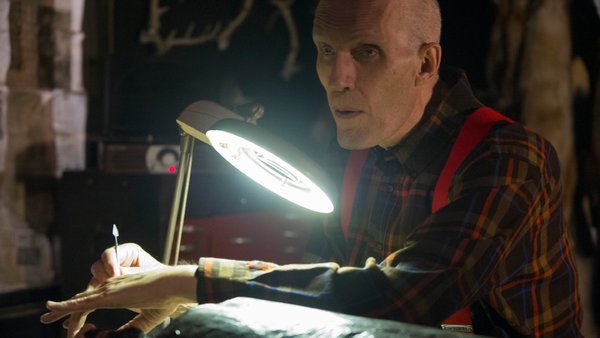
Slotting in at first in the Creepy Criminal Sweepstakes, narrowly edging out Tom Noonan’s superb Stewmaker, are the shuddersome Kincaids of The Mombasa Cartel.
Any sensible person queueing up a police procedural episode called The Mombasa Cartel would expect the baddies to be a cartel, perhaps from Mombasa! Here, the titular human traffickers are practically pushed offscreen by their Alaskan suppliers.
“Spooky family in the sticks” has been done to death in American horror. It’s our equivalent of the smiling hippie cults into weird sex and/or fire that evidently appear whenever you turn off a main road in Europe. As the poet hath wrote, however, ain’t what you do, it’s the way that you do it. The Kincaids, played by Phyllis Somerville, a never-better Carel Struycken and – spoiler incoming – apparent philanthropist Peter Fonda, meld mommy issues, taxidermy and '50s pop into TV scares better than anything since X-Files’ classic Home. The twists are also expertly done, leveraging the dangers of the Alaska setting, one character’s looming addiction and another’s wham-bam shock at the end to deliver 45 minutes of raw-nerve tension. If you’re looking for bite-size grindhouse horror on Netflix as the nights draw in, enjoy.
3. Joker's Favor - Batman: The Animated Series

Really, this entire list could be Batman: the Animated Series. Harvey Dent goes full Jekyll and Hyde, an invisible monster stalks a child, Matt Hagen f*cking melts. This was a cartoon! For kids!
When it comes to compelling horror straight from the best of comic books, however, no one tops Mark Hamill’s Joker. Funnier than Ledger, scarier than Nicholson, Hamill’s Joker may be the finest take to date on Batman’s eternal foe.
Joker’s Favor is about what it’s like when Joker happens to you.
Charlie Collins is an ordinary man with an ordinary life, up to the precise moment he directs a bit of road rage at the worst person alive.
As punishment, Joker takes Charlie’s driver’s license, granting him his life for a favor to be named later.
Charlie flees. Plot ensues. Things end in a dark alley, because Batman. Batman is elsewhere. Is Joker menacing poor, put-upon Charlie Collins?
Not bloody likely. Charlie is threatening Joker.
Cackling, sweating, pushed beyond sanity, Charlie has picked up one of Joker’s own explosives, intending to detonate them both. This man has a wife, a child, a life, and he no longer cares. Killing the person he hates is enough. That’s what happens when the Joker gets in your head. Terrified Joker screaming for Batman’s help is gratifying in a good-guys-win sort of way, but Charlie reminds us that, at the end of the day, the Joker is right. Any of us can snap. Anyone can choose evil. That there? That’s scary.
2. Dreams - M*A*S*H
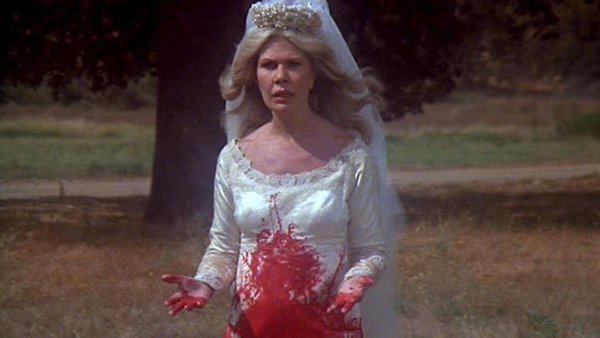
Wait. M*A*S*H? As in, Alan Alda, Korean War, stuff of a million lazy rerun-filled afternoons, every American grandpa’s favorite source of laugh-track comedy and comforting morals? Surely this is the unscariest show in TV history. Where’s the spook?
In fact, the venerable M*A*S*H went dark several times, often straining against the broadcast restrictions of its time to get real about the horrors of war. Its most successful attempt is Dreams, which delivers exactly that: dreams of the main characters after a brutally demanding day.
Convincing dream sequences are hard, verging on impossible. Fiction in any form struggles to present anything that is simultaneously as coherent and as incomprehensible as a true dream. M*A*S*H succeeds on pure surrealism, presenting each vignette as complete unto itself, never cheating the viewer by pointing out the symbols or belaboring the point. As with real dreams, it’s the images that hit hardest. The arrogant and brilliant Charles Emerson Winchester reduced to a dancing clown twirling sparklers before a parade of the dead ranks with the most fundamentally disturbing moments in classic TV.
1. Frame Of Mind - Star Trek: The Next Generation
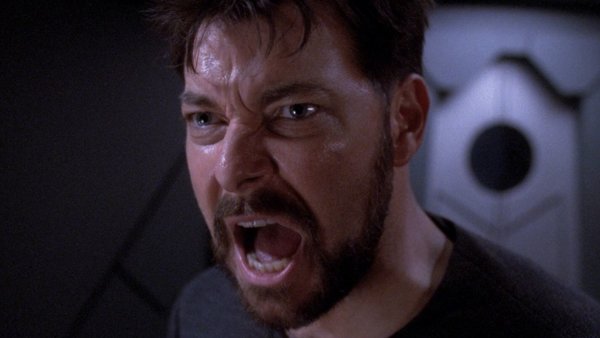
Star Trek has never shied away from horror. Seriously, the first episode of Trek ever aired had a freaking vampire in it. Deep Space Nine took on the real-world horrors of postcolonialism and refugee life. Voyager turned a guy into a salamander one time. (He got better.)
Salamandrification notwithstanding, it was Next Generation that really drove home horror, and with all due love to the Borg and David Warner’s four lights, the dark streak peaked in Frame of Mind. The episode put every aspect of the show at risk, locking us into the viewpoint of Commander Riker as his sense of reality, and ours, slowly unraveled. This was Star Trek as black box theatre, turning the fourth wall into a portal invariably leading to more confusion and pain. Mainstream TV hadn’t been this stripped down, surreal and shamelessly artificial since the experimental peaks of Twilight Zone, echoing classic episodes like The Obsolete Man and Five Characters in Search of an Exit.
Above all, Frame of Mind was shocking. It broke the show’s utopian setting, its self-consciously intricate production design, even the core qualities of its characters, to deliver a real exploration of a disintegrating mind. Most Trek fans don’t turn on the show in hopes of masterful psychological horror, but Frame of Mind delivers on every level.