8 Times Doctor Who Mocked Itself
Doctor Who doesn't always make perfect sense, and hilariously, the writers know it.

Doctor Who is that rare TV show that's older than most of its fans. The kids who grew up watching the Doctor's adventures in the '60s, '70s, and '80s are now in charge of producing those adventures today, meaning that the show has become more and more self-aware as the decades have slipped by.
From subtle jokes to clear sight gags, Doctor Who is not afraid to poke fun at itself and point out its biggest flaws, whether it's those notoriously cheap production values, messy continuity, or the many, many tropes that have followed the Doctor through nearly 60 years of time-travelling hijinks.
Modern audiences are smarter and more clued-in than ever before, so it's always great to see that the writers are acutely aware of this, dropping nuggets of meta mockery that everybody - fans and creators alike - can all laugh at together.
But because Doctor Who has been running for such a long time, this type of humour isn't just a recent development - it's something that's been a part of the show from the heart of the classic days...
8. The Fourth Doctor Mocks The Overpowered Sonic Screwdriver

It's one of the most iconic and important parts of Doctor Who, but over the years, the sonic screwdriver has evolved into something of a joke.
Rather than having a firm set of rules about what this device can actually do, its functions seem to be generated on the fly, based on the needs of the script. Does the Doctor need a pen? Well, guess what - the sonic is a pen! Does the Doctor need to open an impossible-to-open door? Well, that's no problem for the sonic!
Fortunately though, the writers are aware that the sonic is ridiculously overpowered. Not only have they attempted to lean into the joke by giving it funny weaknesses - like wood - but they've also directly mocked its near-limitless capabilities.
In the second episode of The Invasion Of Time, the Fourth Doctor tries to use his sonic to open a door, assuming it will work - because why wouldn't it?! However, he quickly realises that it isn't going to work, at which point, he looks straight into the camera, and delivers a memorable one-liner:
"Even the sonic screwdriver won't get me out of this one."
It's a clear-as-daylight dig at the sonic's overuse - as well as its extreme power. Could the writers have gone with a subtle remark here? Probably. But for such a pressing topic... only a fourth wall break will suffice!
7. Billy Shipton Mocks The Wonky TARDIS Windows

Fans who are passionate about any franchise will occasionally debate ultimately pointless details. Star Wars has the Han/Greedo "who shot first?" controversy, and for Doctor Who, one example of this is the "incorrect" size of the TARDIS windows.
While this debate has largely vanished over the years, it was an extremely hot topic back in the early days of modern Who, with forum-dwellers criticising the windows of the 2005 TARDIS model.
Having previously been a forum-dweller himself, Steven Moffat - who penned several episodes between 2005 and 2010, before taking over the show until 2017 - was keenly aware of these criticisms, but rather than ignoring them, he actually chose to acknowledge them in one of his best episodes.
Midway through Blink, detective Billy Shipton tells Sally Sparrow about the abandoned cars that were found outside Wester Drumlins, before introducing her to the TARDIS, which he describes as being a fake, pointing out its dummy phone and wrongly-sized windows.
This was Moffat's way of having a bit of a joke at the TARDIS's expense, while also pointing out something that should be obvious: the TARDIS doesn't have to look like a real police box, and it also doesn't need the exact same dimensions as any of the earlier models used in the show - and that includes its windows.
6. The Tenth Doctor Mocks The UNIT Dating Controversy

The UNIT Dating Controversy is another one of those ultimately pointless details that fans like to debate, although, to be fair, this one does involve some pretty huge inconsistencies with the Doctor Who timeline.
To provide a quick summary for the uninitiated, the UNIT Dating Controversy is a continuity issue that stems from some of the dates that were provided during the classic era. Basically, when it gets to the 1970s and the 1980s (in-universe), the timeline of UNIT goes a bit wibbly-wobbly.
It's definitely a strange problem, and since there isn't a clean way to fix it, the writers of the 2005 revival did the only thing they could: they made fun of it.
In Series 4's The Sontaran Stratagem, Martha Jones summons the Tenth Doctor to help UNIT combat a Sontaran plot. Attempting to explain his UNIT days to companion Donna Noble, he tells her that he used to work for them back in the 1970s, gets confused, and adds "or was it the '80s?"
It's an extremely quick line that most viewers will miss entirely, but for those in the know, it's a brilliantly self-referential joke about UNIT's complicated timeline.
5. The Twelfth Doctor Mocks The Fact That Everyone Is Usually Evil

The universe is an enormous place. It's so large, that our tiny human brains cannot possibly comprehend its full scale. So isn't it weird that every single alien the Doctor encounters usually has some sort of evil plan?
You'd think that the Doctor would run into some nice, welcoming aliens from time-to-time, but with each new episode... nope. It's just bad guys after bad guys.
Now obviously, this is a part of the show's design. Each episode needs a hostile force for the Doctor to overcome, because it wouldn't be all that thrilling to watch the TARDIS crew chilling on a beach for 45 minutes. Doctor Who is a show where an ancient Time Lord battles deadly aliens - that's the format.
In Twice Upon A Time though, this format is subverted when Doctors One and Twelve encounter the glass avatars of the Testimony Foundation. Because this is Doctor Who, the natural assumption is that these glass people have sinister intent, but late in the episode, we find out that they don't - at which point, the Twelfth Doctor drops a meta line that cheekily pokes fun at the show's "all aliens are evil" trope:
"Oh, it's not an evil plan. I don't really know what to do when it isn't an evil plan."
Considering that the Doctor's life is essentially a battlefield, you have to imagine that, deep down, Twelve was secretly relieved that he didn't have to defeat any bad guys.
4. The Fourth Doctor Mocks The Show's Production Values

Even though the Thirteenth Doctor's era has taken the show's visual effects to a truly impressive level, Doctor Who has always had a reputation for looking a bit... cheap. And it probably always will.
However, this isn't a bad thing. It's part of the show's charm (particularly in the classic years) for things to look a bit low-budget from time-to-time, but as you'd expect, the show's wobbly sets and rudimentary practical effects have been subject to a lot of mockery over the decades - even from the Doctor himself.
In the Fourth Doctor serial Destiny Of The Daleks, Tom Baker's wonderful incarnation of the Time Lord lands on an unknown planet, uses the TARDIS scanner to take a look outside, and is greeted by... a rocky cliff face.
In response, he quips "Oh look, rocks!" a sarcastic jab at the fact that Doctor Who is known to film in boring old gravel quarries on a regular basis, meaning that many of the amazing alien worlds seen in the show look exactly the same.
3. The Master Mocks The Show's Inconsistent History
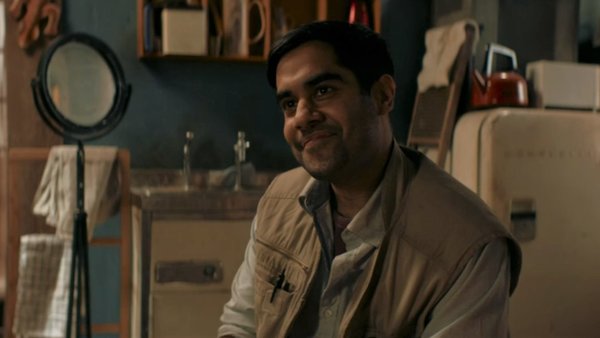
With almost 60 years of adventures under its belt, and hundreds of writers, producers, and directors having contributed to its mythos, it’s no surprise that the Whoniverse is littered with inconsistencies.
Inconsistencies are to be expected when a show has been running for this long, and if we’re honest, it’s weirdly charming that the show likes to play fast and loose with its own rules and continuity. It’s almost like the Doctor’s madcap, carefree personality is bleeding through to the writing.
Even better, the show itself occasionally likes to poke fun at this issue, pointing out how wibbly-wobbly its lore has become over the years.
In the Series 12 opener Spyfall: Part 1, Graham chats with MI6 agent O, a character who is later revealed to be the Doctor’s arch-frenemy, the Master. At one point, O mentions that he’s got an entire shelf full of documents all about the Doctor, adding that there are “a lot of inconsistencies” in this information.
It’s a subtle jab at Doctor Who’s long, complicated, and often contradictory history. The writers clearly know that not everything in the Whoniverse fits together like a neat jigsaw puzzle, but at the end of the day... who cares?
To quote the Twelfth Doctor in The Witch’s Familiar “I'm the Doctor. Just accept it.”
2. Whizz Kid Mocks The Show's Obsessive Fanbase
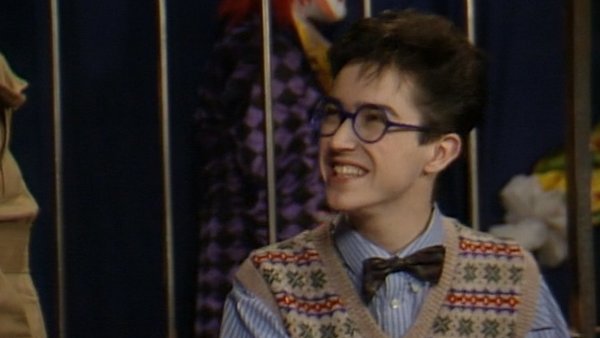
Us Doctor Who fans are a strange old bunch. We spend the early episodes of each regeneration complaining about how the new Doctor sucks, and how the show was much better "back in the day".
But then, when the time comes for the current Doctor to leave, we miss them terribly, beginning the endless cycle of "hating the new guy" all over again.
There's a clear nod to this kind of fan behaviour in the Seventh Doctor serial The Greatest Show In The Galaxy, with the character of Whizz Kid (yes, that's actually his credited name), claiming to be a massive fan of the Psychic Circus.
However, despite this, he openly bashes it, voicing his opinion that it's "not as good as it used to be".
Whizz Kid is a not-so-subtle mockery of the show's fans, who - and let's be honest here - are known to adopt this "it's not as good as it used to be" mentality from time to time, usually due to childhood nostalgia.
Amusingly, Whizz Kid dies shortly after this scene, a clear statement from the writers that they aren't too fond of this kind of fan behaviour. Bit mean, but fair enough.
1. The Curse Of Fatal Death Mocks Absolutely Everything

We're going to cheat a little bit for this one, but it would almost be a crime to not talk about the hilarious short episode The Curse Of Fatal Death, a charity special that was created for the 1999 Red Nose Day celebrations.
While this special isn't an official part of Doctor Who canon (although some fans do have fun trying to work it in), it does serve as an example of the show mocking itself, at least in retrospect. This is because it was written by former showrunner Steven Moffat, arguably the most influential creative voice in the show's modern era.
The Curse Of Fatal Death sees Moffat roast the living daylights out of the show he would one day go on to helm. He pokes fun at the Master's ridiculous schemes and over-the-top villainy, points out how silly time travel is as a narrative device (with the Doctor and the Master repeatedly visiting the past in order to "bribe the architect"), and even takes a quick shot at the show's constant use of "endless gravel quarries."
The phrase "I'll explain later" is also used several times throughout, mocking the fact that many things in Doctor Who are often waved away and left unexplained. During his time as showrunner, Moffat took the "I'll explain later" mantra to the next level, with story arcs that would stretch on for years before finally being resolved.
Despite all this lampooning though, The Curse Of Fatal Death was clearly written by someone who loves Doctor Who. The comedy comes across as affectionate rather than mean-spirited - and that's why it works so well.