Doctor Who: 10 Cleverest Classic Who References In NuWho

Mock Moffat and RTD all you like, but you can bet damn sure they'll destroy you in an obscure Who-off.
NuWho has always had an interesting relationship with classic Who. It€™s a very different show, and while it features old favourites aplenty - Daleks, Cybermen, Sontarans - it€™s also subverted many of the tropes that the older generation of fans thought were sacrosanct. Now it€™s practically compulsory for the Doctor to kiss his companion. For most of us, who appreciate good writing and good acting, these €˜controversies€™ are a complete non-issue. But it has led many classic fans to criticise the show and its writers in often heated terms. The thing is, most of the writers love the classic series. Russell T Davies and Steven Moffat might not have taken pen to paper if it hadn€™t been for Hartnell, Troughton, some threatening bits of cardboard and tinsel and that weird title music. Sensibly, they€™ve updated the look and tone of the show, but they still manage to pay tribute to the old stuff, usually in extremely subtle ways. Rather than confuse new fans with elaborate continuity nods, they€™ve inserted in-jokes and name drops that will only make sense to anyone with a mid-80s Colin Baker serial in their DVD collection. So anyone decrying NuWho for being too, well, Nu, has obviously missed these ten references. That€™s understandable. They are very clever. Click "next" below to get started...

10. Mr Clever Has A Long Memory- Nightmare In Silver
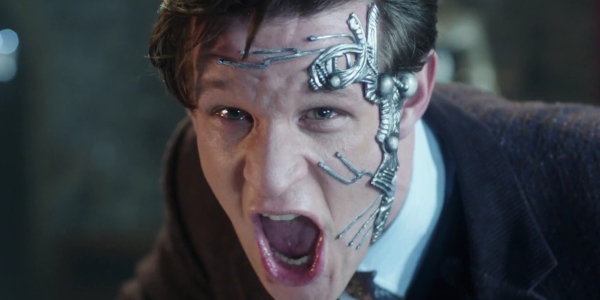
One of the big differences between Old and New Who is that New Who is creator driven. One person- currently Steven Moffat- oversees all continuity. It wasn€™t always that straightforward. In fact, back in the day, it wasn€™t straightforward at all. The Cybermen were created by Gerry Davis and Kit Pedler, but meddled with by multiple different script editors. The result is a Cyber-history that€™s both extensive and often completely ridiculous. Nightmare in Silver, scripted by Neil Gaiman, revels in the inconsistencies. The Doctor, in a mental battle with Mr Clever (the latest in a long line of head honchos, including the CyberLeader and the CyberController), mentions the cyborgs€™ previous weaknesses against gold and, er, cleaning fluid. The allergy to Au was introduced in Revenge of the Cybermen, and became an accepted part of the mythos in Earthshock and Silver Nemesis. This despite the fact that it barely made any sense- some nonsense about choking their respiratory systems. Even more baffling is the nod to cleaning fluid. Can the Cybermen really be repelled by Mr Sheen and Ajax? Well€in the Patrick Troughton story The Moonbase, the Doctor€™s companion Polly stumbles upon a recipe to dissolve the Cybermen, using (because she€™s a girl) nail varnish amongst other things. At least the Cybermen in Nightmare in Silver are felled by something slightly more impressive- namely a big planet-destroying bomb. It€™s a nice touch for Gaiman, learned Whovian that he is, to acknowledge the frankly rubbish elements of the Cyberman backstory.

9. The Master's Greatest Fear - Last Of The Time Lords
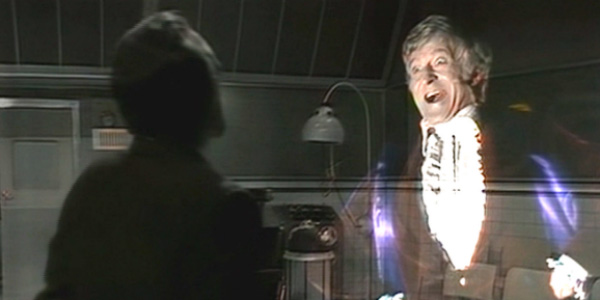
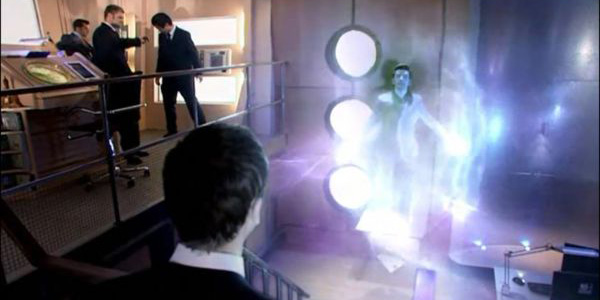
Russell T Davies€™ approach to Who continuity was canny. Instead of dropping forty years€™ worth of accumulated storytelling on the heads of a wary audience, he slowly drip-fed the relevant details over the course of four seasons. In season one we got the Daleks. Season two was the Cybermen. Any Who fan worth their salt knew what season three would hold - The Master. The Master is an easy concept to grasp- he€™s The Doctor€™s equal and opposite. The Sound of Drums two-parter works with minimal exposition, but RTD threw a few references in there anyway, notably when The Doctor reminisces about the Axons and the Sea Devils. He even gives John Simm€™s incarnation of the villain a line of dialogue from Anthony Ainley€™s version. For the fans, this was shivers-down-the-spine stuff, but subtle enough that it wouldn€™t bother less seasoned Who watchers. More audacious than any of that, though, is a visual lift from one of the less remembered Jon Pertwee adventures. When David Tennant is resurrected by the Archangel network, you€™re watching a direct homage to 1971€™s The Mind of Evil. That story features a sequence in which The Master, attacked by a device that invokes the subject€™s greatest fear, is confronted by a looming, god-like apparition of The Doctor. Nearly forty years later, Russell T Davies paid it off, and only the most hardcore Who fans noticed. He has his critics, but the man could take them in a canon fight any day.

8. The Macra - Gridlock

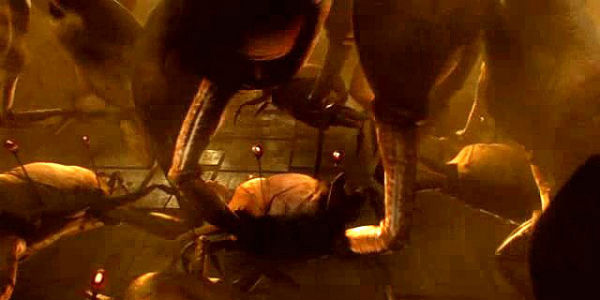
In Gridlock, David Tennant€™s Doctor arrives in far future New New York to finds its inhabitants trapped in a seemingly endless hovercar traffic jam. Cars that attempt to circumvent the jam by are being destroyed by a monstrous€something€living at the bottom of the fast lane. The Doctor investigates, and makes a discovery that only hardened convention-goers would appreciate. He discovers the Macra. Giant crab-like creatures, the Macra€™s first - and, many would have guessed, only - appearance came in 1967€™s The Macra Terror. Like many Patrick Troughton serials, the master tapes for were wiped after broadcast, meaning it only exists on soundtrack and in a few clips. Even if the Macra had survived, they would never be remembered in the front rank of Who monsters- not with competition from Troughton era standbys like the Ice Warriors and the Great Intelligence. So why did they appear in New Who long before either of them? It comes down to storytelling. Russell T Davies€™ Who, at its best, borrowed from the more whimsical end of the classic era. The Macra Terror is a satire about conformity set in a holiday camp, with some crab monsters in it. In the same vein, Gridlock uses the conventions of Who to tell a larger and more interesting story, one with ambitions beyond scaring small children. In both cases, the Macra were used to lure the viewing public in. They expected monsters€but what they got was something altogether more complex and profound.

7. The Doctor Retires - The Snowmen

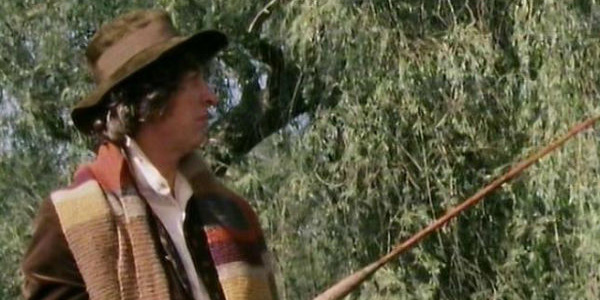
The 2012 Christmas special featured an obvious call-back to the past with the return of the Great Intelligence. Cleverly, when the Doctor shows the Intelligence a map of the London Underground, he€™s effectively prequelising 1968€™s The Web of Fear. However, this is not the only way that The Snowmen harks back to the past- or at least, a potential past. When we meet the Doctor in this episode, he€™s retired to a cloud hovering over Victorian London. With the loss of Amy and Rory in the previous season, his wanderlust has gone and he€™s taken to pottering around the TARDIS. In narrative terms, that€™s a big deal- the Doctor is defined by his restless need to explore. It seems like the sort of gambit that could only be pulled off in the new series. It was, however, first mooted in the 70s, with the Fourth Doctor. The idea- provisionally titled 'The Doctor Retires'- was pitched to the Doctor Who production team by Douglas Adams, pre-Hitchhiker€™s Guide. Tom Baker, then at the peak of his popularity, was appreciative, and when Adams took over as script editor he attempted to use the concept in Shada. However, producer Graham Williams, wary that an already zany show would drift into outright self-parody, put a stop to it. Perhaps the time wasn€™t right. The Doctor of the 70s was a more straightforwardly heroic character. Only now, when the character is portrayed with greater complexity, could such a narrative gambit be pulled off meaningfully.

6. The Ood And The Sensorites

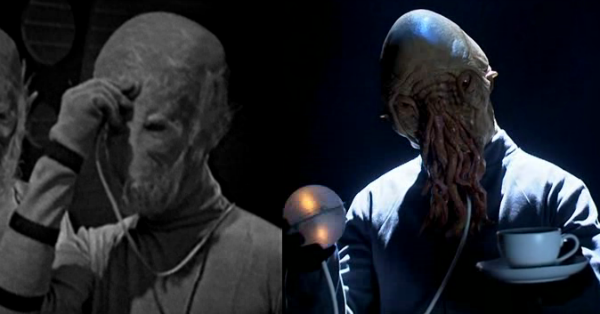
The Ood are one of New Who€™s most memorable creations. Few other creatures in the show€™s history have been written with such complexity. We€™ve seen them develop from the possessed fiends of The Satan Pit to peaceful mystics in The End of Time. They€™re a welcome reminder that Doctor Who has, at heart, a strongly moral message about tolerance and understanding. In the occasionally overblown Russell T Davies years, that level of nuance was welcome. Davies can€™t take all of the credit though. As we€™ve already seen, he€™s astute at borrowing from the forgotten corners of Who history. In this case, he€™s stated that the Ood were partially derived from the Sensorites, an alien race from the very first series of Doctor Who. In their self-titled story, initial expectations that the creatures are purely evil are subverted early on. Compared to The Daleks- the serial that established the Who tradition of malevolent alien beings- The Sensorites are portrayed in more ambiguous terms, with good Sensorites and bad Sensorites interacting with the Doctor and his companions. Besides certain visual similarities, the Ood share telepathic abilities and their basically gentle nature with the Sensorites. Information in the episode Planet of the Ood, as well as tie-in material, also reveals that the Ood€™s home world is in the same system as the Sensorites€™. It€™s a nice piece of universe building in a series that can seem made up as it goes along.

5. Snow White And The Seven Keys To Doomsday - Night Terrors
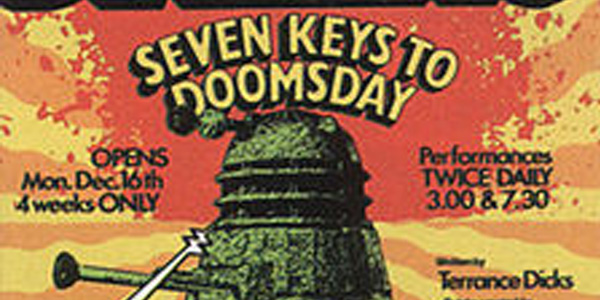
Mark Gatiss is one of the new series€™ most controversial writers. Compared to Davies, Moffat and Gaiman, Gatiss can seem slavishly reverent to the format of the old series- indeed, his most successful Who related script is probably An Adventure in Time and Space, his William Hartnell bio-drama. It€™s also rare to see Gatiss write Who in a modern timeframe, which makes Night Terrors unusual in his €˜Whovre€™. In critical terms, it€™s about as well regarded as the rest of his work - i.e. not much at all - but it does feature one reference to the past that isn€™t totally unwelcome. While talking about his childhood, the Doctor mentions that he was read the stories The Three Little Sontarans, The Emperor Dalek€™s New Clothes and Snow White and the Seven Keys to Doomsday. Joke titles, right? Except Snow White and the Seven Keys to Doomsday is actually a nod to one of the least discussed aspects of Who canon - the theatrical side of it. In the 60s, the popularity of the Daleks spawned a stage play called €˜Curse of the Daleks€™. Who€™s continued popularity in the 70s led to the creation of €˜Doctor Who and the Daleks and the Seven Keys to Doomsday€™, featuring an alternative Fourth Doctor (this was before Tom Baker first appeared in the role). Officially sanctioned, but problematic in terms of continuity, by its very nature it€™s a footnote in Who lore. But it€™s a footnote that a young Gatiss may have seen first-hand, or at least been aware of. And now it's a part of proper Whoviana.

4. The Face Of Boe And The Web Planet
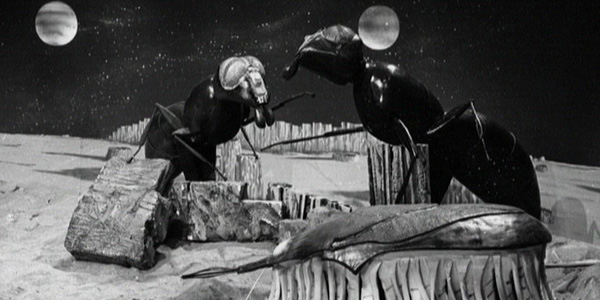
We€™ve established that Russell T Davies likes obscure Who. But if there€™s one bit of obscure Who he loves, it€™s 1965€™s The Web Planet, generally considered one of the weirdest episodes in the show€™s history. A rambling saga of warring insectoid aliens who communicate with each other via interpretive theatre, it has few genuine fans - and even the ones who do mostly like it for the bit where the extra in the ant costume bumps into the camera. All except Davies. In Bad Wolf, for example, he drops a reference to Isop as the home galaxy for the Face of Boe. The Isop Galaxy is where the (painfully slow) events of The Web Planet take place, specifically the planet Vortis. Is this just a random name Davies plucked out of a Who reference guide? Apparently not. In an interview with the show€™s original producer Verity Lambert, Russ gushes about his love for The Web Planet, describing the Zarbi (the aforesaid giant ants) as €˜classic€™. But what does it all mean? It could be that Davies is making the point that Doctor Who lives and dies by the imagination of its fans. The Web Planet must have seemed exotic to children of the time, even if it doesn€™t stand up today. By the same token, the Face of Boe may look wacky, but the mythology surrounding the character confers upon him a certain grandeur. Or he could just really like The Web Planet.

3. The Doctor's Wife

Despite the fact that the Doctor and the TARDIS have been about the only constants across all fifty years of the show, it wasn€™t until Neil Gaiman came along that the relationship between the two was properly examined. The Doctor€™s Wife became one of the highlights of the Matt Smith years, thanks partly to Gaiman€™s narrative genius, and partly to the chemistry between Smith and Suranne Jones as Idris, the personification of the time machine. And for fans of a certain vintage, that title had an additional resonance. Deep in the 80s, Doctor Who was taking a turn towards excessive continuity and returning monsters. Producer John Nathan-Turner made this move to please Who fans worldwide, but one of the consequences of this decision was the emergence of the spoiler as a key meme in fan discourse. Nathan-Turner was paranoid that someone within the production team was leaking information to fanzines, and to weed the perpetrator out, invented a fictitious serial that occupied The Caves of Androzani€™s eventual spot in Season 21. The title of that serial? The Doctor€™s Wife. No details were given about the episode, but the fans were more than able to invent their own. That€™s what fans do. Fast forward nearly thirty years, and spoilers are a commonplace hazard in genre television. Gaiman has acknowledged that he borrowed the title from JNT. Why did he borrow it? So that fans wouldn€™t realise the episode was actually about the TARDIS. Now that€™s pretty nifty. Almost show-runner nifty€

2. They Were All Wearing Eyepatches - The Wedding Of River Song
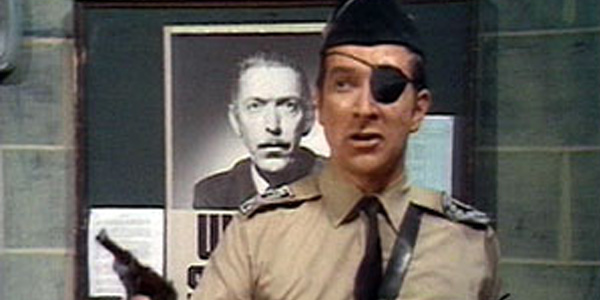
Nicolas Courtney was one of the most beloved figures in Doctor Who, and his presence was still felt on the series right up to his death in 2011. Courtney may not have appeared in the new series proper, but even there, Steven Moffat paid tribute to the fan favourite actor in the finale of series six. The Wedding of River Song brings the Silence arc to its (almost, kind of) conclusion. It takes place in an alternative universe where everyone wears eye patches, all the better to stave off the memory-fading effects of the Silence creatures. Now, there€™s one other major Doctor Who story that takes place in an alternative universe. And there€™s only one other major Doctor Who story that takes place in an alternative universe where eyepatches are involved. We're not talking about Rise of the Cybermen. In Inferno, Jon Pertwee€™s Doctor is sucked into a fascistic parallel Britain. His old UNIT friends are now jackbooted minions, led by Brigade Leader Lethbridge Stewart. Nicolas Courtney highlighted the difference by donning an eye patch, which in itself led to one of the most infamous behind the scenes jokes in Who history. As Courtney was wont to recount at conventions, during one dramatic moment €œI turned round and they were all wearing eyepatches!€ Every one of the cast- Pertwee included. So Moffat isn€™t merely referencing Inferno- he€™s actually referencing an anecdote about Inferno. Eleventh level stuff. Almost as complicated as The Wedding of River Song.

1. UNIT Dating Controversy - The Sontaran Stratagem/The Day Of The Doctor
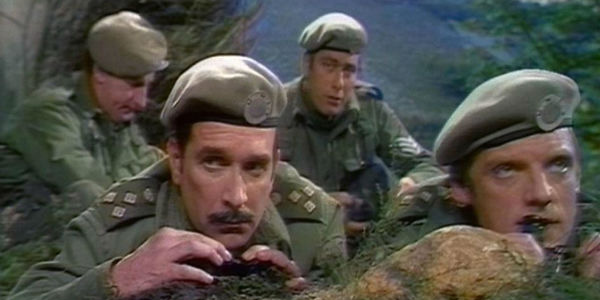
If you want to start a fight amongst a group of classic Who fans (and why wouldn€™t you?) simply mention three medium sized words- €˜UNIT dating controversy€™. During the Jon Pertwee era, the Doctor worked with the paramilitary organisation UNIT, fighting topical fears like consumerism, pollution and dinosaurs. But what looked like 70s Britain was actually€80s Britain. Despite sharing the same aesthetic as, well, the decade it was made in, the UNIT years were supposed to be set in the future. This started to cause problems when the Fifth Doctor revisited UNIT in 1983€™s Mawdryn Undead. Here, the Brigadier claims he retired in 1976, which makes no sense if he was fighting Sea Devils in 1980. Of course, it makes sense if viewed as a direct representation of our timeline, but not in the half-thought-out continuity envisioned by the Pertwee boys. So what we have is a mess. Doctor Who fans love a mess. They love rationalising messes. Luckily for us, Russell T Davies and Steven Moffat are better than them. Cut them in half and they bleed Who, but they also have a sense of humour, thus explaining those vague lines of dialogue in Sontaran Stratagem and Day of the Doctor- €œSeventies or eighties, depending on the dating protocol.€ They€™re not intended to build mystery around the origins of UNIT. They€™re jokes at the expense of hardcore Who obsessives. What€™s most brilliant is that they€™re the only people who would get the joke. Or even care about it.

In this post: 
Doctor Who
 
Posted On: 
Contributor
Contributor

I am Scotland's 278,000th best export and a self-proclaimed expert on all things Bond-related. When I'm not expounding on the delights of A View to a Kill, I might be found under a pile of Dr Who DVDs, or reading all the answers in Star Wars Trivial Pursuit. I also prefer to play Playstation games from the years 1997-1999. These are the things I like.