Doctor Who: 10 Biggest Missed Opportunities Of Series 8
Series 8 was good, but it should have been even better.
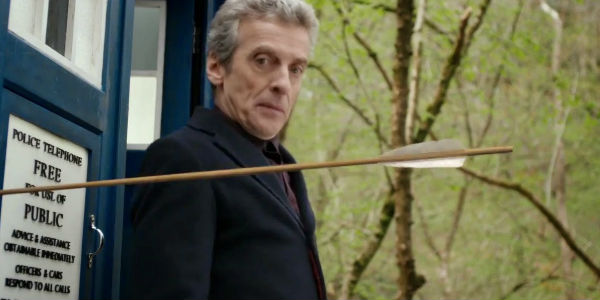
Series 8 was definitively a mixed bag and, with all of its factors considered, the debut adventures of the Twelfth Doctor well and truly had it all, from bright and juicy Jelly Babies to the more disconcertingly brown off-brand variants which were thrown in there to ultimately spoil it all.
The major low points include some unfathomable design and narrative decisions and, while these don't always manage to spoil the series as a whole, they have certainly caused some frustrated fans to question what the writers and show producers were even thinking in the first place.
Of course, with a head writer who is also the executive producer, and subsequently the boss of the writers he decides to employ, the concepts for the series aren't going to be altered particularly far from the Grand Moff's original design. As such, there were many moments throughout the latest series which needed to be retouched by somebody else's creativity, as well as entire episodes which required a major rethink.
Whether or not you loved Series 8, this was as such always going to be a fairly easy list to write. The narrative holes that Steven Moffat leaves are so wide and unavoidable that, at this point, nearly everybody has started to notice them, even Grandma on Christmas Day who was transformed before your very eyes into a ranting mess after watching 'The Snowmen'.
So, without much further ado, let's begin to fill them in.
10. No Redesign Of The Sonic Screwdriver
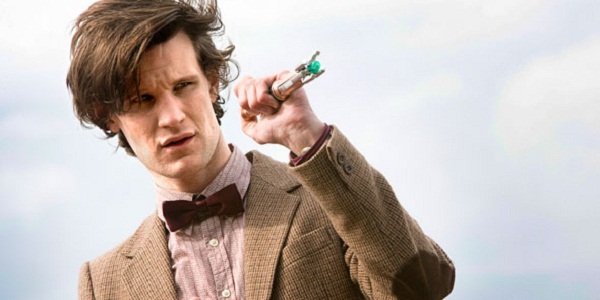
The Eleventh Doctor's Sonic Screwdriver was as much a toy for him as it was a scientific instrument. It allowed his hair to fly around foppishly as he swished it open. The War Doctor, however, sneered at it. In retrospect, the more reserved and professorial Twelfth Doctor, repeatedly scrawling on blackboards, should have had a more dignified tool, perhaps more akin to the classic design.
When the Sonic Screwdriver first appeared on our screens it was of a simple yet stylish design, so much so that you could replicate it with a Biro. As the more action-orientated Doctors took over the role, however, there was a distinct change in its operation with the introduction of larger segments and even an extra attachment at the top. Then, with the more reserved Fifth Doctor, the Sonic as fans knew it was scrapped completely, but he did have that stick of celery to make up for it!
The Sonic Screwdriver should always reflect the personality of the Doctor who wields it and the overly complicated design completely contradicts the character of the Twelfth Doctor. Plus, the dictatorial professor in him would probably have slapped the Eleventh Doctor's screwdriver out of his hand and thrown it into a volcano before berating him for being an idiot. As such, it's probably time to get a more simple Screwdriver into the hands of our beloved Time Lord.
Think of the aforementioned Grandma being made to choose between a TV remote with three buttons or one which lights up and shoots fire, and you'll get the general idea.
9. No Prequel Episode To Deep Breath
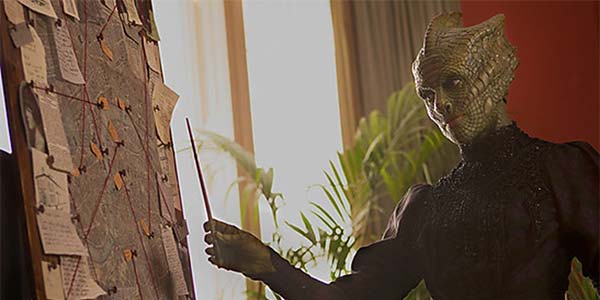
In recent years, prequel episodes have becomes the norm for Doctor Who. Every episode in Series 6 got one, Series 7 got a whole mini-series, while The Day of the Doctor got what amounted to a short film in the shape of 'The Night of the Doctor'. The opening of Deep Breath, due to the Doctor's sudden inability to pilot the TARDIS, meant that in his dying moments, the Eleventh Doctor set course for the throat of a T-Rex.
What could have happened - the Twelfth Doctor starts shouting that he'll take Clara to that lizard person... she can take care of you... the lizard... Set course for lizard!, ending the episode on an almighty cliffhanger. The punchline, of course, being that he ends up in a dinosaur instead
This would reflect the excellent 2005 Children in Need special 'Born Again' which documented the moments after the Ninth Doctor regenerated, explaining just why he decided to take Rose home for Christmas, which ultimately proved to a much less necessary explanation than the lack of one offered in 'Deep Breath'.
8. No Special Weapons Dalek In Into The Dalek
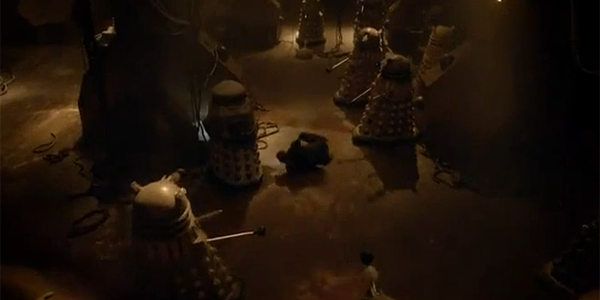
Any war requires heavy artillery and the Daleks have their own share of this, as seen in 1988's Remembrance of the Daleks, in the form of the Special Weapons Dalek. This Dalek has been shown in 'Asylum of the Daleks' and it would have made up for their mistreatment there to see them in action again with the budget of the new series.
While the practical effects in that story were excellent, it would have been wonderful to see them directed by Ben Wheatley, director of the battle heavy 'A Field in England'. The model is clearly in the warehouse so it can be wheeled out of retirement any time. Many fans would happily build one at their own time and expense to see it blast the TARDIS across the room and through the hull out into space. After all, that's what Doctor Who is all about, isn't it?
However, it could have been given a starring role. In the extended universe novels, the Special Weapons Dalek was more insane and sadistic than any regular Daleksever could be. Couldn't the episode have revolved around going into THIS Dalek? Obviously not.
7. Not Utilizing Seb More
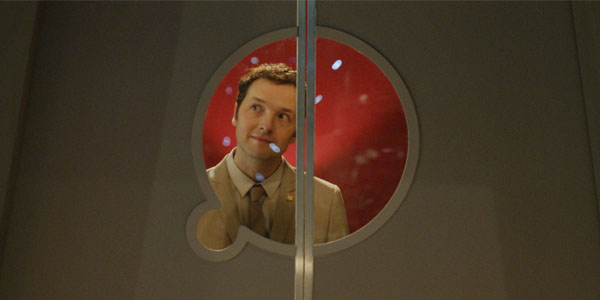
Seb, brilliantly played by Chris Addison, was one of the two characters who introduced us to the Nethersphere, and, perhaps more importantly, the first one to explain it.
Furthermore, he was a wonderful foil to Missy's evil psychopathic nature by being a fairly nice psychopath. However, his death at the halfway point of Death in Heaven causes him to be reduced to nothing more than a plot exposition device in this episode, when the character and performance allowed him to be so much more.
He could have been captured by UNIT to be used in their own databanks like the Microsoft Word paperclip (maybe his punishment could have been this), or as a store of information on Missy, which is basically what he literally is anyway. Instead he's dispensed of, wasting not only an interesting character, but an overall brilliant actor, too.
6. Not Linking The Light-Sparks In Into the Forest of the Night To The Cyber Pollen In Death in Heaven
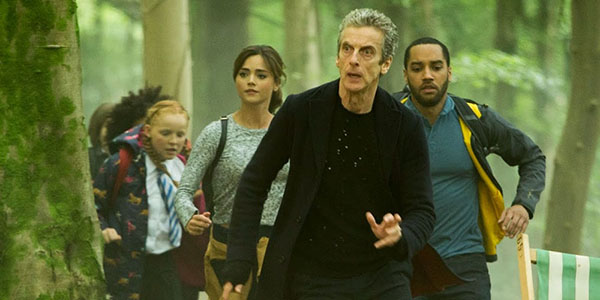
The resurrection of Maebh's sister at the end of Into The Forest of the Night goes beyond CBeebies logic. Even Disney didn't have Bambi's mother dance in at the end with a bandage on saying she'd magically got better. This is more insulting than Don't cremate me, since every relateable feeling in the journey of a girl loosing a relative is rendered worthless, made even worse by everybody thinking Maebh has gone schizophrenic and requires medication because of it.
This moment could have been salvaged if they had explained it as being part of a test for the Cyber pollen. This could have worked, leaving it fantastical in nature and therefore less realistic and patronising for those who have lost relatives. As it stands, it's confusing how the two end of series plots about an invasion of the world, seen through the eyes of a small group of people in London, weren't even linked together at all.
5. No New Writers For Episodes 3-6

Mark Gatiss has now written seven episodes, Gareth Roberts has written six, and Stephen Thompson has penned two such universally panned episodes that the only possible explanation for him being invited back is that he begged Steven Moffat for help since he was unable to even get a job cleaning the BBC's industrial dustbins with his tongue.
While Mark Gatiss' episode was enjoyable, it followed his usual formula of 'the Doctor meeting an historical figure' which fans have already seen five times before. In a similar fashion, Gareth Robert's episode followed the same 'the Doctor is out of place and acts funny because he doesn't understand modern day earth' (comfortably forgetting where the majority of his long term travelling companions are from) that we've seen twice already.
Neither of these stories needed to be made in a series which can go anywhere in time and space, especially in a series which survives on change - the best being the most drastic and ballsy change, keeping the stories earthbound in the classic show for three years. Moffat getting his friends from Sherlock to keep penning episodes keeps us from seeing more from the stock of new writers like Jamie Matheison, who was easily the best writer of the series. Which leads nicely to...
4. Not Making Listen

This requires its own subsection.
As the epitome of Moffat tropes (full of timey-wimey, corner of your eye, whatever you do don't X, a 4 line poem recited in full at a climactic moment for use in the trailer), this is the ultimate argument for more talent to refresh the series when the head writer doesn't have the ideas to honour even his own scripts.
Moffat fills the pages, which could have been used for other writers, with his rehashed drek, to the point where there is really no reason for it to have been made at all. The storyline regarding his youth and his entire internal strength as a character is set up and paid off within the same episode, leaving it hushed immediately without affecting events in the series at all. It appears that Moffat's plots will either be fixed within the episodes themselves, ultimately leaving them hollow or unearned (Amy and Rory's divorce in 'Asylum of the Daleks' and the Brigadier wanting to be saluted in 'Death in Heaven', for example) or not being fully explaining at all (the crack in time).
If Listen was the finale, with the motifs of conquering fear within the story being scattered throughout the series to where they are paid off in the context of the Doctor's childhood and his companion's descendants, this could have been interesting and spectacular. Instead, confusingly, this is shoved into episode four and then never even mentioned again.
3. No Two-Parters Besides The Finale
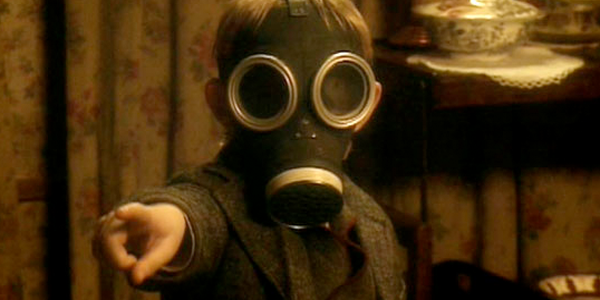
In an interview, Jenna Coleman said how the episodes were slower paced, with longer shots to allow the episode to breathe. Under this logic, the sheer unnecessary bulk of 'Listen' and 'The Caretaker', which is sitting on and suffocating world-centric episodes like 'Into the Dalek' and 'Time Heist', could have been sacrificed to make these episodes two-parters.
What's more, in a series which arguably harks more back to Classic Doctor Who than any other of the revived series' so far, surely there should have been more of a change back to the show's beloved serial format?
With a more dignified and cunning Twelfth Doctor, as opposed to the energetic and constantly running (seriously, did they ever stop running?) Tenth and Eleventh Doctors, a shift towards a more cerebral and slower packed manner of storytelling would have been the most suited. The best example of this was Mummy on the Orient Express which, due its more scaled back story, allowed the Twelfth Doctor to show off just how cold and calculating he can be. Throughout the second half of the episode especially, he gains control through his presence and authoritarian manner alone.
However, his worst moment comes when he acts the complete opposite. In 'Robot of Sherwood' he acts like a goofy weirdo when he gains the trust of Robin Hood in a few minutes by a spoon fight. The Twelfth Doctor works best when he can win people over with his knowledge and strength of character, rather than trying to be overly dashing.
2. No Ian In The Caretaker
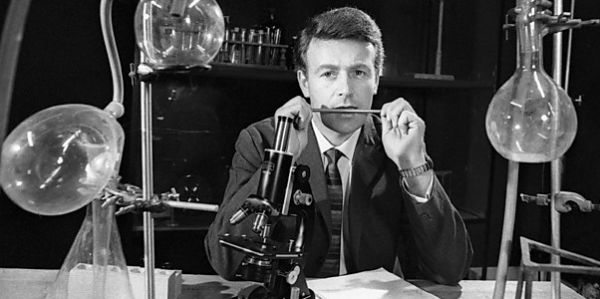
'The Caretaker' at present revolves around Clara and Danny, with a largely off-screen villian. Danny should have been made into a regular, with his characterisation in this episode spread over the series rather than crushed into a 45 minute episode.
Then, when Danny got fed up of the Doctor's official manners and demands to be taken back home. instead of Clara in a repositioned 'Kill the Moon', he would meet Classic Series companion Ian at Coal Hill, who was shown to be the school's chair of the governors in 'The Day of the Doctor'.
The episode would then follow the friendly relationship between the Doctor and Ian, showing Danny that, even though this man is the chairman of the board of governors, he's still capable of such comradery with the Doctor. The affection shown between the two convinces Danny that the Doctor isn't as official as he seems, thus he stays aboard the TARDIS.
All of the characters would go through an arc and fans would also see a much-loved classic companion- one who travelled with the equally old and ill-tempered First Doctor, no less - finally return. Everyone's a winner.
1. Not Making The Series Happen Out Of Order For The Doctor
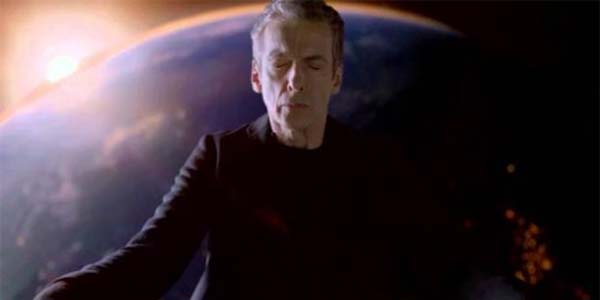
Steven Moffat is the king of timey-wimey plots and this could have been his Zenith - an entire series out of order. If Clara is to be dropped off at the end of each episode, why wasn't this put to some actual good use?
The series would start with Deep Breath and ends with Listen, after which the Doctor has been driven into the paranoid person he is in that episode, desperate to hide from Missy's matrix device which scans the entire universe. This would explain how he forgot about Orson Pink in 'The Caretaker' and why his character so radically shifts in terms of seriousness throughout the course of the series.
This would have made the finale less of a standalone story, too. It could have been a much larger plot thread that would be significantly more series-connected than the bolt-on Missy segments, and something Steven Moffat, as a writer, could have ultimately thrived in.
However, fans were instead merely left with the running thread being a mere afterthought as the Doctor hurried to make sure that his companion was dropped off at home each night in time for EastEnders.