Doctor Who: 10 Episodes That Should Have Changed Things Forever (But Didn't)

Those times when Doctor Who was guilty of dropping massively game-changing revelations at the drop of a hat.
In Michael Kmet€™s interesting and fun article on Star Trek he investigated the times when new technology or events, which should have been carried over, were left dangling like threads on a too-old t-shirt. That got us thinking, is Doctor Who guilty of the same crimes against story telling? Have there, over the 50 years of the show, been episodes where something momentous happens only to be forgotten about the next week? Well of course there have. Sometimes even within the same story! How often did we see a cliff-hanger situation altered slightly at the beginning of the next episode just to make the situation seem less impossible? Here we will cover episodes of this nature as well as ones where, had the Doctor made a slightly different call, the future would have been radically different. It must be caveated in advance that we will cover mainly the newer episodes of Doctor Who since there are just so many from Classic Who to go through we would be here for days. So does your memory stretch back further than this mid-30€™s wannabe Whovian? Can you recall older episodes that should have been included? Please educate us young whipper-snappers in the comments section and give the younger audience some suggestions of Classic Who that isn€™t to be missed.

10. The Daleks (William Hartnell)

The pepperpot€™s first outing on the small, black and white screen, was to alter the course of Doctor Who history forever. It instilled in the young viewers€™ minds the idea of these ruthless, evil, neurotic killing machines that yelled €œExterminate€ in a high pitched and excited tone. Playgrounds and busses were filled with excitable children running around pretending to €œexterminate€ each other. So it was that a long and complex relationship began with the Doctor that would turn them into his greatest enemy and eventually wipe out his people. But it almost didn€™t work out that way, the Daleks should never have made it to the screen in the first place. Save for Verity Lambert€™s impassioned pleas to Sidney Newman the whole thing may well have been canned (forgive the pun). As it was he did not want monsters and robots on the screen and the Daleks were destroyed at the end of the episode. They were to return, though, in the Dalek Invasion of Earth in 2164 when Terry Nation was asked to revive the popular enemy. So while the destruction of the species in the original story should have been the end of it, we are instead told that those were just the last original refugees left on Skaro.

9. Genesis Of The Daleks (Tom Baker)

Perhaps one of THE most famous stories of the Classic Who era and one that, even now, stands the test of time. Granted, some of the scenes would be cut for pace, but as a piece of storytelling with relevance to modern society they don€™t come much better than this. As the Doctor stands outside the chamber with the two cables in his hand ready to destroy the Dalek embryos he asks himself €œhave I that right?€ As we now know, that decision and his refusal to commit genocide leads to his eventual downfall, the deaths of countless billions and him having to commit genocide on not just one but two races. The Daleks are the Universe€™s greatest enemy and he should have destroyed every last stinking one of them. Instead he trusted the Kaleds to heed his warning and alter the path of Dalek development. We know how that worked out for him. It should be noted that according to the BBC€™s slightly convoluted time-line this episode DID have a huge effect on the Dalek time-line and states that many of the later Dalek escapades, which took place with previous Doctors, either did not happen at all or were altered due to Davros€™ interventions after reading the Doctor€™s mind. This intervention, it is claimed, is responsible for the Daleks taking longer to become the ultimate force of evil in the Universe. Had the Doctor just touched those two wires together, though, the time war would never have happened and his people would have been saved. Then again, the Daleks are a huge ratings boost.

8. The Deadly Assassin (Tom Baker)

A well-loved and well-remembered story now, this was not quite the case on original transmission. There were complaints that the Galifrey council of government was too close to that of humans and that the episode was too violent. Mary Whitehouse got her bloomers very much in a twist over this one. It was also the first foray back to Galifrey for the Doctor in quite a number of years as well as being the first solo outing for the Doctor. The increased level of violence was epitomised by the cliff-hanger scene of the Doctor€™s head being held under water. The level of complaint had the master tape altered and an apology issued by the BBC. The scene was recently restored in the DVD release, but what could have been a more adult and Doctor-centric direction for the show was curtailed. Crucially, the Doctor wasn€™t to be seen sans companion again. It could be argued that the level of violence and death seen in more recent episodes owe their germination to The Deadly Assassin, but it took a long time for public attitudes to change.

7. The Pyramids Of Mars (Tom Baker)

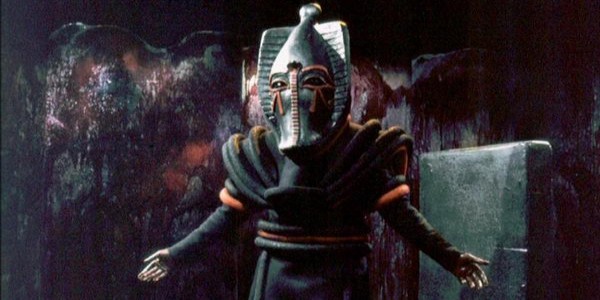
There are two words that strike fear into the heart of any Doctor Who writer; isomorphic controls. In The Two Doctors, where the Androgum try to steal the secret of time travel, we are given yet more hints as to the mechanics of time travel, and we learn that key to the use of a TARDIS is that it is linked to its owner. This usually happens the first time a Timelord uses the ship, but the Doctor stole his. In €œThe Pyramids Of Mars€, Tom Baker€™s Doctor tells Sutekh that the controls were €œisomorphic€ meaning they are linked to the Doctor and only he can use them. This is reused again for the Master€™s laser screwdriver in the later series. But this handy feature to avoid having someone steal your motor seems to come and go whenever is required and in the most recent episodes it has been completely thrown to the wind with any old primate able to fly the thing. We know that the TARDIS operates telepathically too so it could be argued that the safety measure is just switched off for the Doctor€™s mate. The idea was a good one, but ultimately limiting and it seems now to have been largely forgotten.

6. Attack Of The Cybermen (Colin Baker)

Come on, hands up, who was waiting for this one? Extra bonus points for those who know what two words are coming, ready: Chameleon Circuit. We all know that the Doctor€™s TARDIS is a Police Box. Always has been a Police Box, always WILL be a Police Box. In An Unearthly Child we find the Doctor complaining about the fact that the TARDIS hasn€™t changed shape like it should. Please sound off in the comments re older episodes which reference the Chameleon Circuit but we will specifically look at the Attack of The Cybermen episodes where John Nathan Turner decided to use a little publicity stunt to up the ratings. He changed the TARDIS. From a decorated stove to a pipe organ and even a gateway, the TARDIS continued to choose utterly useless shapes. JNT had hinted that this would be a more permanent feature but it never transpired that way. Despite the fact that the Masters TARDIS worked perfectly and would always meld seamlessly into the environment, the Doctor is left with his 60€™s Police Box. But let€™s admit it, we prefer it that way.

5. Doctor Who The Movie (Paul McGann)

Some do not consider the TV Movie to be canon but since the regeneration was rightly recognised in the 50th anniversary special, Paul McGann€™s Doctor gets to stand pride of place with his other selves. Unfortunately, this also mean that everything that happened in that episode also has to be accepted as canon, except the Doctor being haof human, that was a joke. Honest. So, and there is no way to put this delicately but for avoidance of profanity, what the %^&*ing h%^l was that snake thing that the Master was supposedly moving around in? And we€™re not talking about Eric Roberts, let€™s not even go there, but what was the transparent snake thing all about? Do we now accept that all Timelords, when exterminated by the Daleks, have the ability to coalesce into a snake, possess a human body and keep it alive for long enough to steal another Timelord€™s lives? The Master has always been resourceful but this seems an odd thing for a Timelord to be able to do. While we€™re at it, The Master was eaten by the TARDIS. If we remember this was the Eye of Harmony, which we know to be a star frozen in the moment of collapsing into a black hole. It is what powers the TARDIS through time and space and falling into it should have ripped The Master€™s atoms and stretched them to infinity. Despite this being the end for our great nemesis, the Timelords then €œbrought him back€ during the last days of the time war. Only for him to use a pocket-watch to turn himself human and be found on the Shores of the Silver Devastation, or whatever word soup tombola name place the writer pulled out that week, with regenerations to spare. We should also mention the other twice that The Master dies even in just the new episodes so we should expect to see him appear in the first series for Peter Capaldi.

4. Dalek & The Parting Of The Ways (Christopher Eccleston)

OK, so we€™re a little Dalek heavy here but, to be fair, they do have an extremely complicated time-line and have been supposedly wiped out on so many occasions. Even the date of Skaro€™s destruction is debatable dependent on what time-line you follow. These two episodes together serve as analogous to all the other last times we€™ve seen the Daleks €œfinished off€ only to have them reappear whenever it seems necessary (which usually means once a season) In Dalek we meet Henry Van Statten who has captured and tortured his Metaltron to discover its secrets and copy its technology. Reanimated by Rose€™s time-traveller DNA, the rogue 'last' Dalek goes on a killing spree before committing suicide on her orders. Prior to this we see an emotionally charged scene with the Doctor and Dalek sharing their loneliness and pain. The Dalek even scans for signs of other Daleks out there only to find none. So the last Dalek kills itself and the Doctor wins right? Wrong. Barely six episodes later we find hundreds of Dalek ships surrounding Earth, supposedly controlling humanity for hundreds of years, guiding and stunting their development (yet the Dalek from the previous episode heard no orders). Rose, empowered with the time-vortex, sees ALL OFF SPACE AND TIME and selects every atom that makes up the Daleks and divides them. Now THIS should really be the end. These were the last, rag-tag, put together, Frankenstein€™s monsters of Dalek DNA left and every atom was destroyed. Done, dusted, quite literally. Well, no, because when we get to the end of the next season we find a Dalek TARDIS containing millions of the little blighters, all but a few of whom are sucked into the void. When it comes to the Daleks, every time seems to be the last time, until the next time.

3. Boom Town & Utopia (Christopher Eccleston & David Tennant)
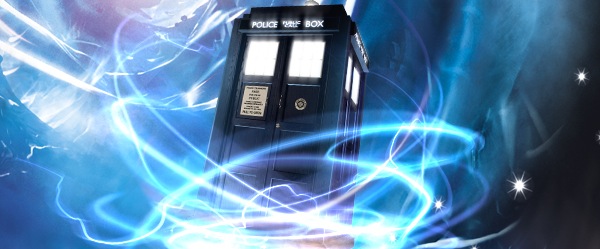
We are, of course, talking about €œthe rift€. The supposed rift in space-time, that the Gelth tried to come through and was partly sealed, reappeared in Roald Dahl Plass in Cardiff. It was a major plot-point in Torchwood, but for Doctor Who it was the far more sinister cousin, a plot device. Suddenly the TARDIS needs to €œrefuel€ on rift energy. This is not to say that the TARDIS has not had its share of mechanical breakdowns, from mercury fluid links and Zeiton 7, to Artron energy and the eye of harmony, it certainly is a power hungry machine. But in 700 years of travelling the universe there are no other mentions of the TARDIS having to stop for fuel. Since the show was brought back, though, there were two incidents of stopping, both of which happened to coincide with a major event. There is a radio adventure with Jack Harkness that attempts to tie off the hanging thread of the rift still polluting Cardiff with ghosts and goblins, and Steven Moffat€™s catch all 50th special took a blowtorch to the thing just to make sure it couldn€™t be tugged on again. So where does that leave the TARDIS with it€™s now apparently frequent need for rift energy? Who wants to bet we never hear it mentioned again?

2. The Stolen Earth & Journey€™s End (David Tennant)

The non-regeneration regeneration stands for many as the biggest travesty of the Russell T Davies era. Yes, he spun it into a decent yarn but the human Doctor and the Doctor Donna were just too far to stretch credulity, even for Doctor Who. That Steven Moffat tied this into the 50th special, taking a veiled swipe at it in the process, was laudable but never in the history of Doctor Who have we seen a Timelord able to regenerate and keep the same face. Romana was, for some reason, able to try many different forms without losing lives but this, like the Klingon forehead ridges, is something we just don€™t talk about. Apart from that one strange Douglas Adams brain fart regeneration is a well-established process; every cell in the body dies and he gets a new face €œI can€™t control it€ said Christopher Eccleston. Yet David Tennant somehow €œguides€ the rest of the regeneration energy into the spare hand. So is this a new tactic? Regenerate, lop off an appendage quickly enough for it to grow back then keep it around in case of death? No, these episodes belong on this list because they stand as the episodes that truly should have changed everything, we should have had a new Doctor. But we didn€™t.

1. Let€™s Kill Hitler

Another regeneration €œwhoopsie€ occurred in €œLet€™s Kill Hitler€ when the Doctor was poisoned by River€™s kiss. In the TARDIS, his safe place for regeneration, he is told €œregeneration disabled€ not, €œyou€™ve used all your lives€ which we find later to be the case. But we€™ve covered that previously so we won€™t go further there. Rather, this episode stands out, not for the botched assassination attempt, but for the rousing restoration of the eponymous Doc to full health, by way of River bestowing upon him the power of all her remaining lives. For the sake of pedantry, let€™s see if we can work out how many lives that is. When we first meet the young girl in the space-suit we hear her say €œit€™s OK, I€™ve done it before€ so that€™s two lives down, tough paper round for such a young girl. When we see Mel about to regenerate into River Song she says that the last time this happened she ended up a young girl. So we have River, Mel, the young girl and one before her, that€™s only four. Leaving at least 7 or 8, allowing for error, lives to pass onto the Doctor. Quite why she needed to use all her remaining lives is up for debate but surely that act would have granted the Doctor at least one more regeneration before having to deal with the €˜last life€™ rather than shoe-horning it in. What could have been an interesting thread of story around the Doctor never knowing which life would be his last was instead swept under the carpet and dealt with all too quickly. There are of course others, so sound off in the comments with your favourite loose threads.

Watch Next


Contributor
Contributor

I.T. Consultant, technophile and Doctor Who fan. I like to talk about tech, take films apart and make excuses for Doctor Who's continuity errors. No other show has the power to make me feel like a big kid.