Doctor Who: 10 Things Nu-Who Fans Just Don’t Understand

There's still a lot to learn, folks.

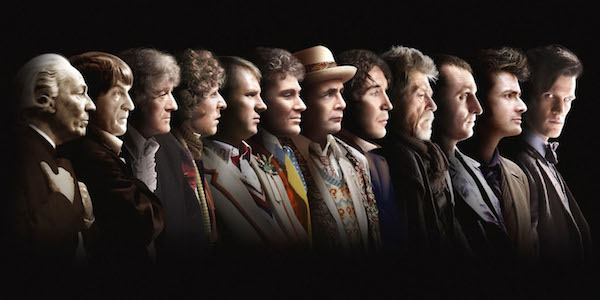
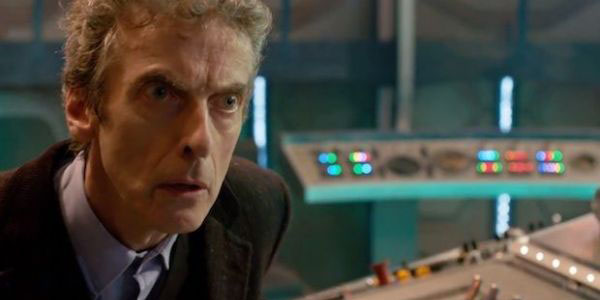
Doctor Who 2005 There are many nuances of the Doctor that are confusing for fans, even more so for those that did not see his adventures prior to the series' re-birth nearly 10 years ago. For example, for almost the entirety of the revived series, the Doctor was always a young man, never taking on an older face like many of those in "Classic Who" did. Why was he ashamed of being older? It was implied in the 50th anniversary episode, The Day of the Doctor, that since the War Doctor was an old man when he destroyed Gallifrey, all Doctors after him were trying to distance themselves from him as much as possible, and taking a younger form was a good way, as he was older when the Moment occurred. His redemption in their eyes allowed the Doctor to once again take on an older face with current incarnation Peter Capaldi's Twelfth Doctor. Doctor Who premiered on 23rd November 1963 with an episode titled An Unearthly Child. Since then, the Doctor has been on many adventures throughout his 51 year history through media which have ranged across the realms of television, comics, audio adventures and books. After the original series was cancelled in 1989, however, many viewers felt they would no longer have the ability to watch new episodes of their favourite Time Lord any longer, excluding the one off in 1996 along with a couple of Children in Need mini-episodes in between. That fear was alleviated on 26th March 2005 when Christopher Eccleston came into our lives and the Doctor was back. It was like he had never been away! Doctor Who has a huge international massive following, although most of them are pretty new to the series having joined alongside its 2005 resurrection. If they have, however, they've missed out on a massive part of the show's past and there will no doubt be many things about the show that they have warped views on. Today, this list takes a look at the top 10 things that the fans of the current series just don't understand.

10. The Doctor Loves Jelly Babies
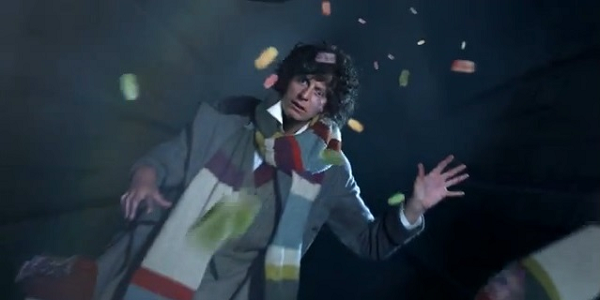
While Jelly Babies have been referenced a few times in the revived series, they were particularly dominant throughout the Fourth Doctor's tenure. In this incarnation, the Time Lord would often offer his companions, as well as newly introduced strangers, his favourite treat as a way to break the ice, calm them down, or sometimes even as a distraction. That's one way to do it! Jelly Babies are the Doctor Who equivalent of Gummy Bears and are native to England, where the show primarily takes place. They were properly introduced to the show by the Second Doctor, Patrick Troughton, and were shown with every incarnation after during the Classic Series run, including the TV Movie. While with most Doctors it was a passive glimpse or reference, the Fourth Doctor was quite fond of them and would waste no time in offering them to anyone and everyone he met. In the revived series, they have only been mentioned a few times, and only actually seen once, in the Series 8 episode Mummy on the Orient Express. Viewers who haven't watched the Classic Series probably don't understand the significance of re-introducing the Doctor's favourite treat, and as such, they were most likely confused as to why a Time Lord would carry these around in his pocket at all.

9. "The Great Curator"

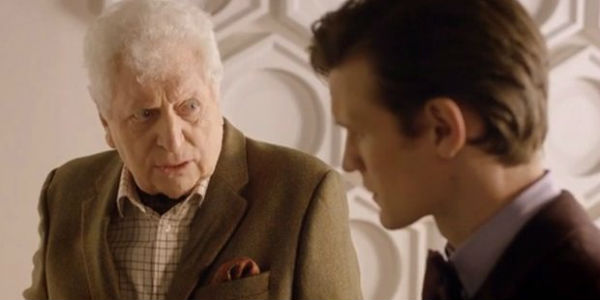
At the end of the 50th anniversary special episode The Day of the Doctor, fans were treated to one of the biggest shock guest appearances in Doctor Who history when Tom Baker returned to the show in a role billed as 'the Curator'. During the few minutes of conversation between Tom and the then-current Doctor Matt Smith, it was strongly implied that the Curator is a future incarnation of the Time Lord who resides in the National Gallery to keep a watchful eye over the elusive 'Gallifrey Falls No More' painting. Pretty simple, right? So why does this still seem to confuse many who only began watching when the revived series premiered? For many fans, the regeneration of the Doctor is a random process, as in he never knows what his successor will look like. However, the intuitive fans amongst us will remember that the Doctor has actually had a choice regarding what he would become next - twice, in fact. The most recent example of this was in the mini-episode The Night of the Doctor which gave fans not only the return of Paul McGann's Eighth Doctor, but his long awaited regeneration scene, too. During this scene in question, the Sisterhood of Karn gave him the option to drink an elixir that would allow him to become whatever he wanted. He chose to become a warrior, and thus John Hurt's War Doctor was born. Back in the Second Doctor's era, the Time Lords forced a regeneration upon him when his current face had become too well known on Earth. The Doctor, being as difficult as he can be, turned all of their proposed faces down and is ultimately given a random regeneration which transforms him into Jon Pertwee. Pretty random indeed. As far as the Curator is concerned, though, perhaps the Doctor really does find Gallifrey in the future and retires with the face of "an old favourite". Stranger things have happened in Doctor Who, after all.

8. Starting Off With The Ninth Doctor
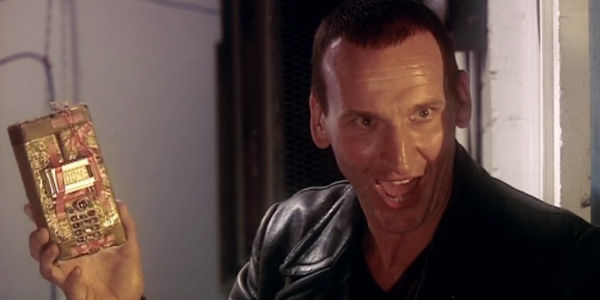
When word spread that Doctor Who was coming back to our screens, many Classic Series fans wondered how the show would start off. The last time anyone (officially) saw the Doctor on television was back in 1996 when he was in his eighth incarnation, played by Paul McGann, but upon the show's return, viewers were introduced to Christopher Eccleston who was initially unnumbered. Was this the Ninth Doctor or had numerous regenerations taken place whilst the show had been on its prolonged hiatus? It was later established that he was the ninth incarnation (at least, that's what fans believed at the time - damn you, Moffat!) who was fresh from the climactic events of the Time War. This concept could ultimately be confusing for new viewers. The show's previous 42 years (at that point) of mythology was still canon and for the fans who hadn't seen any of it, there was no doubt a sense of befuddlement whenever they heard reference to the Doctor's preceding incarnations. There's always Google, though, and Rose Tyler certainly took advantage of it in her first episode. She used Search-Wise.net, though, for licensing issues, but the results are all the same.

7. The Numbering System

As all fans know, current Doctor Peter Capaldi is the twelfth, although the character is actually in his 14th incarnation of a brand new cycle of regenerations. Confused yet? You should be. Until the Series 4 finale episode Journey's End, the numbering system for the Doctors was fairly static. The First Doctor became the Second who one day became the Third and so on, until the then-current Tenth Doctor decided to throw an almighty spanner into the works by getting himself shot by a Dalek (he didn't do it on purpose of course, but that's what happens when you let your guard down). He ultimately managed to 'cheat' death in this instance, though, by pouring all of his regeneration energy into his "handy spare hand" and as such he had used up one of his allocated regenerations but still sauntered away with the same face as before. What's more, a few series later fans discovered that it wasn't actually the Eighth or Ninth Doctor that fought in the Time War, as was previously assumed, but it was in fact a version of him that nobody had even known about. Referred to as the War Doctor, this lost incarnation bridged the gap between his Eighth and Ninth personas and was wholly responsible for fighting in the majority of the Time War. As such, before Matt Smith's Doctor was granted a fresh regeneration cycle by the Time Lords in The Time of the Doctor, he - and us - generally believed that he was going to be the last, as Time Lords can typically only regenerate 13 times. But the BBC were never going to honour this and bring an end to their most popular show now, were they? No, because that would've been Mad with a capital M. And thus the story goes on...

6. Regeneration Sickness

During the NuWho Series 1 finale, The Parting of the Ways, the Ninth Doctor absorbed the energies of the time vortex which ultimately resulted in his untimely regeneration, though it did save the life of his ever faithful companion Rose Tyler in the process, which is the most important thing... right? After transforming into David Tennant before our very eyes, our beloved hero preceded to enter a somewhat manic state and crashed the TARDIS near Rose's house in London before falling into a deep slumber. Not the best of timing considering planet Earth was about to be invaded by the superstitious Sycorax, but the Doctor been through a lot so he deserved a disco nap. What's more, when Matt Smith had his first full appearance in The Eleventh Hour, he too suffered from strange spasms so the question for newer viewers was, why does the Doctor act so strangely after he regenerates? In Classic Who, regeneration sickness was typically displayed as a loss of identity. Simply put, the Doctor didn't know who he was. While each time it was different, it appeared that each successive regeneration would become more stressful than the last. The Sixth Doctor, for example, attempted to strangle his companion while the Eighth showed strong signs of harbouring an emotional instability in the immediate aftermath of his latest transformation. As such, the Doctor's strange post-regernative behaviour could easily confuse new viewers as it's understood that the regeneration process is supposed to help the Doctor heal - psychically, at least, though it's been established it can take much longer for him to recover emotionally.

5. His Long History Of Companion Loss

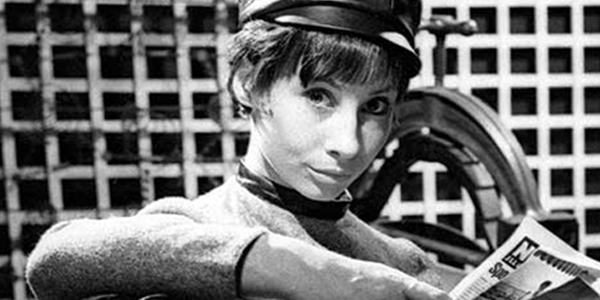
doctor who companions It's fair to say our beloved Time Lord goes through companions quicker than the Daleks go through world domination schemes but why does it always seem that as fans are finally getting to know these people, they just as soon leave? The companion(s) of the Doctor are his closest friends and they're typically the first to know his secret that he isn't actually human at all. His companions often serve as his conscience and stop him from making rash decisions and, while there were many times the Doctor has sacrificed himself for his companion (The Caves of Androzani, The Parting of the Ways, and The End of Time, to name a few), it's usually the companion who has made the sacrifice (à la The Traitors, The Destruction of Time, Earthshock and Voyage of the Damned). Doctor Who is nothing at all if not about loss and at the inception of the revived series, the Doctor was facing the ultimate one - the loss of his kind. As such, he - and us - believed for the better part of 7 series that he was the last Time Lord in existence (barring a few stragglers) and, what's more, that he was directly responsible for their death. New viewers could find themselves wondering how someone they just met in 2005 could have travelled with that many other people, without knowing he had been around for nearly 40 years (on television at least) by that time. And although the Doctor has had many companions, there was one event recently that must have left many new viewers scratching their heads...

4. The Eighth Doctor's Companions

In last year's mini-episode The Night of the Doctor, Paul McGann's Eighth Doctor was finally granted the long awaited regeneration scene that the fans had been waiting for. During the occurrence he listed off numerous names that would have no doubt sounded like a jumble of nonsense to fans of the TV show, including Charley, C'rizz, Lucie (above), Tamsin and Molly. He also mentions Kes, the girl he had just attempted to save prior to crashing near the Sisterhood of Karn. All of these companions have indeed been his faithful allies throughout his acclaimed Big Finish audio adventures (which some would argue are even better than the main TV show...). The fact he has now mentioned them on screen, however, makes them at least semi-canonical and, while viewers have never seen any of them in the Time Lord's televisual adventures, the Doctor did take the time to call out to some of his closest travelling companions which highlights their importance to that particular incarnation.

3. The Doctor's Attachment To K-9

K 9 Most of the time our leading Time Lord is referred to as "the Doctor" by his legion of faithful companions but there's been one that knows him only as "Master" (and variations thereupon). The companion in question is K-9 who first appeared in The Invisible Enemy as the creation of Professor Marius. K-9 is a dog-like robot who was programmed to be loyal and logical to whomever it considered its master and there have been a total of four versions (or "Mark I, II, III, IV") of him to date, with the most common, the Mark II, serving as the Fourth Doctor's beloved companion. He had the ability to warn the Doctor of impending danger and was a valuable asset to the TARDIS team. In the revived series, K-9 was reintroduced in the Series 2 episode School Reunion alongside Elisabeth Sladen as Sarah Jane Smith and, after being blown up by the Krillitane, the Tenth Doctor left Sarah Jane K-9 Mark IV to continue serving his "Mistress". As K-9 has only been seen a few times in the revived series, many viewers could be confused as to why he was such an important part of the Doctor's life. At least two versions were created or upgraded by the Doctor and, while most of the Doctor's companions have been human, K-9 proved that a dog really is a man's best friend indeed.

2. Brigadier Sir Alistair Gordon Lethbridge-Stewart
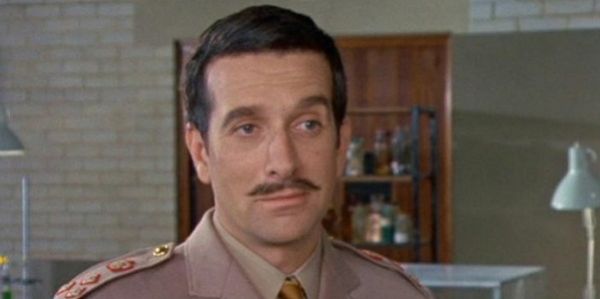
Brigadier Sir Alistair Gordon Lethbridge-Stewart, or just 'the Brigadier' for short, was possibly the Doctor's closest companion throughout the Classic Series. The Brigadier first met the Doctor all the way back in his scone incarnation, played by Patrick Troughton, and he easily accepted the story about who the Doctor was and what he stood for. When the Third Doctor was exiled to Earth for the majority of his reign, he joined forces with the Brigadier, who was assigned to a military intelligence group called UNIT, to aid him against Earth's latest extraterrestrial excursions.The Doctor even became an adviser to UNIT and his partnership with the Brigadier subsequently extended into his future incarnations. In the revived series, the Brigadier has been fondly remembered by the Doctor and he lives on through his daughter, Kate Stewart, who stands as the head of UNIT in the present day. The Brigadier himself was given the farewell he deserves when, as a Cyberman in the Series 8 finale Death in Heaven, the Twelfth Doctor finally rendered him the salute he had always been aiming for.

1. His Family

In the Series 1 episode The Empty Child the Ninth Doctor makes a passing remark to Doctor Constantine that no doubt sparked a series of questions from the show's newer viewers. Doctor Constantine states that he has lost his family due to the war but he is still a doctor, to which the Doctor replies, "Yeah, I know the feeling". The Doctor has had at least two members of his family show up on screen at some point during the show's history. The first was his granddaughter and his first traveling companion, Susan Foreman, who showed considerable brilliance for someone of her age. She was eventually forced to stay in 22nd century London by her grandfather as he didn't want her to choose between a life in the TARDIS or one with the man she'd fallen in love with (David Campbell). While it's unknown what happened to her after that, she remains lost to the Doctor and she has only ever been mentioned in passing. And then there's Jenny, who was the Doctor's daughter in a sense. She was a clone of him created from a sample of his DNA taken but the Tenth Doctor needed some convincing to accept her as her own. A third, River Song, is his wife. It is widely believed that her story is far from over and, should she ever return, the interaction between Alex Kingston and Peter Capaldi would be remarkable... Spoilers There are many aspects of Doctor Who that continue to stupefy and confuse even the most ardent viewer. While many questions find a way to get answered in the course of a series or two, there are many things out there that fans of the new series alone have a difficult time grasping. It is definitely worthwhile to take a look back at the classic episodes of Doctor Who from 1963 to 1989, as many things that seem like they are insignificant do indeed have a lot of weight in the lives and times of our beloved Time Lord. What do you think of the list? Are there any unanswered questions we've missed? Share your thoughts in the comments below.

Contributor

I am an avid fan of Doctor Who, Video Games and WWE Wrestling who is a 12 year medically retired veteran of the U.S. Air Force. I've been married for 14 years with two children, 10 and 8. As a stay at home father, I find myself with copious amounts of free time and have taken to writing as a way to give me something to do. I currently reside near Kansas City, Missouri in the United States but am originally from Chicago, Illinois.