Doctor Who: 10 Worst Things The Doctor Has Ever Done

He's not the messiah, he's a very naughty Time Lord.
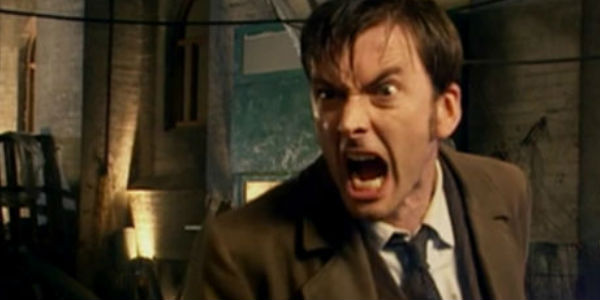
The Doctor is a hero, right? He fights the monsters, he protects the weak and the oppressed and has even saved the Universe. However, when you've lived for over 2000 years, you're going to have done the odd thing that is less salubrious and sometimes just downright wrong. The Doctor may have met Robin Hood but he's not the same kind of hero. For a start, the Doctor isn't human and therefore doesn't necessarily see things the same way we do. Sometimes sacrifices have to be when you're looking at the bigger picture. Over his lives and throughout his many adventures, the Doctor hasn't always been perfect and there are occasions when he has done things that could be called terrible. From choices that have led to mass murder or decisions that have had calamitous consequences to his supposed friends, the Doctor doesn't always act in the way that society would expect a hero to do so. From heartlessness, manipulation, murder and genocide, the Doctor's past is littered with acts that have questioned his morality. Going through that TARDIS door is not just the trip of a lifetime but a potential life of danger, trauma and betrayal. Here follows a run down of the 10 worst things that our beloved mad man in a box has ever done. Be warned, because some of them might just shock you...

10. Just Putting Him Out Of My Misery

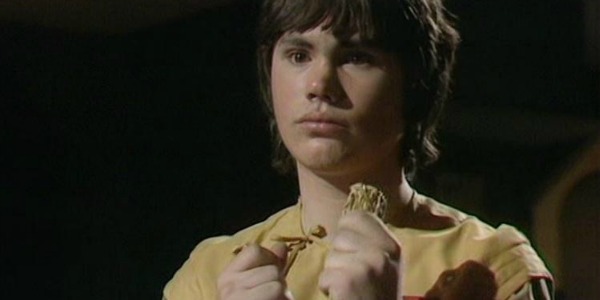
Well, he can't say he didn't warn you. From the off, the Doctor had a decidedly nasty side. Delighting in bamboozling poor Ian Chesterton, the Doctor then went on to kidnap the hapless teachers of Coal Hill School and then get them all captured by homicidal cavemen. However, he outdid himself when the quartet escaped but the others wouldn't leave a wounded caveman, insisting on making him a stretcher. The Doctor has other ideas, however, and finds a handy palm sized rock and approaches the prone man. As Ian spies what he doing and takes the rock from his hand, we'll never know for sure if the Doctor would have gone through with staving an injured man's skull in so he could save his own skin. We do know, however, that he was seriously contemplating it. Of course, the First Doctor would then go on to lie to the whole crew and then get them captured by the Daleks which almost killed them all. Naughty, naughty Doctor.

9. The Doctor's Hypocritical Deposing Of Harriet Jones

When introduced in Aliens of London/World War Three, Harriet Jones is the tenacious MP who helps the Doctor defeat the Slitheen and ends up becoming Prime Minister as a result. Not too shabby. The Ninth Doctor talks of how she will usher in a new Golden Age for Britain. However, having helped set her on her way, the Tenth Doctor is responsible for her tragic fall from grace, in an act that smacks of hypocrisy. With the Doctor incapacitated by his recent regeneration, Harriet has to handle an invasion by the Sycorax without his comforting assistance. On his return, the Tenth Doctor takes out the leader of the invaders (with his fightin' hand and a Satsuma) and declares he doesn't give second chances. At the story's end, Harriet calls on Torchwood to blow the departing Sycarox spaceship up. Now, isn't that very similar to what the Brigadier did to the Silurians? Hasn't the Doctor destroyed countless races to save humanity? What Harriet did wasn't a vindictive act but one to protect Earth, especially as the Doctor had just proved that he couldn't always be there to do so. However, the new Doctor takes it upon himself to bring on her political demise with just six words, in the process changing Britain's history and probably ending the Golden Age for good. Yes, the Doctor ushered in the Age of Austerity.

8. Taking Adric Out Of E-Space

It's true that Adric wasn't invited onboard the TARDIS but was a stowaway, however the Doctor is still responsible for who he brings out of one universe and into another. After all, the lorry drivers at Calais don't just smile and say "well, you're travelled this far, you might as well stay and come over the channel", when they find someone hiding in the cargo hold. The Doctor's actions inflicted Adric upon an unsuspecting Universe, damning us to seeing his space pyjamas on a regular basis and to have to put up with his petulance and inability to walk in a straight line convincingly. In a more serious vein, however, bringing Adric out of E-Space brought the lad nothing but pain and hardship, adrift from his own kind and alone among the TARDIS crew. As if that wasn't bad enough, the Doctor then managed to let him go and get killed. Way to go, Doctor. You made us suffer and him.

7. Helped Cause Numerous Disasters

This may not always be the Time Lord's fault but he does have a recurring habit of helping cause some of the worst disasters in human history, resulting in the death of many of his so called "favourite species". With great power comes great responsibility and all that, so the Doctor should be a bit more careful, really. Under his watch, not only has he helped start the Great Fire of Rome but he was also inadvertently responsible for the Great Fire of London, too. D'oh! In more recent times, he became part of the Web of Time when he helped blow up the volcano that consumed Pompeii, although he was quick thinking enough to save the actor who would play him further down the line. While we're at it, let's spare a thought for the dinosaurs. If the Doctor and Adric hadn't meddled in Earthshock, UNIT would have been commanded by Brigadier Steg O'Saurus.

6. Manipulated His Companions

He's quick to call his travelling companions his 'best friends' but the Doctor hasn't always had a great track record when it comes to those who travel in the TARDIS. Surely the lovely Second Doctor didn't do anything wrong, did he? Well, beneath that benevolent Beatle mop, the Second Doctor was much more manipulative and Machiavellian than people might remember. This was a Time Lord who sometimes had a different agenda to everyone else. He may have been forced to use Jamie to test the Human Factor in The Evil of the Daleks, but he didn't have to enjoy it so much. "Anything would think it's a little game," Jamie blasts him. "Well, I'm telling you this, we're finished. You're just too callous for me." Touché. This pales, however, next to the Seventh Doctor's use of Ace. Spotting her as a 'Wolf of Fenric', the Doctor takes her on the TARDIS and effectively weaponises her. While this can be seen to be for the greater good, his manipulation of a highly vulnerable teenager can also be seen as irresponsible. He then goes on to force Ace to deal with her most traumatic issues and fears, from a haunted house to meeting her mother as a baby, incidents that could have broken many a young girl. We don't know what happened to Ace (killed in the comics, Dalek killer in the books, Time Lord in the audios), but she probably needed a lifetime of counselling.

5. Cold-Bloodedly Killing Soloman

In Dinosaurs on a Spaceship, we're supposed to dislike trader Soloman intensely but there's a difference between the villain getting his just desserts and the Doctor actively killing him when he didn't have to. This is the same Doctor that has always held back from taking revenge. Just witness how he controls himself when his daughter Jenny is shot. The Doctor feels anger and grief but he doesn't let that turn him into someone who kills for revenge. However, that's exactly what he does here. Not only does he ensure that Soloman will be killed, but he also hangs around long enough to watch the trader know his death is near. Yes, the Doctor has come close before, such as when he watched Cassandra explode impassively. However, there's a difference between letting villains perish by their own machinations and actively making sure that one dies. At that moment, Eleven is the only one who doesn't deserve the name of the Doctor.

4. Destroying Skaro

Some might point to the Doctor not destroying the Daleks when he had the chance in Genesis of the Daleks as evidence of the Doctor's weakness. Had he killed the Daleks at the moment of their creation, he would have spared the Universe untold pain, death and destruction. However, the role of a hero is not to dish out retributive justice. That's not being a hero, that's being a vigilante. This changed midway through the Seventh Doctor's reign, however, when the little God became much more Old Testament than New. Full of secret schemes and hidden agendas, this darker Seventh Doctor no longer wandered but developed an aggressive foreign policy, deposing corrupt regimes and judging which races deserved to live. Yes, the Daleks are evil but tricking Davros into using a Time Lord WMD which destroys the Dalek home planet is also evil. Worse, don't the Thals, those lovely blonde pacifists, live there, too? Somehow Skaro exists again in NuWho (same planet at a different time? New version?), but that doesn't negate the act.

3. His Treatment Of The Family Of Blood

One of the Tennant era's greatest tales is the two-part Human Nature/The Family of Blood. Here, for some inexplicable reason, the Tenth Doctor decides the best way to avoid a race who are after his slim Time Lord bod is to go through a convoluted and painful process of turning himself human and then hiding out in a school. Doesn't he own a time machine? Can't he just run away? It's almost as if he needs to be human for the sake of the plot... Anyway, not only do the Doctor's actions result in the death of many and in poor Joan being heartbroken (which we could also say was the direct fault of the Doctor's daft decision), but he then metes out some particularly vindictive punishments on the Family. Now, that's not to say that the Family don't deserve it, seeing as they are thoroughly nasty, but it's not the hero's job to punish and certainly not to torture. How long must the Father be chained up? What about the Daughter being trapped in a reflection in a mirror? Are they there for eternity, aware of their captivity? No second chances indeed.

2. Strangling Peri

Yes, it can obviously be argued that the Sixth Doctor was not in full control of his faculties, but even under the influence of post-regenerative trauma attempting to kill your companion is a no no. As other stories, such as Amy's Choice, show, the Doctor has a very dark side underneath all the jokes and heroism. In his Sixth incarnation, he came closer to many of those traits being nearer the surface. If trying to murder his friend wasn't bad enough, his reaction is less about her well being and more about him, the Sixth Doctor deciding to condemn them both to a life of solitude. Though he never tried to murder Peri again, he did continue to browbeat and belittle her for much of their subsequent association in a highly abusive way. Why, o why did she stay on the TARDIS!?

1. Making Clara Choose

Of course, until the Moff retconned it in The Day of the Doctor, the Doctor's destruction of his home planet of Gallifrey would have been his worst act by far, one that it took the Time Lord several regenerations to recover from. However, with Moffat waving the magic wand, the greatest stain on the Doctor's character has been removed. However, his latest regeneration has turned out to be one of the toughest, non-compromising incarnations yet, one who has no interest in what others make of his decisions. From lying to people who will die to possibly throwing a foe to his doom. He has also been very tough on poor Clara Oswald. Perhaps the worst example of this was in putting her in the horrible position of having to choose whether to 'kill the moon'. It's bad enough that the Doctor has abandoned Clara and an astronaut but he's also left a school girl there too, one who 50 years back might have been in Susan's class. Their choice could have had disastrous consequences for the Earth and its future. The Doctor wasn't letting her choose, he was aloofly dodging his own responsibility. He's the Time Lord, he's the one with 2000 years experience. Clara rightfully slaps him around the chops. That's not the way to act, Doctor. What did you think of this list? Do you agree that these are the worst things that the Doctor has ever done, or are there any others that should've been included? Join the conversation in the comments section below!

Watch Next


Contributor
Contributor

Writer of The Blog of Delights, a review site covering film, TV, cult TV, books and audio. Fan of Dr Who, Bond, X-Men and Marvel. Also the writer of e-book 'Fictional Legends: Doctor Who - the TV Adventures' for Collca.