Doctor Who: 5 Reasons You Need To Watch Castrovalva

Classic serial turns 33 this month.

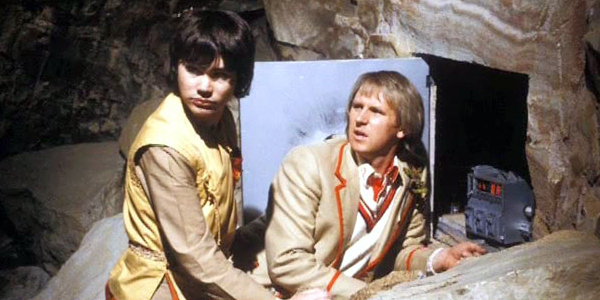
This month is the 33rd anniversary (wow - time really does fly when you're having fun, doesn't it?) of the Doctor Who serial Castrovalva which was the premiere episode(s) of the Fifth Doctor, Peter Davison. At the time of casting, Peter Davison - at 29 years old - was the youngest actor to ever hold the role of the Doctor (and to date, is the second youngest to ever hold the title - Matt Smith beat him out by a few years when he was cast in 2009). Castrovalva is an impressive serial of its own merits as it was the first to have the main actor credited as "The Doctor" instead of "Doctor Who" or "Dr. Who". It was also the first adventure to have a pre-credit sequence that most NuWho fans are used to with the series revival in 2005. This list will contain some big spoilers for the main plot of the Castrovalva serial,so if you don't want to be spoiled, go take a peek at the show, then come back and read over the list... Still here? Well, let's get started! As this is an anniversary of the first serial of an excellent portrayal of our favourite Time Lord, let's take a look at 5 reasons as to why you should watch the four part serial Castrovalva, starting with...


5. Fifth Doctor Debut

As previously stated, this was the first set of episodes for Peter Davison in the coveted role of the Doctor. As he was the youngest actor to hold the role at the time, many fans were wary of what this young man would bring to his portrayal of their favourite Time Lord. They needn't have worried, though, because h was able to quickly dispel any rumours regarding his inability to play the role as it was meant to be played. In order to make this debut a successful one (this was actually the fourth serial of season 19 to be filmed), Peter Davison had to be able to ease himself into his new role as the titular Time Lord. This allowed him to work out any jitters he might have had upon taking on the role, as well as get him familiar with the set so that he didn't fumble around looking for things on the TARDIS console. From 1981 to 1984, Peter Davison made the part his own and left an impression on a young man who would grow up and become a Doctor of his own, David Tennant. It is well known, and even stated in the 2007 Children in Need mini-episode Time Crash, that the Fifth Doctor was David Tennant's favourite Doctor. It's therefore a possibility that many fans wouldn't even have their Doctor without him latching on to the show watching his favourite Doctor. Now how's that for timey-wimey?

4. Most Difficult Regeneration Yet

The premise of Castrovalva involves the difficult time The Doctor is experiencing as a result of his latest regeneration. One factor could be that it occured so far away from his TARDIS (which is rumoured to assist in renegeration in a way) so at first, the Doctor attempted to locate and found the Zero Room which was a neutral environment away from the technology of the universe. As soon as he was within the room, his regeneration stabilized and he was the Doctor of old. However, the Master trapped the TARDIS in 'Event-One' (i.e. The Big Bang) and the Zero Room, as well as 25% of the other TARDIS rooms, were jettisoned. Upon researching the TARDIS Index File, Nyssa and Tegan located Castrovalva - a neutral, simple planet - which could assist the Doctor in a similar fashion to a Zero Room. The coordinates were set and the Doctor and his companions eventually made it to Castrovalva, where all was not as it seemed. This is Doctor Who of course! The Doctor couldn't make it to Castrovalva on his own. Instead, he had Nyssa design a Zero Room cabinet from the remaining sections that were not jettisoned which was then driven, via electric wheelchair, toward Castrovalva. Upon finally reaching their destination, the Doctor did indeed slowly improve - with setbacks. Perhaps being away from technology once in a while does do you good...

3. All Previous Doctor Identities Explored

During the first parts of the difficult regeneration, the Doctor started to revert to his prior personalities. He mistakenly referred to his current companions as previous companion names (He called Adric "The Brigadier" and "Jamie" and he called Tegan "Vicki" and "Jo"). He mentioned Romana, as if she were a current companion, yet she had previously departed during the Tom Baker years. He also urged Tegan not to reverse the polarity of the neutron flow which, as every fan will know, was a popular line from the Third Doctor. He showed the characteristics of the First Doctor when he called Adric "boy" and had a very similar laugh to that of William Hartnell, too. He also picked up and attempted to play a recorder for a few moments before setting it aside again. The range that Peter Davison showcased in these scenes was excellent as it was a way to hark back to the days of old Doctors. It shows that what he said a few years later in The Five Doctors was spot on, that "a man is the sum of his memories, a Time Lord even more so". This was one of the first occurences of the Doctor reverting back to previous incarnations, something that has been explored quite a few times in NuWho, specifically with Matt Smith. The companion confusion is sure to remind fans of the more recent first episode under Peter Capaldi's belt, Deep Breath, in which he confused Clara and the Pasternoster Gang with his bizarre post-regnerative outbursts. Perhaps the Doctor really should take that holiday that Romana kept reminding him about.

2. Shows The Genius Of Adric

As the serial moved from part 3 to part 4, viewers found that Castrovalva was nothing but a mathematical recursion, or in laymen's terms, the city was a mathematical problem made into a physical form. This was all made possible through the mind of the Doctor's third companion, Adric. Adric, for those of you who are unaware, is a mathematical genius from the planet Alzarius in a parellel universe. The Master was able to use Adric both to force the TARDIS to Castrovalva (Adric appeared on the TARDIS, did some stuff on the control panel then went to help the Doctor) as well as used his mind to create the whole city and history of Castrovalva. However, Adric proved his will was much stronger than the control of the Master when he ended up causing Castrovalva to start folding in on itself, creating numerous repetitions and errors within the city. Finally, as the city itself was the creation of Adric's mind, he was the only one who could safely guide the Doctor and his fellow companions to safety from the confines of the imaginary city. Not too shabby for a companion that many people rank fairly low on their 'Top Companion' lists. Perhaps he deserves a bit more credit.

1. The Master

The Master, expertly portrayed by Anthony Ainley, attempted yet again to kill the Doctor after his failed attempt to do so in Logopolis. He knew the Doctor would be at his weakest just after regeneration and used his companion Adric against him to create a false city that would make him recover after his difficult regeneration (this was after he attempted to destroy him and the TARDIS in the Big Bang). Although the Daleks are widely considered to be the Doctor's mortal enemy, the Master has always been his greatest foe. Not only is he a fellow Time Lord but he also doesn't have the will to help others that the Doctor possesses - he simply wants to rule the universe and doesn't care who or what he has to dispose of in order to get his way. This time, the Master narrowly misses out once again on his attempt to do away with the Doctor for good, if not for the willpower of Adric and the Doctor coming to his wits at exactly the right time. The Doctor might not have made it past his fifth incarnation if this hadn't been the case which would've been unfortunate for all concerned. Finally, something that the Doctor says at the end of Castrovalva holds true for the whereabouts of the Master after the events of Series 8 finale Death in Heaven. When the Doctor reveals to Tegan that she hadn't flown the TARDIS like she thought he had (it was actually pre-programmed by Adric while he was under the control of the Master) he states, "The Master leaves nothing to chance". As it is doubtful that adage has changed during the long lifespan of the Master, she surely got away when it appeared that the Cyber-Brigadier vaporised her. Only time will tell. Castrovalva was a fine introduction for Peter Davison's portrayal of the Fifth Doctor and, while it does not explain why he wore the celery stalk (that doesn't get explained until the very end of his time on the show), fans are able to see why many fans of Classic Who have him ranked #2 behind Tom Baker as their favourite incarnation of the titular Time Lord to date. What did you think of this list? Is there anything else about Castrovalva that wasn't mentioned? Join the conversation in the comments below. Castrovalva aired on BBC One in four twice-weekly installments from 4th January 1982 to 12th January 1982.

Contributor

I am an avid fan of Doctor Who, Video Games and WWE Wrestling who is a 12 year medically retired veteran of the U.S. Air Force. I've been married for 14 years with two children, 10 and 8. As a stay at home father, I find myself with copious amounts of free time and have taken to writing as a way to give me something to do. I currently reside near Kansas City, Missouri in the United States but am originally from Chicago, Illinois.