Doctor Who: 6 Reasons Russell T Davies & Steven Moffat BOTH Rock
 For some reason, every Doctor Who fansite seems to be taking the break as an opportunity to divide into pro-Moffat and pro-Davies camps. Well, I say it's time to resist peer pressure and form a camp that I suspect the great majority of us would prefer: those who like BOTH Davies AND Moffat. Sure, some of the episodes the fellas wrote weren't to my taste. Yes, they both use cliches sometimes--who doesn't? And they would occasionally get hung up on a plot tumor. But in the end, both men ADORE Doctor Who, and they did their best to do it proud. Both showrunners helmed shows with different themes and arcs. But you don't have to hate one to love the other. So let's all just calm down a bit, try not to count the months 'til the 50th, and look at 6 reasons Davies and Moffat were both great COMPLIMENTARY showrunners.
5. The Show Keeps Getting Better
 Classic Who had its appeal, but like original Star Trek it's not what a modern audience would call "good." So taking the spirit of the classic series and creating something modern is a cool project, and Moffat and Davies both did it wonderfully. Sure, there are a few hiccups, but who cares! Every year, the effects are getting better. The budget is getting bigger. The acting takes you places you never imagined, makes you think it can't get better, and then somehow does. The companions keep getting smarter and cooler and more fashionable. And the Doctor keeps being the Doctor, an utterly original character who can't be mistaken for anyone else.
 It's still Who, and it's still climbing uphill. It feels like it could keep getting better forever.
4. Playing With Time Travel
 Having a main character who grew up with time travel being as ordinary as trees presents a whole lot of cool storytelling possibilities. Each man brought his own ideas and interests to the genre, and the results were awesome. Davies was interested in the magnitude of time travel, in what knowledge of it did to an individual. That's why Rose was nearly overwhelmed by the time vortex, why Eccleston was always so pained. And he was interested in the isolation of time travel, in the distance it put between the Doctor and his friends: in how lonely it made him. The end of "Journey's End" was heartbreaking because the Doctor was left more alone than seemingly ever before. And in "The Waters of Mars," he became so caught up in the magnitude of time and space that he forgot what it was to be human. Finally, when the tenth Doctor did his farewell tour, it was as much about how paradoxically tangential yet essential the Doctor was to the lives of his friends. All because of time travel.
 Moffat has a more playful attitude to time travel. He likes to create paradoxical plots, wacky mobius designs where cause and effect are eating each other. And rather than focusing on how the Doctor's time travel affects his persona, he likes to look at how time travel affects the companions. That's why Amy Pond, River Song, and Clara Oswald are all time travellers themselves, Amy suddenly going from a child to an adult to an old dead woman, River Song ricocheting through timelines, Clara coming back again and again.
3. They Both Get The Gravity Of The Situation
 A big criticism of Moffat is that he doesn't kill people often enough. A big criticism of Davies is that he can be too wacko in things like "Journey's End." And both of these claims boil down to: I like this kind of storytelling better, why won't he tell this kind of story.
 To the anti-Moffats: Moffat wrote the line "You need a good death. Without death there'd only be comedies. Dying gives us size." He gets the importance of the impactful death, he just doesn't feel the need to rack up a body count. Quality over quantity: Amy and Rory are gone for good, never to return. River reached a final end, in spite of the library. The Eleventh Doctor's death is going to make us all cry into our eggnog on Christmas Day. Yeah, he brings people back, but that's the beauty of a time travel show: death doesn't always HAVE to happen at the end, sometimes everybody can live. That doesn't mean he doesn't like the drama that a real death can give. And it doesn't mean that he's going to ruin the show by not letting anyone die.
 And now to the anti-Davies: Madcap insanity is part and parcel of Doctor Who. Without the vaguely cheesy craziness, it wouldn't be Doctor Who. Even episodes which embrace gravitas like no other, like "The Name of the Doctor," had zaney moments with Strax. So yes, sometimes the episodes are really packed, sometimes people act out of character, and sometimes the plots seem to be completely unhinged. Welcome to "Doctor Who," make yourself some popcorn and enjoy the ride: it'll get scary again next week, I promise.
2. They Both Do Brilliant Things With The Companions
 If you don't like Rose, you probably don't like Davies. If you don't like River, you probably don't like Moffat. and sure, everyone has a right to their opinion on whether they liked a story. But that doesn't make story, character, or writer THE WORST. I'm going to take the position that Rose and River were both AWESOME. And even if you didn't like them, their stories were FASCINATING Here's why: Rose was the first companion on the new show. She was the first companion who was not pretty easily replaceable. I've watched a random selection of classic episodes, and those girls were changing so fast I stopped bothering to learn their names! None of the episodes were really about them: they were about the adventures they tagged along with. They could be swapped without changing an episode.
 So making a new companion the focus of the kickoff, putting the spotlight on her emotional journey, and making her the ultimate hero of the season, was a pretty daring choice. And it was absolutely necessary, because the show needed to go to new places with companions. They couldn't just be the +1, they had to matter, had to have voices of their own and noticeable effects on the Doctor. Rose was PERFECT for that, because her uncomplicated humanity made the alien Doctor feel like a real person. And she was the first human (to my knowledge) to call the Doctor on his long line of interchangeable companions, and how small that implied she was.
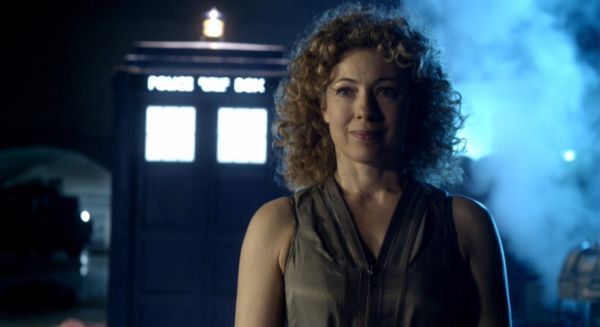 River, and her mum Amy, were both very cool companions. River was a brilliant experiment in the time travel drama, in how to build a romance in reverse, and in just how un-interchangeable a companion could get. River was always confident of her place in the Doctor's life, never willing to let the Doctor get away with crap, and always very forcefully herself. She was, above all, fun. And she was a fascinating look at the effect the Doctor could have on companions, at the way he could ruin their lives. 'Cause in the end, both Davies and Moffat were turning a critical eye to the effect the Doctor had on his companions' lives. These aren't stray dogs: they're people, and in their relationships with the Doctor both are changed. Rose and Martha became dark, sad soldiers; Donna became the most important person in the universe before being destroyed; Amy's childhood was stolen by the Doctor and she became a mother and a writer and a name on a gravestone; River's life was ruined by the Doctor (just as she reveled in shaking up his life); and god only knows how Clara will end. So dislike each companion all you want, but you can't deny they all have quite the story behind them.
1. They Both Made The Show A Success
 There's no way reviving Doctor Who was a sure bet. The show had been off the air for years, it had flopped towards the end. It was a classic and frankly weird cult show that most people remembered fondly from childhood. Bringing it back was NOT a safe plan, and if it had failed, it would have been the end of Doctor Who. So the fact that Davies was able to not only bring the show back, but to make it a success, speaks volumes. He made a show that people wanted to watch, where they were invested in the characters. Then the Doctor swapped out, and everything managed to get even better. After spawning two spin-offs, Davies left and Moffat took over. With Davies departed a big chunk of the crew and the lead himself, so that Moffat was basically running the same ship with a new crew and hoping no one would notice. Then he cast a 26-year-old as the new Doctor, and it looked like all of Whodom was going to come crashing down. 'Cept that 26-year-old made acting like a 1000-year-old look easy. And the new "pilot" proved to be one of the best episodes of Doctor Who ever produced. And the Doctor's fame climbed and climbed, until today even Americans are starting to take notice. So for serious, guys: both these men are doing a REALLY hard job REALLY well, so stop pitting them against to each other and give them both some peace.