Doctor Who: Every Doctor's Definitive Seasons
A journey through The Doctor's defining seasons on television.
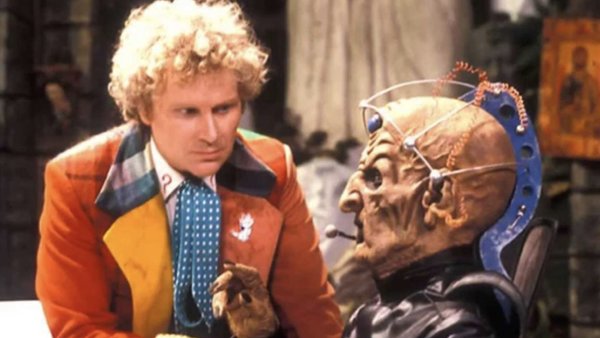
As a fan of Doctor Who, it's always fun to conjure up new ranking systems. Whether it be who's your favourite Doctor? Who is the best companion? Which Dalek story is definitively the greatest? Maybe even which show-runner has held the most consistent tenure? The lists go on.
But one thing that's always fun to do is talk about each Doctor's eras. With every incarnation of The Doctor comes a brand new chapter within Doctor Who's long standing career on television. These tenures naturally define that particular Doctor, crafting both their onscreen character, and their overall journey through space and time.
Sometimes it's naturally hard to pick which Doctor is the best, let alone sifting through each individual era, and deciding upon a champion. However, every Doctor has that one season, that one golden egg within their chapter that simply stands out for one reason or another. Whether it be it's simply the best. That it holds your favourite story featuring that particular incarnation of The Doctor. Or perhaps it simply defines that Doctor. Either way, we'll be looking through Doctor Who's long history, and picking out The Doctor's definitive seasons.
DISCLOSURE: The Eighth Doctor has not been included on this list due to the fact he hasn't received a televised tenure. The Thirteenth Doctor will also not be included on this list as her era is still ongoing, and it would be unfair to pick a definitive series before we have seen her full tenure play out.
The First Doctor: Season 2

Season 2 was a great run, holding many stellar outings featuring the First Doctor. Also, Dennis Spooner's more family friendly take on the show, through his witty humour, and adventurous vibe, allowed the First Doctor to feel jolly in his portrayal, cementing himself as a loveable adventurer, with a heart of gold, and a caring nature (particularly as a grandfather figure).
Not only that, but there are two key serials in Season 2 that were both endearing, and rather personal to the First Doctor. Namely, The Dalek Invasion of Earth, and The Chase. Both of these narratives featured the First Doctor's original companions departing from the TARDIS. Letting go of his granddaughter Susan was an emotional punch, and a hard pill for the First Doctor to swallow. But he knew deep down he had to let her go in order for Susan to find her way in the universe, without his interference.
Naturally, it was an even bigger blow when Ian and Barbara finally decided to part ways, having found a way to journey back to their own time. They were certainly grateful for their time on the TARDIS, despite their rocky start. This still remains one of the most integral companionships in The Doctor's life, as Ian and Barbara ultimately shaped the very characteristics we know and love today.
They turned him from being a mysterious, self-centred alien figure, into someone who understood the importance of humanity, and the need to help those in need. The First Doctor was deeply saddened by their departure, and would certainly come to miss them.
The Second Doctor: Season 6

It's a particularly difficult task to pick just one season from the Second Doctor's tenure, considering each of them hold stand out classic gems. But then you remember that Season 6 holds both The Invasion and The War Games.
These tales have been cemented in the fandom's minds, ultimately becoming the highlights of the Second Doctor's era. Although one can't forget about other enjoyable serials, such as The Mind Robber, and The Seeds of Death. Furthermore, this saw the Second Doctor's best TARDIS team come into full fruition, after Zoe was introduced in The Wheel in Space at the end of the previous season.
Jamie had been a loyal companion since the Second Doctor's second outing, The Highlanders, and had become like a best friend, and it shows perfectly through the writing, and Patrick Troughton and Frazer Hine's onscreen chemistry. The addition of Zoe rounded everything off, through her impeccable genius when it came to computers, and not to mention her strong confidence, and bravery in the face of danger.
Another noteworthy element to Season 6 was the introduction of UNIT. Though Alistair Gordon Lethbridge-Stewart made his debut in Season 5 (The Web of Fear), The Invasion was his first appearance in the rank of Brigadier. This serial is simply a joy to watch, spanning over eight thrilling episodes, depicting one of the most callous, power hungry human villains in the show's history - Tobias Vaughn, on top of an iconic Earth invasion story, which would go on to shape the foundations of the Third Doctor's era.
Also, The War Games saw the first appearance of not only The Doctor's home world, Gallifrey, but also a full introduction to his people the Time Lords.
The Third Doctor: Season 10

For the tenth anniversary of Doctor Who, Terrance Dicks and Barry Letts pulled out all the stops. Most importantly, they established the running tradition of The Doctor meeting his other incarnations during a time of crisis. This has easily become the quintessential method for celebrating milestones, whilst also being a genuinely fun experience for fans, as they get to see various Doctors come together for a massive reunion (as well as having some hilarious banters).
This led to the Third Doctor being freed from his exile, having spent three full seasons stranded mostly on Earth without the use of his TARDIS. His only off-world adventures at that point were forced assignments by the Time Lords. So the Third Doctor gets to spend three consecutive serials travelling the universe once again, and it's an exciting experience, allowing for some fresh storytelling away from the familiar UNIT style investigative mysteries.
We also received a spiritual successor to The Daleks' Master Plan through Frontier in Space, and Planet of the Daleks. These two serials formulated a twelve part epic, dealing with the Daleks' latest attempts to invade the galaxy. It even featured a brief alliance between The Master and the deranged pepper-pots. Although, sadly, this would be Roger Delgado's final appearance on the show before his untimely death.
Finally, one cannot forget the brilliant season finale, The Green Death, which acts as not only a great environmental story, but also just a damn good story in general. Giant mutated maggots, and a computer trying to control humanity. What could be better? Also, it established the fact that despite the Third Doctor being free now, he would always return home to UNIT HQ. Quite poetic really. And let's not forget about the emotional farewell scene between the Third Doctor and Jo. A truly definitive moment in The Doctor's life.
The Fourth Doctor: Season 14

One could probably spend hours debating over the definitive season for Tom Baker's Fourth Doctor. In the end, one has to go with the crème de la crème, Season 14. Not only does it have some of the best adventures featured within the Golden Age of Doctor Who, but it's such a great send off for Philip Hinchcliffe, and Robert Holmes' partnership as show-runners. Plus, it saw the introduction of one of the best companions within the Whoniverse, i.e. Leela.
She was such a stark contrast from what came before, given she was a primitive savage who could not only defend herself, but also protect the Doctor as well. That, and it was really intriguing watching their unique dynamic as tutor and student, with the Fourth Doctor trying to educate Leela, whilst teaching her to be less aggressive. Season 14 also saw the saddening departure of long time companion, Sarah Jane Smith, a very important moment within the Doctor's life (one that would resurface in School Reunion).
The Deadly Assassin then sees a full re-establishing of the mythology on Gallifrey, whilst also reinventing The Master, who is now presented as a gothic monstrosity, hell bent on destroying both The Doctor, and the Time Lords. The Robots of Death acts as a thrilling whodunnit, within a claustrophobic setting. Sure, the title gives the game away, but it's still all very exciting, and the robot designs are stunning. Finally, The Talons of Weng-Chiang is an absolute gem, blending what made Robert Holmes' writing memorable, into one giant cocktail of twisted delights.
Honestly, it's such a good story, and one that I can personally watch over and over again. It's setting is used to perfection, creating a gritty, and cold atmosphere, as Weng Chiang stalks the streets, with The Doctor going full-on Sherlock Holmes in order to thwart his schemes through intellect, and cunning. And, of course, it introduced us to Jago and Litefoot. These three stories all showcase the greatness of the Hinchcliffe era, whilst being bloody good stories, that have cemented themselves as instant classics, whilst also defining the Fourth Doctor during the height of their popularity.
The Fifth Doctor: Season 19
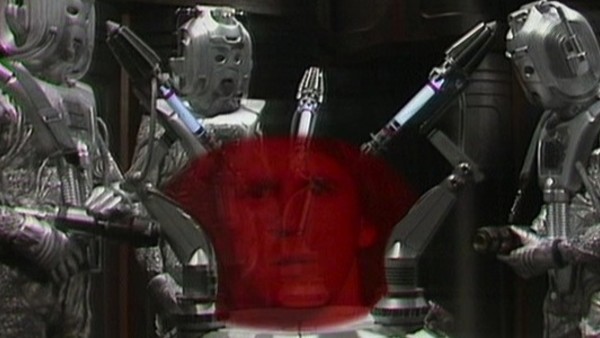
Given that Season 21 holds Resurrection of the Daleks, and The Caves of Androzani, you might be wondering why I haven't picked it as the Fifth Doctor's definitive season. Whilst his final season holds so many grand moments for this charming, and human-like incarnation of The Doctor, one cannot forget about the charm, and consistency of his first run of adventures.
Castrovalva was such a pleasant experience, and a perfect introduction for the Fifth Doctor, given the fact that we'd just lost the Fourth Doctor (who'd been on screen for seven years). It's a slow, gentle, and beautiful transition, that allows you to feel acquainted with this new Doctor in such a relaxing way, and by the end, you're ready to follow them on their new adventures, and have managed to move on from Tom Baker without feeling too much guilt.
Then there's the likes of Kinda, and The Visitation, which are both fantastic tales that set the tone nicely for the Fifth Doctor's era, continuing on from the more science-fiction feel of Season 18. Kinda is a deep, psychological story that has such deep meaning, and addresses how our inner demons can ultimately consume us. While The Visitation acts as a fun period outing, with plenty of exciting ideas, and one hell of a pay off (The Doctor's isn't particularly good when it comes to not interfering in the events of history).
The icing on the cake is obviously Earthshock, a serial that has wedged itself in our minds, and for good reason. It's such a tight adventure, with strict direction, keeping the pacing, and the characters constantly flowing with such concise continuity and non-stop action. Ultimately, it resurrects the Cybermen in an explosive way, allowing them to feel totally threatening, and intense with their schemes, and power. And, of course, the Fifth Doctor is deeply impacted by the loss of Adric, something that would haunt him until his regeneration.
Also, Black Orchid and Time-Flight aren't all that bad!
The Sixth Doctor: Season 22
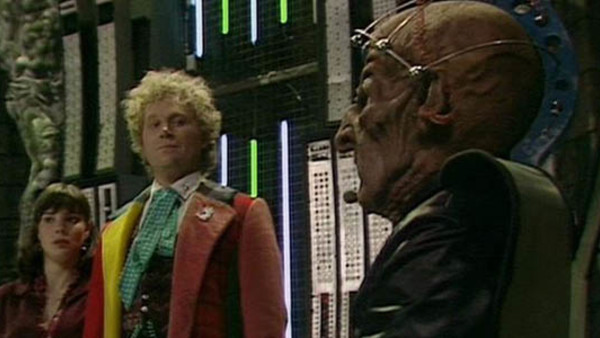
It seems almost unfair picking a definitive season for the Sixth Doctor, considering he only featured in two full seasons during his turbulent tenure. However, it has to be said that Season 22 is clearly the better of the two, despite Season 23 still being a good run with The Trial of a Time Lord storyline.
A lot of the Sixth Doctor's more iconic traits appear throughout Season 22, particularly his more egotistical, arrogant, and short tempered persona (although, there was clear signs that he had a huge heart). Along with this, there was the unique decision to make the overall tone of this short-lived era darker, and violent, much like a lot of the video nasties making the rounds at the time.
Sure, perhaps this was a step too far, but it's always interesting witnessing Doctor Who take a fresh direction, especially when it pushes various boundaries in how it tells stories. That, and it's nice to have a shocking moment from time to time, like Lytton getting his hands crushed by the Cybermen, those guards who fell into a bath of acid, and pretty much the entirety of Revelation of the Daleks (which remains my favourite Davros story, and one of Terry Molloy's greatest performances as the evil Kaled scientist).
Also, it was welcoming to see Patrick Troughton return for a multi-Doctor story written by Robert Holmes. It was certainly a change to see the concept used outside of the anniversary period, demonstrating it didn't have to be a limited element, and could be explored further as an individual story within any given season.
The Seventh Doctor: Season 26

Despite a shaky start, the Seventh Doctor's era became something of a renaissance for Doctor Who during its final years. With the addition of Andrew Cartmel, the show was given a reinvention, that allowed The Doctor to become a more mysterious entity once more, accompanied with narratives that made you question his authority, and legacy.
This all began with Season 25 bringing about some juicy hints towards the Time Lord's heritage, indicating he wasn't who we all thought him to be. That, and we received some fantastic stories that all went about to explore this new version of The Doctor. Naturally, Season 26 pushed the boundaries even further, generating some challenging plotlines that delved deep into the mythology of The Doctor's darker, more manipulative nature, especially when concerning his companion Ace.
Ghost Light sees the Seventh Doctor betray Ace's trust by bringing her to the one place she never wanted to revisit. And yet, this was all for her own good, allowing her to face her demons, and build her up as a stronger person. Then you have The Curse of Fenric, which literally tests Ace's faith within The Doctor, to the point where she challenges his god-like presence in the adventure, as he towers over everyone in his long game of chess against Fenric. He's even forced to break her will, all for the purpose of ensuring checkmate (although he does later apologise for doing this to her).
Finally, Survival became a powerful thread that ensured Doctor Who's eventual return, creating the very groundwork that Russell T Davies would instil into his own version of the show upon its revival in 2005.
The Ninth Doctor: Series 1

Despite having only one season to talk about, the Ninth Doctor certainly left behind one hell of a legacy, and holds one of the most definitive seasons within the Time Lord's long history on screen. First off, it was the grand return of the show, after being off the air for fifteen years (minus its brief return in 1996 with The TV Movie). Secondly, it introduced many important elements that would go on to define The Doctor's character for years to come.
Namely, the revelation that The Doctor was now the last surviving member of the Time Lords, after the events of the Time War. This caused The Doctor to become a much more emotional character, filled with deepening depth of sorrow, bitterness, and even aggression. Furthermore, the Ninth Doctor was ashamed of himself and what he had done in the Time War.
Series 1 delves into this deep, meaningful character arc, and builds the Ninth Doctor up throughout the course of the episodes. He goes from being a lonely survivor, filled with regret, and post traumatic stress disorder, to someone who finally sees hope again, and has found a reason to go on living, as well as finally atoning for his sins by being the better man (ultimately becoming The Doctor once more).
There are so many astonishing moments throughout Series 1, alongside distinctive stories that really define who the Ninth Doctor was. Dalek, in particular, shows off the raw anger that The Doctor now holds against the Daleks, but he comes to understand just how far he's fallen in the process. Then there's the beautiful moment in The Doctor Dances where he manages to win a battle without a single drop of blood, putting a huge smile on his face, and granting him a huge step towards redemption.
The Tenth Doctor: Series 3

Series 4 was certainly a high point for not only The Doctor, but Doctor Who in general. However, as successful, and epic the Tenth Doctor's final full series was, it doesn't hold a candle to the consistency, and well driven narrative displayed in Series 3.
What makes Series 3 so good is how well thought out, and executed, the story arc was. Everything fit together perfectly, with each successive hint, and tease, building towards the big reveal. Even the likes of the Chameleon Arch, which seemingly was there just to tell the story within the confines of Human Nature/The Family of Blood, ended up being another teaser towards the final outcome. When you see Yana holding his very own fob watch, everything immediately clicks into place.
Then the final message delivered by the Face of Boe explodes onto our screen with such a clever tie-in to the events during Utopia. This explains not only the meaning behind 'you are not alone' with a broad meaning (i.e. the Doctor isn't the last Time Lord), but also as a hidden warning to indicate who the person is (i.e. the message alluding to Yana). Honestly, there hasn't been a more clever reveal, or a better working story arc in the entirety of New Who to date. Russell T Davies really did wonders with Series 3, and his ingenious ideas, and made them work in such a satisfying way.
Of course, this series becomes definitive for the Tenth Doctor in his slow change in characterisation, slowly becoming more bitter, and emotional towards the universe, having just lost Rose. She was the beacon in his life during such a difficult time, and now she was lost to him, whilst the Daleks kept coming back. There's of course the introduction of the Weeping Angels, and furthermore, the return of The Master, which pushes The Doctor into some challenging corners, as well as being the set up to the Tenth Doctor's darkest hour during The End of Time.
The Eleventh Doctor: Series 6

Series 6 built upon the success of Series 5, pushing Doctor Who into a new era of popularity, which ultimately took the show oversea to America. The show felt much grander in scale, incorporating a more heavy approach to storytelling, similar to how an American drama would be formatted. This was apparent with Steven Moffat's integral mystery boxes, which were seeded into every episode, building up to a grand reveal, before the series took a break during the Summer, before returning in the Autumn.
We were also enlightened with a lot of the mysteries from Series 5, namely why someone was trying to kill The Doctor. This was due to a terrible battle that will occur in The Doctor's own personal future, and a religious group known as the Silence wished to prevent him from reaching this moment in history. What resulted was an elaborate (if extremely convoluted) plot revolving around brainwashing River Song to murder The Doctor at a location that would instil a fixed position in time.
It became more complicated when River's identity revealed she was actually the offspring of Amy and Rory. Adding more insult to injury, it meant that they didn't get to raise their own child, given the Silence stole her as a baby, before putting young Melody Pond through a gruelling upbringing. It's quite bleak when you think about it, especially when Amy nearly killed her own child, and then wasn't aware that her best friend growing up was a regenerated version of her future child. Wibbly Wobbly Timey Wimey!
Furthermore, it's a series that really tests the Eleventh Doctor, as it's shown how far he's come, and not necessarily in a good way. He's now feared across the universe, and is able to destroy an entire fleet, whilst making an army bow before him. With all his years of travelling, and his reputation during the Time War, the word 'Doctor' had seemingly lost its original meaning, and his foreknowledge of death due to his future actions, made him rethink his way of life, inevitably forcing him back into the shadows, whilst the universe slowly forgets who he is.
The Twelfth Doctor: Series 9

The Twelfth Doctor shook up the series with his darker portrayal, and questionable morality, making even himself wonder whether or not he was indeed still a good man. Come Series 9, his persona loosened up, and became more of a whacky uncle who held a stern, and abrasive interior. Essentially, he was a bit all over the place, but Peter Capaldi constantly rose to the occasion, and really drove home the idea that The Doctor was trying to find himself.
One of the notable issues he had to face was his growing concerns for Clara. Having just lost Danny in the previous season, her stance on life was swiftly altering, and The Doctor's powerful influence on her life (and even destiny) was beginning to rub off on her in the worst way possible. She grew more reckless, and became almost disconnected from reality, hell bent on transforming herself more and more into the Time Lord she admired and loved dearly.
Ultimately, this proved to be her downfall, and set a course that would take the Twelfth Doctor on a painful journey of discovery. He endured billions of years being tortured over and over again inside his confession dial, all for the sake of releasing his bitter rage upon the Time Lords. He cruelly humiliated Rassilon, before abusing his new authority on Gallifrey to save Clara from her fixed death in time. Eventually, he came to the realisation that he had gone too far, and was punished dearly for his crimes by losing his memories of Clara in order to stop him from pursuing his awful course of action.
Amongst this challenging, and fascinating character journey, there is an abundance of fantastic content throughout Series 9, highlighting why the Twelfth Doctor is so beloved, as well as holding many of his absolute classics, particularly Under the Lake, The Zygon Inversion, and Heaven Sent.