Doctor Who: EVERY Version Of The Daleks Explained
Think a Dalek’s just a pepperpot with a plunger and a gunstick? Think again.

Of all the Doctor’s enemies, the Daleks have, by far, plagued him the most.
They’ve also had an unrivalled number of redesigns and variants, with the basic outline remaining the same but the casing designs and colour schemes constantly updating.
Then there are the more specialised Daleks, with their own specific ranks and capabilities. Many of these have followed the iconic “plunger and gunstick” template, but some have had bespoke appendages, or even none at all!
Countless other Dalek variants have appeared in expanded media – perhaps most famously, the Time Controller, with its striking diagonal neck rings. However, this list will only be dealing with the ones seen onscreen. Likewise, we’ll only be talking about television versions of the Supreme and Emperor Daleks.
From Skaro Daleks to human Daleks, Davros’ Daleks to the New Dalek Paradigm and Reconnaissance Scouts to Executioners, this is the ultimate guide to the universe’s deadliest creatures.
18. Skaro Daleks (First Appearance: 1963)

The earliest Daleks were native to Skaro, mutated from one of the planet's original indigenous species, the Kaleds, after a long and bitter war with fellow Skaro natives the Thals.
The whole purpose of the Dalek casing was to function as a life support and weapons system for these mutated Kaleds... but it also turned them into something far worse.
Initially confined to their city due to a reliance on static electricity, they gradually adapted themselves for travel further afield – first by adopting solar energy collection discs on their backs for their 22nd century invasion of Earth, and then by adding solar slats to their midsections (a feature that has remained ever since).

This enabled them to lead campaigns on various planets, including Earth (in both the 22nd and 40th centuries), Aridius, Spiridon, and Exxilon – almost always being foiled by the Doctor, who quickly became their most hated enemy.
Setting the template for most subsequent models, these Daleks typically sported a plunger and a gunstick. However, the plunger was occasionally swapped out for a more specialised appendage such as a cutting device or a flamethrower. This weapon variety even extended to some of these Daleks becoming full-on suicide bombers during one of the Daleks' many wars!
Eventually, these Daleks evolved into the Renegade faction, who opposed all Daleks who weren’t from Skaro and were loyal to the Supreme Dalek rather than their original creator, Davros.

Protecting the purity of the Dalek race has always been at the heart of the Dalek cause, and so for them to turn on fellow Daleks showed just how far they would go in that mission.
17. Supreme Daleks (First Appearance: 1964)

The Daleks quickly developed a hierarchy, with certain units given more responsibility than others. This was first demonstrated by the fleet that invaded 22nd century Earth, which included a Saucer Pilot and a Supreme Controller.
The Supreme Controller was the commander of the Dalek forces, a rank that soon became known as the Supreme Dalek, or Dalek Supreme.
Early examples include the black Supremes who led the Daleks’ pursuit of the First Doctor and oversaw the Daleks’ Master Plan, the all-gold Supremes who occupied Earth in an aborted timeline and teamed up with the Master, and the black and gold Supreme who seized control of Dalek operations on Spiridon.

In the aftermath of the Dalek-Movellan War when rival Dalek factions emerged, the Supreme became the figurehead for the "pure", Skaro-born Daleks, steering them through a tumultuous civil war against Davros and his own factions.
Supreme Daleks persisted all the way through the Time War and into the New Dalek Empire, where a snazzy red and gold Supreme commanded the Dalek Crucible and led the 21st century Dalek invasion of Earth. This design was the most elaborate yet, incorporating additional struts on each side and a bonus third light on the dome.
Supreme Daleks are rarely too dissimilar from standard Daleks in terms of size or power, so it's unclear how they ascend the ranks. And though they have authority over all Dalek forces, they're far from the biggest fish in the Dalek pond...
16. The Emperor Dalek (First Appearance: 1967)

By far the most imposing type of Dalek is the Emperor – a behemoth who rules over the Dalek Empire. Think of the Emperor as the king, and the Supreme Dalek as the military commander.
Two Emperors have appeared in the show so far, both of which inhabited huge, immobile casings.
The first model operated from a throne room on Skaro and plotted to distil the human factor – the essence of what distinguished humanity from other species. The Emperor transferred this human factor into some Dalek test subjects, but was ultimately destroyed by them when they turned against him, triggering a Dalek civil war.
Years on in Dalek history and a new Emperor emerged in the aftermath of the Last Great Time War. This bronze and gold version was altogether more fanatical, rebuilding the Daleks to the point where they viewed him as a god. Like his predecessor, he also attempted to create a new breed of Daleks by combining them with a human element, but this plan was foiled when Rose became the Bad Wolf and wiped him and the rest of the Daleks out.

Both Emperors were flanked by black-domed Dalek guards, some of which possessed unique appendages, from a triangular sensor device to a mysterious clawed sphere.
The role of Emperor was also briefly assumed by the Daleks’ creator, Davros, using a special type of casing.
A mention must also go to the Dalek Prime Minister, who led the Dalek Parliament that was the ruling body of the resurrected Dalek Empire. Like the second Emperor, the Dalek Prime Minister was essentially just a mutant in a glass tank, though he did seem to display higher levels of intelligence and self-awareness than normal Daleks – just like both Emperors before him.
15. Davros (First Appearance: 1975)

Davros, creator of the Daleks, was a Kaled scientist who sought to preserve his race at any cost.
After suffering a near-fatal accident during Skaro's Thousand Year War – the name given to the war between the Kaleds and the Thals – he required the use of a life support chair to sustain him.
This incident changed something in Davros, and he foresaw a time when his fellow Kaleds would mutate and regress, and would also require some sort of machine to survive. To this end, he created the Mark III Travel Machine – or as it's more commonly known, the Dalek casing.
Shortly after the genesis of the Daleks, they turned against Davros, having been programmed to believe that no creature was superior to the Daleks. This kick-started an uneasy relationship between creator and creation that would last centuries, with the Daleks at times opposing Davros and at others coming back to him, relying on his insight to help them survive.
Eventually, Davros began to operate independently – first in the guise of the philanthropic "Great Healer" on the planet Necros, where he oversaw the creation of a new strain of Daleks, and later as a dome-headed Dalek Emperor.
Initially thought to have perished in the first year of the Time War, he escaped and founded the New Dalek Empire, using cells from his own body as the basis for these new Daleks. Defeat at the hands of the Metacrisis Doctor saw him retreat to an infirmary in the rebuilt Dalek City on Skaro, where he employed the snake-like Colony Sarff as his servant.

As a Kaled, Davros has a much more evolved mind than his Dalek creations, which is one of the reasons he's been able to survive, and survive, and survive! He's not without his firepower either – his chair has force fields and is capable of hovering, while his mechanical hand can deliver bolts of electricity.
He was presumed dead following the Dalek City’s destruction, but it wouldn’t exactly be the first time he’s survived.
14. Imperial Daleks (First Appearance: 1985)

The main model of Imperial Daleks was developed by Davros on the planet Necros and were rendered in a stunning white and gold casing. But it wasn't just the exterior that differentiated them from regular Daleks.
These were developed at Tranquil Repose – a funeral facility that purported to keep the rich and famous in suspended animation, but was in fact converting them into Daleks. Some test subjects, including the Sixth Doctor’s friend Arthur Stengos, were so horrified by what they were becoming that they saw death as a preferable fate.
In the end, the Necros Daleks were tracked down by the Renegades – who were loyal to the Supreme Dalek rather than Davros – and were absorbed into their ranks. However, more refined Necros Daleks followed with flatter dome lights, smooth gold slats, and hexagons (rather than ovals) on their midsections.
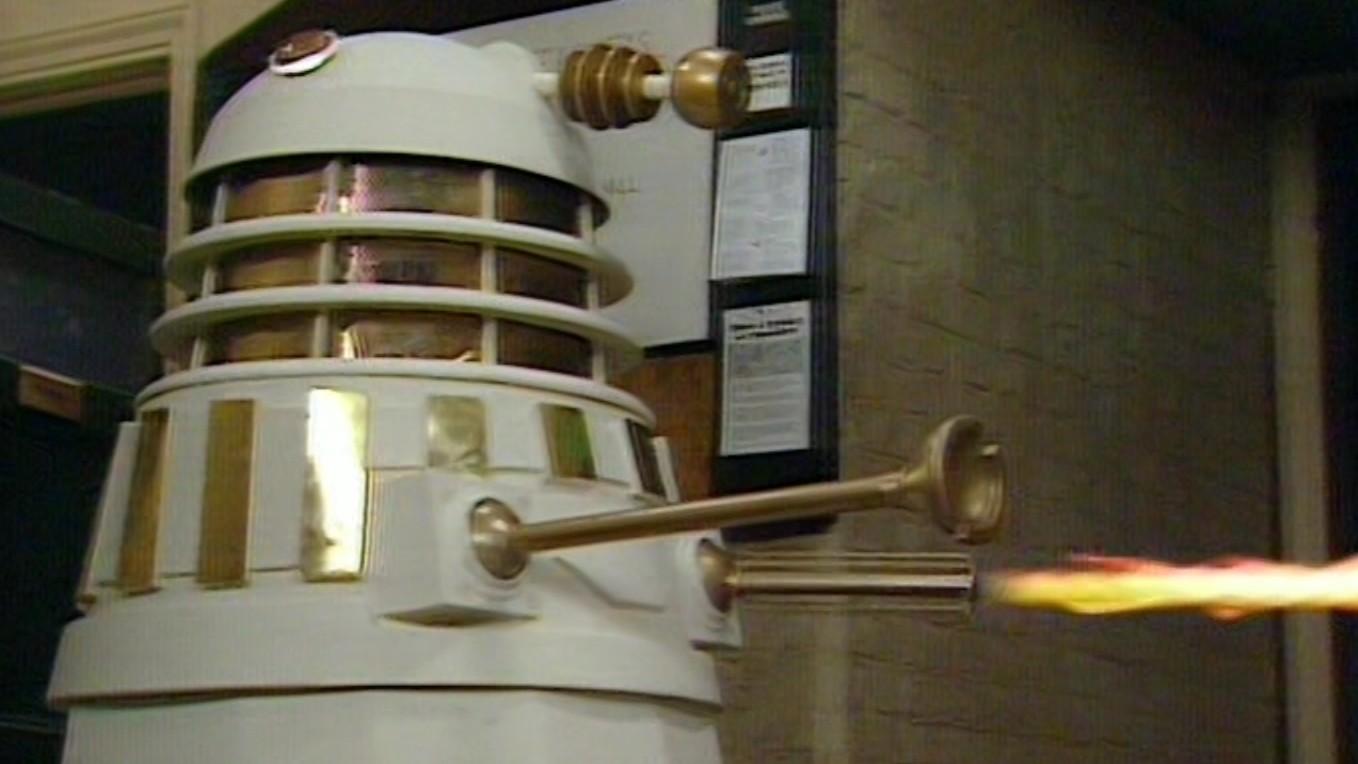
Officially known as Imperials, these Daleks fought the Renegades on Earth for control of the Hand of Omega – a stellar manipulator created by one of Gallifrey’s founding fathers, which had the ability to create supernovas.
Ultimately the Seventh Doctor allowed them to obtain the Hand, but only because he’d reprogrammed it to destroy Skaro, and the Imperial Daleks were wiped out as a result.
13. The Special Weapons Dalek (First Appearance: 1988)

For extreme battle scenarios, the Imperial Daleks devised special tank-like units whose sole purpose was to kill.
These Special Weapons Daleks were absolute beasts, housed in bolstered, battle-ready casings that combined the standard Imperial skirt with a bespoke top half.
Rendered in the Imperials’ signature white and gold, they lacked all the usual Dalek appendages, instead incorporating a single cannon-style weapon capable of taking out multiple opponents with a single blow.
The original model was deployed by the Imperials in their fight for the Hand of Omega, giving them an upper hand against the Renegades. It enjoyed an explosive showdown underneath a London bridge and was crucial in securing the Hand, but presumably perished with the rest of the Imperial faction when their mothership was destroyed.
A second Special Weapons Dalek resided in the chambers of the Dalek Asylum, but appeared to be inactive. More advanced variants with light-up necks and the ability to speak were later seen roaming around the rebuilt Dalek City on Skaro, alongside Daleks from other eras.
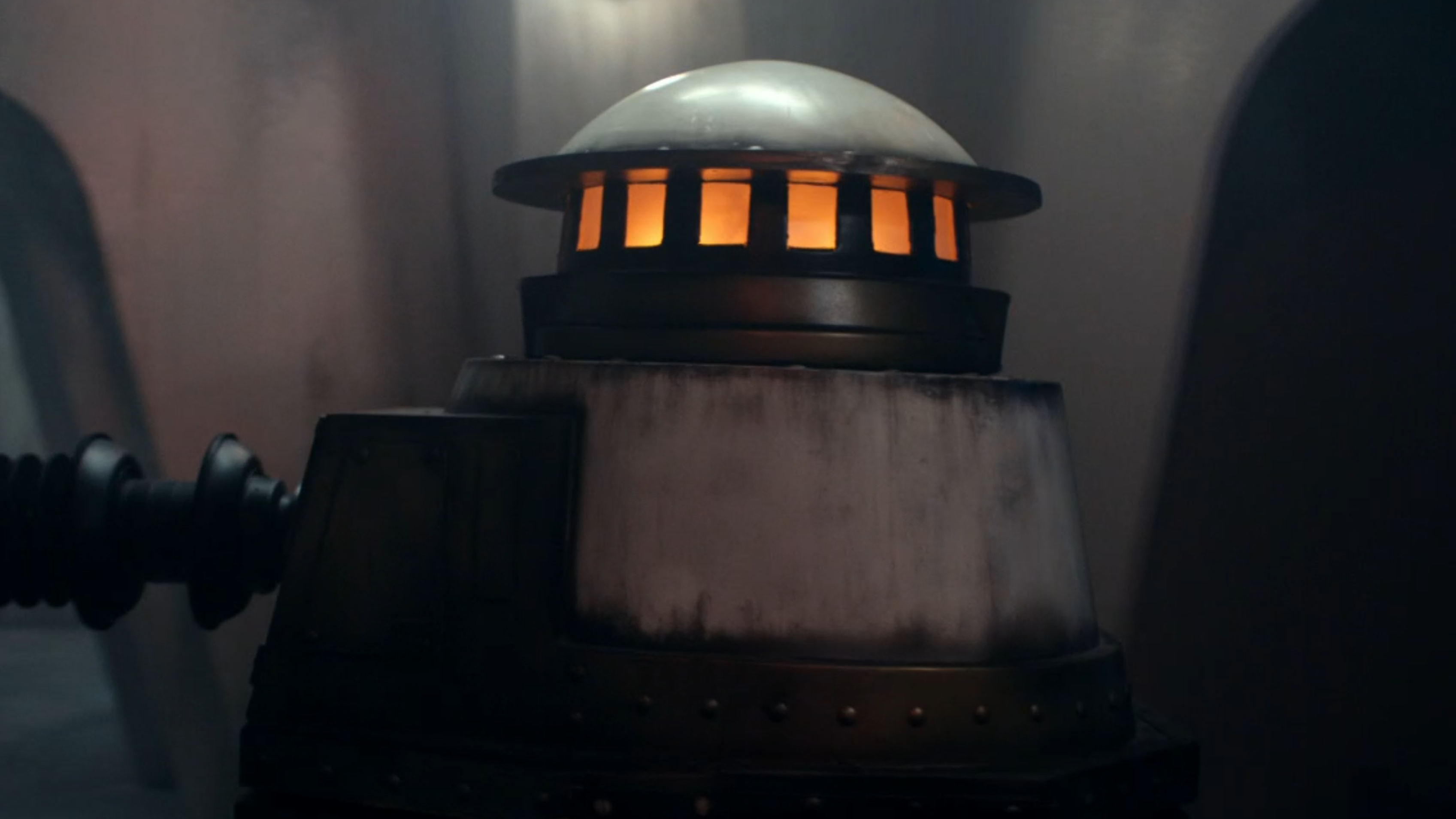
And like the original, these Special Weapons Daleks were ultimately destroyed – during the destruction of the Dalek Asylum and the Dalek City, respectively.
12. Time War Daleks (First Appearance: 2005)

Following in the footsteps of the Special Weapons Dalek, the Daleks introduced in the Time War were tougher and more tank-like, boasting robust bronze and gold casings with ridges and bolts galore.
Originally, they were thought to have been wiped out at the war’s end, along with the rest of the Dalek species. However, a single soldier survived and was taken prisoner by American businessman Henry van Statten. Dubbed "Metaltron", this Dalek was revitalised by Rose’s time-traveller DNA, which inadvertently also gave it emotions – and eventually, caused it to self-destruct, due to the belief that these emotions were a sickness.
The rebuilt Dalek armies seen since have, for the most part, retained this standard bronze design – from the Dalek Emperor’s disciples, to Davros’ New Dalek Empire. Time War-style Daleks also populated the Dalek Parliament, and assisted the Spy Master in his "Master’s Dalek Plan".
They're essentially the Daleks' dispensible foot soldiers, and as with the original drones, the majority of them possessed a standard plunger and gunstick, though some did incorporate more bespoke weaponry.
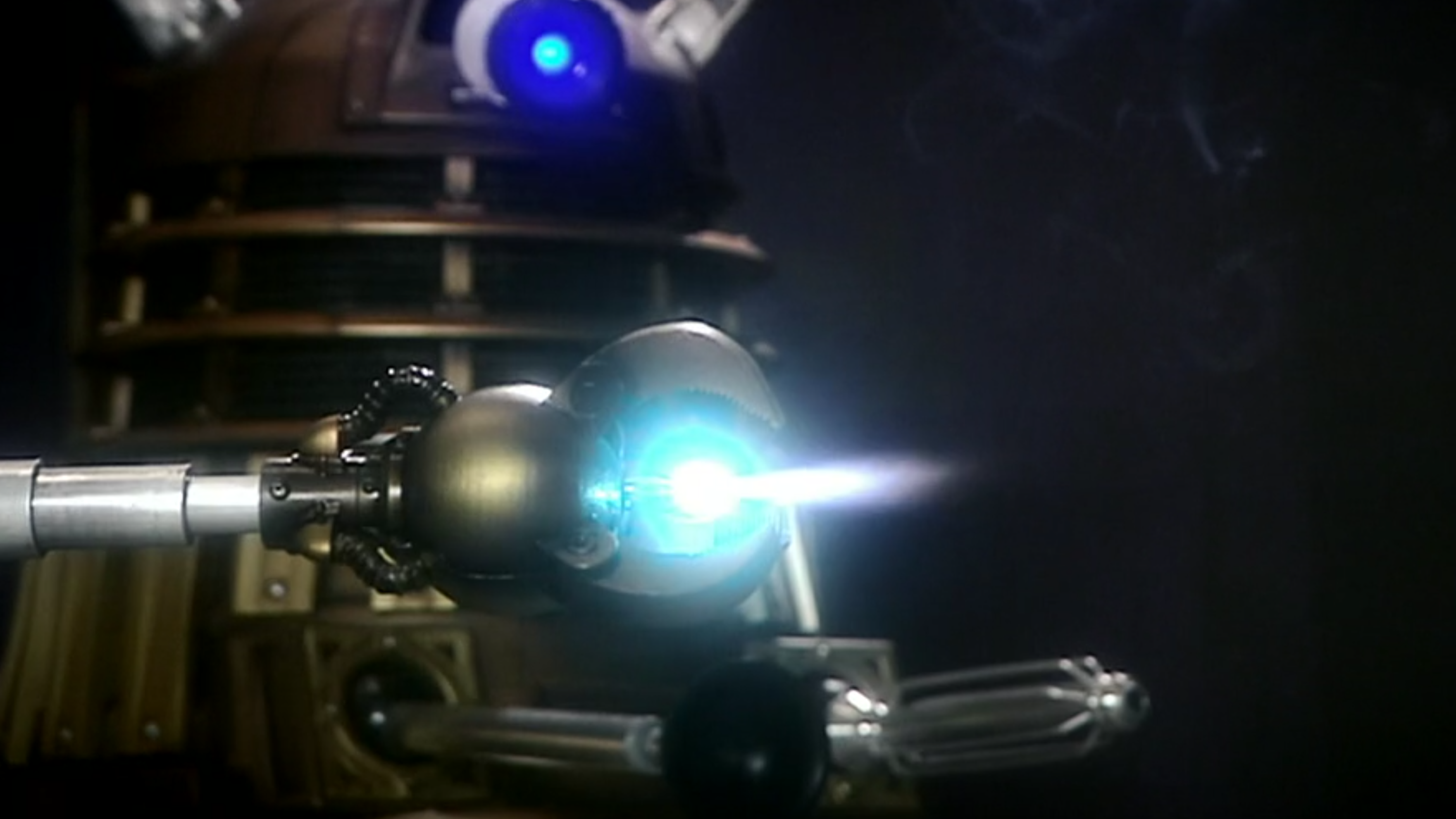
These include the Assault Dalek, which was deployed to cut through a door during the Battle of the GameStation (much to the fright of poor Lynda with a Y), and the Vault Daleks, which flanked Davros on the Crucible and featured a special claw manipulator arm.
11. The Cult Of Skaro (First Appearance: 2006)

Other Daleks to survive the Time War included the Cult of Skaro, a black ops-style group tasked with finding new ways of killing, and new ways of keeping the Dalek race going.
Uniquely, these Daleks all had names and personalities. Most distinctive was their leader, Dalek Sec, whose all-black casing was reminiscent of the early Supremes. The other three members, Jast, Thay, and Caan, had standard bronze casings, but could nevertheless be told apart by the ID tags just beneath their eyestalks, while later on, Jast briefly sported a syringe attachment instead of the usual plunger.

The Cult of Skaro spent much of the Time War under the radar, leading many (including the Doctor) to believe they were just a legend. Realising that the Daleks would not win the war, they fled in order to preserve Dalek-kind, using a special ship called The Sphere to access and hide within The Void, the space between universes.
When they eventually re-emerged, they brought with them a Genesis Ark – a stolen Time Lord device holding millions of Daleks that had been imprisoned during the Time War. These Daleks were temporarily unleashed upon modern-day London, but were ultimately sucked back into the Void by the Doctor and Rose.
The Cult of Skaro escaped however, travelling to 1930s New York via an emergency temporal shift. They built a laboratory and attempted to enact their "Final Experiment" – a last-ditch effort to continue the Dalek race.
This backfired massively, leading to the destruction of the Cult of Skaro – minus Dalek Caan. It also led to a completely new way of thinking for the Daleks – at least, temporarily...
10. Human-Dalek Hybrid (First Appearance: 2007)

By the time the Cult of Skaro arrived in 1930s New York, the Daleks were dangerously close to extinction. After unsuccessfully trying to grow new Dalek embryos, they decided to diversify, with the intention of creating a new, human-Dalek variant.
To this end, the Cult’s leader Dalek Sec made the ultimate sacrifice, merging with the ambitious American businessman Mr Diagoras to become the first human-Dalek hybrid.
This hybrid was largely human in appearance, though his head – with its single eye, exposed brain, and fronds on each side – incorporated clear echoes of a standard Dalek mutant.
Thanks to his human DNA, the hybrid was much more receptive and emotional than ordinary Daleks, demonstrating genuine respect for the Doctor and a desire for his people to embark on a different, more peaceful path.
However, this view was not shared by the rest of the Cult, who believed that Daleks should remain pure, and they eventually chose to depose and exterminate their leader.
9. Dalek Caan (First Appearance: 2006)

The battle caused by the Cult of Skaro's mutiny against Dalek Sec resulted in the deaths of Sec, Jast, and Thay. Dalek Caan became the last Dalek in existence, and fled by activating another emergency temporal shift.
Taking it upon himself to save his race, he flew into the heart of the Time War and rescued Davros, who subsequently created his New Dalek Empire using cells from his own body.
However, the journey scarred Caan, both physically and mentally. The top half of his casing was completely ripped apart, exposing him to all of time and space. This simultaneously sent him mad, and granted him the ability to see into the future.
As such, though viewed as an "abomination" by other Daleks, Caan was a vital asset to the New Dalek Empire. He correctly foretold the Metacrisis Doctor’s birth and Donna Noble’s 'death' (though failed to mention that it was merely metaphorical, or that it would eventually be reversed).
What the Daleks didn’t realise is that Caan was also plotting against them, manoeuvring the timelines to manifest their demise. Across time and space he saw the truth of the Daleks, all that destruction and hatred, and had decided that it must end.
His final act was to convince the Metacrisis Doctor to blow up the Crucible, destroying the New Dalek Empire in the process – save for a handful of survivors...
8. Ironside Daleks (First Appearance: 2010)

A single Dalek saucer survived the fall of the New Dalek Empire and ended up in the 1940s, where its crew hatched a cunning plan to reboot its species.
They managed to track down the last remaining Dalek Progenitor, a device that stored pure Dalek DNA and would allow their race to rebuild. There was just one problem – the Progenitor would only respond to pure Daleks, and since these Daleks had been created from Davros' cells, the Progenitor did not recognise them as pure.
Demonstrating that the Daleks can be just as clever as they are destructive, two of the three survivors integrated themselves into the British Army, by presenting themselves as "Ironsides" – robotic war machines ostensibly designed to help the British war effort, by doing everything from shooting down enemy planes, to carrying cups of tea. Their goal was to have the Doctor testify that they were indeed Daleks, which was an alternate way of activating the Progenitor.
The Ironsides were your standard Time War Dalek drones with khaki-green paint jobs, midsection utility belts, Union Jack ID tags, and covers over their luminosity dischargers, so they wouldn't be lit up during air raids.
Having successfully obtained the Doctor's testimony, the three Dalek survivors were able to use the Progenitor to trigger the birth of a fresh Dalek empire, led by a group of brightly-coloured Dalek drones.
These new Daleks promptly exterminated their impure predecessors, and escaped into deep space.
7. The New Dalek Paradigm (First Appearance: 2010)

The Daleks created by the Progenitor were taller and more muscular than their predecessors, incorporating plainer, less embellished casings, and organic eyes in their eyestalks.
These Daleks also had specific ranks, designated by their casing colour. There was the standard red Drone, the blue Strategist (who oversaw battle strategy), the orange Scientist (who controlled scientific operations), the yellow Eternal (whose mysterious purpose was never revealed), and the white Supreme (who, as with previous Supremes, all Daleks reported to).
The Eleventh Doctor witnessed the original Paradigm’s creation, but had to let them escape in order to defuse a bomb the Daleks had planted on Earth. He later encountered a Supreme, Eternal, and Drone at the opening of the Pandorica, and raided a battle-damaged Supreme for information about the Silence.

By the time the Doctor was brought before the Dalek Parliament, the Daleks had, for the most part, reverted to the bronze Time War design, with the Paradigm taking more of a background officer role.
The Parliament included variants of the Supreme, Strategist, and Drone Daleks, with slimmer and less hunchbacked casings (which, in the case of the Strategist and Drone, were also darker and more metallic).
Following this, the New Dalek Paradigm was never seen again, and their ultimate fate remains unclear – though some accounts indicate they were completely wiped out when the Eleventh Doctor's regeneration destroyed the Dalek Mothership on Trenzalore.
6. Dalek Puppets (First Appearance: 2012)

Following their attempts to merge Dalek and human DNA, the Daleks developed a technique to recruit any organic being to their cause, via specially-engineered nanogenes.
The process worked equally well on the living and the dead, and the resulting "puppets" weren’t always aware that they’d been converted, making them the perfect sleeper agents. Eventually, their true nature would be belied by their appearance, with Dalek eyestalks sprouting from their foreheads, and gunsticks from their hands.
Dalek Puppets were first used to bring the Eleventh Doctor, Amy, and Rory to the Dalek Parliament. They were also present within the Dalek Asylum, which was covered in a nanocloud that turned any intruders (such as the deceased crew of the Starship Alaska), into part of the on-site security – unless, like the Doctor and friends, they were wearing protective bracelets.
The Daleks subsequently used nanogenes to convert Papal Mainframe members during the Siege of Trenzalore, including Tasha Lem and a handful of Silents. Then, the Twelfth Doctor’s 12th century mate Bors was converted into a Dalek Puppet, to help locate the TARDIS and bring it to Skaro.
Though Dalek Puppets possessed firepower in the form of a Dalek gunstick, they featured no armour or defences to speak of, and unlike proper Daleks would be susceptible to most forms of attack.
They were phased out by the Daleks and haven't been seen in quite some time, though this wouldn't be the last time the Daleks used human bodies to do their bidding.
5. Rusty (First Appearance: 2014)

During the Dalek Wars of the far future, a battered Time War-style drone drifted off into space while suffering a radiation leak, before witnessing the birth of a star. This experience led him to develop a sense of morality, and an unprecedented hatred for his own race.
This Dalek was later salvaged by the Combined Galactic Resistance, a human force doing battle with the Daleks, and was taken aboard their command ship Aristotle, where it was held prisoner.
The Twelfth Doctor later arrived and nicknamed the Dalek "Rusty". Curious to find out whether there really is such a thing as a good Dalek, he ventured inside its casing – which, by this point, had been embellished with various cables and components.
After healing Rusty, and inadvertently turning him back into an ordinary Dalek, the Doctor successfully managed to reinstate Rusty's sense of morality – but not without also passing on his own hatred for the Daleks!
The result was a Dalek that was, by human standards, "good" – but was nevertheless still consumed by hate.
Rusty continued to fight the Daleks for billions of years and soon gained legendary status as a unique Dalek that had actually turned on his own kind.

He settled in the ruins of the planet Villengard where the Twelfth Doctor encountered him once again, shortly before his regeneration, in order to connect to the Dalek Hive Mind (the shared intelligence of the Daleks) and discover the truth about Testimony.
4. Reconnaissance Scout Daleks (First Appearance: 2019)

When the Daleks first left Skaro they sent an advance guard of Reconnaissance Scouts – specialised units designed to survey planets prior to invasion.
One of these Scouts came to Earth in the 9th century, where it was vanquished by an army of humans. The mutant was split into three pieces, which were sent to be buried on three different continents. However, one piece never made it to its destination and instead remained in Yorkshire, where it was eventually uncovered as part of an archaeological dig underneath Sheffield Town Hall.
With the aid of ultraviolet light, the mutant reassembled itself on New Year’s Day 2019, using unsuspecting archaeologist Lin as a puppet to retrieve its gunstick and build a new, makeshift casing. This casing featured a claw instead of a plunger, plus a unique skirt section with three (rather than four) rows of sense globes, along with some concealed missiles.
The actual Reconnaissance Dalek mutant appeared much larger than a standard Dalek mutant, suggesting higher levels of intelligence fitting for such an important role within the Dalek forces.

Following an explosive showdown with the British army, the Recon Dalek arrived at government communications facility GCHQ, from which it attempted to summon its invasion fleet.
It was ultimately thwarted by the Thirteenth Doctor and her extended fam, who melted its casing with a microwave oven before throwing the mutant into a supernova.
However, the legacy of this Dalek lived on…
3. Defence Drone Daleks (First Appearance: 2021)

Following its defeat, the Reconnaissance Scout’s casing was acquired by disgraced American businessman Jack Robertson and scientist Leo Rugazzi, who used it as the basis for a new type of security drone.
These Defence Drones were essentially sleeker versions of the Recon Scout, incorporating more streamlined casings and a smart black and silver colour scheme.
Initially harmless, they were created to operate as riot police, stationed in high-security environments such as airports and prisons, and possessing water and tear gas cannons in place of the usual laser gun and manipulator arm, plus the ability to emit a high-pitched noise that could irritate and disperse rioters.
But unbeknownst to Robertson, Rugazzi had also grown a mutant from the Recon Dalek’s DNA, traces of which were found within its destroyed casing. This mutant possessed him and created countless copies of itself via a clone farm in Osaka, so that when the Defence Drones were formally unveiled, a whole army of Dalek mutants was waiting to take them over.
Their plans for conquest were subsequently stopped by the Thirteenth Doctor, with help from none other than the Daleks themselves…
2. Death Squad Daleks (First Appearance: 2021)

The Daleks’ obsession with purity eventually led to the formation of the Death Squad – an SAS-style group whose sole purpose was to preserve the integrity of the Daleks.
These Daleks were largely identical to the standard Time War-era drones, though like the rebuilt Recon Scout, they had claws rather than plungers. And in another departure from other Dalek divisions, their leader was indistinguishable from the rest of the group – though leaders did possess a deeper voice then the rest.
Having been familiar with the Death Squad's existence, the Thirteenth Doctor reluctantly sent a signal through the time vortex and called them to Earth to deal with the Defence Drones, which had been fed liquidised humans while they were grown, and thus were considered "impure" by the Death Squad. A civil war subsequently ensued, during which the Defence Drones were ruthlessly exterminated.
The Doctor then gave the Death Squad a taste of its own medicine, sending Captain Jack, Graham, and Ryan to blow up their ship while luring the remaining Daleks into a decoy TARDIS disguised as her own, which folded in on itself.
Daleks of this design also formed part of the war fleet that was destroyed in the final Flux event – though it’s not clear whether they were all Death Squad members or not.
1. Executioner Daleks (First Appearance: 2022)

When the Dalek War Fleet was destroyed by the Flux, the Daleks held the Thirteenth Doctor personally responsible and began plotting their revenge.
Knowing that she had managed to disable Dalek gunsticks in the past, they developed a new class of Dalek with gatling-style weapons, capable of rapid fire. These Executioner Daleks also possessed Recon and Death Squad-style claws, but were otherwise identical to standard Time War-era drones.

Shortly after the TARDIS landed at ELF Storage, a group of Executioners was sent there too, and successfully managed to exterminate the Doctor, Yaz, and Dan.
Things became more complicated when the TARDIS inadvertently created a time loop, which initially worked in the Daleks’ favour, allowing them to carry out their executions again and again and again.
However, the Doctor and her friends ultimately managed to escape, tricking the Daleks into blowing up the warehouse by firing at a stash of forbidden items (including fireworks).
The Daleks that the Doctor has encountered since have all been standard Time War models, but it’s only a matter of time until the next new variant comes along!