Doctor Who: Lucky Day Review - 7 Ups & 3 Downs
Ever wanted to see Doctor Who fight online trolls? Well, it's your Lucky Day!

Pete McTighe is the go-to writer for stories about what Doctor Who companions get up to after they leave the TARDIS. Who can forget Leela staring down the Daleks in the ruins of Gallifrey? Or Tegan and Nyssa reunited in a dream world to face off against the Mara? Now we have, er, Ruby Sunday on a podcast.
But of course, Lucky Day isn't really about Ruby Sunday, it's about how her time with the Doctor (and her personal trauma) are weaponised by online conspiracy theorist and misinformation peddler Conrad Clark. Guest actor Jonah Hauer-King makes his mark as a truly odious Doctor Who villain, who feels more real and terrifying than last year's political caricature, Roger ap Gwilliam.
Indeed, when Lucky Day gets going, it does feel like we're retreading 73 Yards, but the rug pull sets up an episode that taps into the anger and frustration of Dot and Bubble. If The Well was a timeless Doctor Who thriller, Lucky Day takes the show into more timely territory with online disinformation, setting up a very different kind of Reality War in the finale.
10. UP - Doctor Rubes

Much like 73 Yards, Lucky Day requires a lot from its leading lady. Millie Gibson more than steps up to the challenge, pitching her performance perfectly throughout. The scene in which she captivates Conrad with her description of the Shreek is an early standout moment, and she further leans into being a Doctor surrogate once they relocate to the village.
However, there's a real vulnerability to Ruby that Gibson performs to heartbreaking effect. It's very clear that, after finally meeting her birth mother, Ruby is still somewhat lost. She misses the Doctor, but acknowledges how grueling life in the TARDIS can be sometimes. It's a personal conflict that Gibson portrays well on-screen.
In an episode all about online radicalisation, Conrad and Ruby's budding romance is a smart way to demonstrate to viewers how these chancers inveigle their way into our lives. The gap in Ruby's life is clearly one of the reasons that she becomes so drawn to Conrad. He's someone who wants to hear her fantastical stories, and can lend a sympathetic ear.
Interestingly, Ruby still cares for Conrad on some level when Kate sticks the Shreek on him, proving that in the face of lies and division, Ruby Sunday retains her empathy and humanity.
9. UP - Conrad Clark
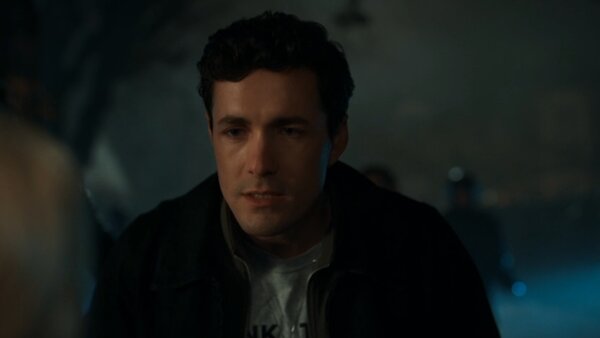
In the climax of Lucky Day, Conrad Clark strides into UNIT HQ armed with a gun and wearing a baseball cap, a hoodie and a bodycam. It's a striking image that draws uncomfortable parallels with real-world radicals. It's the ugly reality of online radicalisation stepping into the fantastical world of Doctor Who with its aliens and comedy robots.
Conrad Clark and his fellow conspiracy theorists are a great Doctor Who allegory for those who believed COVID is a hoax. They think the policies in place to protect humanity from Yeti in the underground are social control, and it's telling that Conrad refuses to take the very medicine that will stop him from dying at the hands of the Shreek. It's therefore utterly thrilling when Conrad's anti-vaxx sentiment comes back to literally bite him in the arm.
As a character, Conrad Clark is constructed brilliantly by writer Pete McTighe. Conrad doesn't really believe that the TARDIS and UNIT and aliens aren't real, he's just angry that he's never been asked to be part of that world. Jonah Hauer-King plays an absolute blinder as Conrad, his transformation into smug, smiling sociopath is utterly compelling to watch.
What's also interesting is that Ruby is the only character in whom Conrad doesn't bring out the worst...
8. DOWN - The Doctor
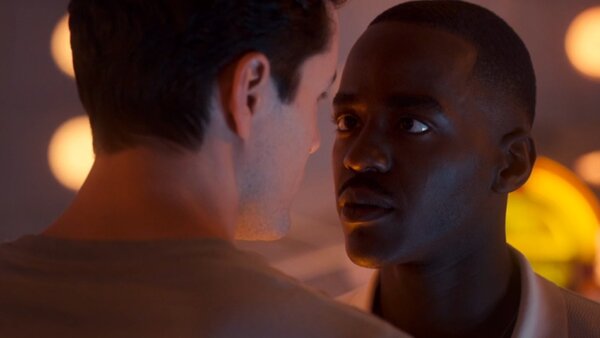
Which brings us to the Doctor, who turns up at the end to deliver the moral and the message.
"Cowards like you, weaponising lies, taking people's insecurity and fear and making it currency. You are exhausting. You stamp on the truth, choke our bandwidth and shred our patience. Because the only strategy you have is to wear us down. But the thing is, Conrad, I have energy to burn and all the time in the universe."
Ncuti Gatwa's steelier delivery means this is likely destined to feature in future lists of great Doctor Who speeches, but it runs the risk of undermining the episode and the character. Conrad's refusal to be cowed by the Last of the Time Lords is definitely an interesting beat. However, Fifteen taking the bait and telling Conrad he'll die alone undermines our hero, proving that this smug sociopath can even bring out the worst in the Doctor!
In its best moments, Lucky Day works as well as it does because the Doctor has no business being in it. This is a story about a very human problem that the Doctor cannot fix, so it would have been best to keep him on the sidelines.
7. DOWN - "I'm The Governor"

And while we're on the subject of very human problems, the end of Lucky Day, in which Conrad is recruited by Mrs Flood, further undermines the episode's power. Conrad Clark is a hugely compelling villain because he doesn't have magic powers, a deal with a nefarious alien paymaster, or access to otherworldly technology. He's terrifying because we all know so many personalities like him.
There's a version of Conrad's story where he becomes a political prisoner, with his fans and allies in Westminster campaigning for his release. A world in which he becomes the next Harold Saxon or Roger ap Gwilliam. Instead, Conrad is recruited by the exhaustingly enigmatic Mrs Flood, masquerading as a prison governor.
The involvement of Conrad in the impending battle between the Doctor and Mrs Flood reduces him to a henchman rather than an impactful villain in his own right, thereby undermining some of the power of Lucky Day.
Hang on, though. A female prison governor who breaks someone out of their cell to help with their dastardly plan, now where have we seen that before? Does this allusion to The End of Time confirm that it's Mrs Flood who retrieved the gold tooth in The Giggle? Time will tell.
6. UP - "I've Been To English Villages..."
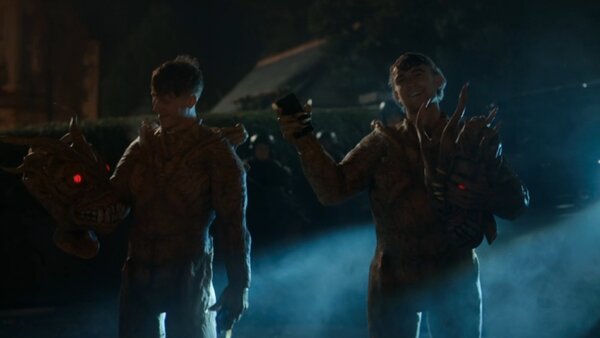
From Carla and Cherry Sunday invoking The Wicker Man to a UNIT helicopter above the village green, Lucky Day plays with the iconography of '70s Doctor Who and folk horror to subversive effect. It's such a smart idea to flip audience expectations by sending Ruby right into the heart of what looks and feels like a classic spooky Doctor Who episode.
In order to confront UNIT on camera, Conrad effectively sets up his own episode of Doctor Who as the perfect trap. It's why the reveal of who he really is, and his motivations, works so well. As an audience we've gone in expecting the sort of creepy, horror inflected Doctor Who that we all love so much. There's a good deal of tension to the scenes of Ruby marshaling the pub punters and setting out across the village, armed only with a cast iron poker.
Instead, we're given a story that's arguably way more horrifying – an online troll capable of staging elaborate hoaxes to further his own twisted world view. Rather than treading a well worn path, we're walking on new ground for the show.
Bonus points for featuring classic Doctor Who actor Paul Jerricho as barman Alfie – from Castellan to Cask Ale Man.
5. UP - Trinity Wells' Heel Turn
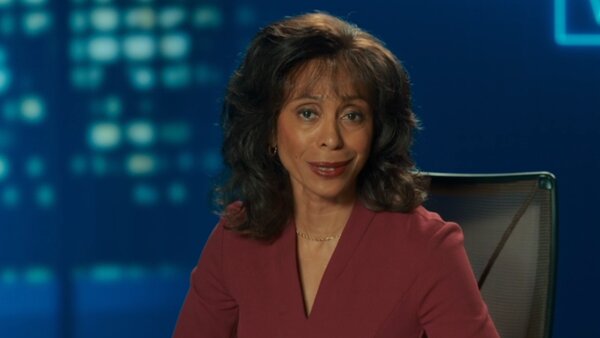
It looks like Trinity Wells' shift to the lunatic right in The Giggle didn't have anything to do with the Toymaker. Lucky Day reveals that Trinity Wells is one of Conrad Clark's biggest supporters, getting behind him on her own deranged talk show. It's an effective way to demonstrate how these conspiracy theorist nutters can spread their message thanks to figures within the media.
Trinity's support of Conrad is similar to how certain news networks parrot the lies and misinformation spread by online agitators. Trinity Wells' heel turn is part of a larger montage of media responses to Conrad's stunt. Joel Dommett jokes about unmasking monsters on The Masked Singer, while Alex Jones interviews Conrad on The One Show.
It's slightly disappointing that the nitty gritty of Kate Stewart dealing with Westminster and the media backlash to that is relegated to off-screen. However, the clips of The Masked Singer, Trinity Wells and The One Show get to the root of the problem – that our news and entertainment media's interest in fringe lunatics like Conrad only serves to spread their message even further.
4. DOWN - The Ableism Against Shirley
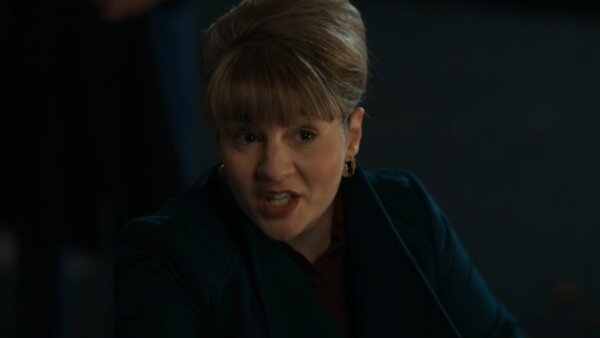
It's great to see Ruth Madeley back as Shirley Bingham, even if ("You've already got two mums" aside) she's slightly under-served by the script. But can we please stop using Shirley and her wheelchair as a shorthand to demonstrate how some characters are total bastards?
In The Giggle, Kate Stewart turned on Shirley while under the influence of the Giggle, claiming she was lying about her disability. Now, Conrad tries to claim Shirley is a benefits cheat, which is an odd moment on multiple levels. Firstly, we've already seen him be utterly horrible to Ruby, and he's positioned himself as an alien invasion "truther" in opposition to UNIT.
We know that Conrad is an awful person at this point, so him highlighting Shirley's disability and making an inappropriate joke just feels needlessly cruel and more than a bit cheap.
Representation is obviously important, and people with disabilities do face cruelty and abuse in the supposedly enlightened times of the 2020s. However, representation also means that characters like Shirley shouldn't just be onscreen to take the abuse of villains.
After The Giggle and Lucky Day, wouldn't it be great to see Shirley in a Doctor Who episode in which she wasn't verbally abused for being a wheelchair user?
3. UP - Love And Podcasters
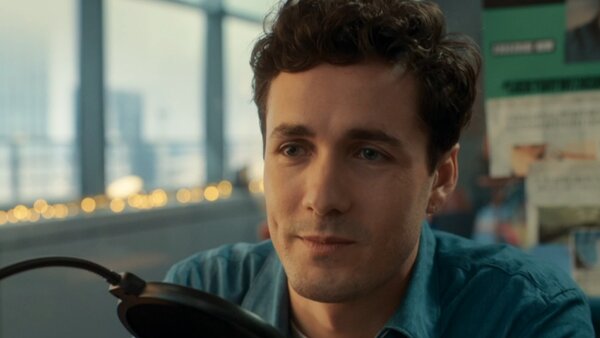
Conrad's origin story is a fascinating way to set up both Lucky Day and the eventual reveal that he's a wrong 'un. The Doctor's meeting with young Conrad (played by Benjamin Chivers, last seen opposite Peter Capaldi in The Devil's Hour) sets up a kind of Love & Monsters Redux. Elton Pope also met the Doctor as a child, and he dedicated his life to finding him again.
This, coupled with the love story, the podcast, and the apparent death of Conrad's mum all feels very familiar. Are we really just doing Love & Monsters for the podcast era? Instead, Lucky Day gives us something far darker, revealing Conrad Clark to be more Victor Kennedy than Elton Pope.
Conrad is the Doctor Who fan who stops it from being fun by twisting the message or misunderstanding just what the Doctor stands for. It definitely won't inspire any introspection from the real-life Conrad Clarks, but fair play to Doctor Who for at least attempting to call this out on the show itself.
2. UP - Kate Stewart The Badass
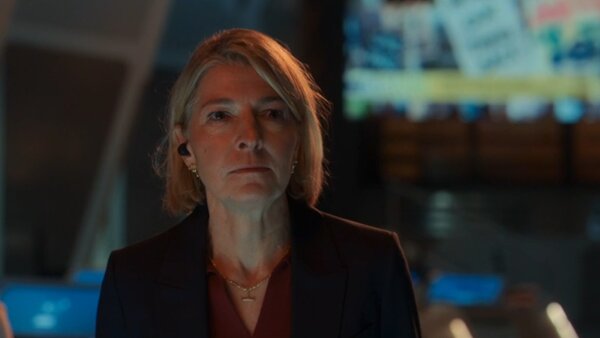
Jemma Redgrave gets some of her best material in Lucky Day, particularly in the climax. We've seen Kate Stewart consider genocide twice in Doctor Who, but her solution for Conrad in Lucky Day somehow feels more brutal. If the Shreek does get hold of Conrad, it'll rip him limb from limb. In a way, it's similar to the situations in The Day of the Doctor and The Zygon Inversion – a life-or-death game of chicken to see who blinks first, her or her foe.
It's a stand-off, Kate daring Conrad to deny the existence of aliens while a very deadly, very hungry Shreek stalks him around UNIT HQ. It's a moment that shows us who Kate and Conrad are as characters. Kate Stewart is the person willing to make the hard decisions to protect those close to her – after all, isn't her decision to unleash the Shreek rooted partly in her desire to avenge Ruby?
Meanwhile, Conrad is just an adult version of the scared little boy who got a clip round the ear from his boozy mum on New Year's Day 2007. It's easy, therefore, to draw a line between Conrad's abusive mother and his desire to tear down the legacy of Kate's father.
1. UP - UNIT Under Fire
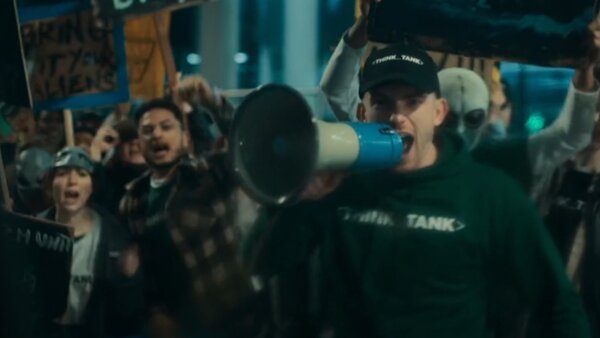
In Flux, Chris Chibnall used UNIT as a means to explore how bad actors can use political power and influence to shut down or drastically de-fang vitally important institutions. However, Conrad is different from the Grand Serpent because he understands that the general public can be a far more powerful tool.
The increased public scrutiny of UNIT feels something that was inevitable after they erected a massive branded skyscraper in central London. Is that really such a good use of public money? Conrad Clark is one of those men online "just asking questions", but those questions force us to rethink UNIT's place in the Doctor Who universe.
Are they a valuable force for good, protecting people from evil, or can they sometimes be a bit oppressive? What does UNIT HR think about Kate and Ibrahim's relationship? Did Kate Stewart get her job because she was the best person for the job or because her dad was the Brig?
This push for more transparency when it comes to UNIT operations will likely impact upon The War Between the Land and the Sea. On the strength of Pete McTighe's script for Lucky Day, that's a very enticing prospect.