Doctor Who: Lux Review - 6 Ups & 4 Downs
Does Lux shine bright? Or does Doctor Who's RTD2 era need a bulb change?

During his first era as Doctor Who showrunner, Russell T Davies established a template that would form a rigid backbone for each season. Opener on contemporary Earth, trip to space, meeting with famous historical figure, return of classic era monster, rinse, repeat.
For his second era, he appeared to throw all of that away, delivering experimental, format-defying episodes like 73 Yards and Dot and Bubble. Did this mean that we were in a new, unpredictable era where we couldn't second guess where RTD would take the TARDIS next?
Lux reveals that RTD2 absolutely has a format. As with last year's Space Babies, we took our new companion to the furthest reaches of space in The Robot Revolution, before Belinda Chandra is introduced to her first Pantheon member in Episode Two, which now appears to be the "Meeting with a God" slot.
With its high-concept monster and evocative setting, Lux should have felt exciting and new, but more often than not it feels like a scratched and discoloured film print, spooling through one more screening to a bored and distracted audience.
10. UP - Mr Ring-A-Ding

Traditionally, Doctor Who monsters are actors in rubber suits, actors inside metal cans, or actors in motion capture suits. So it felt brand new and exciting to see Mr Ring-a-Ding, a traditional, hand-drawn animated character. Director Amanda Brotchie has a real sense of space, and perfectly manages the eyelines, allowing the Doctor, Belinda and Reginald to interact with Ring-a-Ding in a way that feels naturally fluid.
Mr Ring-a-Ding's hand-drawn animation is key to the monstrous transformation in the climax. As he saps the Doctor's regeneration energy to become three dimensional, Ring-a-Ding loses all the charm of the 2D version, becoming a bloated, empty caricature. It's a subtle but brilliant commentary on so many lifeless CGI "upgrades" of beloved two-dimensional cartoon characters over the years.
Alan Cumming is unrecognisable as the voice of Mr Ring-a-Ding, really giving it his all as the all-singing all-dancing... pig... man... pig man? Cumming also balances comedy and menace brilliantly, making Ring-a-Ding a unique and unforgettable villain.
The only downside is that a lot of money clearly went into Mr Ring-a-Ding, meaning that other elements are less well-realised...
9. DOWN - The God Of Light
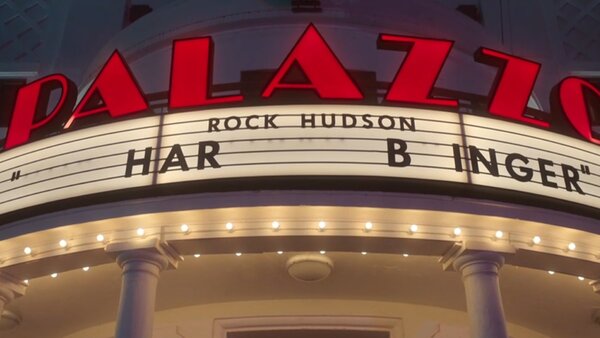
Case in point; Lux Imperator, the god of light. When the Doctor and Belinda first meet Mr Ring-a-Ding is revealed to be the harbinger of the coming of Lux Imperator. The marquee for the (entirely fictional) Rock Hudson movie, The Harvest Bringer even falls apart to reveal the words "HAR B INGER"!
But then Ring-a-Ding says he's also Lux. So what, he's both harbinger and god? Okay, that sort of scans with Harriet Arbinger being both a harbinger and a vessel for Sutekh's influence. But if Ring-a-Ding is also Lux Imperator, why is he so serene when he becomes the "light of creation", both everything and nothing? Surely he already was, he's the literal god of light?
The script doesn't seem to know what, exactly, Ring-a-Ding and Lux are, and it might have worked better if there was a few more minutes on the runtime, or a clear distinction between both harbinger and god. Ring-a-Ding as the physical manifestation, Lux as the flickering and malevolent light inside the projector. Clearly the VFX budget didn't extend to creating two animated characters.
It's a fascinating example of how, even with the fabled Disney money, Doctor Who still doesn't have the time and money to realise its big ideas.
8. UP - The Palazzo

While the script and the plotting of Lux was disappointing, the atmosphere of the twilight seafront and the cinema interior were well-realised.
One of my nagging doubts going into Lux was whether Penarth Pier in Wales could really double for Miami, Florida. The episode largely gets away with it, spending the majority of the runtime inside the creepy old cinema where Mr Ring-a-Ding keeps Reginald Pye and the fifteen missing Floridians. The projection booth (Reginald Pye's safe haven) was well-used, particularly in the scene where Mr Ring-a-Ding slithers under the door and takes control of the dual projectors, turning them on the Doctor and Belinda.
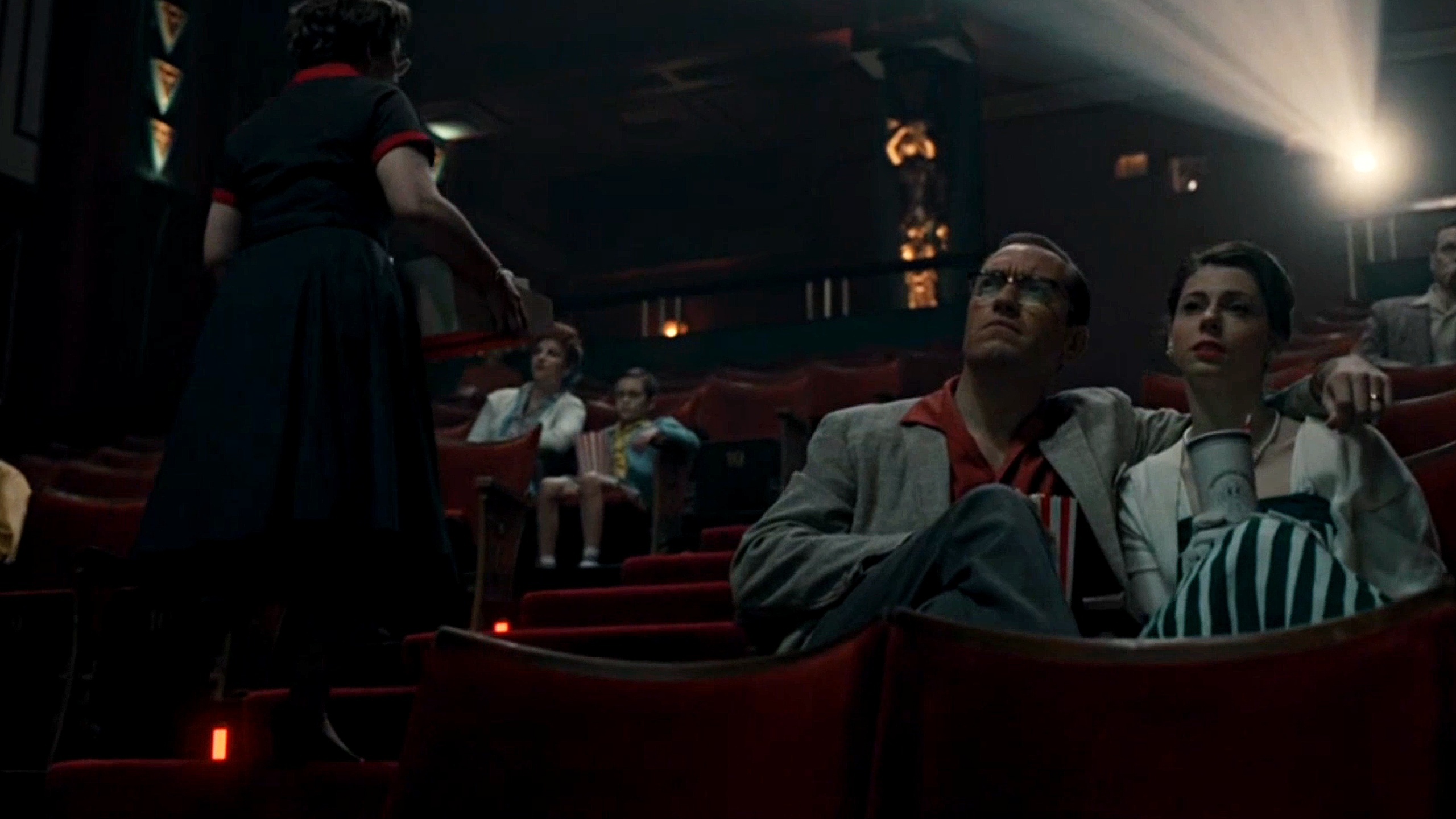
Full disclosure; I love old cinemas, the elaborate interior design, the exquisite architecture, the click and hum of the projector. Lux had all of this, and it's kind of disappointing that it didn't spend more time exploring the cinema itself. The discarded popcorn tubs and the old cowboy movie playing to an empty auditorium was incredibly evocative, but I'd have loved the Doctor and Belinda to explore the abandoned concessions stand or ticket booth.
Abandoned cinemas are such strange places, so they're the perfect location for a Doctor Who story. Incredible that it took the show so long to realise this, really!
7. UP - Reginald Pye
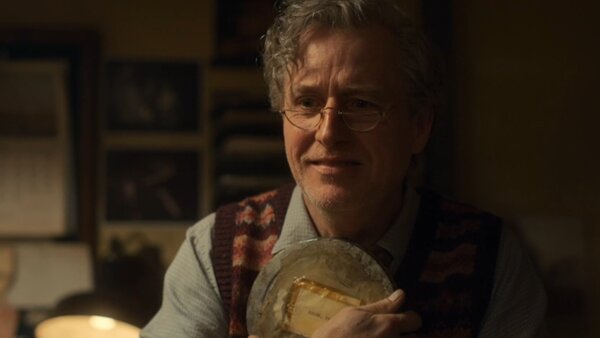
Because the cinema is abandoned, and much of the budget has clearly gone on realising Mr Ring-A-Ding, Lux is quite devoid of memorable supporting characters. Thankfully, we have Linus Roache playing the tragic projectionist Reginald Pye. The revelation that Lux can bring Reg's wife back to life via old home movies is an emotional beat that the episode desperately needed.
When Lux works, it's a story about how light can bring images to life, and nowhere is this better realised than the scene where Reg dances with his dead wife. The monochrome gradually becoming colour is a nice touch, as is the tearful Mr Ring-a-Ding watching on from the projection booth.
It's the most striking scene in the whole episode because it has emotional heft, and helps to explain why Reginald Pye hasn't run a mile after his first encounter with Mr Ring-A-Ding. It also gives us a real sense of the seductive power that Lux can offer; living movies!
It's disappointing that this power isn't explored further in the episode, either through Lux offering Belinda a chance to be reunited with her much-missed parents or by menacing the Doctor with old movie villains.
6. DOWN - "We're Your Biggest Fans!"
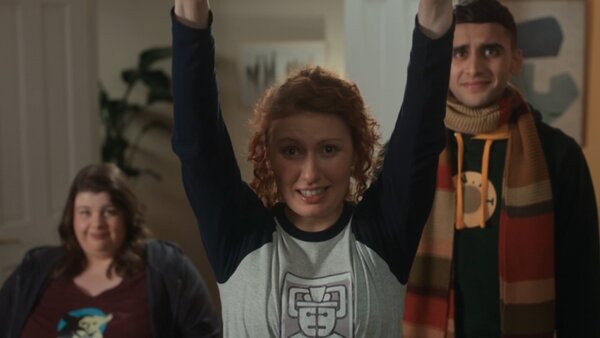
Say what you like about Love and Monsters, but it was at least an affectionate portrayal of fandom, with each member of LINDA feeling like a living, breathing individual. Sadly, the same can't be said for Lizzie, Hassan and Robyn, and not just because they're fictional constructs created by Lux.
Robyn's declaration that she knew the Doctor and Belinda would come out of the TV because it "leaked online" is a good joke, but it's couched in a slightly half-baked swing at the #RIPDoctorWho discourse.
It's clear that Davies is exorcising some of his gripes with fandom, but it's such a huge idea that could be an episode in its own right. Instead, it's a short sequence where fandom is handled in a simplistic and route-one way; two-dimensional "annoying" archetypes in long scarves and Doctor Who t-shirts which are available from your nearest retailer.
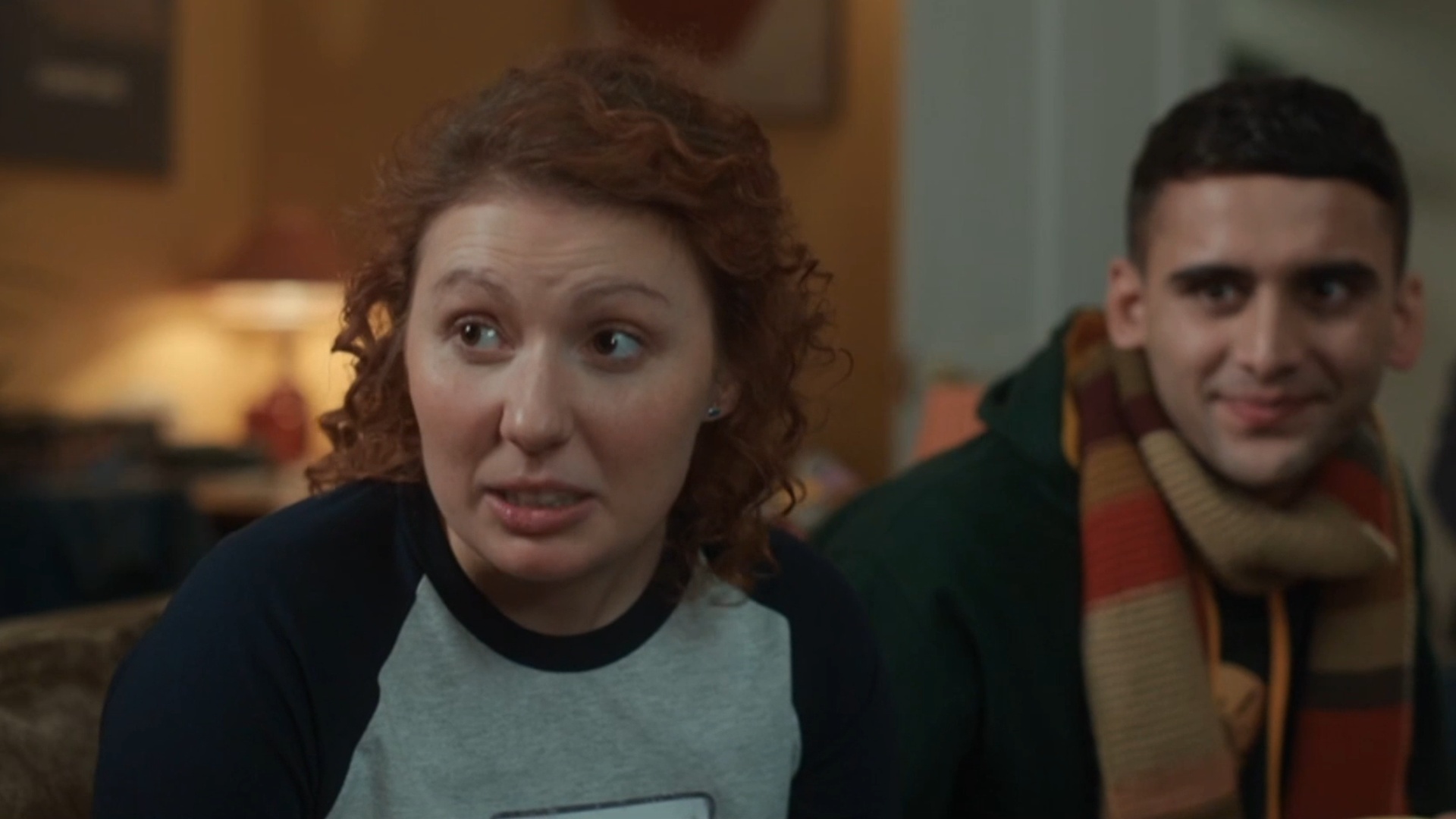
Lux is about the power of images, from the cinema audience trapped in celluloid to Reginald's wife being brought back to life. However, these fans aren't real, so the power that Doctor Who holds for them doesn't work alongside the episode's other elements.
You just never feel the emotion, no matter how loud they start playing Murray Gold at you.
5. DOWN - Cartoon Doctor And Belinda
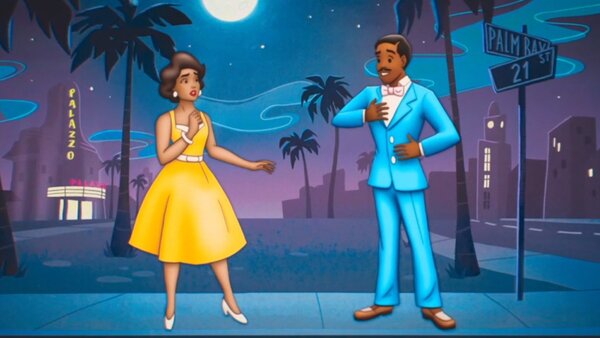
The idea of the Doctor and Belinda being flattened and gaining more dimension as they share their emotions and anxieties is a good one. However, the execution of this sequence leaves a lot to be desired. It's not just the rather uninspired cartoon recreations of Ncuti Gatwa and Varada Sethu (which pale in comparison to Mr Ring-A-Ding) but it's the voice acting.
The Doctor's two-dimensional brain makes him sound like a bad children's television presenter, which while being the point, doesn't quite gel. In fact, the Doctor and Belinda's cartoon voices sound quite patronising and over the top, which the best cartoon voice acting never does.
Ncuti in particular doesn't sound comfortable in cartoon mode, heightening his delivery but also somehow sounding quite flat. Whether he's a bit self-conscious in the recording booth or lacking strong direction, it makes the scene feel jarring, in a bad way. Thankfully, it doesn't last for long, and it's telling that the image of flesh and blood Doctor and Belinda against their cartoon background feels more visually interesting than their animated counterparts.
Chalk it up as another example of Doctor Who's complicated relationship with animated reconstructions.
4. UP - "We Are Children"
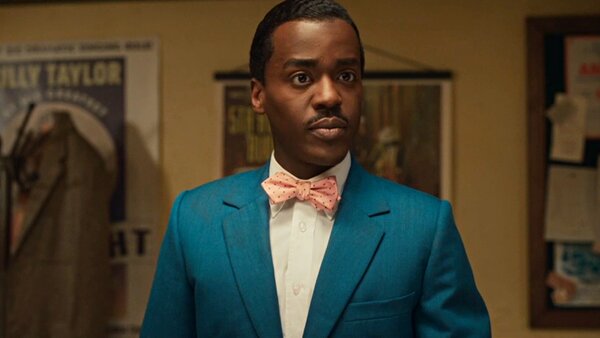
In The Devil's Chord, the Doctor ran a mile upon realising who Maestro was. Thankfully, he's grown a bit since then. After defeating the Toymaker, Maestro and Sutekh, he stands his ground and delivers quite a stirring speech about the Pantheon of the Gods. He's not scared this time, he's empowered, and he's going to stand up to Ring-a-Ding/Lux, and whichever other gods are coming his way in Season 2.
"There are forces beyond this universe..." the Doctor begins, before talking about how even he is a mere child compared to these "vast creatures". It's a commanding performance by Ncuti Gatwa, who by now has really settled into the role of the Doctor. It's interesting how small and quiet Ncuti can be in this story, perhaps deferring to the big, brash cartoon villain for the headline grabbing performance.
And yet, in those quiet moments, he has such power, and crucially believes the mad words he's being asked to deliver. It's the mark of a great Doctor, and it's exciting to think about where he'll go from here in the remainder of Season 2.
3. UP - The Doctor And Belinda
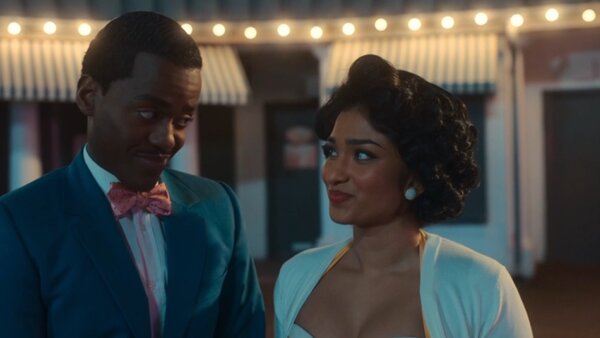
There's a world in which Belinda Chandra becomes the next Tegan Jovanka; so obsessed with getting home that she doesn't appreciate the absolutely insane opportunity she's been given to see all of time and space. Lux reveals that while Belinda is keen to get home to her mum and dad, she's not going to turn up her nose at seeing a bit of history on the way.
Ncuti Gatwa and Varada Sethu are settling into a nice groove together at this early moment in the season. Belinda is nothing like Donna Noble, but there's a similar type of friendship between the Doctor and Belinda. They're not afraid to bicker with each other or take the piss in a way that you can't quite imagine the Doctor and Ruby doing a season earlier.
As actors, Ncuti Gatwa and Varada Sethu handle the tone of Lux brilliantly, seamlessly moving between scenes where the Doctor and Belinda joke about Scooby Doo and then delicately dancing around the subject of racism and segregation. These are all really promising signs for a strong TARDIS team that we could remember for years to come.
2. UP - Miami 1952

We obviously spend most of Lux inside the Palazzo's auditorium (and silver screen), but the scene in the diner has an eerie quality to it for an entirely different reason. When the Doctor and Belinda "risk" a 4am coffee, there's an uneasy tone to the scene that you wouldn't get with any previous Doctor. The diner and the cinema are segregated spaces, where non-white people aren't welcome, an obstacle in the way of the Doctor and Belinda that has to be delicately handled.
The Doctor and Belinda operating in secret at 4am is a fascinating way to handle this potential story obstacle. This is a twilight world where the rules of segregation can be overlooked without severe ramifications.
In the past, the Doctor could just march up to someone and ask about the locked up cinema. Now that we have the first black Doctor, history can put societal barriers in the way, adding a new dimension to the storytelling.
It's sometimes a bit too on-the-nose, the Doctor's "sometimes I wait for people to topple their world" feels like an explanation too far, for example. However, the subject of racial tension gives Lux a uniquely tense atmosphere throughout the episode.
1. DOWN - "Show Ends May 24th"
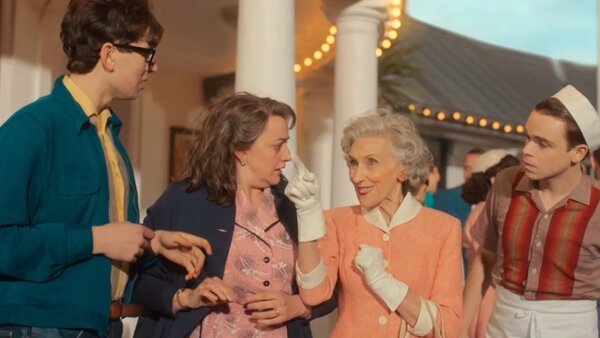
With all the cancellation anxiety swirling around Doctor Who at the moment, Mrs Flood's "Show ends May 24th" may prove to be a rather prophetic statement. Obviously, when written and performed it was a tease for the devastating events that will unfold in the finale, but it's taken on an entirely new life now.
However, that's not the reason that this moment gets a down. It's the fact that Mrs Flood's cameos across Season 2 bear an uncanny resemblance to those of Susan Triad in Season 1. It further adds to a feeling of exhaustion and lack of new ideas, not least because we've had Mrs Flood's bizarre powers and knowledge teased since Christmas Day 2023.
Not only that, but RTD1 had words seeded through each season; Bad Wolf, Torchwood, Saxon. RTD2 has female character actors seeded through each season, but with somehow less impact and portent.
If another mysterious woman is going to keep turning up, and if it's just spent Episode 2 meeting gods, before putting the Doctor and Belinda through the wringer on a hostile planet in Episode 3, isn't Doctor Who Season 2 already repeating itself?