Doctor Who Series 12: 10 Huge Questions After Orphan 55
7. Why Did It Feel Like A Throwback To The 80s?
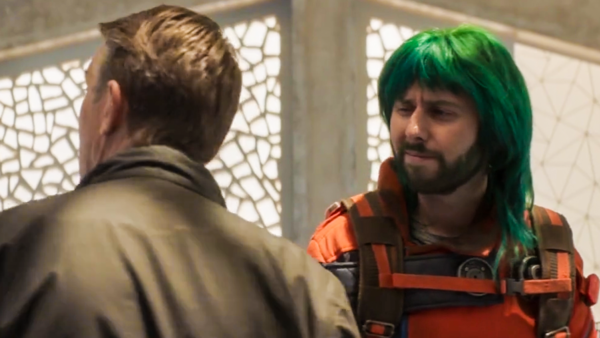
With its gaudy costume designs, cartoonish characters and wild hair-dos, Orphan 55 had the look and feel of a Colin Baker/Sylvester McCoy story circa mid-1980s. Whilst a recurring feature of Doctor Who, the almost comedic contrast between the design and the threat being conveyed was at its height with the likes of The Happiness Patrol, Paradise Towers and The Greatest Show in the Galaxy. Some even argued at the time that the series had fallen up its own proverbial wotsit and was sending itself up.
The scenario, a seemingly tranquil resort that hides a terrifying truth, has a long habit of reoccurring in Doctor Who and dates back much earlier to the recently animated missing Troughton story, The Macra Terror, but there is an element of black humour about Orphan 55 that ties it more specifically to mid-1980s Who.
Part of the reason for the almost crass design choices of Tranquility and its occupants is that it is meant to highlight the fact that Kane and co are trying to cover-up the most awful crimes, lulling holiday-makers into a false sense of security. It is also there to exaggerate even further the wasteland of the planet outside the complex’s walls.
The cover-up angle ties in neatly to the Doctor’s fears about Gallifrey and her own attempts to hide them. But it is the contrast between who we are now and what we could one day become that is the biggest deal, as illustrated by the slightly jarring final jump-cut to the Dreg.