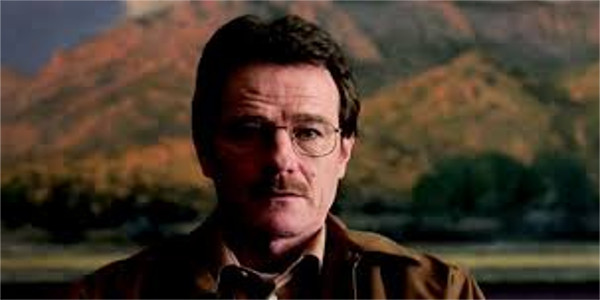
House Of Cards: 5 Reasons Frank Underwood Is No Walter White

Bryan Cranston's performance sets the bar extremely high, at a place Kevin Spacey's Underwood cannot reach...

Anti-Heroes are fast becoming a staple of high-quality TV dramas. Gone are the days we expect the hero to be a noble everyman, for more often than not that noble everyman will find himself physically or morally compromised, or just outright decapitated. Arguably the first major antihero of this new era of TV was Breaking Bad's Walter White, a character defined by his transformation from ordinary high school chemistry teacher, to ruthless drug lord. Since Breaking Bad's end, many have moved on to proclaim Kevin Spacey's grandiose performance as Frank Underwood in Netflix's House of Cards to be the new definitive antihero of our age. But wait just a minute, people. While Frank Underwood's deliciously Machiavellian scheming has been the main draw to House of Card's neo-Shakespearean narrative, it is hardly any contest as to who is the more iconic antihero of the modern TV age: Bryan Cranston's performance sets the bar extremely high, at a place Kevin Spacey's Underwood cannot reach (not yet, anyways).

5. He Started From A Position Of Power

House of Cards is a show that cannot work with an outsider perspective - perhaps this is the reason that when the series opens, Francis Underwood is already amongst the White House's "in-crowd". We never see how he got there in the first place, and the only direction he goes is up. His cool head and unshakeable poise make him a respectable character, but rob the ensuing drama of much of its tension. Frank is always floating above the action rather than knee-deep in it. Mr. White, on the other hand, is the very embodiment of rising from a mundane beginning to an operatic finish. He starts out a complete misfit within his own world - a chemist amidst cutthroats and drug addicts. The way the environment slowly brings out all of Walter's suppressed character flaws provides a dramatic and yet not overstated arc - something that Congressman Underwood cannot match, for he is already a demon at the outset.

4. His Schemes Leave Less Collateral Damage

If we were rating them on the effectiveness of their schemes, Underwood would come out on top every time, but in terms of narrative development, this is a negative point on Underwood's side. While every so often an occasion comes along where a "problem" must be exterminated (at least once a season, as pictured), for the most part, the dramatic stakes of House of Cards are measured by how much influence any given character holds amongst their fellow politicians. This is, while compelling to think about, not nearly as viscerally interesting as the collateral Walt piles up. Heisenberg doesn't necessarily kill everyone who are problems to him - his increasingly egomaniacal journey is marked by both the physical and emotional carnage left in its wake, namely in his own family and Jesse Pinkman, his longtime associate. The more power Walter gains, the more he takes away from the supporting characters, either by force or coercion, making his ascent to villainy that much more compelling than Frank, who rises purely on Quid Pro Quo, rewarding those who assist him.

3. His Actions Rarely (If Ever) Have Long-Term Consequences
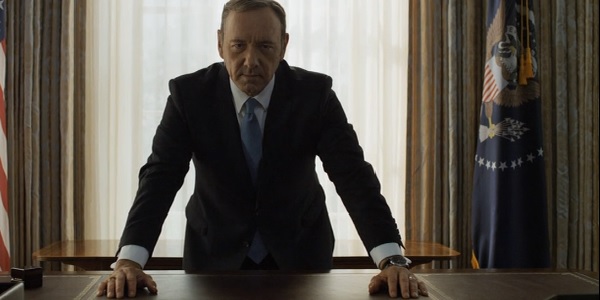
So far, House of Card's pattern has been very clear: ascension. Frank Underwood has never been put in his place for more than an episode or two, his rise being a constant one from the outset of season one. He boldly turns to the audience and proclaims the direction he is headed in, and so far has not faltered. Since the end of season 2 sees Frank rise as high as he can (unless he will make a bid to become world leader next), one must hope that the next season will be his downfall - a plot device that would not be out of character for this Richard III inspired figure. Walter White has the exact opposite problem to Frank's: He cannot scheme at all within the little world of Albuquerque without having it blow up in his face. The frantic action/reaction plotting of Breaking Bad makes Walter White's struggles feel more real and compelling, because the world seems much harsher to a man with more limited resources, and a dubious grasp on luck. There is no status quo situation for Walt to restore, for every choice he makes distances himself from his former life, while Frank's goal is to preserve the equilibrium of his world - albeit with a better job when the dust settles.

2. He Has No Double Life To Maintain

Frank Underwood is a simple man - he desires power, and he takes it. There is little in his character that cannot fall under that little rule. He is unashamed of who he is, even if he has to play it down at times to appease his Washington bosses, but never has to hide within his own home. While far from one-dimensional, this can make the congressman turned president seem a touch one-note compared to the vicious deception within Heisenberg. Breaking Bad is one of the few shows willing to thrust its main character into a universe where he can never be 100% honest. He has specific lies he tells to his family, lies he tells to the gangsters, and lies he tells to himself, all of which reinforce his status as the most complex protagonist television has seen, let alone antihero. Frank just can compete with the layers of deception ingrained in this man.

1. None Of His Opponents Are As Ruthless As Him

This has been a problem since the very beginning of House of Cards - Frank Underwood has never been given an opponent who can match him. Frank Underwood's character almost exists within a void because the show has yet to create someone with the sufficient ruthlessness and political shrewdness to prove a worthy adversary. Roger Ebert once said, "Each film is only as good as its villain." and while he was referring to film, this is still an applicable idea to TV drama. A powerful antagonist is always needed to provide dramatic tension and stakes over the course of the season in serialized TV drama. And let me just say, that tension has never been House of Cards' strong suit. The strength of the conflicts Breaking Bad thrusts Walter White into is that he is always in over his head. Even when he has gone too far to the dark side to be fully sympathetic, Walter White remains an underdog. Because of this, his conflicts remain compelling and rife with tension. From Tuco Salamanca to Gus Fring, the rogues Gallery of Breaking Bad (of which Heisenberg remains an aspiring member until the very end) always feels like a clear and present threat, and Walter must often think on his feet in order to prevail. There is tension in panic and desperation that scheming on its own can never quite match.

Contributor
Contributor

Self-evidently a man who writes for the Internet, Robert also writes films, plays, teleplays, and short stories when he's not working on a movie set somewhere. He lives somewhere behind the Hollywood sign.