Money In Star Trek EXPLAINED
8. Today
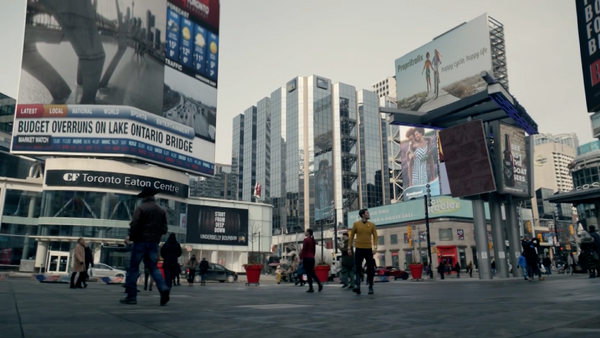
As of writing, we in the real world have missed out on a lot of the alternate history of Star Trek. But that doesn’t mean that many of the causes of those events don’t exist. The Bell Riots specifically came about in Sanctuary Districts, where the homeless and destitute were relegated. This solution, initially intended to be a temporary stop for the less fortunate as they got back on their feet, only exacerbated the problem. Overcrowding became rampant as entire families were forced to move in after parents lost their jobs. City governments also forcefully relocated those with mental health issues who could not afford treatment.
All of this began with the repeal of the Federal Employment Act of 1946, which allowed the US Federal Government to wash its hands of any responsibility for economic stability. Translation: Every aspect of the economy became privatised. While we haven’t quite reached that point yet in 2026, rampant deregulation and wealth disparity are leading us down that path. There are already zones of differing income levels, each of which receives a distinct level of focus in terms of funding, infrastructure, and policing.
While we have not seen the Eugenics Wars, the Second American Civil War, or World War III, it’s hard for anyone to say that those possibilities seem far off. Wars over land and resources, and of course, ideologies, have been almost constant for nearly the last hundred years. Even today, there are wars ongoing on multiple fronts. It begs the question: can we reach Star Trek’s level of development without first experiencing cataclysm?
Of course, anything worth doing is going to be difficult. I think it is possible, even if the timeline may not quite match up with that of the Star Trek universe. Despite all of the problems of today, there are a great many people joining movements that are affecting real progress towards a better world. We are still exploring and making scientific advancements. Though some of that is still constrained by the competition inherent to our global society, any discovery still affects us all. We just went to the moon again for the first time in over 50 years, and there are plans to expand and continue that program.
It may take us a while to get there, but the future, according to Star Trek, doesn’t even really begin until around 100 years from now. While we will most certainly develop differently, and reaching some of the same milestones may take a bit longer, we’ve still got time and momentum moving forward.
But what does it say happens next?