Star Trek: 10 CORE Spock Moments
Spock is one of Science Fiction's greatest characters, and is one of the true hearts of Star Trek
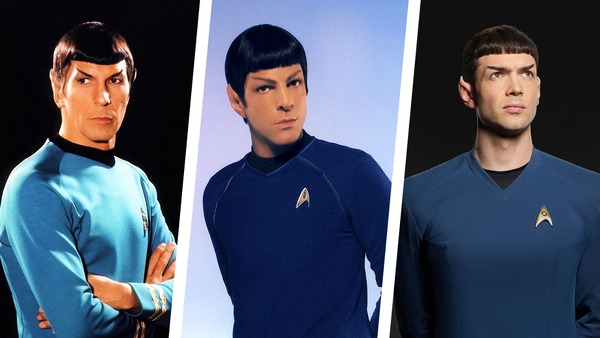
How does one separate the most important moments for one of television and film's most well-known characters? This list could simply speak about the first ten episodes that feature Spock and still barely scratch the surface. To paraphrase a certain southern Doctor, there's a lot to get through when it comes to this green-blooded son of a bitch.
Spock was introduced in The Cage, the first pilot for Star Trek. He was, initially at least, the only character to survive the retool before Where No Man Has Gone Before, now serving alongside James R. Kirk, and ditching much of the emotion that was on display earlier.
Since then, Spock has become one of the most developed and intriguing characters in science fiction, has been recast several times, and continues to be an extremely popular icon of pop fiction. His pointed ears are recognisable to those who may never have watched a moment of the franchise he's from, and the famous Vulcan hand gesture, introduced by Leonard Nimoy, is a universal greeting.
Spock, the half-Human, half-Vulcan symbol of joined worlds and logical thinking, has somewhat eclipsed the Trek into which he was born. But why? What is it about this man that makes him so engaging to so many? What is it, in his life, that has allowed him to become so loved and recognised?
Here, we break down those moments that truly stand out for this son of Sarek, helping him to become the famous Vulcan he is today.
10. Check The Circuit
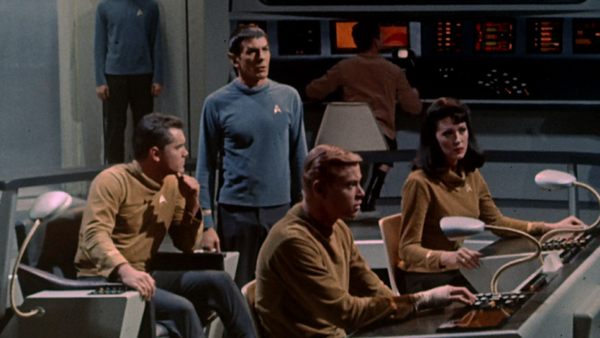
Spock spoke the first lines ever heard in Star Trek, with Leonard Nimoy's deep voice asking a fellow crewmember to 'Check the circuit!'
In The Cage, Spock is both a science officer and an example of alien life co-existing peacefully aboard the USS Enterprise. Serving under Christopher Pike, this version of the character was a template for what would come later. Though shades of the logic that would define Vulcans going forward were there, Spock was also quick to smile, unafraid of the odd outburst, and was an outward fan of blue flowers.
This early pilot was a suggestion of what Star Trek was. With Strange New Worlds picking up several years after this story (several decades later in the real world), the Spock on show there was closer in tone to this version.
Perhaps Gene Roddenberry knew that Spock was destined to become the icon that he did. Giving him the opening lines in a brand-new show, as well as crafting that alien look (one that was a shade too demonic for some viewers at the network in the mid-60s), was a gamble. Had Leonard Nimoy not been able to pull it off, the chances were that Spock would have followed the rest of that early crew of the Enterprise into rewrite oblivion, serving as sacrificial lambs on the altar of network approval.
Thankfully, with that clear and concise order, Spock entered the public consciousness, even if the initial audience was just the executives waiting, red pen in hand.
9. Like Father, Like Son
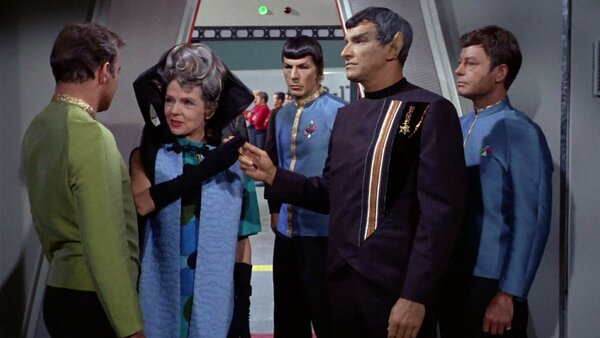
In Journey To Babel, the audience is introduced to Sarek and Amanda Grayson, Spock's parents. While the episode Yesteryear would depict Spock's childhood on Vulcan more directly, the relationship between the three becomes a crucial piece of him, helping to expand Spock as a character.
Mark Lenard and Jane Wyatt proved to be a successful pairing when it came to depicting Spock's family. Lenard's dignified portrayal of the elder Vulcan made perfect sense when considering the context of Spock's behaviour. The latter's refusal to relinquish command of the Enterprise during a crisis, despite Sarek's need for a blood transfusion that only Spock could deliver, also helped to highlight both their estrangement and Spock's sense of duty.
Amanda's interactions with her son in this episode also help to highlight Spock's human side, effectively demonstrating where his more emotional actions come from. In slapping her son for his obstinacy, the audience was given a then-rare insight into Spock behind the uniform, so to speak.
D.C. Fontana, who wrote this episode, created for Spock a backstory that included an 18-year feud between father and son, one that would be further explored in Star Trek: Discovery. Spock's choice of Starfleet Academy over the Vulcan Science Academy helped to solidify that breakdown, a decision that crossed universes.
The first depiction of this frosty relationship served as the catalyst for one of the deepest and lengthiest familial struggles in Star Trek's history.
8. The Death Of I-Chaya

Yesteryear, also written by D.C. Fontana, featured the return of Mark Lenard as Sarek (one of two guest stars to reprise their roles on The Animated Series, with the other being Roger C. Carmel as Harry Mudd) and, via the Guardian of Forever, Spock's travel to the past to meet himself as a child.
Spock's childhood is filled with moments to shape the man that he would become, but it is the interaction with himself from the future, his journey through the Vulcan's Forge, and the loss of his beloved pet Sehlat I-Chaya that truly served as a critical time in his life.
Cousin Selek, otherwise known as Spock from the future, helped to guide his younger self as the boy embarked on his kahs-wan, despite not being prepared. As they trekked through the desert, they were accompanied by their pet, which in turn led to Spock's life being saved, at the cost of I-Chaya's.
This was Spock's first true encounter with death, as well as the feeling of responsibility for that death. Had he remained at home, I-Chaya would never have faced the Le-Matya that killed him. However, as Spock's older self reminded the boy:
Loss of life is to be mourned but only if that life was wasted. I-Chaya's was not.
Spock ultimately chooses to euthanise his pet, sparing him from any pain. In this moment, the boy begins his journey to becoming the man who travels back in time, prepared to risk everything to save the future. It would not be the last time that Spock time-travelled, protecting a future that needed a logical hero.
7. Refusing The Offer To The Vulcan Expeditionary Group
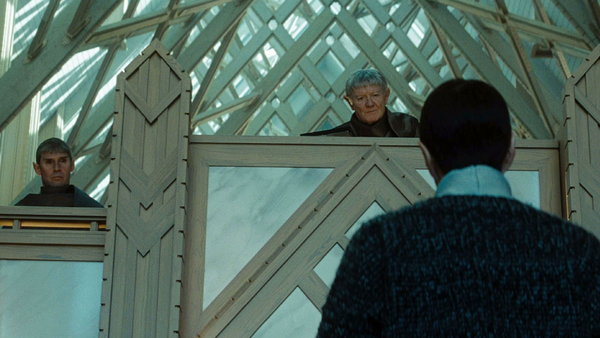
In both the Prime and Kelvin universes, Spock made decisions that would have long-lasting impact on both his and his family's careers. In the Kelvin universe, Spock refused the offer to join the Vulcan Science Academy, unhappy with the admittance board's perception of his 'disadvantages' - specifically, his half-human biology.
In the Prime universe, Spock attended the Science Academy but turned down the offer to join the Vulcan Expeditionary Group, opting instead to join Starfleet Academy. Here, that helped to further sour his relationship with his father.
Michael Burnham, adopted sister to Spock and daughter to Sarek and Amanda, was effectively refused entry to the Group because a human had never been accepted. The Board offered Sarek a choice - Burnham now, or Spock later. Sarek chose Spock, kept the reason to himself, and held onto the shame of that decision for years. With Spock's refusal, that shame doubled, as Sarek felt he had robbed Michael of the opportunity for no reason.
In both universes, this contributed to the father and son not speaking for almost two decades. The circumstances may have been different, but Spock's actions, despite their reasons, did make life more difficult for those around him.
6. Charades With T'Pring
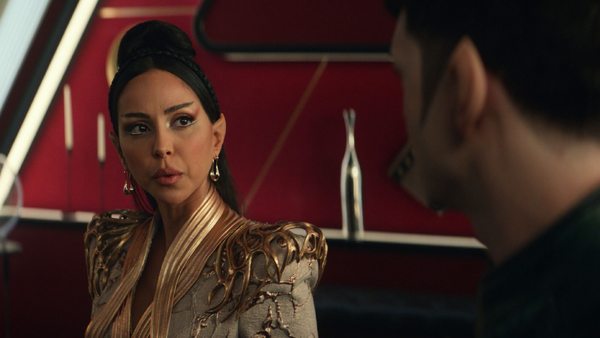
Spock's betrothal to T'Pring, though it was neither of their decisions initially, seemed like a good match. They grew up together, forming a bond that led to love, one that continued into his career aboard the USS Enterprise. However, as audiences were already aware, this relationship would sour by the events of Amok Time.
Strange New Worlds depicted a version of Spock that prioritised his career and duties over his responsibility to T'Pring, who, in turn, struggled with being left behind. She, quite fairly, criticised his reluctance to include her in his life. Their Katra-swap in Spock Amok seemed to help them both understand each other better. By the time they were facing her parents in Charades, Spock had once again slipped.
His transformation to fully Human, while far from being his fault, was something he chose to hide from T'Pring. Indeed, once she discovered the truth, she then found out that almost the entire crew of the Enterprise was aware, while she was left in the dark.
In Amok Time, T'Pring was something of an unsympathetic character, choosing to force Spock into a fight to the death rather than marry him. However, when one considers how Spock treated her in earlier years, this helps us to understand both more clearly. T'Pring was left behind by Spock, who unintentionally made her seem foolish. Her decision to pause their relationship seems much fairer when one considers Spock's actions that preceded it.
5. The Loss Of Vulcan And Amanda
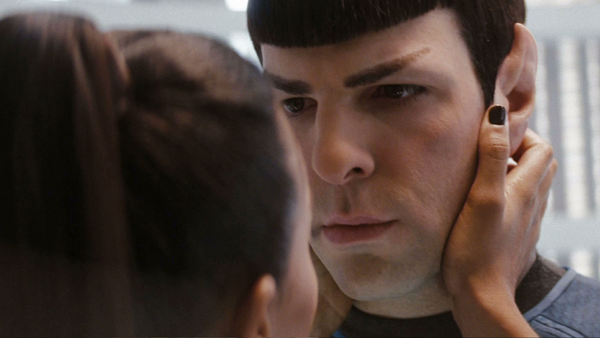
In Star Trek, the vengeful Romulan Nero orchestrates the destruction of Vulcan, forcing Spock to bear witness to the destruction of one of the worlds that he calls home. There is a second and even more devastating outcome of this plan - the death of Spock's mother.
In this Kelvin universe, Amanda supported Spock through his initial decision to enter the Vulcan Science Academy, effectively choosing the Vulcan way of life over his half-Human side. His subsequent choice to enter Starfleet Academy took him away from Vulcan and away from his mother. Nero's arrival, the introduction of Red Matter to the planet's core, and the black hole that consumed the world, all combined to leave Spock, in his own words, emotionally compromised.
Before this event, Spock was more duty-focused, obstinate, and unyielding. He immediately began to butt heads with James Kirk, unable to find any common ground with the more willful officer. He even marooned Kirk on Delta Vega, though this, of course, led to the latter's meeting with Prime Spock.
Though relinquishing command of the Enterprise later due to his compromised state, Spock was ready and willing to join Kirk on the mission aboard the Narada to save Pike, destroy the vessel, and save Earth from Vulcan's fate. While the cost was high, Spock's loss led to some of his greatest growth in his life, including a fateful meeting at Starfleet HQ.
4. I Am Not Our Father
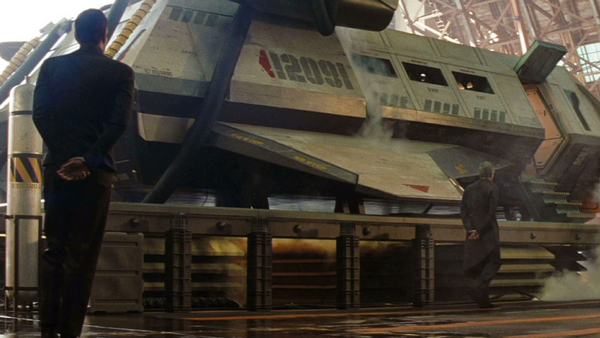
Time-travel stories and multiversal arcs offer audiences a fun trope, which is to see two or more actors playing the same role in the same scene. Such was the case in Star Trek, where Zachary Quinto's Spock came face-to-face with Leonard Nimoy's. The scene, short though it is, offered the baton from one essential Vulcan to another.
The line 'I am not our father' may have been a nod to another long-running Sci-Fi franchise, though Nimoy delivers it in such a tongue-in-cheek fashion that it is hard not to smile at Quinto's perplexed expression in reply. At the time of production, this may have served as the great handover between old Star Trek and new, so the scene takes on extra resonance in that context.
As the younger Spock embarks on his career as the first officer aboard the Enterprise, the older Spock becomes a part of New Vulcan's future. There is a playful logic in their interactions:
You can be in two places at once.
Ambassador Spock finds a new life in the Kelvin universe, even as his old life in the Prime universe saw the end of Romulus. His efforts there were not in vain, though he would not live to see the fruit of them. At this great meeting of the mind, both men face a new future of possibility and change.
3. Death And Rebirth
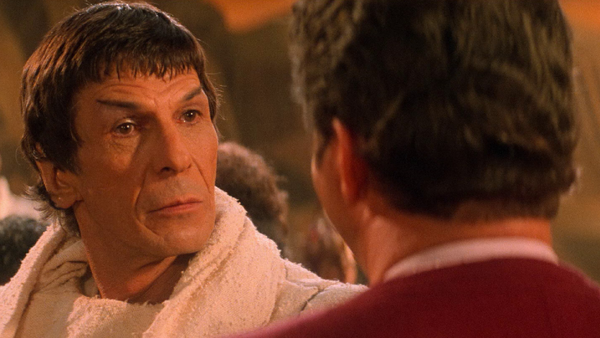
One may assume that Spock's death in the Mutara Sector would be the core moment of the Vulcan's life, though while death normally signifies the end of a life, it was not so for this decorated officer. Having transferred his Katra to McCoy, Spock was able to survive his body's death, with a little help from his friends.
A combination of many factors led to his resurrection. The choice to fire his body into space in a hollowed-out torpedo casing, resulting in his body's deposit on the newly-born Genesis planet, allowed a physical rebirth. David Marcus's decision to include protomatter in Genesis's makeup led to Spock's rapid aging, allowing him to return to the age he was at the time of his death in a matter of days.
His rescue from the planet's surface by Kirk and his friends allowed his return to Mount Selaya on Vulcan, the reunification with his Katra, and the beginning of his journey back to the man he once was. For well over a millennium to follow, Spock's journey defined not just the man, but those who followed him. His words - the needs of the many outweigh the needs of the few - echoed across centuries, compounded with his sacrifice and return.
It is almost clichéd now to focus on his death. Spock's revival and subsequent work may have been defined by his early death, yet it was a critical marker on his path, as opposed to a gravestone at the end.
2. I Feel Fine
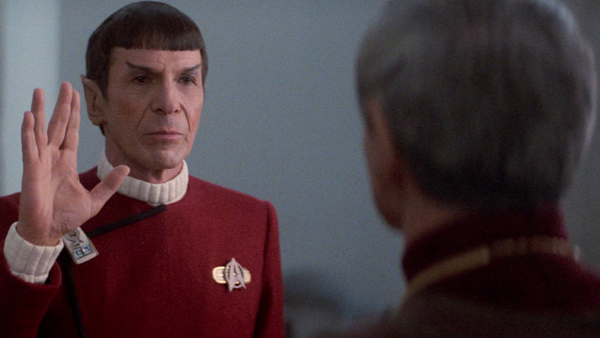
In Star Trek IV: The Voyage Home, Spock is learning what it is to be himself again. At one point, he is posed a question to which he has no answer:
How do you feel?
Though Amanda reminds him that he is half-Human, a fact that the computer testing him is aware of, Spock struggles to understand why his feelings would either matter or be something he should embrace. Though Spock chose to embrace his Vulcan side over his Human heritage, the simple existence of the latter had given him pause as a child, then again when returning to life.
Spock's final exchange with Sarek, which coincidentally served as the final on-screen interaction between Leonard Nimoy and Mark Lenard, in the fourth Star Trek film, was designed to depict his growth (once again) as a person and to elicit smiles from the audience.
Do you have a message for your mother?
Yes. Tell her...I feel fine.
This is followed by the traditional Vulcan salute between father and son. Here, Spock displays the marriage between his Humanity and his Vulcan nature, sped up thanks to being surrounded by his friends and colleagues. Kirk sacrificed much to save Spock again, and while it may have taken some time for the impact of this to settle, Spock's return was every bit as important as the events that necessitated it.
It also included a taste of colourful metaphors, though that took Spock a little longer to truly grasp.
1. Unification, Reunification, And What Comes After
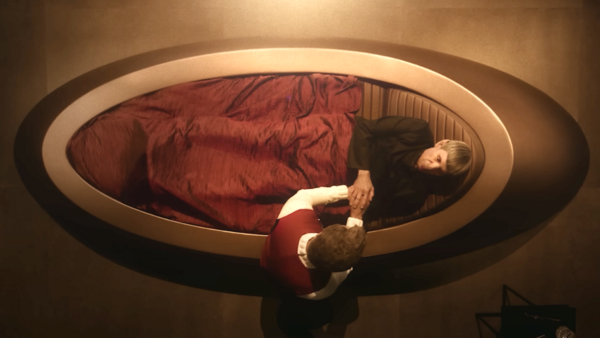
The path toward reunification of the Vulcan and Romulan races was a turbulent one. Spock spent decades of his life attempting to bring peace to both worlds, facing opposition from both sides. His efforts were almost co-opted by the Romulan military in the 2360s, though the movement survived Sela and Pardeck's treachery.
Spock later attempted to save as many Romulans as possible with his efforts to stop the supernova, and though he disappeared through a black hole, his efforts would echo through time. When Michael Burnham visited the re-named planet of Ni'Var in the 32nd Century, they still remembered Spock for his strive to bring both societies together again.
Over in the Kelvin universe, Ambassador Spock passed away from natural causes in 2263. While this news hit Kelvin Spock particularly hard, something happened that made the moment less tragic and more cathartic.
In OTOY's short film 765874 - Unification, Lt. Yor, the temporal agent, brings Captain James T. Kirk from the Prime Universe across to the Kelvin one. Kirk, revived after his death on Veridian III, meets Saavik again, along with Spock's son, Sorak. From there, he is brought to Spock's bedside. Together, the two old friends watch the sun rise on New Vulcan one last time.
Though Spock affected countless lives throughout his own lifetime, the greatest impact he had was on those closest to him. His family, his friends, and those who knew him best all bore witness to one of the greatest journeys in Star Trek, as well as one of the greatest character arcs in Science Fiction, one that continues to develop to this day.