Star Trek: 10 Secrets Of The Enterprise D You Need To Know
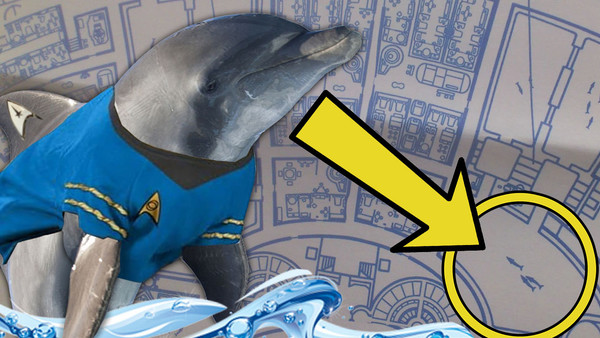
Lt Cmdr Flipper, reporting for duty.
Question! Who's the only character to appear in every episode of both the original series of Star Trek and the Next Generation?
Time's up! The answer is... the Starship Enterprise, of course. Granted it was played by two different actors across both shows (and a third, if you include the slender young thing in the movies) but it was the only fully recurring element in the franchise for the better part of 30 years. Don't get angry, that's a good joke.
Despite the ship being arguably the most important element of making a Star Trek show a Star Trek show - every offshoot of the franchise since has named the show itself after the vessel at the heart of it - it was often the most overlooked aspect of it, especially in the Next Generation. Grand sweeping ideas that would have changed its identity forever were normally consigned to the cutting room floor.
Thankfully though, while these ideas might have been left out for budgetary of narrative reasons, they didn't slip for Star Trek legend. Going through the old technical manuals and picking up some old head-in-the-clouds interviewers reveals there was so much more to the old 1701-D that even the show's biggest fans ever knew...
10. The Calypso
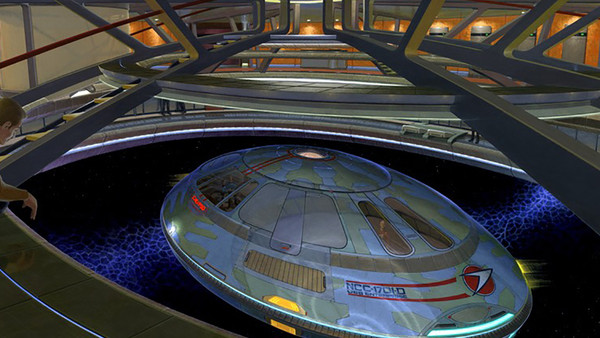
Remember Star Trek: Insurrection? Remember how in the midst of the watery-plot, cheesy dialogue, and hokey action sequences, Captain Picard departed the ship on his own personal Yacht and, watching, it occurred to you that it was actually a pretty interesting inclusion to the design of the ship?
Remember thinking how much fun they could have had on The Next Generation if only Picard had his own little ship there too? Well, turns out that he did, it just never got included in the show.
Situated on the underside of the saucer section (pretty much opposite to where the main bridge is) the small executive craft was designed for diplomatic missions as well as the Captain's personal recreation. While several pitches were floated for how to use it in the show, it never got further than an inclusion on a master systems display screen in Main Engineering.
According to Patrick Stewart, if they ever had featured the ship in the show it would have been called "The Calypso".
9. It Was Incredibly Empty
In an insanely good video by EC Henry, it's been worked out that the Enterprise was practically a ghost ship.
Taking the published schematics of the vessel, which listed it as 642.5m long and holding a crew of just over 1000 people, he worked out precisely how much of the ship was actually being used at any one time. On a ship with over 800,000m², that gives each person onboard almost 850m² to themselves. That is insane.
For comparative purposes, the largest military vessels today have about 1/10th that sort of size, with well over 6x the number of people on board. You could conceivably walk around all day on the ship, going about your duties, without bumping into anybody. Working out the average size of crew quarters, accommodation on the ship accounts for only 4% of the total space.
The show actually supports this theory as it's often depicted as being empty. Rarely do crew members pass each other in the corridors, and the only areas depicted as being busy as the recreational hubs like Ten Forward where you'd expect everyone to congregate.
Still though, having vast, vast areas of the ship entirely empty is a curious design choice.
8. It Nearly Didn't Exist At All

It's almost impossible to imagine any Star Trek show taking place without an iconic Starfleet vessel there to navigate with, but the original concept work for The Next Generation gave serious consideration to that very notion.
Worried about the reaction the public might have to a "new Enterprise" not living up to the original, several options were discussed. Producers originally planned to have the show set nearly two centuries after the Original Series, with giant strides forward in transporter technology entirely eliminating the need for starships. The crew, instead, would be based on earth simply sent out 'on mission' from there.
Thankfully this idea was scrapped early on in the development stage, and designs for a USS Enterprise NCC-1701-7 were commissioned. Then when Star Trek II cataloged its Enterprise as NCC 1701-A, the Next Generation adapted to match with the NCC 1701-G before eventually setting the show chronologically nearer to its forebears with the D.
7. You Never Actually Saw The Main Shuttlebay
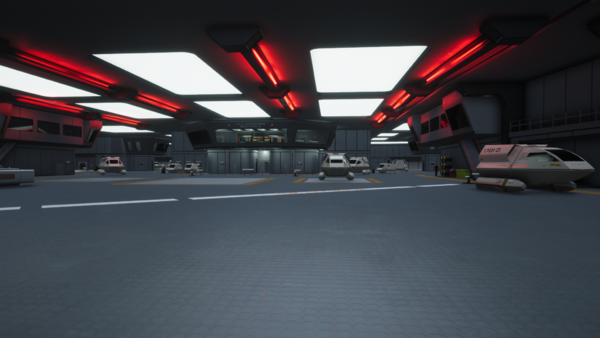
Rarely depicted in the show for budgetary reasons (that's going to be a recurring theme in this article, by the way), the Enterprise-D's shuttle bay usually looked about big enough to accommodate one or two small craft, and whatever cargo or crew they happened to be carrying. Small, but efficient, you'd probably assess them as.
However according to the official design schematics of the ship, as drawn by Rick Sternbach the man responsible for the vast majority of props and sets seen on the show, the main shuttlebay was absolutely massive. One singular space the spanned three entire decks of the ship and, at any given time, was home to over a dozen small craft.
Not only that but there were a number of repair facilities, refueling stations, cargo storage areas, and even a central control tower that was three decks tall. The cost of building a practical set for this was deemed too high for the show, but Stage 9 Studio did render it in VR for their tour of the ship, before CBS shut them down for copyright issues.
6. There Were Dead Bodies In The Warp Nacelles
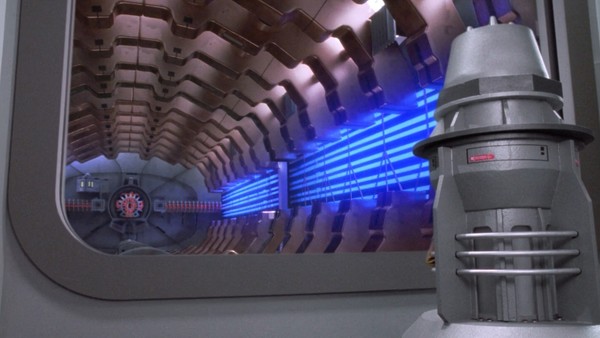
In the year 2363, the USS Enterprise-D launched from the Utopia Planitia Shipyards orbiting Mars to commence it's run of service as both Starfleet's flagship and most advanced vessel ever constructed. In 2370, they discovered that the warp nacelles had been the site of a double murder-suicide before they even launched. This was, you imagine, quite awkward.
In the Season 7 episode Eye of the Beholder, it's revealed that Walter Pierce, one of the construction team, killed two of his fellow officers in the midst of some seedy love triangle. The victims, Marla Finn and William Hodges, were cleverly disposed of in the plasma stream, with Pierce then committing suicide the same way. Their remains not discovered for over 8 years.
However, with Pierce having a Betazoid grandparent, this left a telepathic imprint in a bulkhead. This imprint would, in later years, compel other crew members to throw themselves into the plasma stream and, in Counsellor Troi's case, induce a hallucination where she lived out Pierce's last days before poetically killing Worf in a jealous rage.
5. It Was Full Of Cat S**t
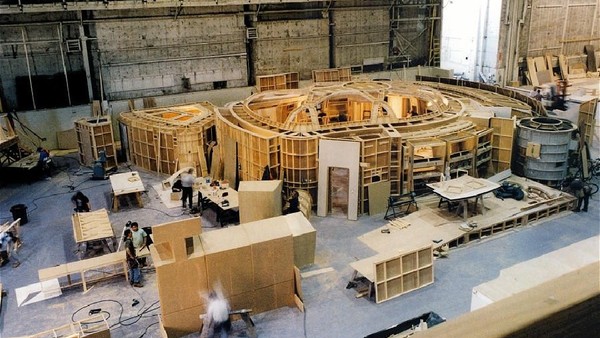
The most advanced ship in the fleet, the greatest technical marvel ever ushered in by humanity, the USS Enterprise NCC 1701-D was, irrefutably, absolutely covered in cat s**t.
Top to tail, stern to stem, inside and out, the entire thing, just totally caked in feline blasting powder and I'm not even making this up. Don't worry though, this isn't some incredible bottle episode you might have missed, where Spot mutinies on the rest of the crew and, instead of sharpening his claws on the soft furnishings around the warp core, enacts a dirty protest in Ten Forward, this is real life.
The soundstage used to film episodes of The Next Generation was, at various points, inhabited by packs of feral cats. The studios at Paramount Picture's home in Hollywood California had a recurring problem with the creatures, and leaving the sets unattended between seasons would normally see them find their way back in.
Ironic, really. Humanity had mastered the entirely non-trivial challenge of intergalactic spaceflight but still hadn't figured out how to stop small, furry animals from curling one out on the nice carpets.
4. The Computer Core Was Huge
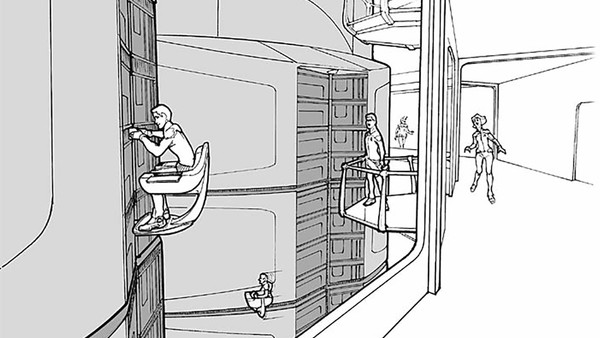
If there's one thing I want you to take away from this article, it is that Picard's ultimate adversary was not the Borg, nor the Romulans, nor even Q, it was the all-consuming war that raged between the creative minds behind the show, and the men writing the cheques for it. So much of this ship never saw the light of day, because of that eternal conflict.
One thing they tried their best with though was the Enterprise's enormous computer core. It's referenced heavily in the show, depicted on all number of graphs and displays, and even physically shown in part, but never at the scale it was intended. The best we got was a small room that depicted the entry to the core, never the actual thing itself.
Original designs had the thing spanning entire decks, with members of the crew floating around various access points and terminals connected to it; not unlike how the human brain looks in Inside Out. The design of the ship had two of these enormous processers in the saucer section, with a further redundancy in the stardrive section.
3. The Recreation Areas
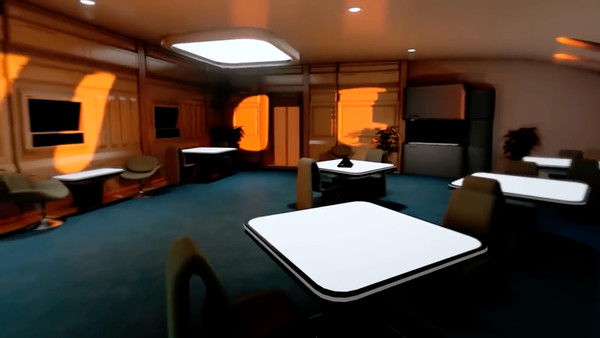
As we've already covered, the Enterprise was an enormous starship that carried an inordinately sparse crew. This being a conscious production choice by the show though, meant that there were originally designs intended to lean into it. Namely, that the ship would be full to the brim of comfortable breakout areas designed to bring people together.
In the show itself, this manifested as the iconic Ten Forward. A place where every single off-duty problem would be thoroughly worked out over exotic food, luminous drink, or just ice cream. However, Guinan would have had her hands full, as there was also Two Forward, Nine Forward, and a number of smaller lounges to manage onboard.
The show's budget wouldn't stretch to these additional bar areas though (and, in truth, there was no need for them from a narrative standpoint), and the smaller lounge spaces were scrapped as unnecessary after the first season. The 5-deck high "mall" area, would have opened up all sorts of creative avenues.
2. It Was Originally Designed For Kirk

The design of the Galaxy-Class starship wasn't just plucked out of thin air. It had actually existed as a concept since well before plans for The Next Generation were even first spoken about, as the ship was originally sketched in the aftermath of Star Trek: Phase II - the abortive attempt at a revival Star Trek series in the late 1970s.
The look of the ship was conceived by legendary sci-fi artist Andrew Probert, who created it as an example of how would redesign the original Enterprise if he had been allowed to break with the basic plan he'd been given for the previous project. Years later, when he was rehired to work in the Star Trek: The Next Generation art department, he hung that exact painting office, bringing it to the attention of Gene Roddenberry who insisted they use it for the show.
While it was never likely to be commanded by James Kirk, that the genesis of the idea started way back in the 1970s during pre-production for one of his adventures is one of Star Trek's best sliding doors moments. Interestingly, one of the other designs for Phase II (above) ended up being a near-exact template for the USS Discovery.
1. Cetacean Ops
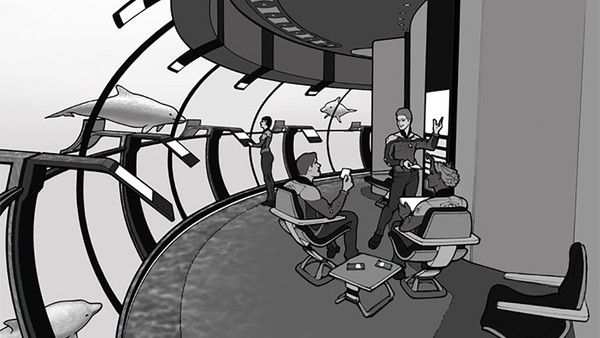
I just need to get this sentence out in one concise go, just so the full impact of it absolutely can't get lost in a more detailed unpacking of the particulars. The USS Enterprise-D, had an entire department onboard that was run, staffed, and operated... by dolphins.
Not some dolphin-like Star Trek species called the Flipperinians or something, actual dolphins that you've seen on TV and dated at least two girls with tattoos of. In fact, to be specific, twelve bottlenose and Pacific bottlenose dolphins, under the command of two Takaya Whales. To repeat, The USS Enterprise-D, had an entire department onboard that was run, staffed, and operated... by dolphins... and two whales.
The idea was that, in a few hundred years, we'll have ways to effectively communicate with both of these species and their different approaches to culture, science and reasoning would make them valuable members of the crew. Primarily they'd be tasked with working out complex navigation problems, and helping with xeno-linguistics.
Curse the many gods of western commerce that the cost of ever displaying these was simply too great for 90s television, however some mentions of them were inserted into the show. Geordi LaForge asks someone if they got a chance to see them, and in Yesterday's Enterprise, a Dr Joshua Kim is ordered to "report to Cetacean Ops".
Once more, The USS Enterprise-D, had an entire department onboard that was run, staffed, and operated... by dolphins... and whales... and Dr Joshua Kim.