Star Trek: Everything We NOW Know About The Klingons
9. They Covered Their Homeworld With Dilithium Reactors. Whoops.
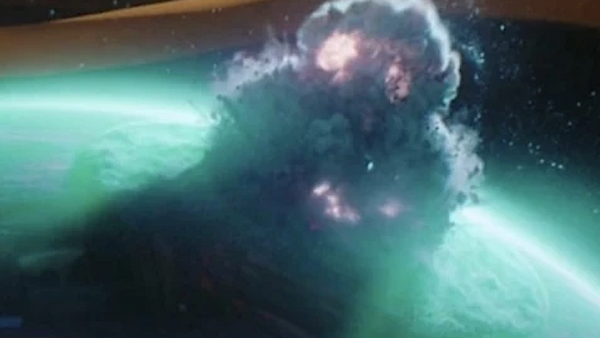
We know that the Burn was caused by a ripple effect, emanating from Theta Zeta and the tragedy that befell the KSF Khi'eth. When Su'Kal was orphaned on the planet, his explosion of grief sent a shockwave through all active dilithium in the galaxy, rendering it inert. Star Trek: Discovery focused on the ships that were destroyed as a result of this, while Star Trek: Starfleet Academy introduced a new devastation.
Qo'Nos was largely destroyed. The planet was littered with large dilithium reactors. These reactors were far from immune to the wave. They also exploded, causing massive damage to the planet's surface. Billions of Klingons died in an instant, while the Empire was reduced to a shadow of its former self.
Star Trek has now condemned both the Romulan Star Empire and the Klingon Empire to similar fates. The supernova in the 2380s reduced the Romulans from an Empire to a gang, while the Burn did the same to the Klingons. The latter makes slightly more sense.
A vast stellar Empire, like the Romulan Star Empire, should, in theory, have been able to bounce back quickly from the supernova. Tragic as it was, it should only have affected a small number of planets, no matter how important those planets were.
The Burn was far more wide-reaching than that. It affected every active dilithium reactor in the galaxy, which, for an Empire that happily deposited those reactors on their homeworld, probably had them on most other worlds as well. The Klingons were victims of progress and circumstance. Had the Klingon sun exploded, perhaps the damage would have been tragic, but survivable.
The Burn was far from that. That any Klingons survived became a victory in itself.