The Walking Dead: 5 Points On How They Botched The Finale
1. The Aftermath
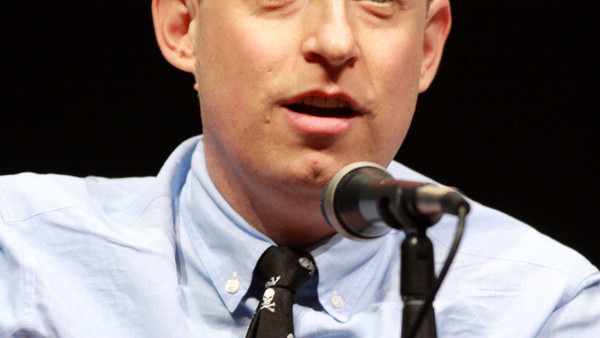
The following people said the following things about the finale, both on Talking Dead and elsewhere. Comments follow.
Greg Nicotero, Director: "One of the best episodes we've produced in six years."
No. It wasn't. It wasn't one of the best this season. It wasn't even one of the best this half-season. It was among the worst episodes the show has ever produced. The episode, in its entirety, is completely skippable. The viewer would miss out on next to nothing, and have everything explained during the premiere of season seven (or so we've been told).
Scott Gimple, Showrunner: "This was the end of one story, and season seven will start another."
Absolutely not. How do you end a story with a cliffhanger? Also, how did no one in the writer's room not raise their hand and say, "Hey, I'm just throwing this out there, but does anyone else think this is a really, really bad idea?" To be fair, the look on Gimple's face when he realized what a trainwreck the finale was indicated to me that he either realized they made a huge mistake, or had to cover up for AMC, who may have told him to delay the killing of a character. At that point, he'd say anything on the Talking Dead dais just to sound like someone who could string together a few coherent sentences, and not appear like the bumbling idiot the finale made him out to be.
Not to be overlooked, he also compared this finale to the end of season one of Lost, where they didn't find out who was in the hatch—which, by most counts is regarded as one of the worst season finales in television history. Bad comparison. He went on to compare it to the Star Trek: The Next Generation classic Best of Both Worlds, where there is a cliffhanger at the end. This is more reasonable, but still, in that episode, Captain Picard (the main protagonist) gets captured and turned into a cyborg (emphasis on the "borg" part...little inside joke, there). If Rick turned into a walker midway through the finale, and then they ended it on a cliffhanger, I think we'd all forgive it because, well, RICK TURNED INTO A WALKER. But the finale was completely devoid of any major moments, and thus couldn't hang its proverbial hat on anything of substance.
Robert Kirkman, Creator: "Most of the comics end in cliffhangers."
That's true. Of course, what Kirkman doesn't tell you is that the one Walking Dead comic that doesn't end in a cliffhanger is #100. (Spoilers ahead) In it, Rick's group is out on the road, they're captured by the Saviors, taken to Negan, there's the ensuing Negan diatribe, and then Negan proceeds to crush Glenn's skull in with Lucille and walk away. Sound somewhat familiar? It's because that's what Sunday's finale was supposed to be. And the one person who realized that it needed to be impactful was the same guy who wrote it that way in the comics. Even he acquiesced to the terrible idea of a cliffhanger. It makes no sense.
Chris Hardwick, Host of Talking Dead (paraphrased): "This isn't the series finale...it's a relationship."
We get that. What we don't get is how this being a relationship somehow makes it immune to criticism. In this relationship, we understand that at times, we’ll be deceived and tricked. But there is a level of trust that the tricks will never overwhelm the story. That trust was broken on Sunday. As viewers, it became abundantly clear that AMC didn't care about the extra time we invested in it. Time is the currency of the audience, and to pack it with two-thirds content and one-third commercials would only have been mildly acceptable had they paid homage to the moment that was due. Yes it would have been grisly and terrifying, but we would've felt something. We would've had the payoff for an otherwise lousy season. But when that one thing was taken away, and when the rest of the episode was largely bloated filler, how is it not apparent why the internet community revolted? Even if you disagree because your paychecks come from AMC—which, at least in my mind is somewhat acceptable—how can you say with a straight face that the finale was “exceptional storytelling?” Those words expose the disconnect between those receiving paychecks from AMC, and those who don’t. This wasn’t just about the killing of a character. It was about the gravity of the defining moment of the series.
There is real creative trouble in misunderstanding manipulative schemes for exceptional storytelling.
What do you think? Agree? Disagree? Feel free to comment!