Watchmen: 7 Ups And 0 Downs From 'It's Summer And We're Running Out Of Ice'
Damon Lindelof's continuation of Moore and Gibbons' comic starts with a bang.
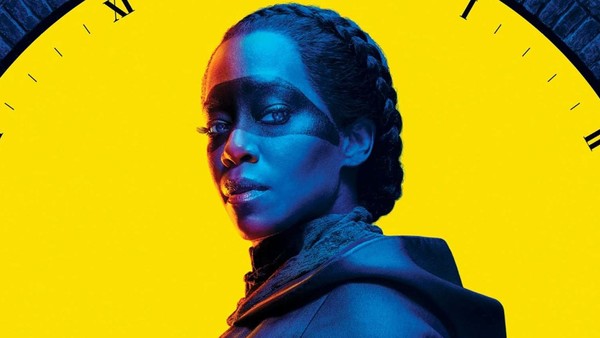
After months of build up, Damon Lindelof's Watchmen show has finally arrived. Suffice to say, the pressure of adapting the comics medium's most vaunted text cannot be overstated, but whereas others have tried and failed to capture (some would say cash in on) the same spark found in Alan Moore and David Gibbons' seminal comic, HBO's Watchmen is, for now, off to a blinding start.
A spiritual sequel to the original comic, Lindelof's series finds itself in something of an awkward position. So much of Watchmen works because of the medium in which it was told, and while DC continue to be criticised for mining Moore and Gibbons' work at every opportunity, any adaptation is going to meet controversy.
Fortunately for fans of the original comic, this latest adaptation is less 'Watchmen Babies' and instead something much more considered. It recontextualises the original comic within the prism of our contemporary zeitgeist, whilst adhering to the same tenets that made it so compelling in the first place.
The end result is fascinating, and while other continuations of Moore and Gibbons' work have often struggled to justify their existence, Watchmen's pilot episode thankfully divests from that precedent, proclaiming a vital and indeed necessary continuation that will hopefully get better and better with each episode...
Ups...
7. Contextualising Watchmen In The Horror Of Tulsa
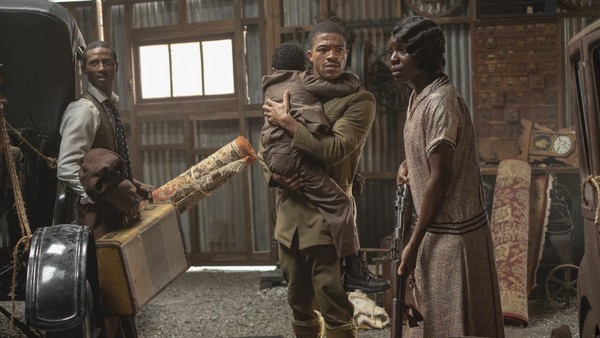
One could be forgiven for mistaking Watchmen's opening scene as a fiction - another event that comprises a part of the original text's alt-history. Horrifically it wasn't, and the show should be applauded for shining a light on such a terrifying chapter in American history, given it's scarcely taught in schools across the globe, let alone in the United States.
The Tulsa massacre took place in 1921 and is pretty much the worst example of racial violence in American history. It occurred during a time in which the Klu Klux Klan were resurgent, and where the Civil Rights Movement was still decades away. White mobs descended on the affluent black town of Tulsa and massacred dozens, with the city even being bombed from the air. It was appalling, and the opening of Watchmen captures the horror in excruciating detail.
It also serves to re-contextualise the idea of Moore and Gibbons' original story. For all that Watchmen was an excellent satire on superheroes, American culture and the Cold War, race was a blind spot. And if you're talking about America, you have to talk about race.
By kicking off the new show with the Tulsa Massacre, Watchmen centres its new story on the most important element of American history, and the most pertinent to us today. White supremacy is a historic enemy, and it's one Lindelof's series is evidently eager to confront.
6. It Genuinely Feels Like A Continuation Of The Comic's World

The alternate history Moore and Gibbons fashioned for Watchmen really allowed the duo to satirise Cold War-era America. It's a world where Richard Nixon served two decades in office and where the United States won the war in Vietnam, leading to the country uniting as a new state. It's also a world with superheroes and superpowers, and while the idea of situating heroes in quote-unquote "real" settings is nothing unusual these days, it was Watchmen that really started the trope as we know it today.
The disparate reality of HBO's Watchmen, while different, still very much feels like it stems from the same world fashioned in 1988. It's still 2019, but it's also a reality where Nixon held office for over a decade and where his successor is actor Robert Redford (Watchmen places his presidency at three decades). There's no internet, and squid fall from the sky at a moment's notice, so in both embodying the spirit of the original comic by providing commentary on contemporary events and by organically expanding its lore, the new series really finds success.
Those familiar with the original story should also welcome the series' ambiguity when it comes to exploring the fallout of the book's ending. There's a mystery to be solved in piecing together what happened after Ozymandias enacted his plan to bring world peace, and while that's merely a side dish compared to what the the series mainly offers, it's also right where it should be.
5. The Production Value Is Top Quality

This should really go without saying given Watchmen is a HBO series, but it's worth pointing out just how good it looks.
It's shot wonderfully, and director Nicole Kassell deserves particular praise for how each scene is composed. There's a clear momentum at play and the tension is immediately apparent, as is the scale of the project. Likewise, set and costume design are also flawless, with Meghan Kasperlik and Sharen Davis both ensuring that the show finds its own aesthetic in a way that also honours the source material.
All the new characters, from Sister Night to Looking Glass and Red Scare, genuinely look like they could've walked off the page of the original comic - albeit with the kind of modern uplift that comes naturally with a story set thirty years later.
However, Watchmen's true quality is best illustrated in how it frames action. There's a grand sequence involving the Owlship and an escaping light aircraft that wouldn't look out of place in a bonafide comic book movie, while the more intimate fight scenes on display in the first episode are fast and fierce enough to evoke memories of those seen in Netflix's Daredevil and Punisher.
4. It Opens Up A Fascinating New Relationship Between The Police And Vigilantism

Watchmen takes a key focus on the history of race relations in the United States, but it also explores power dynamics when it comes to law enforcement too.
Lindelof's series takes place parallel to our timeline in that it's also set in 2019, and one of the biggest issues currently governing public discourse is law enforcement, or specifically how law enforcement is deployed in the United States. Police brutality is a historic issue, and it's one that's only been exposed further with the help of video evidence.
Likewise, the increasing militarisation of police forces across the globe but particularly in the U.S. has also made headlines over the last decade. It feels like now, more than ever, are people feeling most anxious about law enforcement - and it's here where Watchmen next endeavours to provide commentary.
In Watchmen's alt-history, the police all wear masks and they're forbidden from revealing their identity to each other or the public. They also live in a post-Cold War era governed by a liberal president, whereby they're obligated to contact a key officer to use lethal force before they can unholster their weapon, which actually leads to the death of one officer by a member of Rorschach's cult - the Seventh Cavalry - at the beginning of the episode.
The police here wear masks because of an event called the White Night, whereby members of the Cavalry targeted specific officers and their families. They're protected by anonymity, while at the same time hindered by the prohibition of immediate access to deadly force; they're both limited by what they can engage and unaccountable by virtue of their secret identities, a puzzling and contradictory set of quandaries both the force and public have to overcome.
At the same time, the enemy is clear. Regina King's Sister Night - the leading figure of Watchmen - is an ex-officer who now works as a vigilante who liaises with the force, and their main enemy are a rabid group of white supremacist terrorists. They dismantle the Cavalry with extreme prejudice, but it'll be interesting to see how the show explores this new power dynamic as it continues.
3. Grappling With The Cult Of Rorschach

Watchmen, the comic, has had a problem on its hands for the last couple of decades, and its name is Rorschach.
Intended as a satire of Steve Ditko's Randian superhero Mr. A (and the early version of the Question), Walter Kovacs was a dogmatic conspiracy theorist who brutalised criminals and condemned those who didn't comply with his own absolutist ideology. He decried sex workers, left a disturbing manifesto behind in his own journal, and threatened to jeopardise world peace and kill millions because Ozymandias achieved it through horrid means. A moral quandary, yes, but once Veidt indicated that the plan had already been put in effect, exposing the conspiracy would've only resulted in further casualties - he had to die to safeguard peace.
As the years have gone by, readers who managed to spectacularly misread the point of Watchmen have come to lionise Rorschach as a badass vigilante who refused to compromise his own morals even at the brink. In reality, Rorschach is depicted as a pitiful character with a warped world view - he's not a hero, and to proclaim him as such would be a mistake.
It's one fans haven't stopped committing though, and the Watchmen show doesn't allow anyone to make that same mistake.
Here, Rorschach's legacy is completely toxic. His journal has partially inspired a new white supremacist terrorist cell called the Seventh Cavalry, who adopt his visual motif and quote his writings in their broadcasts. They're the unquestionable enemy of HBO's Watchmen, and in reckoning with Rorschach's legacy, the series further intimates its importance.
2. The New 'Minutemen' Are Genuinely Brilliant

One of the greatest achievements with this first episode has been how quickly it established the new Minutemen. They're vigilantes unlike the ones seen in the original text, but all are uniquely compelling and believable, and you care about each and every one.
The core relationship in the first episode lies between King's Sister Night and Don Johnson's Police Chief Crawford. Crawford is a veteran of the force and the only figure to publicly disclose their identity while in uniform, and he's incredibly likeable (even if he is doing coke at a family gathering). Johnson sells Crawford as a man who's been through a lot and who is both tired and determined. He's come up against the Seventh Cavalry before, and while he's sick of the conflict at hand, there's a ferocity at play that sees him lead the charge when it's most needed.
King's character sees the bulk of attention in the pilot episode and she's an incredible presence on screen. The story only ever touches on her past in a brief few moments, but King is able to telegraph the weight of these events in her every action, whether she be gearing up in her uniform or savouring her time with her family in the episode's quieter moments.
It's not just King and Johnson who shine through though. Tim Blake Nelson is fantastic as Looking Glass in the few moments he gets on screen, especially in the Parallax View-esque interrogation he oversees with a suspected Cavalry member, while the other members of the Tulsa Police Department have already shown signs of promise.
1. You Can Already Feel The Tension Beginning To Build
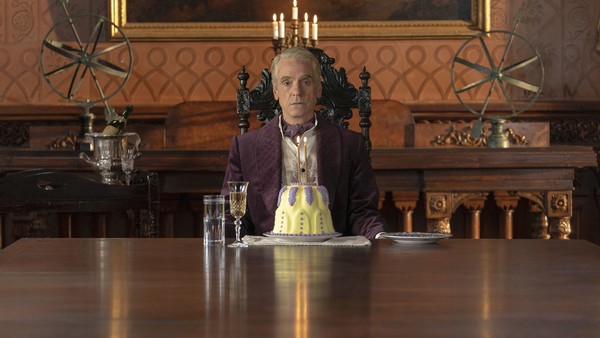
One of the most important visual motifs of Watchmen is the Doomsday Clock, a symbolic instrument fashioned by scientists to illustrate how close humanity is to a man made catastrophe. Time is central to the story, but in the HBO show, time takes on a different kind of menace - the tick tock of a pocket-watch.
The pilot sets the stage for a burgeoning conflict, and the presence of Adrian Veidt implies that grander dangers await the series as it edges forward. The tension is made ever more palpable, however, by the decision to include the sound of a pocket-watch during the last few minutes of the episode.
Even while Crawford relaxes with friends and family, the sound of the watch loudens and quickens. The Seventh Cavalry's earlier declaration ended with a menacing chant of "tick-tock, tick-tock", and with the first episode ending in such a devastating fashion, it's clear things are about to get a lot worse before they get better.
Watch Next
How Well Do You Know Watchmen?
