Doctor Who: EVERY Dalek Story Ranked Worst To Best
16. Victory Of The Daleks

Victory of the Daleks will always be infamous for the misjudged redesign of the New Dalek Paradigm – or as we like to call them, the skittles. Their larger size wasn’t such a bad upgrade, and certainly made them feel more imposing, but the colourful paint job had the opposite effect, making them feel more cartoonish and child friendly.
Dalek makeover aside, the other issue with this story is that the Daleks are revealed far too quickly which removes the opportunity to build up the tension and paranoia in both the Doctor and the audience.
Having said that, the concept of the Dalek’s luring the Doctor in and using his testimony to fulfill their plan is very clever and it’s great to see new ideas for Dalek stories after so many have come before. It’s just a shame that the rest of the Dalek plan wasn’t also an original idea, instead taking much inspiration from 1966’s, The Power of the Daleks, even going as far as to parody their “I am your servant” line.
Despite these setbacks, Matt Smith plays the Doctor's anger towards these creatures who relentlessly torment him brilliantly. Ian McNiece is a fantastic Winston Churchill and the World War II setting, and overall sense of British pride and camaraderie, is such a joy to watch.
You can’t get much more British than Doctor Who, Winston Churchill and the offer of countless cups of tea!
15. Army Of Ghosts/Doomsday

Considering the Series 2 finale was only marketed as a Cyberman story, it came as a huge shock when Army of Ghosts ended with the Cult of Skaro emerging from the mysterious sphere.
It finally answered the ultimate Whovian question – who would win in a battle between the Cybermen and the Daleks? Well, the Cybermen were on top for a while but the arrival of those four Daleks proved just how powerful the pepper pots truly are.
One of the best moments in the two-part story has to be the petty sparring between the Doctor’s two greatest enemies. There are plenty of battle sequences but this squabble session in the depths of Torchwood Tower is by far the most memorable showdown moment.
Of course, this finale is mostly remembered for its heartbreaking departure of Rose Tyler. The Daleks were a fun surprise and they delivered their usual world ending schemes but neither they, nor the Cybermen, were the main focus of this story and they were thwarted fairly quickly in order for more time to be spent on Ten and Rose’s farewell.
Let’s be honest, if that devastating departure was removed, this would be a perfectly fine, if slightly underwhelming, story, especially with regards to the Daleks.
14. Day Of The Daleks

Day of the Daleks is a great Doctor Who story but it isn’t a great Dalek story. As revealed by Terrence Dicks, the original story outline did not include the Daleks, with them only being added later at the request of Barry Letts, and, unfortunately, it shows.
The concept of guerillas from a dystopian future travelling back in time to change history, only to create a temporal paradox, is already a strong foundation in its own right. The addition of Daleks on top of all this, particularly in the first few episodes, feels more like an afterthought rather than an integral part of the story – especially with the inclusion of the Ogrons.
Having said that, after five years of absence, it was hugely exciting to see the return of the Doctor’s pepper pot foes – this time in colour - and this was reflected in the viewing figures at the time which surpassed 10 million views for episode two.
The level of enjoyment of this particular serial perhaps depends on which version you view. The original 1972 version suffered in its final Dalek attack scene due to the small number of Dalek props available, making the ambush appear rather implausible. The version now available on BBC iPlayer, however, is the 2011 Special Edition which features additional sequences and CGI enhancements as well as Nicholas Briggs’ replacement of the Dalek dialogue.
Which version did you see first?
13. Asylum Of The Daleks

The Daleks having an entire planet where they keep the members of their race that are too insane even for them? That’s a pretty chilling concept and would work great for a horror-tinged episode.
Seeing the Doctor facing off against unhinged and totally unpredictable Daleks would be absolutely thrilling. But the promise of this premise is soon wasted once the episode actually gets started, quickly devolving into a run of the mill story where the Doctor and his companions sprint around corridors for a while until the baddies are blown up.
Toss in a strange subplot about Rory and Amy getting a divorce, as well as the ludicrous decision to erase the Daleks’ memories of the Doctor with the show’s 50th anniversary on the horizon, and you get a story that, just like the Daleks’ mindless human slaves, is completely dead on arrival.
The early appearance of incoming companion, Jenna Coleman, was a fun surprise but her Dalek fate does seem a little obvious, enough that you’ll kick yourself if you didn’t spot it on first viewing.
The inclusion of past Daleks within the asylum was a fun addition, especially spotting the Special Weapons Dalek, which always deserved more screen time, and the idea of the intensive care unit holding those who had previously encountered the Doctor was probably the best part of the episode. This moment offered a hint at what this story could have been. Oh, well.
12. Revelation Of The Daleks

There are several aspects of Revelation of the Daleks that make the viewer feel uncomfortable, and yet, it also triggers a morbid curiosity to keep watching.
Once again, the Daleks themselves feel a little sidelined but Davros’ twisted plan to use human bodies to grow new Daleks is rich with potential and intrigue. The gruesome image alone of poor Arthur Stengos as a mutated blob of flesh and offal packed inside a Dalek shell is enough to fuel nightmares, not to mention the escaped mutant who attacks the Doctor in the snow.
And then there’s pervy Mr Jobel. This is a character who has aged terribly and left me feeling extremely uncomfortable while watching his behaviour and actions. Having said that, his cruelty towards Tasambeker had me rooting for her to get her comeuppance and her breaking point was so satisfying to watch.
So too was the unlikely team up of the Sixth Doctor and assassin, Orcini, to overpower Davros, complete with Colin Baker’s perfectly ad-libbed line – “No ‘arm in trying”.
Revelation of the Daleks isn’t a story best described as “enjoyable”, rather “disconcerting” or “unsettling”, but many entries lower down on this list fail to evoke much of a response or feeling at all, so while this story might leave you feeling a little squirmish, at least it makes you feel something.
11. The Evil Of The Daleks
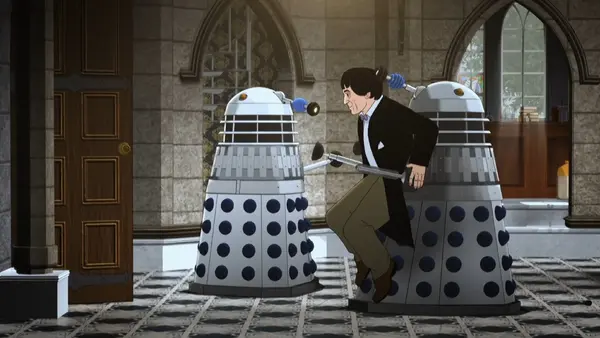
At the crux of The Evil of the Daleks there is a great commentary on the qualities of human nature and how powerful it can be, with the Daleks attempting to extract and incorporate the “human factor” into their own makeup, believing it will make them more capable killers.
This concept offered up a bold new step for the Daleks but ultimately resulted in some hilarious, yet oddly unsettling, sequences of Daleks behaving like petulant children and the eventual destruction of all Daleks forever. Or so they thought at the time.
This serial offered up some great moments – Jamie challenging the Doctor, dizzy daleks, the introduction of the Dalek Emperor – but ultimately suffered due to its drawn out runtime. Realistically, this story could have been condensed down to half the number of episodes and picked up the pace in getting the Doctor involved in the experiment.
Like many serials from the Second Doctor’s era, the original video footage of The Evil of the Daleks remains lost but the 2021 animated reconstruction does an excellent job of merging the original audio with great visuals to bring this story alive once again.
10. The Daleks' Master Plan
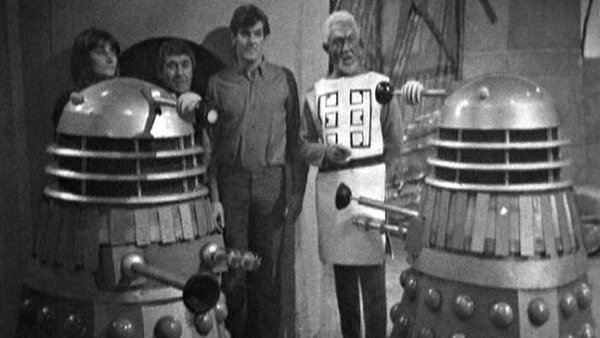
The Chase walked so that The Dalek’s Master Plan could run.
Despite over half of the episodes being lost, this 12 part serial (13 if we include the prequel story, Mission to the Unknown) took the concept of the Daleks chasing the Doctor through time but this time upped the ante to provide a story more befitting the destructive nature of the pepper pots. For the first time since their introduction, the scale of the Dalek’s schemes escalates into the universal destruction we’ve come to know them for.
Add to that an early appearance from Nicholas Courtney – in a role that no doubt sparked interest in bringing him back later – the return of the Monk and the first companion deaths, and this serial packs quite the punch.
The downside of The Dalek’s Master Plan, as a modern day viewer, is the fact that it’s incomplete, meaning that full comprehension and enjoyment of the story is unachievable, but there still remains hope that one day all 12 instalments might be restored.
This may have seemed a ridiculous notion even as recently as last year but with episodes one (The Nightmare Begins) and three (Devil’s Planet) only being discovered this year, things suddenly seem just that little bit more possible.
9. The Magician's Apprentice/The Witch's Familiar
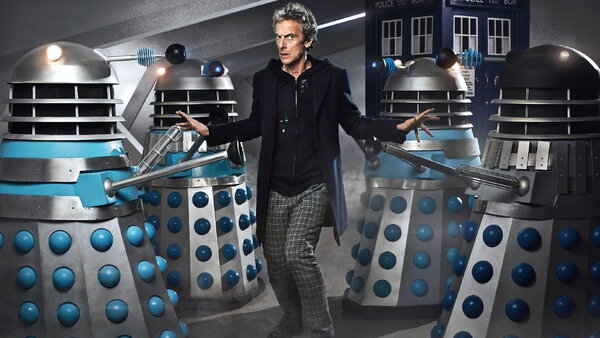
Like many of the later Dalek stories in the classic era, the Series 9 opener is less about the Daleks as a whole and more focussed on Davros, yet this story elevates his character into a far more layered and devious villain than he’d ever been before.
The trick to make any villain more complex and interesting is to make the audience feel something towards them – whether that’s a visceral hatred, a deep fear or even a sense of sympathy. In this case, we see a vulnerable side to Davros which flips the good vs. evil positions of him and the Doctor on their head.
The uncertainty over whether the Doctor will save young Davros from the Handmines lingers throughout and Davros’ meticulous ability to manipulate his oldest foe into unknowing submission is such a thrill to watch.
Julian Bleach does a fantastic job at selling both sides of Davros and manages to trick the audience into feeling sorry for him just as easily as he does the Doctor.
There are a few elements to this two-parter which muddy the waters a little – namely the introduction of the ridiculous sonic sunglasses, the sewage solution to the Dalek regeneration and Missy and Clara feeling a little superfluous at times – but overall it’s a great story for Davros and even manages to expand on Dalek lore, deepening the brutal truth of what the creatures experience inside their metal casings.
8. The Dalek Invasion Of Earth

Their second outing introduces the common theme of the Daleks becoming the masters of Earth.
The Dalek Invasion of Earth, though slow to get started, presents a dystopian future in which the world has been overtaken by the metal machines and the human race is reduced to small groups of rebel freedom fighters. The visuals of empty London streets lined with Daleks are eerie and powerful, and still iconic today.
Taking clear inspiration from H. G. Wells’ The War of the Worlds – even naming a character, Wells – Terry Nation created a science fiction allegory for the Nazi occupation during World War II to brilliant effect. From the merciless villains to the slave labour to the brainwashed collaborators blindly aiding the oppressors in the hope of being spared themselves.
This is an expertly crafted, multi-layered story which makes great use of the central characters by splitting them up to each solve a different piece of the puzzle in order to save the day.
And then we come to Susan’s departure. The first companion departure the show had seen. William Hartnell delivers his iconic speech with such authority and yet also so much heart, making us believe that he really will come back one day and reunite with his granddaughter.
I wouldn’t wait up, Susan, 60+ years later and you’re still waiting on that promise!
7. The Daleks

The one that started it all.
Despite the slower pace of the classic-era stories, The Daleks is a strong and engaging introductory serial for the pepper pots.
Not only does it establish their “master race” mentality but it also introduces a backstory to the species which is often overlooked in the modern era. The battle between the Daleks and the Thals is ultimately one of survival and while the Daleks show no interest in finding a way for both species to coexist, it is interesting that this first exploration, of what would later become the most ruthless villains in the Whoniverse, actually examines a vulnerability in these mutated beings who were simply trying to survive by any means necessary.
Does that mean they were right to irradiate the entire planet, killing the Thals in the process? No. But it’s a far cry from the gratuitous acts we would later see from these creatures.
This also marks the early establishment of the Doctor’s mindset that “the mind will always triumph” over weapons, although it's very interesting that it is Ian who questions the morals of sending The Thals into battle against their will, while the Doctor is eager for their involvement. The Doctor often learns and grows thanks to his companions and this is an early example of that.
Many might dismiss an early 1963 serial as long and sluggish but this second story is pivotal in establishing some of the core elements that still bolster the show today. Without the success of this story, we wouldn’t even have this list!