Doctor Who: EVERY Dalek Story Ranked Worst To Best
6. The Stolen Earth/Journey's End

Forget Avengers: Endgame. The Series 4 finale is still the best large-scale science fiction crossover ever put to the screen.
Bringing characters from spin-offs Torchwood and The Sarah Jane Adventures into the main show, as well as featuring the return of every NuWho companion – right down to Harriet Jones, former Prime Minister – gives the entire production an epic quality that future showrunners have often tried to replicate, with varying results. This is an example of how to successfully incorporate a large ensemble into a story without it feeling overcrowded or certain players seeming superfluous.
This story also marks the welcome return of Davros, creator of the Daleks, after a 20-year absence. Julian Bleach plays the mad scientist with an unhinged brilliance, giving his genocidal rants a truly terrifying edge.
As for the Daleks themselves, they offer up their usual merciless tactics in their quest to conquer the universe and even get an eyestalk upgrade which eliminates their previously laughable “visual impairment” weakness, much to Wilf’s dismay.
The biggest downfall for this otherwise perfect story is its final act. The introduction of a Doctor duplicate and the Doctor-Donna is a touch contrived and almost feels a little anticlimactic with every NuWho hero already on hand to save the day.
Despite its conclusion, the scale and nostalgia levels of this story would be fitting for the heights of an anniversary special, and yet, this was merely a series finale. With this as the blueprint, no wonder everyone expected cameos galore by the time RTD returned for the 60th!
5. Remembrance Of The Daleks
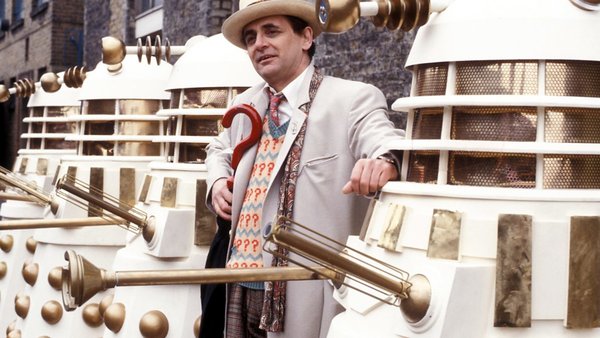
After the previous few Dalek stories had felt like the Daleks themselves had taken a bit of a backseat, it was great to see them return to the forefront in Remembrance of the Daleks.
A civil war sparked by the notion of purity and the rejection of difference is thrilling and intense to watch, while the comparisons and references made to Earth’s own instances of such bigotry make for such a visceral viewing experience. The Daleks felt dangerous again and their disregard for the human collateral amidst their own civil quarrel only added to their heartlessness.
There are many aspects of this story which seemingly influenced the direction the revival took in 2005 – from the more serious, dramatic tone of the storytelling, to the more mysterious vibes of the Doctor, to the introduction of the Time War. Sylvester McCoy lays the groundwork for the Doctor’s of the future, with his unpredictable behaviour, the undercurrent of guilt and the weight of his decisions bubbling beneath the surface, and his desire to solve a problem without pulling a trigger (although in this instance that’s just a technicality… he does end up indirectly blowing up Skaro!).
This is a story where the stakes feel high and the tension is constantly building. The Hand of Omega element is a little simple but this is made up for with the high production value and upgraded Dalek design.
Petition for the return of the Special Weapons Dalek!
4. The Power Of The Daleks
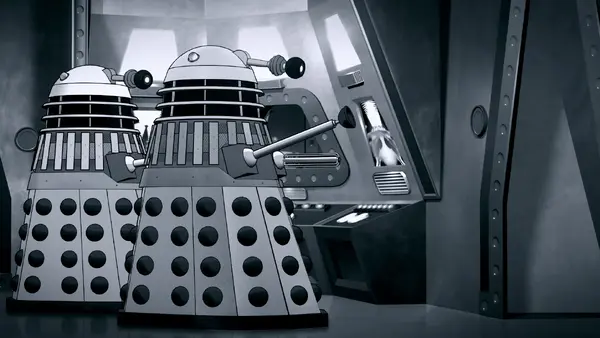
Like The Evil of the Daleks, the video footage of The Power of the Daleks remains lost from the BBC archives but, miraculously, the audio survived thanks to a fan’s home recording and we were treated to a fully animated reconstruction of the serial in 2016.
Though sceptical about an animated version, this story was a pleasant surprise. On the planet Vulcan (which is the most open invitation for a Star Trek crossover if ever I saw one) the newly-regenerated Second Doctor must try to convince a group of colony scientists that their new Dalek “servants” are actually deadly killers.
This is the first time we see the manipulative side of the Daleks, who had previously seemed quite linear in their methods of coercion. This time, however, there’s a level of mockery from them as they almost sarcastically repeat the phrase “I am your servant” while the audience and the Doctor see right through their deceit. The Daleks had never felt this intelligent or methodical before this serial and the animation format lends an added level of tension to their scheme which might not have been so clear in the original broadcast.
The Power of the Daleks also marked the arrival of Patrick Troughton as the Doctor and quickly solidified him as a worthy successor for the role. The decision to include the already popular and familiar Daleks to this story was a clever way to ease audiences into this new era and is a technique still used to great effect today.
The Doctor’s post-regeneration erratic behaviour is also established here but also lends itself to the story whereby nobody takes his warnings about the Daleks seriously meaning that they are able to carry out their plans and kill a lot of colonists before they’re eventually stopped.
Overall, a wonderful introduction to the Second Doctor and a great development of the Daleks and their quest for total domination.
3. Bad Wolf/The Parting Of The Ways
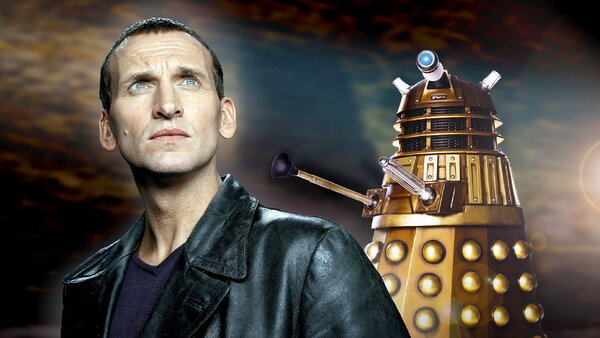
The satires of The Weakest Link and Big Brother may be slightly dated for today’s audience but the first series finale of NuWho set the standard for each one after it. Memorable guest characters, a terrifying and seemingly invincible enemy, and a conclusion that challenges the Doctor’s core beliefs.
The key to the intensity and impactfulness of this story is Christopher Eccleston. His hardened performance, as the Doctor faces an impossible choice and tries to justify his decision as the most humane option, is so layered and affecting. Beneath the anger, there’s a deep sadness and pain in the discovery that his biggest regret, his act to end the Time War, was for nothing and he now finds himself in the exact same position, only this time it would be humanity who become the collateral.
Thank heavens Rose managed to get back in time to save the world!
In terms of the Daleks themselves, RTD did a fantastic job of finding the balance between telling a story that would be understood by new viewers, while also including elements that existing viewers would appreciate. The Emperor Dalek could at once be a new threat to those who didn’t recognise him, while also sparking a thrill to those who knew the history between him and the Doctor. Likewise, it was great to hear the familiar ambience of the Dalek ships and see that, despite the evolution of the show, the Dalek design had remained almost exactly the same.
A fitting final bow for the Ninth Doctor, even if his ending came far too soon.
2. Dalek
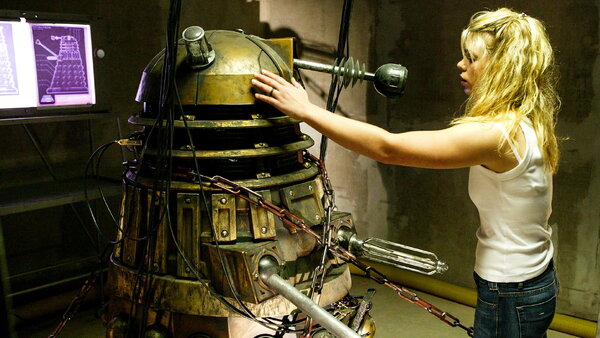
As with Bad Wolf/The Parting of the Ways, it’s hard to imagine any other Doctor than Christopher Eccleston in this episode. Even if new viewers hadn’t seen the many Dalek stories from the classic era, Eccleston’s performance alone sells the long and dark history between these foes.
Nine ordering the Dalek to kill itself is one of the most chilling moments in Doctor Who history. His anger and hatred is unusual and disconcerting for viewers who had previously seen the character aiming to save rather than destroy. To that end, this episode achieves something few other Dalek stories have, it makes you feel sorry for the “monster” and fear the supposed hero.
In the past, one of the major setbacks of the Daleks was the lack of usable props, leaving them feeling far less threatening than they were supposed to (three Daleks attacking Auderly House in Day of the Daleks became a famously laughable situation), and yet 2005’s reintroduction of the Doctor’s greatest foe managed to establish them as one of the most dangerous beings in the universe using only a single Dalek prop.
The design remained mostly unchanged but the addition of emotion and instability made these previously one dimensional baddies far more interesting and complex. An upgrade necessary and fitting for the new, more dramatic era of Doctor Who.
There was a lot of pressure on the reintroduction of these iconic creatures and it’s safe to say that Robert Shearman absolutely nailed it!
1. Genesis Of The Daleks
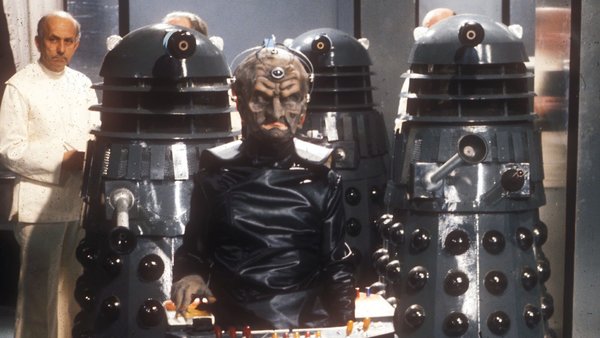
When done right, an origin story can elevate and enrich a villainous character, and that is certainly the case with Genesis of the Daleks.
Until now, the Daleks had always been presented as rather one-dimensional baddies – devoid of emotion and hellbent on the destruction of all inferior lifeforms – with just a hint at their origins made in their very first appearance, The Daleks.
This story provides the missing piece of the puzzle and allows us to fully understand how the Daleks came to be, while also managing to evoke a level of sympathy for them. Not only that, but it also offers a much darker story than usual with clear connotations to the Nazi regime including the Kaleds' uniform design and Davros taking on the role of maniacal dictator.
Add to this the Doctor’s moral dilemma as he holds the future of the Dalek race in his hands and we have one of the greatest Dalek stories in the history of Doctor Who.
While quirkiness and campiness have always been key components of Doctor Who, it is also true that some of the most memorable and impactful stories are the ones which take a more serious approach, leaving the audience to reflect inwards and question their own stance on a situation. Unlike many of the other classic stories on this list, Genesis of the Daleks still holds up today for this very reason and stands as a reminder that Doctor Who can, and should, go to these darker places.