10 Awesome Things You Don't Remember About WWE's Ruthless Aggression Era
How soon everybody forgets...

The Ruthless Aggression era has a pretty definitive beginning and end: it was ushered in with a promo cut by Vince McMahon to the entire (and enormous) post-Invasion roster in front of fans at the Gund Arena in Cleveland to kick off the 24th June 2002 RAW and ended when the PG edict came down on July 22nd 2008.
In that infamous promo, McMahon was his usual bellicose self, ranting to his employees about what had made him the success he was: the quality of ruthless aggression.
That new Attitude was an introspective one. Without any appreciable outside competition, the company created the brand extension, turning in upon itself to create new, artificial rivalries, rivalries that sought to retain some of the edginess of the Attitude Era.
The era saw the in-ring comeback of Shawn Michaels after what was thought to be a permanent retirement, and the return of the supernatural Dead Man whod retire him for good. Olympic legend Kurt Angle became a wrestling machine and midcard hardman Bradshaw became a Wrestling God. Edge became Rated-R and Chris Jericho became a rock star.
Thats what everybody knows and what everybody remembers. However, this article is dedicated to ten lesser known examples of the finer things WWE brought to us in the Ruthless Aggression era, things that you might have forgotten...
10. Straight Edge Means Im More Popular Than You

At Survivor Series on November 26th 2006, CM Punk teamed with Shawn Michaels, Triple H, and Matt and Jeff Hardy to take on Edge, Randy Orton, Johnny Nitro, Gregory Helms and Mike Knox in a traditional five-on-five elimination match.
The mis-match was embarrassing (Mike Knox?!), and the results confirmed it: a five man shut out, Team Rated-RKO were humiliated in defeat.
You could tell The Game wasnt best pleased. Youve got to bear something in mind, here: he was standing in the ring with a man that he and Michaels had supposedly buried the year before while watching a 2005 tryout from the gorilla position.
More than that, this wasnt a competitive Survivor Series elimination contest designed to conclude or advance storylines. It was a glorified squash match designed to make Triple H and Michaels look (and feel) like heroes on the night.
They were a team that represented the glory days of the Attitude Era: the safest, most generic babyface versions of D-Generation X and Team Extreme. For the Hardy Boyz, it was the first time theyd teamed in nearly five years.
This was an exercise in nostalgia, the pro wrestling equivalent of getting the old band together for a one-off gig. The Philadelphia crowd had other ideas, however. They knew the future when they saw it.
9. The Devil You Know
When WWE relaunched ECW as their C-branded show on SyFy in June 2006, they had to work with the remit of the channel the show was on, and duly created a vampire character to satisfy that outlandish genre fetish.
Well, given that WWE has made a megastar out of a giant undead zombie wizard for a quarter of a century now, its not as odd a decision as youd think.
Accompanying Kevin Thorn (aka Kevin Fertig, the former Mordecai from SmackDown in 2004) was his valet Ariel, supposedly a vampire tarot reader. The two would pair up on ECW for a year until Ariels release in July 2007, which came about due to a backstage misunderstanding with Batista.
What a waste of talent this was, given the real-life Shelly Martinez commitment to the role shed been handed.
To get Thorn over, Martinez displayed a focus on the Ariel character that bordered on method acting. Given that outré wrestling gimmicks like theirs require nothing less than Undertaker/Kane levels of complete investment to pull them off, she was instrumental in providing the charisma-free Fertig with colour and depth.
He had the tendency to look like a giant sulky child instead of an intimidating, dread vampire lord, which would have been a kayfabe-killer had Ariel not stepped up her game.
Indeed, it can be argued that prior to her release, Ariel was more over than Thorn was, and she wasnt shy about getting her hands dirty, either, throwing herself into every aspect of a heel managers job with gusto.
WWE are constantly looking for stars that attract the lucrative Hispanic demographic, so its hard not to see this as a missed opportunity on the WWEs part. Had the company not chosen to back Big Dave over Shelly Martinez in a he-said-she-said nine years ago, who knows where her career might be now?
Remember, this is how Trish Stratus started, and shes now a record-setting Women's Champion, a wrestling icon and a WWE Hall Of Famer.
8. The Return Of Fit Finlay
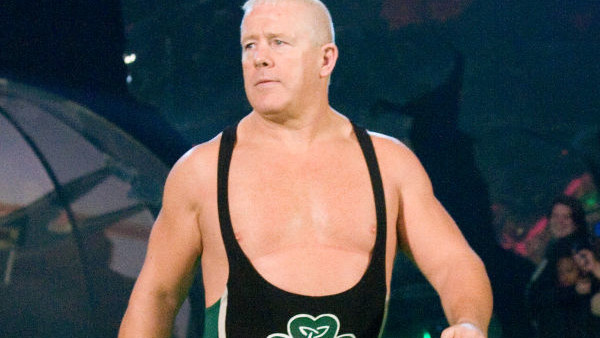
Debuting in 1974, third generation Belfast-born wrestler Dave Fit Finlay was a mainstay of the Irish and British scene for nearly twenty years, in-between frequent trips around Europe and to Japan, before he made the move to the US to work for WCW in 1995.
Hed wrestle for the WWFs competition for five years, before being taken out after suffering serious lacerations in a hardcore match against one of the Nasty Boyz on a house show. Finlay would sever nerves in his leg, and even after recovery wasnt able to feel anything below the knee. He was considered to have suffered a career-ending injury, and retired in 2000
...except he didnt. In January 2006, Finlay returned after a gruelling year of intensive rehabilitation - this time in the WWE, where he was naturally given the stereotypical gimmick of an Irish street fighting brawler with an evil-minded little leprechaun for an sidekick (except that the gimmick was Finlays idea, and Hornswoggle was his own invention, even down to the name).
Still, Finlays comeback wasnt just a minor miracle, but a genuine gift from the wrestling gods. Back in the late seventies and early eighties, Finlay had helped revolutionise wrestling in the UK, along with other superworkers like Rollerball Rocco, Marty Jones and the Dynamite Kid.
Theyd initiated a stiff, technical, intense and bruising style, far faster than was the style in Britain at the time, and the world would begin to pay attention.
Like Terry Funk, when Finlay hit you he didnt daintily tap your face while furiously stamping the mat. He hit you hard, and you stayed hit. Finlays no-nonsense, fast and brutal style was a breath of fresh air in 2006, and he wrestled like a man half his age with something to prove.
It seemed like, even at forty-eight years old, the man was incapable of having a bad match with anyone.
7. The Greatest Cruiserweight Champion In History
Beginning the WWF/E part of his career as superhero wannabe The Hurricane, Shane Helms didnt just embrace the midcard comedy gimmick, he bought it a ring and took it to meet his parents.
One of the unanswerable truisms of pro wrestling is that if the performer steps up and owns whatever character they end up saddled with, then 90% of the time theyll get over with the crowd despite a lack of creative support from the office.
Thats Helms all over; a perennially underrated in-ring talent, he had the chops to perform geeky character comedy and slapstick too. The Hurricane character would always have a natural ceiling to it, but Helms must have impressed somebody, because he was handed the ball and told to run with it.
Turning heel in October 2005, he dropped the gimmick, reverting to his own name and putting on some solid muscle. He'd soon win the Cruiserweight Title at the 2006 Royal Rumble.
Hed hold the title for 385 days, well over a year, and 223 days longer than anyone else had ever held it. That speaks to how well he was regarded by the office, and Helms stepped up once again. His heel work was a revelation and his trashtalking, arrogant piece-of-sh*t villain was a beautiful thing to behold.
During this historic title reign, Helms would retain his title against pretty much every cruiserweight contender on the roster. In fact, hed actually feud with the entire cruiserweight division all at once - incredibly, not once, but twice.
In doing so, he forced every other performer in that division to step up their game, not just in the storylines, but in real life too. They had to, just to try and keep up with him - he might not have been The Hurricane anymore, but he still created his own weather system.
There arent enough good things to say about Gregory Helms, and this was the midcard run of a lifetime. What a guy.
6. A One-Legged Man In An Ass-Kicking Contest
Casting a one-legged teenager as the whipped underdog in a long-running wrestling angle is one of Vince McMahons more harebrained ideas, especially given that Zach Gowen - whod only just turned twenty a matter of weeks before his May 2003 debut on Smackdown, and whod lost his left leg to cancer at the age of eight - would be forced into competition with Rowdy Roddy Piper, the Big Show and Brock bloody Lesnar.
But a high point for any beaten dog in WWE storylines is when your revolting boss decides to enhance his heel heat by beating the crap out of you himself. And at the Vengeance pay-per-view in July, with an upcoming feud with the Undertaker and his own daughter Stephanie to build up to, McMahon booked himself to do just that.
Its a match so well remembered that it's not even mentioned on Vincent Kennedy McMahon's Wikipedia page. Gowen received some offence, but as a scrawny kid who looked a good half his real age (never mind the missing leg), anything he did in there except get crushed was always going to look contrived.
No, this is an exceptional case of an exceptional performer rising to the occasion. Vince McMahon is not a wrestler, no matter how much he secretly wishes he was, but in the right situation he can be magical in the ring. The wrong circumstances gets us Hart vs. McMahon at WrestleMania XXVI, the obnoxious stink of which still hasnt quite left Glendale, Arizona some six years later.
The right circumstances get us his match later on this year against the Undertaker (a one-sided, bloody beatdown which McMahon sells like the commission was feeding his family), and this one. Its a little too long, but McMahons character work is on point.
Whats more, the unexpected gusher of a head wound after a viciously dropkicked chair to Vinces face - which looks just like a bladejob, but which Gowen maintains to this day was hardway - adds sudden drama, and gets Gowen over to the point where youre almost invested in him winning.
5. A Decade Too Late
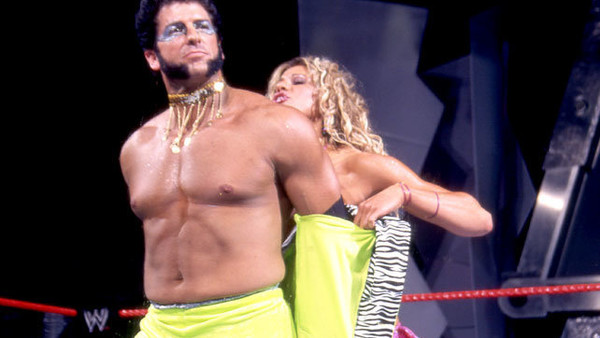
When WWF/E historians look back on the fabled OVW Class Of 2002, theyll cite megastars John Cena, Brock Lesnar, Batista and Randy Orton. Theyll recall wrestlers with the potential for greatness like Matt Morgan, Ali Stevens, Shelton Benjamin and Rene Dupree.
Chances are they may have forgotten about Rico, however. A former SWAT police officer and professional bodyguard, he started training for pro wrestling late at age thirty-seven after a phenomenally athletic turn as an American Gladiators winner.
Debuting on Smackdown in March 2002 as Billy & Chuck's stylist and manager, as time went on he developed an exótico gimmick straight from the lucha libre playbook. However, Rico owed more than a little to the example of the legendary Exotic Adrian Street, whose blessing and advice he received when he took on the role.
When his flamboyant, outrageous heel character took off with the crowd, Rico turned babyface, teaming with Charlie Haas with Jackie as their valet. Asking Vince McMahon how far he should take the flirtatious, flaming homosexual gimmick, the boss told him to "strap a rocket to your ass and take off... I'll tell you when to quit".
Rico took McMahon at his word, and rose to become one of the most entertaining things on Smackdown in the spring and summer of 2004, until he was unexpectedly released in November 2004. The word was that hed asked for a raise due to his characters popularity, but that at forty-three years old and running a defiantly midcard gimmick, the office didnt see a future in him.
Thats a crying shame, because Rico had extraordinary form. Incredibly athletic considering his size (a shade smaller than John Cena), his double-vertical into a Falcon Arrow was stunning, his moonsault was practically perfect, and his kicks (unlike many supposed martial artists in the WWE) were on point and straight-legged.
He was a significant in-ring talent with a great look and a fantastic character guy, able to get serious noise from a crowd as a heel or a babyface. Had Rico tried out five years earlier, he could have been lost in the Attitude Era shuffle.
Ten years earlier, however, and we could be talking about him in the same way we talk about Owen Hart today.
4. Joey Styles Lets Loose

3. Down Among The Dead MenWWE.comThe Undertaker is unlike any of WWF/Es other headlining stars, in that he doesnt represent any set era. He came in during the last couple of years of The Golden Era, worked steadily at the top in the New Generation Era, was front and centre in the Attitude Era and a mainstay of the Ruthless Aggression Era. Even the PG Era, which was more or less when he went part-time, saw a sudden burst of quality in the Dead Mans matches, with his WrestleMania encounters in particular going from pedestrian slugfests to stealing the show almost every year. Part of that upswing began with his feud with Kurt Angle in early 2006. He and Angle had feuded before, but playing different characters: Angle had been in his Olympic douchecanoe phase, while Undertaker had been a giant, no-nonsense biker badass. Fast forward a few years, and the situation was significantly different. By then, the Undertaker was two years into the Dead Man persona that would see out the remainder of his career, a hybrid of the American Badass ferocious, fast-paced style and the Lord Of Darkness unstoppable monstrosity. Meanwhile, although plagued with significant physical issues, Angle (one of the most intense, committed individuals in the history of the sport) was deep into his bravura run as the wrestling machine. Their match for Angles World Heavyweight Championship at No Way Out in February 2006 was more or less the beginning of the Undertakers long run of pulling phenomenal matches out of nowhere, no longer chained down by a gimmick that wouldnt let him work or injuries that slowed him down. Angle was the perfect opponent for that mindset, a man who could have a five-star match with a crash test dummy. The match was blistering: a rematch on Smackdown only a week later, nearly as good as that. The two characters and the wrestlers behind them had meshed perfectly, and it seemed clear to anyone paying attention that this feud could run and run. Sadly, it wasnt to be as Angles ongoing physical issues and increasing dependency on painkillers began to make him a liability, and he was gone from the company by the end of the summer.
2. The Tyrant King Of WWEWWE.comBack in late 2007, William Regal was the General Manager of Monday Night RAW. He was a heel authority figure who regularly abused that authority, but was far more delusional than wed all become used to. Winning the 2008 King Of The Ring tournament in April, Regal began evincing a new persona, that of a softly-spoken, tyrannical megalomaniac with a hair trigger temper who had a propensity for turning off the lights in the arena and even cutting off Monday Night RAWs broadcast in the middle of the main event, just to make a point. It was brilliant stuff. William Regal already had a reputation for being a big, nasty badass with almost unparalleled technical prowess and vast experience in the ring and now he was a near sociopathic despot, a dictator who revelled in his power to affect careers as well as break faces. Sadly, this character-driven run at the top wouldnt last long. Regal failed a second Wellness Policy test in May 2008, only a few weeks into the angle, and was beaten by Mr. Kennedy in a Loser Gets Fired match to begin his sixty day suspension from the company. Still, for a little while, Regal was King.
1. The Weirdest Night in WWE Championship HistoryWWE.comOctober 7th, 2007 - the night of the No Mercy pay-per-view - was a strange time to be a WWE fan. WWE Champion John Cena had torn a pectoral and been forced to vacate the title only days beforehand, when he was due to defend it against Randy Orton in a Last Man Standing match that Sunday. That left WWE with no champion and no main event so who should step up, but a man desperate for more world title wins to add to his record? The show opened with Vince McMahon simply handing the title to Orton, but advising him that hed have to defend it that night. At that point, a babyface Triple H - who was already scheduled to face the Samoan Forklift Umaga that night - turned up and made the challenge, which heel Orton rejected. Triple H goaded McMahon into making the match regardless, starting immediately. Eleven minutes later, Triple H had won the WWE Championship - with a roll-up. That was the shape of things to come, because then the ruling came down that Triple Hs match against Umaga would still be going ahead, but would now be for the title. He defeated the Samoan Lawnmower with a Pedigree to retain the WWE Championship in just over six minutes, only to be informed shortly afterwards that Orton was activating his rematch clause for that evening. The main event would see Orton vs Triple H for the WWE Championship in the Last Man Standing match that the fans had paid to see... just with Cena swapped out for the Game. How Orton had any kind of clause, rematch or otherwise, in a championship match contract that didnt exist is a question only a pretend lawyer can answer. Similarly, one wonders what McMahon intended the main event to be before Orton invoked this fictitious clause, as one would assume that the whole point of awarding the title at the beginning of the show was to safeguard the WWE Championship match for later that night by setting up a title match as the main event. Orton was successful in the main event, keeping Triple H down for a ten-count after a twenty minute battle. So nothing changed from the opening segment, then. Orton was still champion, Triple H still faced Umaga, but both Orton and Triple H notched up an extra WWE Championship win each. In the aftermath, Orton moved straight into contention with Shawn Michaels, while Triple H continued to feud with Umaga. Utterly baffling.