10 Best Career Making Pieces Of Advice In WWE History

Little nuggets of encouragement that elevated wrestlers to dizzy heights.

Wwe Yellow Listen to any major star who has carved a living for themselves in the wrestling world, male or female, and they will gladly tell anyone with ears that they need to start using them. The very definition of the word 'advice' is, 'guidance or recommendations concerning prudent future action, typically given by someone regarded as knowledgeable or authoritative'. There are 2 key elements to that meaning, most notably the fact that it concerns what is coming in the future, along with the fact it is delivered by somebody who has past experience, or the best intentions for the recipient. Often, the best advice comes from people who have someone's well-being at heart, and thus don't want them to fall into a trap they perhaps did, or see something they could improve on to make the best of what they have. Probably one of the best examples of this would come from 'The Kliq', the group of guys who pretty much called the shots in the WWF locker room of the mid-90's. Armed with their motto, 'you can make friends in this business, or you can make money', the likes of Kevin Nash and Shawn Michaels directly influenced guys like Triple H and Sean Waltman. Numerous other top names in the world of professional wrestling can never claim to have simply been born to do what they do. There is some degree of natural ability, of course, but by and large, it takes a lot of soul-searching, not to mention a lot of help from people around them, for someone to become a top, money-making star. This list takes into account some of the absolute best advice ever given to some of wrestling's top names, helping them create characters and a persona which could feasibly live in the minds of fans forever.

10. Jimmy Hart Told To Dress Like Nobody Else In The Building
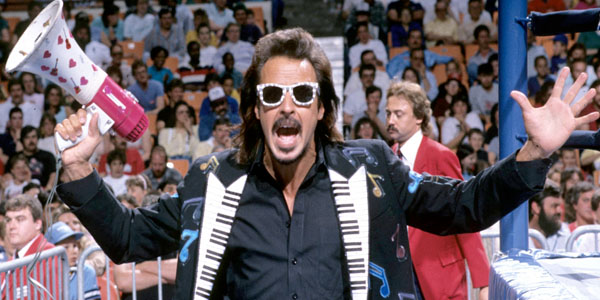
Coming from a music background, Jimmy Hart was always quite the flamboyant type anyway. Entering the pro wrestling business in the 1970's, the manager quickly established himself as a colourful talker who could raise the ire of the fans, something which led to him signing with the then-WWF in 1985. It was there that Vince McMahon instructed Hart to start carrying around a megaphone, shouting instructions from ringside and annoying ringsiders, but that wasn't the most crucial piece of advice Jimmy would receive. Before crash-landing in the bright, garish world of the WWF, Hart was given some advice by legendary broadcaster Dick Clark, words which would live with him for the rest of his career. Clark told Hart that if he ever hoped to make it in the wrestling industry, he should dress differently from how the fans do, otherwise he might find himself sitting in amongst them someday. Taking the advice to heart (no pun intended), the manager started presenting himself in an array of flashy suits and jackets, often emblazoned with airbrushed caricatures of the wrestlers he was managing. This became a Jimmy Hart hallmark, and really helped the diminutive heater stand out.

9. Razor Ramon Told To Have More Swagger By Bobby Heenan
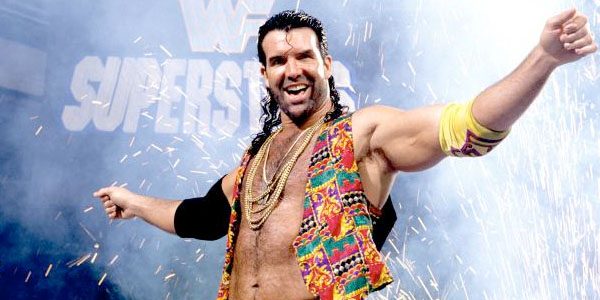
Signing with the WWF in 1992, Scott Hall presented a character to management that he was interested in playing. Based on the success of movies such as Scarface, Hall created 'Razor Ramon', a tough-talking Latin American who could back up his words with his actions inside the ring. Even though he looked the part, it's startling to imagine that Hall was pretty under-confident, but according to Bobby 'The Brain' Heenan, that's exactly what he was. Incredibly, it was Heenan who suggested that Razor start throwing his trademark toothpick at the camera when walking to the ring, or even his opponents when inside of it. Generally, the manager felt that the fledgling new star should have more swagger about him, especially if he was going to talk about his 'machismo' in a brash manner. This is advice which really helped the character of Razor Ramon take on a life of its own - quickly, Hall ascended the ladder in WWE, proving ideal foil for the likes of Bret Hart as WWF Champion, before he would eventually turn babyface in the Summer of 1993.

8. Shawn Michaels Encourages Daniel Bryan To Embrace 'Small' Size

Daniel Bryan Vs Shawn Michaels Being considered a 'small' man in the professional wrestling can be tough, even more so if one hopes to make a splash in what is typically referred to as the land of the giants, World Wrestling Entertainment. A lot of this mind-set stems from Vince McMahon's fascination with muscle bound stars in the 1980's, feeling his 'WWF Superstars' had to be larger than life, and could never look like every day people. Shawn Michaels and Bret Hart were the kind of wrestlers who started to change the way the then-WWF presented wrestling in the early-to-mid-90's. Suddenly, faster-paced action became the norm, and that was all because McMahon realised guys like Michaels and Hart were the way forward, despite their smaller size compared to stars such as Hulk Hogan or The Ultimate Warrior. Training Daniel Bryan during his formative entry into the wrestling business, HBK told Bryan he had to embrace his stature if he ever hoped to be successful. This is certainly something Bryan has done, using his superior in-ring skills and natural charisma to connect with the audience, but realising that he has to package himself differently to larger performers like John Cena or The Big Show.

7. Paul Heyman's Honest Advice For CM Punk
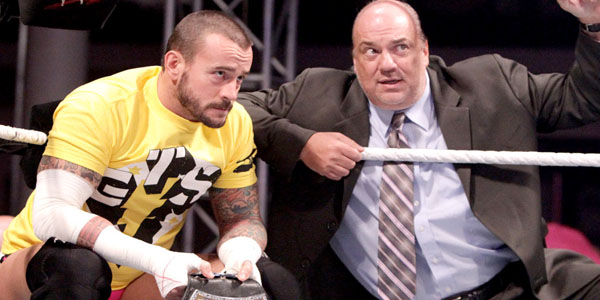
From the very time he laid eyes on him, Paul Heyman has been high on CM Punk. Maybe it's the maverick personality, defying what the status quo perceives to be the correct way, or perhaps Heyman just really thinks Punk is indeed the 'Best In The World'. Whatever the case, the former ECW head honcho has stated on more than one occasion that he wishes Punk had been around when he was running that company. Working with the future WWE Champion in the promotion's developmental system, Heyman quickly recognised that Punk wasn't viewed as a future star by the likes of Vince McMahon or Triple H, because he didn't directly fit into the paradigms of what they were looking for at the time. As a product of the American independent scene, Punk was not WWE Superstar material, according to some. Looking to keep his protege motivated, Heyman told Punk to stick true to what he wanted, because that self-belief would resonate with everyone around him. Heyman has always been regarded as someone who could talk the hind legs off a donkey, then sell them back to it, but he deserves praise for keeping Punk focused, when others were trying to fob him off.

6. Overwhelming Criticism Forced Chris Jericho To Adapt

Making the jump from WCW to the WWF in 1999, Chris Jericho had grown frustrated by his ability to crack the main event scene in Atlanta, and felt he had way more to offer the wrestling industry than he was being allowed to. Eventually, Jericho would prove to be right, but by his own admission, he wondered if he had maybe made a bit of a mistake during his first few months in his new surroundings. Wrestling the way he had always done, 'Y2J' even made comments about The Undertaker being boring live on air, and started to build a reputation for himself as arrogant and difficult to work a good match with. Looking to challenge his new employee to sink or swim, Vince McMahon directly called him out as the 'drizzling shits'. At first, this seemed to knock Jericho's confidence, but by working alongside X-Pac (who was put in charge of piecing together Jericho's matches), and repeatedly asking for advice from the likes of Triple H, the former WCW star made good in the WWF. There are more ways than one to give advice, and even though McMahon's words may have seemed harsh, it was the kick up the backside that Jericho badly needed.

5. Bret Hart Tells The Rock To Ignore Pressure

During his rookie year in the WWF, The Rock didn't really give fans any warning that he was going to be one of the biggest names in the industry just a few short years later. As the bland, goody-two-shoes Rocky Maivia, the future star of Hollywood came across as pretty unlikeable and hard to relate to. At his core, Rocky was playing an outdated babyface who would have been more at home in the 1970's. Whilst anti-hero stars such as Steve Austin were starting to catch fire, fans wanted Rocky to literally combust, chanting things such as, 'Die, Rocky, Die' at live events. Using this as a reason to badmouth the man to management, Shawn Michaels and Triple H reportedly tried to sabotage any push for the youngster, but it was Bret Hart who put his neck on the line for him. Realising that The Rock was coming under some immense pressure, Hart started to give him advice on how to navigate the shark-infested waters of the pro wrestling industry, something which stood the man in great stead going forward. Dwayne Johnson is not exactly a push-over, but Bret Hart standing up for him was important in leaping that difficult first hurdle in the WWF.

4. Seth Rollins Told By Triple H Just To Have Fun
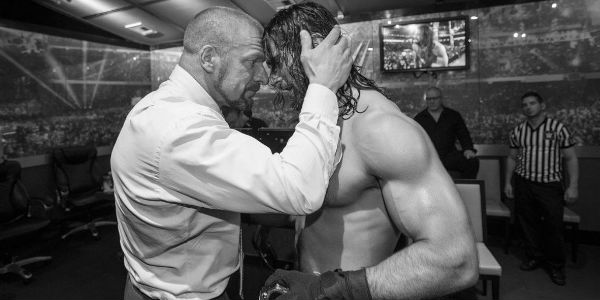
Since taking over the job of overseeing WWE's development system, Triple H has received widespread credit for how he has revamped the division into a crucial part of the promotion's future. NXT is roundly praised, and a true gem of the WWE Network line-up, providing fans with a weekly slice of fun, easy-to-follow professional wrestling. One man who has reaped the benefits of HHH's advice is Seth Rollins, who now holds the WWE World Heavyweight Title. A key member of The Shield, Rollins was ironically considered to be the man many felt might get left behind once the unit were split - Roman Reigns seemed to be WWE's choice of first champion, whereas Dean Ambrose had a unique vibe to him that many likened to Roddy Piper. Speaking candidly, Triple H says that he instructed Rollins, along with pretty much everyone else on the NXT roster, to just go out there and have fun week-to-week, then focus on the main roster once they got there. Looking back over his own career, 'The Game' says he wishes he had enabled himself to have more fun, but he was so determined to get to the next level that he didn't stop to appreciate much. It's obviously just by watching Rollins on television that he has taken this to heart, taking things one match/promo at a time.

3. Vince Tells HBK To Steal The Show Every Night
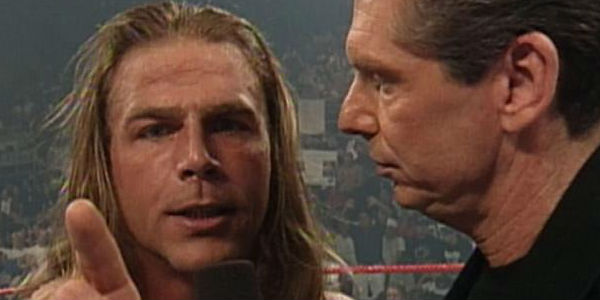
As mentioned during a previous entry, there was a noticeable shift in how the WWF presented their product in the early-to-mid-90's. Huge, hulking beasts started to be phased out somewhat, and in their place were smaller, more athletic and quicker wrestlers, ones who focused more on the actual content of their matches. Even so, Vince McMahon still wanted his performers to remain larger-than-life, but did recognise that there needed to be something fresh to shake up what had become a terribly stale product. Thus, the 'New WWF Generation' was born, as the company tried to move away from the likes of Hulk Hogan, Randy Savage and The Ultimate Warrior. Bret Hart was the ringleader, certainly at first, but McMahon challenged Shawn Michaels to step up to the plate and top his performance from the previous show, every single night. The pressure must have been immense, but it was a challenge HBK would rise to, and helped bring out his natural showmanship. It was guidance that helped Michaels take one final step up the ladder, finally achieving his dream of becoming WWF Champion.

2. Ted DiBiase Instructed To Be 'Million Dollar Man' At All Times
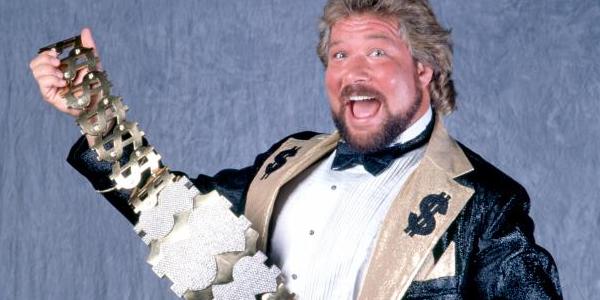
One of the absolute best characters to ever come from the brain of Vince McMahon and company, the 'Million Dollar Man' was a genius idea. Originally, it was a persona envisioned for McMahon himself, but knowing he would never become a full-time wrestler, he passed it over to Ted DiBiase, and it proved to be the perfect fit. DiBiase took to the role like a duck to water, and one of the best aspects of it was that he was told to play the character at all times he was in in the public eye, regardless of the cost. No pro wrestler in their right mind would turn this one down, the chance to be a top heel who rode around in fancy cars, ate the finest foods, drank the best wines and stayed at the most plush hotel suites. Professional wrestling may have been (slightly) more protected in the late-80's than it is now, but most fans had cottoned on the fact that it wasn't all real, playing out largely in fantasy. Nonetheless, DiBiase was awesome in the role, and the fact he was instructed to be in character at all times only heightened the hatred fans had for the man. If the guy had been shown to be anything other than a rich snob, perhaps the gimmick wouldn't have been quite as successful.

1. Steve Austin Advised To Cut Loose In Promos
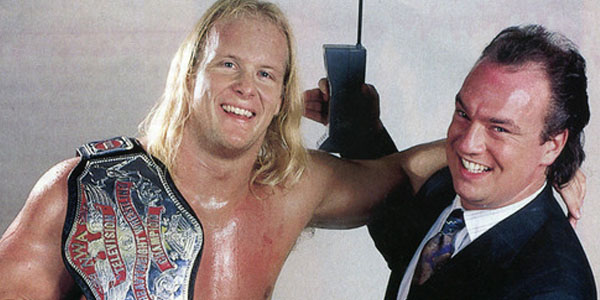
Steve Austin and Paul Heyman had worked together before in WCW, but it wouldn't be until they were re-united in the original ECW that Heyman would give the wrestler a piece of instruction so valuable that it would shape his career and change his life forever. Bitter and angry over how his tenure with WCW had ended, Austin couldn't believe that Eric Bischoff had fired him via FedEx, with the only phone call coming from his secretary in the WCW offices. Needless to say, Steve Austin was one wrestler who needed an outlet, and ECW would provide him with exactly that. Encouraging Austin to sit and vent at his cameras, Heyman said he wanted the grappler to speak from the heart about what had happened, and get it off his chest. By doing so, Austin stumbled upon a promo style which he wasn't really aware he had in his arsenal, and it would later be adapted into the 'Stone Cold' character which would make him millions. Paul Heyman saw something in Steve Austin that not even Austin could see, which is a brilliant thought, and exactly what giving positive advice is all about. Realising that the wrestler had much more to him than meets the eye, the boss of ECW provided the platform for Steve Austin to grow as a performer. What other pieces of career-making advice can you think of? What do you think of the entries on this list? Let us know down in the comments section!

Contributor

Lifelong wrestling, video game, music and sports obsessive who has been writing about his passions since childhood. Jamie started writing for WhatCulture in 2013, and has contributed thousands of articles and YouTube videos since then. He cut his teeth penning published pieces for top UK and European wrestling read Fighting Spirit Magazine (FSM), and also has extensive experience working within the wrestling biz as a manager and commentator for promotions like ICW on WWE Network and WCPW/Defiant since 2010. Further, Jamie also hosted the old Ministry Of Slam podcast, and has interviewed everyone from Steve Austin and Shawn Michaels to Bret Hart and Trish Stratus.