10 Booking Steps For WCW's Future If WWE Hadn't Killed It

Forget Vince McMahon, WCW needed an internal overhaul if it was going to survive 2001...
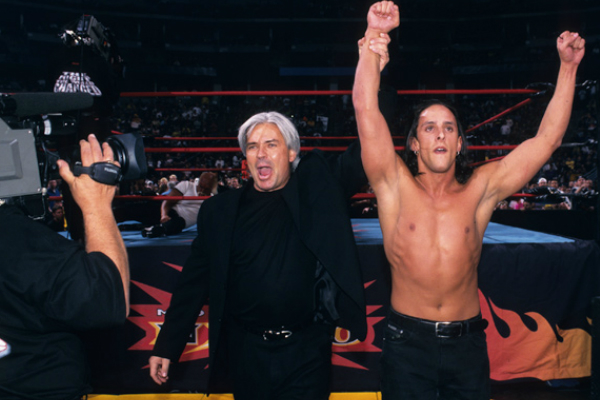
Even the most casual of pro wrestling fans know the story by now. In March, 2001, Vincent Kennedy McMahon swooped in and purchased World Championship Wrestling. Buying his major competition for a paltry sum (approximately $2.5 million), McMahon had swallowed up the only promotion to have ever threatened his monopoly since the 1980's. In truth, even if McMahon hadn't been interested in acquiring the rights and trademarks to the WCW name, the company was in dire straits. There's been a long-standing argument that Vince Russo's booking killed WCW. Whilst it definitely turned fans away from what the company presented on television and Pay-Per-View, there was something else going on behind the scenes. Ted Turner, who credited pro wrestling as being a cornerstone of his media conglomerate, had less control than ever over the empire he'd built. AOL/Time Warner were calling the shots by 2001, and they were far from happy with the money WCW was wasting. Viewing the wrestling division of the company as nothing special, officials had long since soured on things. Therefore, there's a chance that WCW could have actually been cancelled outright in 2001, which is a sobering thought. This article focuses on what might have saved the ailing giant if McMahon hadn't come on the scene. Assuming Eric Bischoff (or another impartial investor) had won the bidding war, how could they have helped turn WCW around?

10. Eliminate Unnecessary Programming

Straight away, World Championship Wrestling needed to streamline their product in 2001. Monday Nitro was struggling itself, and that was the flagship show, so there was really no need for programs like Thunder. The long-running WCW Saturday Night has already been cancelled in August, 2000, Thunder and the woefully inept WorldWide needed to follow suit. Incredibly, WorldWide continued to be broadcast until May, 2001 in the United Kingdom. This is down to the fact that the show was normally taped well in advance, so episodes could continue to air. Neither Thunder nor WorldWide were particularly worth watching in 2001, and hadn't been for quite some time. Deleting them from schedules would have actually helped WCW, because the shows were often a detriment to the product. WorldWide, with cartoon-like sound effects and graphics to mask weapons shots, was comical. Thunder had been ill-wanted by Eric Bischoff to begin with in 1998, so the sole focus in 2001 would have had to have been on re-establishing Nitro as must-see TV

9. Offer To Work With AOL/Time Warner And Rebuild Brand

In the eyes of top brass at AOL/Time Warner, World Championship Wrestling was a failing brand. This wasn't a new thing for the company, which had previously been viewed as the lame duck of the Turner portfolio. Right up until Eric Bischoff made sweeping changes in the mid-90's, WCW wasn't a money-making organisation. Monday Nitro had played a huge role in changing WCW's fortunes. If the promotion were going to survive - and hopefully thrive - in 2001, there needed to be a lot of work done to restore faith from those in charge. One thing Bischoff, or whomever was running things, could have done would be to try and mend fences with the corporate side of AOL/Time Warner. WCW had shown it could make money in 1997 and 1998. Even into 1999, the brand was still selling hefty portions of merchandise and shifting tickets at an alarming rate. The company would fail to freshen things up however, and fans became bored or disillusioned. AOL/Time Warner wouldn't have been complaining if WCW could get back to a level of making cash, but that required a lot of dedication and patience from both wrestling company and corporate structure.

8. Hit Markets The WWF Didn't

In 2000, World Championship Wrestling organised a short tour of the UK and Australia. Great Britain had already become a cornered market for the then-World Wrestling Federation, who were beginning to return annually to the country. It's difficult to foresee WCW having the same success, but the point raised here is that North America was a failing market for them by the turn of the millennium. The tour, specifically in Australia, was fruitful. In 2001, this is something WCW would have had to have capitalised on further. Vince McMahon hadn't yet branched out to doing shows in places like Australia or New Zealand. Maybe that's an avenue WCW could have explored. Grappling fans were starved in these regions, so they would have welcomed the promotion with open arms. Annual jaunts over to Australia or New Zealand could have been big business for WCW. North America, in the long run, would have been the core market for the company again, but they were a tarnished brand to many cities in the country. Things needed a rethink, and WCW needed customers who weren't jaded on the product.

7. Switch World Title Sparingly

In the year 2000, the WCW World Title was vacated no less than 6 times. In addition to that fact, the belt also switched hands between 10 different wrestling personalities (including Vince Russo and David Arquette). Long story short, the WCW World Title had been badly hurt by neglectful booking and absolutely pointless reigns. By 2001, the title was a laughable symbol of WCW's woeful incompetence. Fans didn't view the strap as important any longer, which is truly a damning verdict over how the creative team had handled it over the past few years. 2001 could have been the year during which WCW attempted to repair the damage they had done. One idea would be to limit the umber of title changes throughout the rest of the calendar year. Better yet, title reigns wouldn't merely be dictated by length, they'd be aided by strong feuds and meaningful title matches on Pay-Per-View. Nitro was seeing more World Title bouts than fans could stomach, few of which had any real impact. That needed to stop before things could move forwards.

6. Put Re-Emphasis On Cruiserweight Division

When longtime wrestling fans discuss the best aspects of WCW, the promotion's famed Cruiserweight division often comes into the equation. During the very first episode of Monday Nitro in 1995, fans were thrilled by matches such as Brian Pillman vs. Jushin Thunder Liger. From there, Eric Bischoff realised variety would be key to the show's success. Signing up everyone from Rey Mysterio Jr and Psicosis, to Dean Malenko and Billy Kidman, WCW went about the task of creating one of wrestling's most promising divisions. From the re-introduction of the title in 1996 (the Cruiserweight Title had earlier been active in 1991-1992), people responded well to what WCW were trying to achieve with the belt. In 1999 and 2000, the wheels fell off the division somewhat. Ill-advised champions like Madusa and Oklahoma cheapened the feel of the Cruiserweight Title. In early-2001, matches involving Shane Helms, Chavo Guerrero and others really helped restore some value. That would have likely continued throughout the rest of the year, something which would have pleased fans.

5. Give Rey Mysterio His Mask Back

Eric Bischoff felt Rey Mysterio was far more marketable with his trademark mask. WCW's big idea was that the Mexican star could never be an important part of the roster whilst he was under the hood, because fans couldn't tell what he was thinking. Obviously, this is ludicrous, because the man went on to become a huge star in WWE, bigger than he'd ever been in WCW. Mysterio achieved this by wearing his mask, which helped him stand out on the show. Better yet, both Rey and WWE earned a fortune from replica mask sales at the merchandise stands. This is something World Championship Wrestling missed out on, unfortunately not seeing the potential to market Mysterio that was staring them right in the face. In 2001, putting the mask back on Rey would have been a very simple, yet effective idea. The high-flyer could have been the face of a revitalised Cruiserweight division, or he could have been pushed into more featured positions. WWE later proved Mysterio had more to offer than simply existing on the mid card, but his mask was vital to his success.

4. Cut Down On Amount Of Useless Pay-Per-View Matches

The last ever World Championship Wrestling Pay-Per-View was entitled 'Greed'. There's irony in that event name, because WCW officials were dishing out a generous amount of matches on each major event. Greed (March, 2001) featured 10 bouts, and SuperBrawl Revenge the previous month showcased the same number. This is something WCW did regularly, stacking cards without care. In 2000, the company opened up with Souled Out. Unbelievably, that show featured 12 different matches. A lot of those bouts, such as Jerry Flynn vs. Tank Abbott, Oklahoma vs. Madusa and Vampiro vs. David Flair and Crowbar were useless. Worse yet, Billy Kidman faced 3 different opponents on the show, with only a Hardcore Match against Perry Saturn being worthwhile. This was not an isolated case, WCW PPV events were often jam-packed with far too many collisions. If WCW wanted to convince fans that Pay-Per-Views were worthy of their time and money, they needed more focus. Cutting down on all the unnecessary matches would be one suggestion. Each match needed to have a hook, instead of simply being wheeled out just to fill time.

3. Push The Reset Button On Starrcade

Since 1983, Starrcade had been the biggest event of the year for both the NWA and WCW. The 2000 iteration of the event attempted to give fans so much that it actually ended up achieving very little. Out of the 10 matches on offer, more than half featured some sort of stipulation or gimmick. The card didn't feature any build towards the Sid Vicious vs. Scott Steiner main event. By the time that particular WCW World Title match took place, fans were numbed by so much action. Things were out of hand. When Starrcade should have been the blow off to the entire year, it instead felt like just another convoluted, frenzied mess that WCW was becoming famous for presenting. Things needed to be reset. In 2001, WCW desperately needed to reconnect with their longtime fan base. Giving them adequate build towards Starrcade 2001 would have went a long way, offering the olive branch to those people. Fans needed a reason to feel good about World Championship Wrestling again, and Starrcade could have been that moment.

2. Trim The Dead Weight Torturing Fans
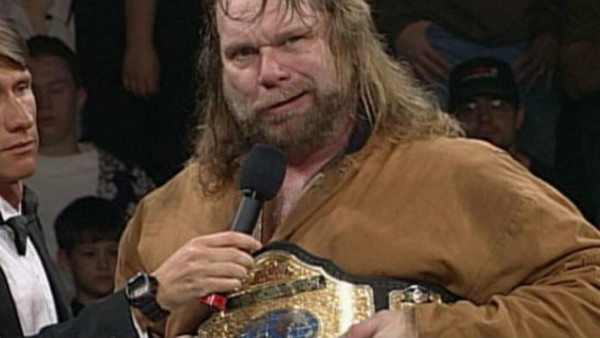
Scanning the WCW roster of 2001 shows a lot of talented performers. Unfortunately, it also highlights just how many names the company had under contract that were contributing very little. After all, just what could 'Hacksaw' Jim Duggan, The Demon and M.I Smooth offer to the promotion in 2001? Unbelievably, men like Curt Hennig were also still being paid to sit at home and do absolutely nothing. WCW's talent policy was a complete mess, and it badly needed sorting out. If the company were expected to move forwards in 2001, the roster needed to be streamlined down to those who actually had contributions to make. New stars such as AJ Styles and Sean O'Haire clearly had ability in abundance. Those men, along with established stars such as Goldberg, Booker T and Sting, needed to be the focus. WCW had booked these performers shoddily, and energy needed to go into changing that. Instead, money was being frittered away on people who didn't have any purpose.

1. Avoid nWo Angles Like The Plague

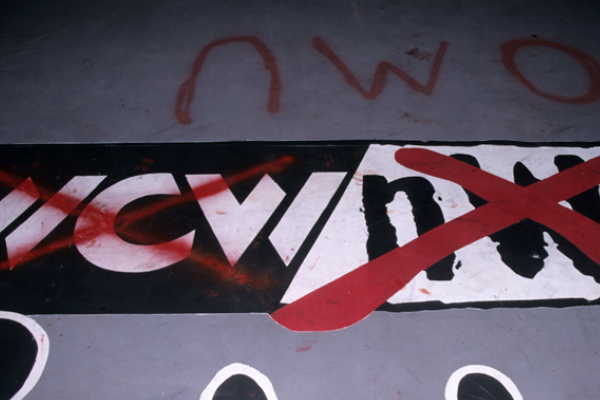
By 2001, World Championship Wrestling needed to get over the New World Order. The group had been a huge part of the success seen from 1996-1999, but the nWo's time in the sun was finished. In 2000, the big idea from the writing staff was to try and reinvent the wheel, introducing 'nWo Silver'. The faction comprised of Kevin Nash, Scott Hall, Scott Steiner, Jeff Jarrett and Bret Hart. It didn't work, fans had seen it all before. The nWo angle was not enough for people at this point in time, fans demanded something fresh. For that very reason, WCW had to stay away from the idea in 2001. Perhaps a few years later, the concept could have been revisited, but it had dominated screens for years, and it was time to put it on the shelf for a good long while. There would have been nothing to be gained by rehashing the New World Order in 2001. The original idea was one of the greatest in North American pro wrestling history, but people had tired of it. A similar heel group also wouldn't have worked, because it'd be too close to the core concept. WCW needed something new, not an over-reliance on what had worked before. What else do you feel would have greatly helped WCW if they had continued in 2001? Do you agree with the choices listed here? Let us know what you think down in the comments section below!

Contributor

Lifelong wrestling, video game, music and sports obsessive who has been writing about his passions since childhood. Jamie started writing for WhatCulture in 2013, and has contributed thousands of articles and YouTube videos since then. He cut his teeth penning published pieces for top UK and European wrestling read Fighting Spirit Magazine (FSM), and also has extensive experience working within the wrestling biz as a manager and commentator for promotions like ICW on WWE Network and WCPW/Defiant since 2010. Further, Jamie also hosted the old Ministry Of Slam podcast, and has interviewed everyone from Steve Austin and Shawn Michaels to Bret Hart and Trish Stratus.