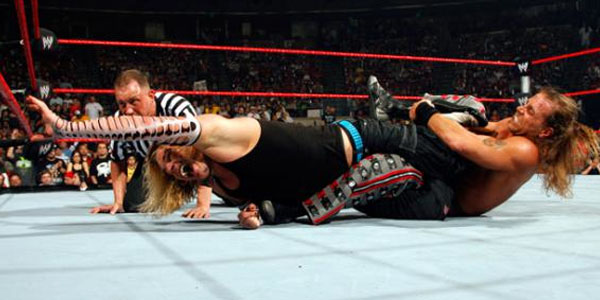
10 Rules WWE Chooses To Ignore
If you're a regular WWE viewer then you know that they have a history of ignoring certain things that don't benefit whatever storyline they're trying to push. It's frustrating to us as viewers, but as a company they likely don't care that it upsets you. They just keep marching on with whatever plan they have in mind. When Stephanie McMahon was on Raw this past Monday she talked about possibly stripping Daniel Bryan of the WWE World Heavyweight Championship. She listed a bunch of names of people she could give the WWE Title too. She mentioned Kane (who Bryan already beat clean at Extreme Rules), Batista (Bryan made him tap out at WrestleMania) and Triple H (Bryan beat him clean at WrestleMania). She didn't say the name of Randy Orton, though. Orton is the former WWE Champion, which usually means he gets an automatic rematch. Nope. It hasn't happened yet. It's as if we're supposed to believe that a man that cared so much about being WWE Champion all of a sudden doesn't care about it because he's in a six man feud that also involves The Shield. Where's the consistency? Apparently it doesn't exist anymore. We know that WWE does a poor job of following up storylines sometimes, but it's really something that should never happen. They employ dozens of writers, they have so many smart wrestling people working as agents and producers. Nothing should ever fall through the cracks. This list is a look at some rules and things that WWE likes to ignore that sometimes relate to referees while other instances are examples of WWE ignoring their own history with some parts of the imaginary wrestling rulebook.

10. Different Counting Speeds By Referees For Countouts
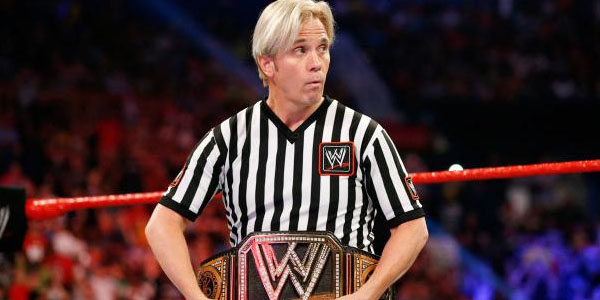
If a match ends in a countout, you'll notice the referee counting at a consistently fast pace. At other times, you'll see the ref barely count or he'll do anything he can to break up the count. It's very inconsistent. There are times when a guy is outside the ring for about 20 seconds, but the ref is counting at such a slow pace because it's not time for the finish of the match. Other times he'll get distracted, so he has to start at 1 again. If a regular person was in a situation like that, they would not start at 1 for their count. Remember that awful Cena/Miz main event at WrestleMania 27. Initially that match was booked as a countout before it was restarted. Wrestling refs are booked like idiots that can't hear a chair being used just because their back is to it. Why do spots like that? It is insulting to the viewer. It's a shame that some things that the referees do haven't changed at all over the years.

9. Questionable Rope Breaks

It doesn't happen too often, but there have been times where guys are in matches with no rules where they get to the ropes and a submission hold is broken up. When Bryan wrestled Kane at Extreme Rules in an Extreme Rules match, Kane actually got the ropes and Bryan didn't let go. That's something I liked seeing because there should be no break. However, it has happened many times in the past. It's a case of instinct taking over. Wrestlers are used to the spot in the match where they grab the rope, then the ref breaks things up and they move on to the next part of the match. There are also times where a foot or hand is under a rope and they pay attention to it while at other times it is completely ignored. That's another one of those inconsistencies that piss off some fans that simply want matches to look the same.

8. Going To Top Rope Is Legal, So Why Do Refs Count?
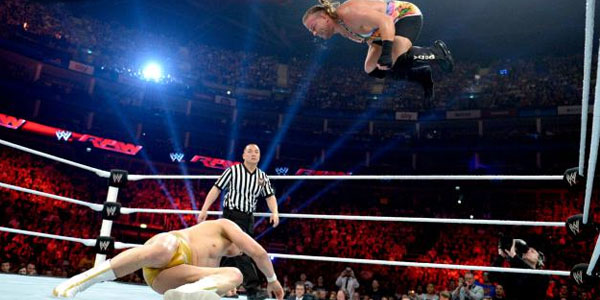
Have you ever watched a match on WWE TV and seen a guy go to the top rope. Pay attention to the referee. Sometimes they are telling the guy to get down from there. Other times you may see them counting. Counting what? It was a DQ in the old AWA, but it's not like it is relevant in today's wrestling world. If a guy is on the top rope, why should the ref care? He is free to do what he wants whether it's jumping onto an opponent or getting knocked down. There shouldn't be any reaction by the referee. Some of them barely react. Others do too much. This isn't as big a deal in WWE today, but if you watch a match from the 1980s or 1990s you'll notice the top rope count was a lot more prevalent.

7. Certain Objects Don't Lead To Disqualifications
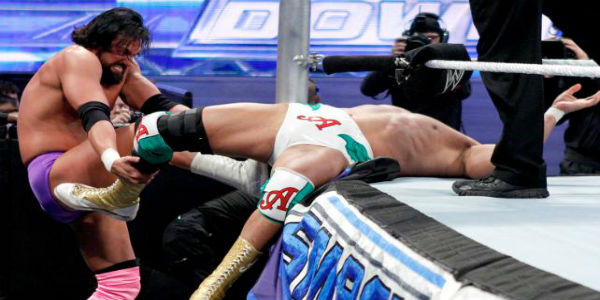
Ending matches via disqualification is something WWE needs to do once in a while. Some fans may not like them or think they're pointless, but it's all about telling stories. A DQ ending is usually something that is done to further a storyline leading to another match. If you bring in a chair and use it on your opponent then you get disqualified. However, if you toss a guy into the steel steps, ring post or barrier at ringside that's fine. No issue with those. Perhaps the rule is that since those objects are at ringside they are a part of the match. However, a chair is at ringside too. Throwing a guy into a steel post should have the same result as jabbing a guy in the ribs with a chair. Those of us that watch wrestling all the time probably don't care about things like that, but think about the casual fan that isn't necessarily "smart" about the business. Having clearly defined rules would help them understand things more.

6. Former Champion Gets First Shot At New Champion

This is one of those things that WWE usually does a good job with, but in the case of Randy Orton's return match for the WWE World Heavyweight Championship they have completely forgotten about it. Shouldn't Orton be really mad that he never got a title shot? I know Hunter and Stephanie said he'll get his shot when the timing is right, but it's been a month and half since he lost it without any indication of a title match. If the "rule" is that the former champion is the first one to get a title shot then it should always happen for every title. Doing it once in a while or whenever they see fit is the kind of inconsistent booking that upsets the fans. Now that there are questions about the WWE World Heavyweight Championship again maybe WWE will realize Orton is due a title shot at some point. Then again, maybe not.

5. Entry Times For Royal Rumble Match Changing

Royal Rumble 1992 The Royal Rumble match hasn't changed too much since it started back in 1988. The format has generally been 30 entrants aside from the first one having 20 men and the 40 man Rumble in 2011. In the early days of the match, entrant times were set at two minute intervals. That's changed over the years. Remember the year when it was only 60 second intervals? That was too quick. There were several Rumble matches in the 1990s especially where they messed up the times. You would see a two minute break between two entrants, then it would be something like 80 seconds for the next guy, then a minute, then back to two minutes for a bigger name and it just wasn't consistent at all. It's not like they would ever admit to it. They just did it to correct timing issues they had as well as giving more time for the entrants of bigger name talent. This is something that WWE has gotten better at in the last decade with a standard 90 second time for entrants in the Rumble match. The match usually clocks in about 55 minutes now.

4. Cage Match Rules - Four Ways To Win Are Confusing
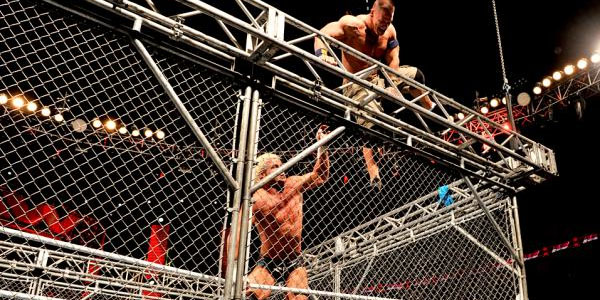
The rules of cage matches have changed so many times over the years that whenever WWE has a match inside of a cage they feel the need to explain there are four ways to win: over the cage, through the door, pinfall or submission. It wasn't always like that, though. What should be the rule is the only way you can win is by climbing over the top and have both feet touch the floor. The idea is that you have to beat up your opponent so bad that he can't come after you. Escaping through the door should be the way that people win because it's the easiest thing you can do, yet few wrestlers win that way. It makes no sense when you're watching a cage match a guy chooses to climb when he can walk out of a door that is right there. Winning via pinfall or submission is fine if those were the only two options. The problem with the pinfall or submission idea is that we're used to seeing those rules in regular matches all the time. We want cage matches to be special and different. What's the point of having a match end the same way other matches can end? It does keep the competitors inside the cage, but it ruins the mystique of the match. It would be nice if WWE made it clear that you can only win by climbing over the top because four ways to win is unnecessary.

3. Closed Fists

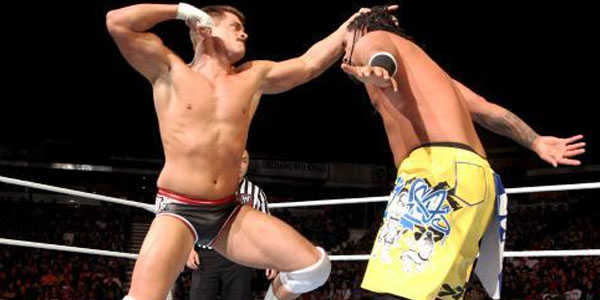
There are no clear rules in pro wrestling, but if there are then closed fists were considered illegal at one point. "A wrestler may not punch an opponent with a closed fist nor kick an opponent with the toe of their boot. When wrestlers do this, however, they usually get away with it with just an admonishment from the referee." In other words, a wrestler is not allowed to throw a punch in the match. It's pretty silly, but it goes back to the days when nobody ever wanted to expose the business and let the fans in on what it really was. If you ever watched WWE in the 1980s or into the early 1990s then you might recall play by play guys like Vince McMahon and Gorilla Monsoon mentioning closed fists a lot of the time. Heel announcers like Bobby Heenan and Jesse Ventura would also bring it up when a babyface wrestler would use punches. They rarely mention the closed fists rule now especially when guys like Big Show are using it as a finishing move. It was definitely part of the wrestling culture when many of us were growing up.

2. The 30 Day Title Defense Rule Is A Myth

A champion must defend his or her title within thirty days is something that has existed at some points in wrestling history, but it's not like it is a consistent rule or even one that WWE enforces to any degree anymore. That's why the current situation with Daniel Bryan being injured during his WWE World Heavyweight Championship does not necessarily require a title change. When CM Punk was WWE Champion through all of 2012, he didn't have a match for over a month. He missed the TLC event in December of that year and returned for the 2013 Royal Rumble against The Rock. He didn't defend the title in 30 days. Some fans probably wondered what happened to that rule. Nothing. It's just something WWE chooses to remember only when it's convenient for them. In 2005, Trish Stratus was a heel that was the Women's Champion. She suffered a back injury that forced her to be sidelined for about four months. Did they strip her of the Women's Title? Nope. She came back with the title. They completely ignored the fact that the Women's Champion was on the sideline and not even on television. There have been plenty of instances where champions didn't defend titles.

1. Winner Of Royal Rumble Main Events WrestleMania

"He's going to WrestleMania!" That's what the announcers usually say when somebody wins the Royal Rumble match. Never mind the fact that nearly everybody in the Royal Rumble match is going to WrestleMania anyway. The idea behind it is that the winner gets to main event WrestleMania due to the Royal Rumble win. That's not always true, though. Here's a look at Royal Rumble winners that did not get to wrestle in the last match at WrestleMania: Shawn Michaels (1995), Steve Austin (1997), Vince McMahon (1999), Rey Mysterio (2006), The Undertaker (2007), John Cena (2008), Edge (2010), Alberto Del Rio (2011) and Sheamus (2012). Every name after 2002 suffered from competing during a period when there were two major World Titles in WWE or in the case of Sheamus it was because of The Rock's match against John Cena at WrestleMania 28. Now that there's just one major World Title in WWE they will likely do a better job of making sure the Rumble winner is in the last match at WrestleMania just like Batista was this year. There will always be exceptions, but it is an insult to the fans to pretend as though the Rumble winner gets to main event every year.

Contributor
Contributor

John wrote at WhatCulture from December 2013 to December 2015. It was fun, but it's over for now. Follow him on Twitter @johnreport. You can also send an email to mrjohncanton@gmail.com with any questions or comments as well.