10 Wrestling Gimmicks Originally Designed For Other Wrestlers
When it comes to wrestling gimmicks, second choice doesn’t always mean second best.

In wrestling, gimmicks are like a paint job on a car; a really good one can enhance what’s underneath dramatically, while a really bad one can make something great seem completely horrible.
When a good gimmick is done right it can almost overshadow the person beneath and the gimmick itself becomes part of the person that portrays it. For proof, look no further than The Undertaker.
Arguably the most famous gimmick in wrestling history, The Undertaker has survived three decades at the top of the WWE and clocked up a WrestleMania streak that’s almost as legendary as the event itself. Despite the character essentially being a walking corpse, The Undertaker persona has endured and it’s hard to imagine anyone else playing the role of The Deadman.
Sadly, not all gimmicks are created equal - just ask Hector Guerrero who played The Gobbledy Gooker - and most gimmicks are designed with a specific individual in mind. However, on occasion, the creative minds behind a character don’t always get their first choice. In fact, some of wrestling’s biggest gimmicks ended up in the hands of a second or even third choice talent.
10. Max Moon - Konnan

Konnan is best remembered by wrestling fans as the razor-tongued Hispanic member of the New World Order in late-90s WCW. The hip-hop style and street smart demeanour of the Mexican superstar was a solid addition to the WCW roster and Konnan’s role in the nWo is still remembered fondly by fans to this day.
Not so fondly remembered is the character of Max Moon. A far cry from the K-Dogg of ‘98, Max Moon was a robot-inspired, intergalactic superhero and the brainchild of Konnan and Vince McMahon. Presented as a futuristic cyborg, the gimmick called for a lot of financial investment, predominantly due to the extravagant costume (which included a pyro gun that would shoot sparks into the crowd).
A combination of disinterest, frustration and locker room jealousy, Konnan parted ways with WWF before the Max Moon character was really off and running, having only appeared in the role on a handful of occasions. The gimmick was immediately given to former tag specialist, Paul Diamond, who would notably appear on the very first episode of Monday Night Raw.

The Max Moon gimmick was a colossal failure in execution and the character was dropped as quickly as it had arrived, appearing just once on WWF PPV (a two minute appearance in the 1993 Royal Rumble match).
9. Demolition Smash – Moondog Rex

As the WWF’s answer to the hugely popular Road Warriors of the NWA, Demolition were one of the most successful tag teams of the 1980s. With a title run that lasted a record 478 days (a feat only broken in 2017 by The New Day), Demolition were the most dominant tandem to grace WWF TV.
With such success as a duo, it’s shocking to discover that Bill Eadie and Barry Darsow were not originally planned to don paint as a team. The original incarnation of Demolition consisted of Bill Eadie and Randy Colley, better known to WWF fans as Moondog Rex of The Moondogs tag team.
Making their debut on the January 17th edition of WWF Superstars in 1987, Demolition defeated the team of Salvatore Bellomo and Mario Mancini; however, the pairing was short-lived. After just a handful of matches, it was decided that Colley was too recognisable to WWF fans and his distinct look allowed him to be easily identified as the former Moondog Rex.

With the Moondog association noticeably evident, WWF made the switch and replaced Colley with Darsow, who made his first appearance as Smash on the Valentine’s Day edition of WWF Superstars just one month after the Demolition gimmick had debuted. The team would pair up until Eadie left the WWF following Survivor Series 1990.
8. Big Van Vader – Sid/Warrior

When the Big Van Vader character was created by New Japan Pro Wrestling in the late 1980s, the success achieved by Leon White as the colossal, dominating juggernaut made him an instant hit with the wrestling world. With such resounding success, it’s hard to imagine anyone else under the mask of Vader; however, it may surprise some to hear that Leon White was not first choice.
A product of Japanese folklore, Big Van Vader was designed to be an unstoppable warrior from the very get go. With such a description, it’s unsurprising that one of the men considered for the role was none other than the Ultimate Warrior himself, Jim Hellwig. However, then wrestling as the Dingo Warrior in World Class Championship Wrestling, Hellwig would soon wind up in the World Wrestling Federation and go on to forge a Hall of Fame career in his own right.
Undeterred, New Japan would move their attention to Sid Vicious who was also strongly considered for the role; however, Antonio Inoki and co ultimately opted for Leon White at the suggestion of Brad Rheingans. White made his debut as Big Van Vader in December of 1987 by defeating Japanese legend Antonio Inoki in just three minutes and “The Mastadon” never looked back.
7. Glacier – RVD

During the mid-90s, WCW was seemingly hell-bent on capitalising on the popularity of the Mortal Kombat video game series and that wish came true in late 1996 when the "Blood Runs Cold" vignettes began airing.
The payoff to these hype packages was the introduction of the Glacier character. Heavily inspired by Sub-Zero from the Mortal Kombat games, Glacier was played by Raymond Lloyd and made his WCW debut in September '96 on WCW Pro. At a time when WCW were moving away from cartoon gimmickry towards more realistic storylines with the inception of the nWo, the gimmick flopped and found its home firmly as mid-card filler.
Which makes it all the more surprising to hear that ECW legend, Rob Van Dam, was originally considered for the role of Glacier. Luckily for both Rob and ECW (as well as the viewing audience at home), Paul Heyman managed to talk him out of accepting the role.

A skilled martial artist in his own right, it’s easy to see why WCW would have been interested in Mr Monday Night; however, the doomed Glacier gimmick could well have ruined his career. Instead, RVD became the “Whole F’n Show” and rode the tidal wave of momentum from ECW all the way to the WWE Championship. Meanwhile, Glacier became a glorified enhancement act before being let go in late ‘99.
6. The Ringmaster - Bryan Clarke

Bryan Clark made his debut in the American Wrestling Association in 1989 as The Nightstalker. After a handful of matches in the AWA, Clark would make two early appearances in WCW at Clash of the Champions XIII and Starrcade ‘91, losing both bouts in short order.
From there, Clark would travel to Smoky Mountain Wrestling to hone his craft. An up and comer in the sport of pro wrestling, Clark’s imposing build, great look and impressive height made him a walking magnet for Vince McMahon and the WWF. Sgt Slaughter would contact Clark shortly after and, in 1993, the big man was offered a tryout for the WWF.
After just one appearance in a dark match, Clark was offered a contract and soon made his debut on WWF TV under the guise of Adam Bomb. That much is common knowledge; however, what isn’t so renowned is that, prior to being given the A-Bomb gimmick, Clark was actually offered the gimmick of The Ringmaster.

Despite being offered the title, Clark conceded that he was in fact not a master of the ring at the time and could therefore not take that mantle. Instead, the gimmick was shelved until 1995 when it was eventually given to a great ring mechanic by the name of Steve Austin.
While The Ringmaster gimmick would flounder in the mid-card, Austin went on to have a pretty decent career of his own.
5. Val Venis - Adam "Edge" Copeland

One of the more outlandish characters of the Attitude Era, Val Venis took sexual innuendo and euphemisms to another level during his time in the World Wrestling Federation and Sean Morley played the role of the adult movie star to perfection.
Despite Morley making the role his own, the character of Val Venis was allegedly first designed for Adam Copeland (better known as Edge). While this story has yet to be verified by Edge himself, it isn’t too much of a stretch to imagine the former Sexton Hardcastle in the role of sleazy porn star. In fact, with Edge and Lita’s “Live Sex Celebration” on Raw still fresh in the memories of many fans, it could have been a great fit in hindsight.
Coincidentally, Morley and Copeland were also pitched the idea of teaming up as The New Midnight Express, in a continuation of the WWF’s obsession with adding “new” before any successful tag team of the past. Luckily, this concept would never leave the pitch room and the young stars were spared the career-killing gimmicks.

Nevertheless, Copeland would make his debut as Edge in 1998 and go on to forge a Hall of Fame career, while Morley - as Val Venis - would become a European and Intercontinental Champion in his own right and a firm staple of WWF in the late 90s.
4. Evolution’s Enforcer - Mark Jindrak

Stables in wrestling can be pretty hit and miss at times; however, when they are done well, the group can become a huge draw as a collective and the members themselves can become legendary. Such has been the case for many iconic groups of the past; from The Four Horsemen and New World Order to The Hart Foundation and D-Generation X.
Another group that can be added to that list is Evolution. Created in 2002, the gathering of Triple H, Ric Flair, Randy Orton and Dave Batista became one of the most entertaining parts of WWE programming and elevated both Orton and Batista to superstardom. However, Batista was very nearly not part of the equation.
The role of evolutionary enforcer had instead been given to former WCW star, Mark Jindrak. WWE even went as far as filming the vignettes and promo footage used for the groups entrance video. However, it was not to be and, for Jindrak, Evolution had passed him by. With immaturity cited as the main factor, Jindrak was dropped from the stable and edited out of the footage with Batista put in his place.

Batista would fill the role perfectly and forge a legendary career of his own. Had he not been part of Evolution under the tutelage of Triple H and Naitch, Big Dave may have never become the star he became. Jindrak has since gone on to become a big star in Mexico’s CMLL and AAA, now wrestling under the name Marco Corleone.
3. The Game - Owen Hart

While it’s more of a moniker than an outright gimmick, it’s still interesting to note that the nickname of “The Game” was originally intended to be used for Owen Hart.
The story goes that, once his comedic stint as the The Blue Blazer had reached its inevitable conclusion, the youngest Hart sibling was slated to be reintroduced under the new prefix of “The Game”. Tragically, that never happened as Owen Hart would fall to his death on May 23rd, 1999, during an elaborate entrance under the Blue Blazer gimmick.
However, it begs the question; how well would Owen Hart have performed as “The Game”? A natural in the ring, a proven commodity in the WWF and a family that was deemed as wrestling royalty, it’s a safe bet to say that “The King of Harts” would have done very well under “The Game” name tag.

Athletically gifted, undeniably skilled and an experienced worker in the business, the description of Hart fits the bill perfectly. Furthermore, had Hart’s life not been cut short, he would have also been around for the introduction of Chris Jericho in late ‘99 and The Radicalz in early 2000; making the potential match ups for a renewed and focused Owen Hart as “The Game” a booker’s dream.
The passing of Owen left the name unused and Triple H would take up the mantle in tribute to his late friend.
2. The Brood - Christopher Daniels

When the concept of The Brood was first created, it’s interesting that the original line-up was slightly different to how it eventually turned out.
Gangrel had been pitching the vampire gimmick to WWF for some time and was eventually given the green light in 1998. As leader of the The Brood, Gangrel was always inked in as the leader of the group; meanwhile, Edge's inclusion was also set in stone as soon as the stable was given the nod.
Christian, however, was not so secure in his spot. In fact, the original plans called for the third man of the group to be none other than Christopher Daniels. Having gone on to become the gothic “Fallen Angel” in the years that followed, it isn’t difficult to imagine Daniels filling the vampire role as a member of The Brood.

As Gangrel tells it, Christopher Daniels was favourite for the third spot in the young vampire stable; however, seemingly out of nowhere, plans were changed and Christian was made the final member of The Brood. Edge had apparently gone to bat for his old friend and was the main factor in Christian making the final cut.
1. Leader Of The New World Order - Bret Hart/Sting
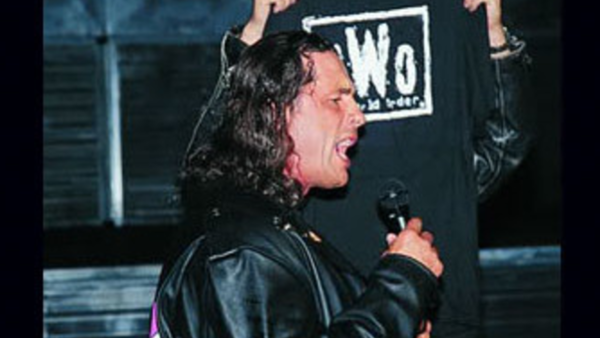
When WCW began the famous “Hostile Takeover” angle with the introduction of Kevin Nash and Scott Hall, the wheels were set in motion for the biggest heel turn in wrestling and the most successful storyline in WCW history. But to say WCW management were concerned about the angle would be an understatement.
After 12 years of preaching truth, justice and the American way, Hulk Hogan was naturally cautious about going to the dark side. Worse still, with an unequalled degree of creative control written into his WCW contract, Hogan wasn’t obligated to do anything he didn’t agree to; all of which made for some uncomfortable weeks for WCW EVP, Eric Bischoff, and WCW booker, Kevin Sullivan.
With such uncertainty hanging over the big payoff, steps were made to secure a suitable replacement should Hogan pull out. The first consideration was Bret Hart. As the successor to Hogan in WWF as the company’s top babyface, Hart wasn’t just a great replacement but arguably would have been an upgrade due to his stellar work in the ring.

Hart's association with Nash and Hall as part of the WWF locker room from ‘93 to ‘96 made him the perfect logical substitute. However, attempts to lure Hart to WCW ultimately failed and Sullivan looked to Sting to be his saving grace. As WCW poster boy prior to Hogan's arrival, Sting also fit the bill logically and agreed to fill the role; however, Hogan eventually saw sense (and dollar signs) and went along with the angle as planned.