5 Wrestling Promotions WWE Swallowed Whole
Will Vince McMahon ultimately end up with TNA too?
 WWE.comThe WWE has long been the pinnacle within professional wrestling and sports entertainment. For over 50 years, they've operated a successful promotion, with a significant portion of that being spent as the undisputed kingpin of the industry. While today, the number two promotion is miles behind, the WWE hasn't always been without competition. For decades promotions have reached national, and even global status while trying to unseat Vince McMahon and the WWE at the top of the wrestling world. Ultimately most, if not all, would be swallowed whole by the WWE. One of the downsides of this situation is the lack of major competition in which the WWE experiences, which allows the company to let its guard down and become stale from time to time. The benefit however? Well, at least there's plenty of cool non-WWE footage on the WWE Network to watch. Some promotions were cast aside and never mentioned again. Others live fondly in the hearts of fans' memories, as well as the WWE home video archives.
5. World Class Championship Wrestling
 WCCW was a successful regional promotion for years, running primarily out of Texas. Promoted heavily on the back of Fritz Von Erich, and later his many sons, WCCW was an unfortunate victim to repeated tragedy, as several of the Von Erich sons would pass well before their time. The WCCW was a part of the National Wrestling Alliance for decades, before pulling out of the NWA in 1986. World Class would work in unison with the AWA in a relationship in which was eventually dissolved shortly before both companies dissolved. As if the tragedies that befell the Von Erich family weren't enough, breakout WCCW star Gino Hernandez also passed away at only 28 years old. WCCW went out of business in 1990, one of the many victims of WWE expanding globally and pushing regional promotions out the door. In 2004, the WWE acquired their video library, and released a DVD, titled "The Triumph and Tragedy of World Class." In 2014, the lone surviving Von Erich brother Kevin managed his sons in their TNA debut, during a pay-per-view match in Texas.
4. Stampede Wrestling
 A promotion that continues to live in lore, Stampede Wrestling from Calgary was the birthplace of the legendary Hart family, serving as a starting point for the career of several influential wrestlers. Founded by Stu Hart in 1948, Stampede, like many regional promotions was a part of the NWA. However, where many of those promotions were stubborn in giving in to the growing World Wrestling Federation, Stu Hart cashed out, and the WWF was a parent company to Stampede between 1984 to 1985. Just a year after the sale, Stu had a change of heart (no pun intended) and bought back the promotion. The family would continue to run shows until 1989 before closing its doors, only living on via several failed reboots of the show. In the end, Stampede couldn't deal with the gutting of their roster by the WWE, and eventually succumbed to the pressure of regional wrestling dying out. The promotion was covered extensively during a WWE DVD release, titled "Hart & Soul", a documentary about the Hart Family. Stampede is remembered fondly by many wrestlers, and is treated as such on WWE programming when mentioned. Perhaps more famous than Stampede Wrestling itself, was Stu Hart's training area, nicknamed the "Dungeon" which produced countless Stampede and WWE superstars.
3. American Wrestling Association
 Quite possibly the greatest company in wrestling history as it pertains to producing talent, Verne Gagne's AWA was a wrestling powerhouse for decades. Based out of Minnesota, the AWA was the launching pad for the likes of Hulk Hogan, Shawn Michaels, Mr. Perfect, and many more legends throughout wrestling history. The AWA training camp, manned by Billy Robinson and Gagne, was notorious for it's rigorous conditioning drills, but produced several future stars, including 16-time world champion Ric Flair. During the AWA's heyday, It ran neck and neck with the likes of the WWF and the NWA, even landing a spot on ESPN. This provided wrestlers with yet another employment option in the event that the politics of the NWA, or the entertainment aspect of the WWF weren't to their liking. During the 1980's, the WWF pillaged the AWA's roster and even paid stars to no-show AWA events, which left the company out in the cold. After clinging to life for several years, the AWA folded in 1990, close to the time in which WCCW and Stampede also closed. The WWE acquired the AWA tape library in the 2000's, and utilized the footage in the "Spectacular Legacy of AWA" documentary. In a major show of respect in 2006, Gagne was inducted into the WWE Hall of Fame.
2. Extreme Championship Wrestling
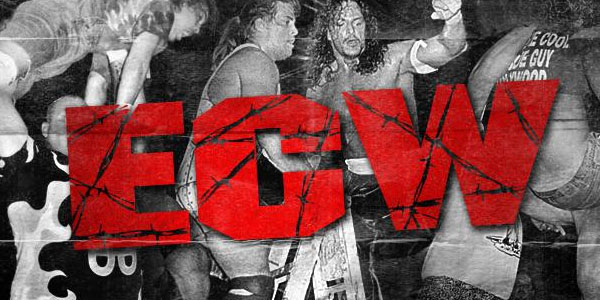 WWE.comPerhaps the most interesting, unique, and fondly remembered promotion that the WWE chewed up and spit out, ECW carved out their place in history during their nearly eight year run. As the case with many promotions on this list, ECW was originally a part of the NWA, before breaking a way in a new, Extreme direction in 1994. Armed with syndication, word of mouth, and a little support from the WWF, Extreme Championship Wrestling was the precursor to the uber-successful Attitude era. ECW ushered in a style of wrestling and promo in which mainstream American wrestling wasn't accustomed to, and the regional, niche promotion was taken to a new level when it landed a national TV deal, as well as a spot on pay-per-view. Despite several controversial violent moments in which nearly killed the company, it was eventually owner Paul Heyman's financial mismanagement that put ECW six feet under. Even though ECW was still selling tickets, moving merchandise, and doing well on pay-per-view, their inability to secure another national TV deal is blamed for the death of the promotion. The WWE had taken ECW's spot on TNN just a few months prior. WWE would go on to pick through and select the talent it wanted from ECW's roster, and would actually get some life out of the brand in the highly anticipated "Invasion" angle in 2001. In 2005 and 2006, WWE hosted ECW pay-per-views, entitled "One Night Stand", before bringing back ECW entirely as a third television brand. However, the ECW that fans knew and loved was nowhere to be found, as it fell victim to WWE's new PG-era. The WWE continues to bank off of ECW, releasing upwards of a half-dozen DVD's dedicated to "the land of the extreme" in the past ten years.
1. World Championship Wrestling
 Easily the biggest threat to WWE's throne was that of World Championship Wrestling, owned by billionaire mogul Ted Turner. After purchasing the promotion, Turner allowed it to sit dormant, retaining the image of a grungy southern regional promotion with ties to the NWA for years. However, in the early 1990s that all changed as WCW began signing established veteran talent and making a presence on Monday Night's. On the backs of recently departed WWE stars such as Hulk Hogan, Scott Hall, Randy Savage and Kevin Nash, WCW actually overtook WWE as the top promotion in the country for a span of two years. What was formerly viewed as a distant number two, WCW jumped into the mainstream by regularly featuring pro athletes and celebrities in an effort to gain more exposure. The ploy worked, and WCW beat WWF in the Monday night ratings war for over 80 weeks in a row. After failing to capitalize on the signing of Bret Hart, the advent of new stars, and countless other situations, the WCW show began to spiral out of control. A terrible booking committee and questionable decision led to their world championship being vacated an unprecedented eight times over the course of a year. As if that wasn't bad enough, parent company Time Warner merged with AOL, and the new company wanted nothing to do with pro wrestling. Eric Bischoff made attempts to buy the company and save it from its eventual demise, but TV time wasn't offered in the deal, effectively killing it. Vince McMahon and the WWE would swoop in and capitalize, buying WCW just prior to WrestleMania X-Seven. Although WCW would be used as a part of the Invasion storyline in 2001, little else was used from the promotion. There would be no re-branding, no reunion pay-per-view, little clamoring for fans to see a re-boot of WCW. WWE sure hasn't forgotten about it, and neither have the fans. WWE seems to release a new WCW-related DVD each year, and World Championship's presence is felt heavily on the recently launched WWE Network. Despite the permanent impact WCW made on the wrestling world, it too was ultimately swallowed whole by the WWE.