8 Famous Wrestlers Whose Careers BRUTALLY Faded Away
Not every wrestler gets a retirement like Sting: featuring Mick Foley, Randy Savage, and others.

Sting had the perfect wrestling retirement.
Consider the build: given five-ish months between his declaration of retirement and the date of his sunset match, Sting worked over a dozen wrestlers for the first time, often doing so in scorchingly hot brawls that offered 'The Stinger' limited bumps and ample time to get this stuff in, and although he was never beaten, thereby maintaining a clean AEW record of 23-0, none of his opponents were any worse off after taking the fall for him. Can you say the same thing about Chris Jericho?
Now, consider the match, and really consider the match: what a mint time that was. Convinced to put down The Young Bucks despite having pleaded to go out on his back, Sting, Darby Allin, and the brothers Jackson worked a pristine brawl at Revolution 2024 that incorporated everything that made everyone great. This wasn't Sting chucking together a bunch of his greatest hits for one last night: this was the perfect retirement match.
Nothing will ever come close to beating it, partly because wrestling retirements hold about as much weight as a fabricated Hulk Hogan tale around the campfire, and partly because so many other legendary wrestling figures have already faded into the abyss...
8. Yokozuna

Despite carving a legacy that most could only dream of, Yokozuna is primarily remembered by modern audiences for three things: the shambolic circumstances surrounding his WrestleMania 9 victory and defeat, being slammed by Lex Luger on a helipad because 'MURRICA, and having an ass that was at least twice the size of Triple H's ego.
Yoko's weight was equally career-defining and career-destroying. At his heaviest frame (a reported 660 pounds, or 300 kilograms, by the dawn of 1996), his body had become so immobilised that, following an angle in which Vader supposedly broke Yokozuna's leg, it legitimately took a forklift to remove his lifeless body from the ring because a stretcher couldn't do the job.
This was done to allow Yokozuna time off to lose weight, the first of two company-mandated weight loss directives issued to him in 1996. Regrettably, despite shifting an impressive 100 pounds (45 kilograms), it wasn't enough to convince the WWF that his employment was worth the risk, and so he was let go in 1998. What followed Yokozuna was what followed every unemployed WWE wrestler of his time: a slate of indie bookings that would leave them sweating buckets in a half-filled high school gymnasium while paying the once-famous Superstars in hot dogs and handshakes.
Tragically, Yokozuna died on 23 October 2000 while on a tour of the United Kingdom. He was just 34 years old.
7. Bobby Fish

The Undisputed Era was, for a spell, the undisputed hottest thing in pro wrestling, so to best summarise the surprisingly tragic breakdown of Bobby Fish's career, let's analyse what the entire faction has gone on to achieve since departing WWE:
Adam Cole - had a sizzling arrival in AEW at All Out 2021, headlined the first wrestling event promoted at Wembley Stadium since 1992 by challenging for the AEW World Championship, and won the TNT Title before sustaining a neck injury that has potentially ended his career.
Kyle O'Reilly - overcame extensive neck problems to become a trusted and relied-upon mid-carder who has enjoyed programmes with the likes of Jon Moxley.
Roderick Strong - held the International Title for the briefest of spells, and became a popular meme amongst online wrestling circles by screaming the name of his best friend while confined to a wheelchair.
The second of his UE contingent to jump to All Elite Wrestling after Adam Cole, Bobby Fish's time under Tony Khan's employment lasted all of ten months, with his return to free agency coming just six days after he used social media to begin a public, albeit one-sided, spat with CM Punk, during which he called Ol' Punker a "c*nt". Classy.
He's failed to regain any semblance of relevancy since - and folks, where's the lie? Fish wrestled just fourteen matches across 2025, and none so far in 2026; for comparison, on the list of wrestlers busier than one of NXT Black and Gold's bygone heroes sit The Invisible Man (a literal non-entity) and Brodie Lee, Jr. (a literal child).
6. Mick Foley

It's important to preface this next entry by stating that if Mick Foley had things his way, he would have spent his 60th birthday using a TV truck as an Olympic diving board.
That's because just three years removed from Ric Flair's fare-fare-farewell - and what a hoot that was for all Nashville-based cardiologists(!) - Foley reportedly had plans in motion for his own farewell supershow, with MJF, Jon Moxley, and Matt Cardona all apparently in the running for the role of his opponent. Foley vs. Moxley would have been the ideal choice for many, given their missed opportunity of a match from SummerSlam 2012, but it was supposedly MJF who came the closest to facing 'The Hardcore Legend': they had a secret meeting in Long Island, with a view to moving the match forward.
A concussion suffered at some point during Mick's training put the kabosh on his tussle with Maxwell, and the fact that he isn't sure when exactly he took the knock to the head is concerning enough for Foley never to don the checkered flannel again.
Foley's actual last match was the six minutes he spent in the 2012 Royal Rumble match. He's made the occasional appearance for WWE in the decade-plus since and still takes convention bookings, but his body is on a timer: your writer saw him live during a 2015 appearance in Scotland, and he was most arthritic in his walk down the aisle. Being lobbed off and through the Hell in a Cell structure will do that to a person.
5. Chyna
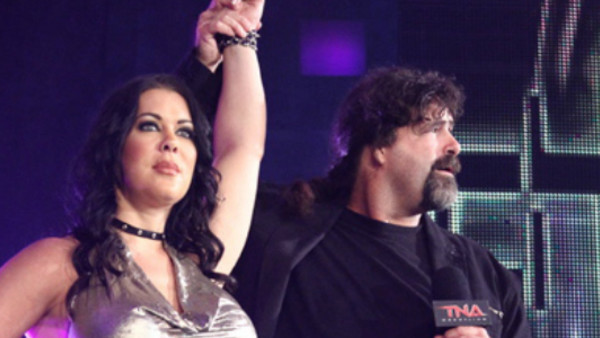
Chyna was finally (indirectly) inducted into the WWE Hall of Fame in 2019 as a member of D-Generation X, but faction frontman Triple H had this to say regarding a potential solo induction:
"I'm sure she will be in the Hall of Fame sometime on her own. I think it's fitting she is in there with DX in the beginning because it's how she started, and I think it's what it should be."
There are two takeaways from this:
1. Triple H is minorly rewriting WWE history. Chyna debuted in February 1997, but they never aligned with Shawn Michaels to form DX until that August.
2. Get a grip. You're in charge now. Just put her in. She's more deserving than at least one 2026 inductee.
The dreary reality is that Chyna left the WWF on bitter terms in 2001. She'd endured a miserable split from Triple H after realising he had been cheating on her with Stephanie McMahon. What followed was a slew of very serious allegations made by Chyna against her former beau, and a career in pornography, which WWE couldn't possibly associate itself with, in case its younger audience were to Google her name. For context, at the same time, WWE's Divas were regularly "competing" in Evening Gown, and Bra and Panties matches, with several having even participated in photoshoots for Playboy, which is about as close to pornography as you can get in print form.
Post-WWE, Chyna wrestled a handful of matches for New Japan in 2002 and made a one-off in-ring return in 2011 for TNA, before she tragically died in 2016 at the tender age of 46. She is yet to be formally acknowledged and thanked for the game-changing contributions she made to the industry, and she likely never will be.
4. Kane

Glenn Jacobs got lucky. None of his early wrestling gimmicks held any substance - of course they didn't: he was cast as a humanoid Christmas tree, an evil dentist, and a poor man's Kevin Nash doppelganger - but when The Undertaker needed a towering antagonist to fill the role of his kayfabe half-brother Kane, he knew just the man. From this came one of WWE's most menacing and, more importantly, most successful gimmicks: as Kane, Jacobs became both a Triple Crown and a Grand Slam Champion.
He was hardly doing that as Isaac Yankem.
Then, Glenn Jacobs got unlucky. As the years progressed, so too did the base-level expectations fans now expected from their wrestling. Even in WWE, a promotion founded upon headlocks and body slams, the influx of super-indie wrestlers drove away any interest left in the Kane character. Take Damian Priest as a prime example. Both he and Kane can hit a Chokeslam as well as the other, but what did fans want to see more of: a giant that wrestles like a giant, or a giant that wrestles like a cruiserweight on steroids?
'The Big Red Machine' unofficially entered part-time status in 2016, however, he hasn't wrestled at all since his short stint in the 2021 Royal Rumble match, meaning that his apparent retirement match played out before zero fans: that was the same for his Hall of Fame induction that year. It made for quite the bleak end to such a legendary career - and it couldn't have happened to a better guy!
3. Bob Backlund
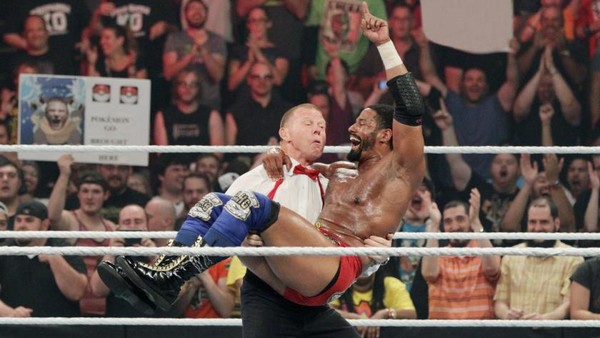
At the tail end of Roman Reigns' revolutionary reign as Undisputed WWE Champion, it became Michael Cole's responsibility to list off the only four historical figures who had a World Title reign longer than Roman's: in ascending order, Pedro Morales, Hulk Hogan, Bob Backlund, and Bruno Sammartino.
Disregarding Pedro, given that he's never been relevant to a WWE audience since his retirement in the eighties, only two out of the three of Hogan, Backlund, and Sammartino have been held in (mostly) high regard, and it's certainly not the guy who was eyeing up the White House.
Despite being the last true hero to wrestling fans pre-Hulkamania, Bob Backlund's status as a company-shaping figure never came close to matching that of 'The Hulkster'. Part of that has to do with when their respective title reigns occurred - pro wrestling was more mainstream while Hogan was on the throne - but it has more to do with how WWE presented both men in the years that followed. Hulk Hogan ruled the industry by being booked - see: politicked - as a multi-time WWE Champion and WrestleMania headliner, while Bob Backlund was doing jobs to The Bastion Booger on house shows. He did get another run with the WWE Title, but does it really count when it lasts three days, and you lose it in eight seconds, again on a house show?
The last notable thing Backlund did for WWE was act as Darren Young's life coach between 2016 and 2017.
Christ.
That would be like if, in 2050, Roman Reigns returns to guide Tank Ledger down the garbage chute of WWE's mid-card.
2. Randy Savage

You'd be quicker looking through a list of wrestlers never to have appeared for TNA than you would scanning the TNA alumni page on Wikipedia. Everyone has walked through the IMPACT Zone at least once in their career. Cody Rhodes? Check. Jon Moxley? Check. WhatCulture's own Simon Miller? Check. You reading this right now? Check your email, partner: you're headlining Slammiversary.
Unlike most of his contemporaries, however, Randy Savage actually ended his career in TNA. Four years after he had exited WCW, 'The Macho Man' was brought in as a surprise to close out Victory Road 2004, the company's first monthly pay-per-view since abandoning the weekly PPV cycle. He was booked alongside AJ Styles and Jeff Hardy in the main event of Turning Point the following month, where they defeated The Kings of Wrestling (Jeff Jarrett, Kevin Nash, and Scott Hall, rather than Chris Hero and Claudio Castagnoli).
Even by 2004 standards, with Hall and Nash well beyond their best-before date, and Styles not yet as phenomenal as he would become, this was a genuine wrestling all-stars affair - until it wasn't.
Randy Savage wasn't Randy Savage that night: he was UK tribute show Randy Savage. Gone were the trademark mannerisms, colourful attire, and Diving Elbow Drop, and in their place was a middle-aged man who couldn't even throw a convincing punch. That's how the match ended, too; having no-showed until the closing minute, Savage stumbled into the ring, and countered a Jeff Jarrett sunset flip by thwacking him on the head.
Savage's Bonesaw McGraw-inspired all-black apparel best summarised how much soul this match had once he joined in.
1. Andre The Giant

Being a wrestling fan is depressing.
Not only is the industry inundated with the worst people who have committed the worst crimes - this significantly outweighs the next point, it should be stated - but we eventually witness the gradual decline in health of the heroes we watched growing up. No wrestler better exemplifies this than Andre The Giant.
Andre suffered from gigantism and stood at an eye-opening 7'4", which, when paired with his scale-tipping 520-pound frame, made him the biggest attraction WWE had during the eighties. He was a major hit with audiences of the era before his heel turn, often being pictured towering over his fans or comparing hand sizes. Even as a heel, the aptly-nicknamed 'Eighth Wonder of the World' still found immense success: he main evented WrestleMania 3 against Hulk Hogan in one of the most seismic matches in history.
Tragically, as modern audiences have witnessed with the lesser-celebrated Great Khali, Andre's condition resulted in his body gradually deteriorating, and he required the use of a walking aid during his final few appearances. He continued wrestling until a month before his passing, but he was in visible pain and discomfort just from standing on the apron during his standardised multi-man tag team outings. It was no way to see one of the most important wrestlers of all time bow out.
He passed away from congestive heart failure in January 1993, aged 46, and would be immortalised later that year as the first inductee into the newly minted WWE Hall of Fame.