8 Things That Could Trigger AEW’s Downfall
Hypothetical doomsday scenarios for a wrestling promotion that almost certainly isn't going bust.
All Elite Wrestling is not going out of business anytime soon.
Tony Khan's promotion has continually demonstrated strong year-over-year growth in key metrics since its inception, with overall upwards trends in television viewerships, pay-per-view buys, average event attendances, and more. That Dynamite routinely finishes amongst Wednesday's top-ranked cable shows bodes well for AEW when its next round of rights fee negotiations commences later this year, too. Currently earning around $45 million annually from its existing deal with Warner Bros. Discovery, objectively strong performances mean AEW is well-placed to land a significant increase.
Assessing the company's financial position is tricky. Unlike the publically-traded WWE, AEW is under no obligation to publish annual reports. Khan had previously stated that he expected AEW's wrestling operations to turn a profit by its second year, however. A rights fee increase would help in that regard.
So, no. AEW is not going out of business. The promotion is stable, growing, and continues to outperform pre-launch expectations. Forbidden Door just sold out in 40 minutes. Things are going well.
But it isn't failure-proof. While the scenarios within wouldn't wipe Tony Khan's wrestling project from the face of the Earth, a number materialising at once would cause the kind of problems the promotion has been navigating since day one.
If AEW can weather a global pandemic less than six months into Dynamite's life...
8. Growing Pains

A new report from The Flagship Wrestling Podcast suggests that current contract rebel MJF isn't the only frustrated person in the AEW locker room.
"Every single one of us is pulling our hair out," a source commented. Another painted a "chaotic" backstage picture of AEW, which apparently suffers from a lack of structure. Match outcomes and angles not being communicated until the last minute and redundant finishes are reportedly chief amongst concerns that have left multiple wrestlers feeling "very frustrated."
Such problems are typical of young start-up companies. Fast growth means increased stresses and demands on operational staff and executives. With an expanding personnel pool, more output to produce, and the associated challenges that come with these situations, companies frequently find that the systems established earlier on, when they were smaller, are no longer fit for purpose.
This sounds like the case with AEW. Now boasting a roster of over 100 wrestlers, all of whom have unique needs and wants that need to be satisfied, and with three hours of weekly cable television, an impending ROH relaunch, and working relationships with multiple promotions to balance, it appears AEW's current support systems are buckling. The promotion's circumstances have changed - now, too, must the way it runs.
7. Homegrown Stars Not Working Out Long-Term

Slowly cultivating a pool of homegrown talent around its all-star cast of those who have already cracked the mainstream has been a great triumph of AEW's first few years. MJF, 'Hangman' Adam Page, Jade Cargill, Britt Baker, Darby Allin, and more have emerged as attention-grabbing presences whose best years lie ahead, but have already captured the audience's imagination. That so many of these names stand as legitimate quarter-hour ratings draws shows Tony Khan's booking can get people over.
It's inevitable, however, that at least a few of those earmarked as future stars won't work out long-term. AEW is understandably banking on its younger wrestlers to carry the promotion forward once the Punks, Danielsons, and Omegas have sailed into the sunset, and has done a better job of future-proofing itself, talent-wise, than the other major American promotion. Nonetheless, the jury remains out on Page's ongoing World Championship reign (even if many of the complaints thrown at it aren't being made in good faith), Jungle Boy is yet to marry his explosive ring work to tangible confidence, and the gap between Baker's character work and wrestling remains.
None of the above is the finished article. At least some must become this long-term. Most have the potential to do so (specifically, Cargill and MJF), but ensuring they hit that level will be amongst AEW's biggest challenges over the next few years.
6. Executive Burnout
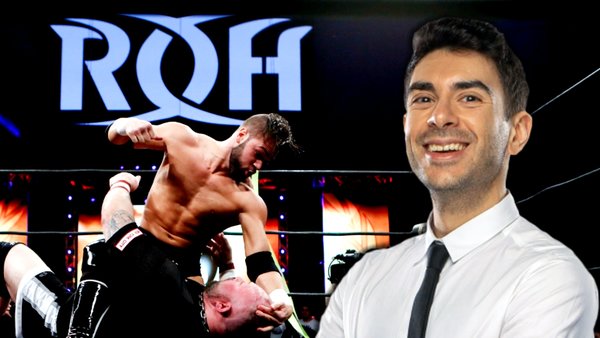
Only Tony Khan and those close to him have the acute knowledge required to make an accurate assessment of his current workload. From the outside, though, it certainly looks like the AEW founder and president has a lot on his plate.
Khan is likely the busiest man in AEW, maintaining a final say on everything the company does while scripting three hours of weekly television, putting two separate YouTube shows together, fulfilling media obligations, and completing the myriad other tasks being a high-level executive in a major sports franchise entails. In April, he confirmed he would be heading Ring Of Honor's impending relaunch following the previous month's takeover. He has a hands-on role with Fulham F.C. in the United Kingdom, is a Jacksonville Jaguar's co-owner in the United States, and heads his own analytics firm.
A busy, busy man.
The aforementioned report of AEW's backstage "chaos", Joey Janela's recent claims that he and Marko Stunt were effectively "ghosted" on their way out of the company, and other rumblings suggest that perhaps, Khan is too busy. AEW may require a few extra pairs of hands if its founder is to avoid burnout.
"May" is the key word there. Perhaps Khan is a machine capable of handling this neverending mountain of tasks and responsibilities. It certainly sounds like a lot to deal with, even with AEW's support staff and other executives on hand.
5. Enduring Biases Against Pro Wrestling
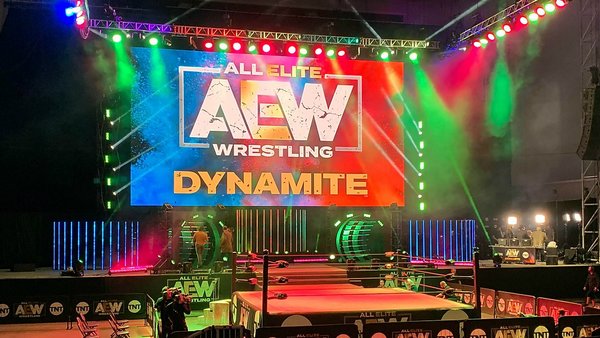
AEW's upcoming round of television rights negotiations will tell us a lot about the promotion's future.
This critical period is expected to commence in late 2022, as Tony Khan and co. work to land a new contract ahead of their $45 million/year deal with Warner Bros. Discovery expiring in early 2024. In all likelihood, they will secure an increase. AEW is currently amongst the most undervalued sports properties in the United States, as far as rights fees go, with Dynamite constantly outperforming all but NBA coverage on TBS. Bucking the wider television trend by demonstrating year-over-year growth in many quarters further strengthens its power in negotiations.
Discovery's stance on wrestling will be a key factor. WarnerMedia, AEW's television partner since its 2019 inception, was bought over by its new owners earlier this year, raising questions on Dynamite and Rampage's televised future. Cuts to scripted programming development and key executive departures have exacerbated this. On the other hand, AEW's continually impressive viewership numbers and big focus at this year's upfronts (where AEW content will be used to sell Warner Bros. Discovery to advertisers) bode well.
Dynamite and Rampage's outright cancellation is extremely unlikely. It'd take a Discovery executive with an outright hatred of professional wrestling informed by decades-old biases to see it shunted off the network. In all likelihood, Discovery will attempt to retain a property that has already proven its worth.
But this is far from guaranteed.
4. A Subpar Television Contract

Similar to the previous entry, failure to secure a television contract that at least a minor increase on the current $45 million/year deal may put AEW in a tricky situation.
AEW's roster has expanded immensely over the past few years. Names like CM Punk, Bryan Danielson, and Adam Cole won't have come cheap, and MJF won't be the only day-one wrestler who is now a bigger deal than when he walked through the door, giving him the power to demand a bigger salary. Elsewhere, AEW's upcoming console game appears to be an over-budget money-sink, contributing to the promotion being in the red for its first year of operations.
Khan is likely holding off on certain major decisions before knowing how much AEW will be bringing in through its next television deal. Should said deal fall short of initially positive projects, tough decisions may need to be made - and a tightening of the purse strings could be necessary.
3. The Handling Of The MJF Saga

From a distance, the MJF/AEW contract stalemate looks relatively straightforward.
MJF likely signed a contract well below his current market value in 2019, when he had only slithers of renown as a rising independent prospect who hadn't yet broken out. His bargaining power would have been lower than most others who entered AEW around that time. Three years later, he is a cornerstone of the company's present-day and future, one of the most effective performers on the roster, and in the form of his life. MJF's 2022 so far has been two back-to-back Feud of the Year contenders (vs. CM Punk, vs. Wardlow). He will be worth considerably more to AEW than his 2019 salary reflects.
Tony Khan, meanwhile, may be waiting to know the value of his next television rights deal before extending an offer. This is as understandable as MJF's frustration at watching countless names enter the company on a higher pay grade over the past few years.
Amicably resolving the situation should be high on AEW's to-do list. Beyond how valuable MJF is and continues to become, AEW was established on the premise that it is different to WWE. This extends to business practices. Wrestlers are supposed to know that if they come to Jacksonville, they will be treated fairly, with a level of respect often absent in Stamford. Failing to appease a valuable young star who likely doesn't want to leave anyway would dent AEW's "babyface" reputation, lessening its appeal to upcoming free agents.
2. WWE Getting Cody Rhodes Right
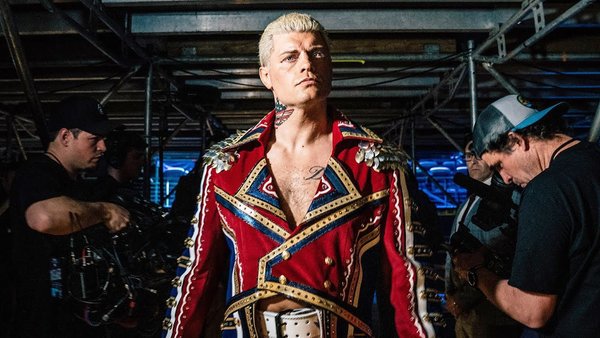
The next few months of Cody Rhodes' wrestling career could prove an invaluable marketing tool when it comes to WWE's chances of acquiring other talents from AEW.
AEW has the perception of a promotion that will use wrestlers correctly in ways that complement their skillsets, giving them a greater chance of getting over and finding fulfilment. This is partly down to WWE. Earned through decades of creative misgivings (and a seemingly chronic ability to generate new stars beyond one or two top guys at a time), WWE has the opposite perception. The hundreds-long list of misused wrestlers who only got over to a fraction of the degree they should have supports this.
But if WWE gets Cody Rhodes right, as it has done so far, this perception flips. Suddenly, WWE becomes a more attractive proposition to AEW stars. When their deals come up and the competition extends an offer their way, they might look at Rhodes, wonder if that could be them, and become more open to making the jump.
1. A Major Talent Exodus

Wrestling remains a star-driven business. The idea that "the brand is the draw" carries some weight in WWE, where most wrestlers not named Roman Reigns and Sasha Banks have little to no impact on ticket sales and television numbers, but it isn't entirely true. If it was, the promotion could get away with booking Akira Tozawa vs. Tamina on top at WrestleMania.
WWE, at this stage, might be down to its hardcore base. Thousands upon thousands will tune into weekly television and attend live events regardless of how well those shows review. That the promotion generates an increasingly huge chunk of its revenue from business to business sources rather than from consumers further strengthens it, shuttling "appeasing the audience" down its list of priorities.
AEW is different. Pay-per-view buys and live event gates are more valuable to this younger promotion that doesn't have billion-dollar distribution deals in place. AEW's stars make a bigger difference to its metrics, too, with quarter-hour increases and dips more perceptible on a week to week basis.
Losing a large group of wrestlers would therefore be more damaging to Tony Khan's group than Vince McMahon's. Should a number of the concerns outlined elsewhere in this article come to life at the same time, perhaps greater volumes of AEW wrestlers will seek their fortune elsewhere.