Bret Hart Vs. Shawn Michaels Complete History | Wrestling Timelines
March 31, 1996 - Iron Man
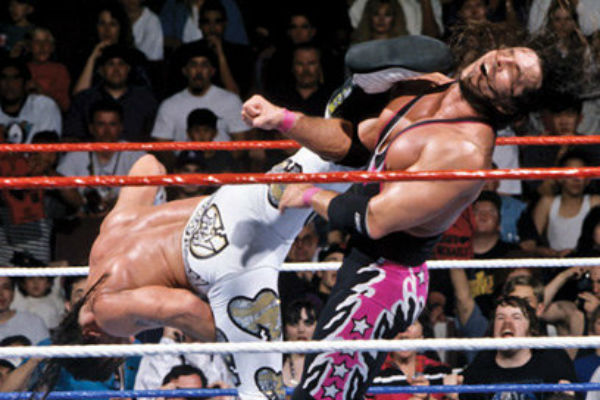
Bret, into overtime, drops the WWF Heavyweight title to Shawn Michaels at WrestleMania XII. It is the longest singles match in the history of the promotion under Vince, Jr., and the first held under Iron Man rules. The idea is that the man who scores the most falls in an hour wins. The execution of this idea is bizarre. There are no falls in regulation time. WWF fans love Bret, but an hour?
Even in an era that emphasises strong in-ring action, it’s a bit much. It’s still the WWF. The fans aren’t that into the craft; many actually leave the arena. American sports are high-scoring, end-to-end games; the WWF’s first foray into a pure sports feel is misguided in the extreme, echoing the failure to launch soccer stateside.
Some fans defend the Iron Man match. Some deem it a masterpiece. To others, it feels like a match you are supposed to like. To them, the Iron Man match is the first step towards becoming a more discerning wrestling fan. The match is at times so dull that you question it. Isn’t this meant to be great? It’s advertised as being great. Why is it boring?
It’s a match that the snobbier fan feels good about feeling unmoved by - almost a password into a secret club of aspiring know-it-alls.
One electrifying spot aside - in which ring announcer Tony Chimel eats an errant superkick when Bret, splayed on his lap, gets out of the way - the match is excruciatingly tedious. At least for the first 40 minutes. It more closely resembles the non-action in the commercial break of a TV offering, albeit with more rare, well-applied submission holds, than an epic technical dream match.
In wrestling, it’s often said that it’s better when reality bleeds into the narrative. Characters drawing on legitimate tension to fuel their invective with more bile, a wrestler taking on a persona that amplifies their actual personality traits: if they don’t buy the con, but they buy you and your story, you’re set. The issue with the Iron Man match is that it’s neither a fantastically-crafted work nor a match so frenzied that it feels, thrillingly, that it might fall apart. The tension is real, but there’s too much and too little of it, at the same time. The odd potato is thrown, but there’s not enough hatred to harness, informing a petty and standoffish affair. Weirdly, Bret rates it as his best ever match. It’s certainly an achievement, if not a spectacle.
The match reflects the state of the relationship, which is at this point awkward and suspicious.
Bret is happy to do the job - he’s set for a well-earned hiatus, imminent free agency, and a very lucrative bidding war - but he is displeased by the build. Shawn isn’t happy, either - the ‘Boyhood Dream’ arc is a bit cornball, and his onscreen relationship with elderly real-life trainer Jose Lothario hardly depicts him as a cool heartthrob - but he at least looks the rippled, bare-chested business in the training vignettes. Hart is heavily clothed trudging through the Canadian snow when he is shown building up his stamina. Bret thinks he’s being set up as the old, ailing guy who is on the way out.
Shawn wins in overtime with Sweet Chin Music. He is now equipped with one of the best wrestling moves ever.
“Tell him to get the f*ck out of the ring! This is my moment,” Shawn says to the ref, as an irate, exhausted Bret complies in disbelief. This is appalling; in an era where passing the torch is an eclipse-rare event, Shawn is almost profoundly ungrateful. The relationship, that barely exists, is rapidly breaking down.
Bret goes on hiatus. Shawn calls to thank him for the match, days later, but Bret reckons this was a Vince edict, not something Shawn did out of true respect, of his own volition, because it was the right thing to do.