How The Future Of Wrestling Might Be In Grave Danger
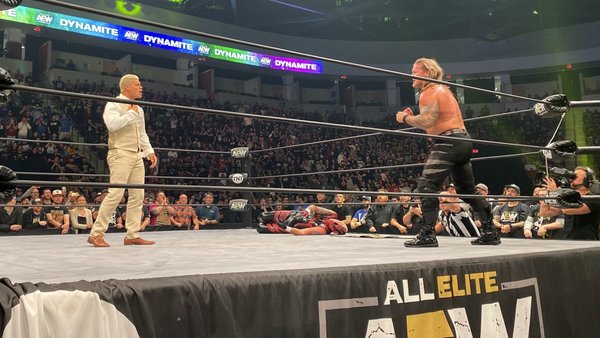
AEW had outperformed expectations to a quite incredible degree to become a legitimate mainstream outfit, the Independent circuit didn't collapse in its wake, and WWE, pitiful critical reception and fan-driven revenue stream declines notwithstanding, remained capable of delivering quality and or very well-attended shows.
But an odd and unsettling feeling persisted that no next big thing was on the horizon, no potential game-changer to usher in whatever amounts to a boom in this fractured cultural age. The average age of the wrestling fan does not sit anywhere near the childhood or teenage demographics, and while the diverse complexion of pro wrestling might be the root of its growth problem - fandom is an endless lateral vista to explore - it is so diverse that something really should have caught fire. AEW at its best is a phenomenal love letter to what came before (Cody's arcs, Chris Jericho's patter), and a deft populist adaptation of modern cross-platform storytelling (the Elite Explodes saga). That it doesn't touch RAW - mostly putrid RAW, with its haemorrhaging viewership - is sobering. Scary, almost.
WWE cannot create new stars. AEW is facing a profound challenge to re-train an audience warped by WWE's practises in a classical pro wrestling curriculum, and is perhaps still struggling to convince those that passed on Dynamite after Full Gear that a frank self-assessment has been conducted. There is a strange phenomenon unique to pro wrestling that is cause for concern, too: most everybody, at some point or another, goes dark.
CONT'D...(5 of 6)