How WrestleMania Almost Killed WWE
Could WWE and WrestleMania even exist without one another? They almost didn't exist at all...
In the grand mythology of contemporary mainstream professional wrestling, WrestleMania is painted as the definitive game-changer - the pivot point that transformed the industry from a regional circus into a global entertainment powerhouse.
WWE’s revisionist history treats the inaugural event as an inevitable success that the "World Was Watching" and indeed the one the business was waiting for. If you've seen one glittery highlight package, you've seen them all, and you know the beats. The first WrestleMania was a glowing, showbiz-and-star-studded triumph where Vince McMahon's enterprising gamble paid off and the world changed forever with Sports Entertainment immediately defined as the genre of wrestling strong enough to tear up the territories and own the conversation forever.
The truth, as is always the case in wrestling, is more complicated and thus often neglected. The reality of WrestleMania I is not just that it was a success but that it had to be a success. If it had failed, it might have taken WWE - or at least McMahon's vision of what he wanted to WWE to be - down with it. Long before WrestleMania made the likes of Las Vegas, Nevada (or even the slightly less glamorous Atlantic City, New Jersey) its home, the 'Show Of Shows' was a high-stakes roll of the dice where a lower number didn't mean losing a game - it meant game over.
At the end of the first show's main event, the game looked won. Hulk Hogan and Mr T embraced to the cheers of thousands of New Yorkers in a wired Madison Square Garden, creating a shot that defined what made the event special and highlighting was as much blueprint as blow-away great. It was, however, the result of more luck and chance than it looked, and piled the pressure on for the recognised leader in Sports Entertainment to do it over and over again for eternity. The template was now in place, and almost everything had been leveraged to make it so.
(CONT'D)
Before WrestleMania, WWE was something of a dangerous position.
Vince McMahon had set his sights on national expansion, and unlike his father - who broadly played within the unwritten rules of the old wrestling territories - was ready to burn the rulebook. He raided the biggest stars from other promotions, rapidly set about attempting to dominate cable television by any available means, and poured any and all resources into a larger-than-life vision of wrestling as well-packaged mainstream entertainment rather than regional athletic sporting theatre.
But his dreams were costing him a fortune. The company’s aggressive expansion, including lucrative deals with Hulk Hogan, Roddy Piper and other emerging megastars (and megastars-to-be) meant expenses were skyrocketing. Vince had broken away from the traditional systems in search of bigger profits than any of the established methods could offer, but in doing so was on the verge of not securing enough accumulation for all of his speculation. When he'd purchased the company around two years earlier, it was still largely a regional operation based in the North East. There were financially lucrative strongholds in New York, Pennsylvania, and Massachusetts, but it was just one piece of a fractured wrestling landscape controlled by the National Wrestling Alliance and could generally be costed for accordingly. McMahon's goals broke molds, but broke the bank too.
He needed more TV to make money, but needed more stars to get more TV. But he needed more TV to make money and on and on it went. WrestleMania - or at very least the idea of a show of such scale - stood to be the one thing that could draw all three components together at the same time, but a potentially magic fix couldn't be created with the wave of a magic wand. To make money, and make the show a reality, McMahon was going to have to start making enemies.
Again, with each territory having its own top stars, champions, and television deals, wrestling promoters could operate under an unwritten code of honour because nobody's business suffered. Wrestlers could get stale and move around, repeat cycles, draw money and keep towns in decent health. It wasn't perfect, nor was it always as easy a formula as that process suggests, but a touring World Champion was never short of a hot town or challenger across any of the 50 states for the decades preceding WrestleMania.
Vince McMahon Jr was prepared to shatter all of that for his own gains. Predictably, this didn't sit remotely well with the long-established promoters who had their own regional empires. These men - the likes of Verne Gagne, Jim Crockett, and others - were not just competitors now. They were personal and professional enemies with a vested interest in seeing him fail. And for a while, failure seemed inevitable. Because getting national syndication was a near-impossible job, McMahon could fall at the first hurdle. He'd even potentially wipe himself out before paying his father back, they'd reckon. Or at very least not make it past the first year or so of being in business under his own steam.
What could he possibly know or do that they didn't or hadn't? More than they could have accounted for, as it turned out.
McMahon secured deals for WWE programming on cable television nationally. With more exposure, he could now go after the biggest stars in wrestling and offer them the kind of money and opportunity they couldn’t refuse, even if it meant leaving behind a system that might have previously served them well. The biggest and inarguably most important name to take the deal was Hulk Hogan.
(CONT'D)
Hulk Hogan had become a breakout star thanks to his role in Rocky III as Thunderlips, a larger-than-life wrestling heel who battled Sylvester Stallone’s Rocky Balboa. At the time, Hogan was working for Verne Gagne’s AWA, but Vince saw him as the perfect centre piece for his vision of WWF. He lured Hogan away in late 1983, and by early 1984, Hogan was crowned WWF Champion after defeating The Iron Sheik at Madison Square Garden. The Iron Sheik’s title reign was short-lived, orchestrated specifically to set up Hogan’s triumph as Backlund's reign - and with it the image of a company McMahon no longer needed hanging around - hurriedly disappeared from view. With Hogan as champion, Jr had his own golden goose.
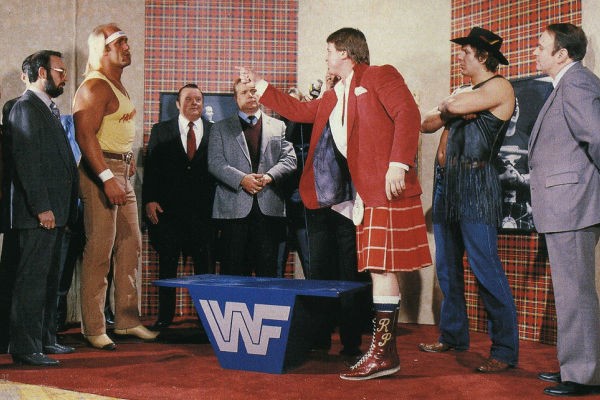
The strategy was clear: build the company around Hulk Hogan’s larger-than-life charisma and position him as a superhero for a national audience. The timing was perfect. The 1980s were an era of excess, where flamboyant personalities and patriotic themes resonated with mainstream America. Hogan fit that mold perfectly with his chiseled physique, boundless energy, and his iconic rallying cry of “Train, say your prayers, take your vitamins.” But McMahon knew that a single star wasn’t enough. He needed a roster filled with characters that felt ripped from the same silver screen TAFKA Thunderlips had emerged from. He assembled a cast of villains and heroes that were tailor-made for television. Rowdy Roddy Piper, an incendiary trash-talker that had drawn money and acclaim everywhere he'd been, became Hogan’s perfect foil. “Mr. Wonderful” Paul Orndorff, a jacked heel as egotistical as his name suggested, was another major acquisition. And then there were legends like André the Giant, who brought credibility and spectacle wherever he appeared and was packaged as somebody as homegrown as Vince Jr himself.
With his roster in place, Vince pushed forward with a bold expansion plan. Ignoring calls to stay in his lane, he struck more deals to air WWE programming in markets controlled by rival promotions, effectively invading enemy territory. He aggressively sought out pay-per-view and closed-circuit television opportunities, recognising that the future of wrestling profitability lay in large-scale supercards such as the yet-to-be-christened 'Grandest Stage'.
The territory promoters fought back. Verne Gagne tried to lure Hogan back to the AWA, even offering him a percentage of the company, but Hogan stayed loyal to Vince. Jim Crockett Jr., who controlled the powerful Mid-Atlantic territory, pushed back by trying to dominate the emerging pay-per-view market before McMahon got there. Other promoters, including Bill Watts (Mid-South Wrestling) and Fritz Von Erich (World Class Championship Wrestling), saw their talent being poached and their business eroding under Vince’s aggressive tactics but remained steadfast that their talent and creativity could outlast his bombastic and marketing-heavy promotion. Not for the first time in the story, they'd end up on the wrong side of this slice of wrestling history.
Despite these successes, WWE was haemorrhaging money by early 1985. The costs of the national expansion strategy mounted up and convincing the public that wrestling could stand shoulder-to-shoulder with the biggest sports and entertainment properties in America wasn't getting any cheaper. WWF was spending more than it was bringing in, and Vince and Linda McMahon had leveraged everything - including personal finances - on the belief that wrestling could go mainstream on a national and global level. It was time to pull the trigger on something that would make all the financial risks pay off in one night - a true game-changer. That game-changer was WrestleMania.
(CONT'D)
Whatever perfect was or is, WrestleMania had to be it. It had to be perfect.
It had to be a sell-out. It had to be a massive success on closed-circuit television (an early form of pay-per-view where fans could watch the event in theatres and arenas across the country). It had to prove that wrestling wasn’t just regional entertainment but mainstream spectacle. It had to make those that had gambled on it come back for more.
Vince McMahon didn’t just invest WWE’s money into WrestleMania; he invested everything. Every available resource went into making the show look as big as possible. If WrestleMania failed, there was no backup plan. There was no Plan B. The death or glory nature seemed to inspire the biggest and boldest strides, and - as was so often the case in McMahon's career - required as much luck as judgment.
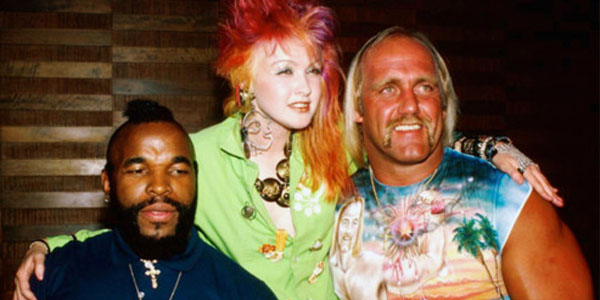
WWE needed to feel like it formed part of the pop culture landscape. This was where MTV came in. The early 1980s was a golden era for the network, having launched in 1981 and almost immediately revolutionised music through the advent of music television. Music videos became cultural milestones, and MTV was defining what was cool for an entire generation. McMahon saw an opportunity took a big swing. He convinced pop star Cyndi Lauper to get involved with wrestling. Lauper and her manager David Wolff became entangled in a storyline with Lou Albano, leading to the “Brawl to End It All” on MTV in 1984, where Wendi Richter defeated the Fabulous Moolah for the WWF Women’s Championship to end a kayfabe 26-year title reign. The event pulled incredible ratings, leading to a follow-up, “The War to Settle the Score,” which further cemented wrestling’s presence on MTV and helped set the stage for WrestleMania thanks to Piper and Hogan's ongoing rivalry dominating the numbers and the conversation.
Both events took place at Madison Square Garden, establishing the Manhattan venue to the new audience as the destination for the action they had now taken more than a passing interest in. Madison Square Garden wasn’t just another arena - it was the arena. The Garden had long been the Mecca of professional wrestling, hosting legendary matches and sellout crowds. But more importantly now, it was a media hub. Getting mainstream coverage of an increasingly mainstream product required New York-based newspapers, television stations, and magazines to care. The location was perfect not only for its wrestling history but for its proximity to these major entertainment outlets, and with NBC and MTV headquartered there, celebrities and press would have easy access to the event, making it feel even more significant. The overlap effect was working too - Hogan and Richter were suddenly considered on the level of Lauper by the wider public, and when A-Team megastar Mr. T found himself folded into 'The Hulkster's rivalry with Roddy Piper, WWE was suddenly at the centre of a cultural earthquake it had smartly manufactured.
It was seeming too good to be true, but the contest of what brought The McMahons to this point is important - the high risk/high reward method was, to Vince at very least, a smoother road than some of the others he'd previously taken.
(CONT'D)
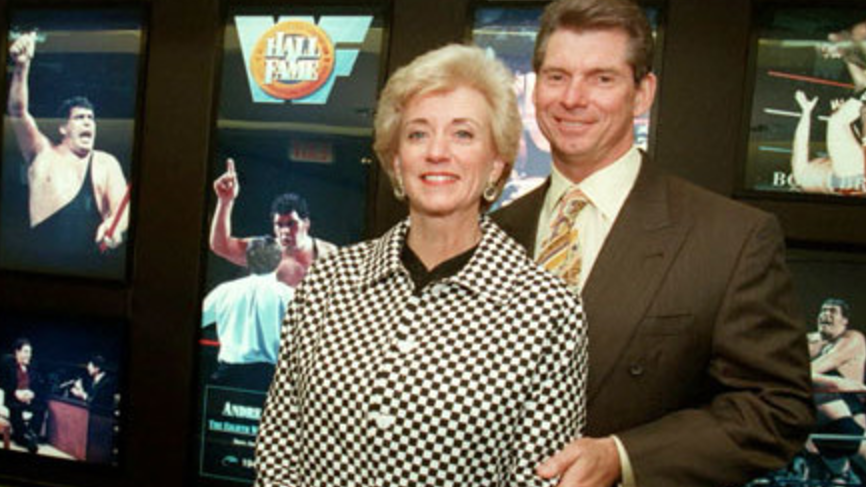
It’d have been one thing to lose company money on something as big as WrestleMania. It'd have been quite another to see your family’s entire personal finances disappear. The McMahons invested their own money, took out loans, and allegedly put their home on the line in order to see it through, and the numbers needed to add up. The company’s financial survival depended on ticket sales and closed-circuit revenue, and Linda - often seen as the reserved business-minded half of the duo - was just as much in the trenches as her now-estranged husband. She worked behind the scenes, ensuring the finances added up, handling endless logistical headaches, and keeping the books somewhat balanced while Vince focused on the big picture. Had WrestleMania failed, WWE would not only have gone bankrupt, but the McMahons themselves would have been ruined.
But McMahon was too busy trying to see through a lifelong dream. Born in 1945 in Pinehurst, North Carolina, Vince’s early years were filled with hardship. Jr. did not grow up under his father’s direct guidance after his parents divorced when he was young, and he was raised by his mother and a string of abusive stepfathers. He didn’t meet Vince Sr until he was a teenager, but despite his rough upbringing, he was ambitious. He entered the business working for his father in the 1970s, serving as a promoter and commentator. Early on, he showed the obnoxious and aggressive business style that became his calling card, pushing for expansion when his father preferred to stick to the traditional territorial system. In 1966, Vince married Linda McMahon, his high school sweetheart. The two met as teenagers, and per their own testimonies, their relationship quickly grew into a partnership built on mutual ambition and resilience. Linda was just as invested in their future as Vince, even if she wasn't interested in being the public face.
She wasn’t simply a supportive wife in the background - she was making sure WWE didn’t collapse under its own ambitions as those ambitions only grew larger and more audacious. By 1985 though, the McMahons had to go all in. They had invested every resource, burned bridges with the old wrestling world, and staked everything on the belief that wrestling could be more than just a niche sport. If WrestleMania failed, there would be no safety net. There was no going back to the territory system they themselves had pillaged. This was all the more reason why the wrestling establishment wanted it to fail.
The traditionalists of the wrestling world, still understandably bitter and concerned about Vince’s attempted hostile takeovers of their territories, actively rooted for WrestleMania to fail. If it flopped, it would serve as proof that Vince’s vision of wrestling as mainstream entertainment was a failure too. There were also whispers that certain wrestlers were being bribed to cause disruptions or no-show. Vince was at war with the old guard, and WrestleMania was the ultimate battleground.
(CONT'D)
Back within Titan Sports' walls ahead of the big show, McMahon was encountering entirely new dilemmas as part of the entirely new world he was trying to occupy. Celebrities were key, but getting celebrities was expensive, and convincing them that wrestling was worth their time wasn’t easy. Mr. T, the key to the main event, almost walked away multiple times, frustrated with the wrestling business and worried about how it would affect his image. Roddy Piper had no intention of letting T make him look bad after legitimate tension developed between the pair. It nearly derailed the main event; tension boiled over in heated confrontations during press events, and there was concern that Piper might go off-script during the match itself.
And even when both the wrestlers and the television stars ostensibly had control over situations, things still happened that could have pole-axed everything. During an appearance on Richard Belzer's Hot Properties talk show, Hulk Hogan was asked to demonstrate a wrestling hold on the host. He put Belzer in a front face lock, and when he released it, Belzer collapsed, hitting his head on the floor and briefly losing consciousness. Blood visibly trickled from his head, and the incident became a minor scandal in the days the followed. Belzer sued, and while the lawsuit was eventually settled, it added another layer of unpredictability and uncertainty to WrestleMania’s promotional tour.
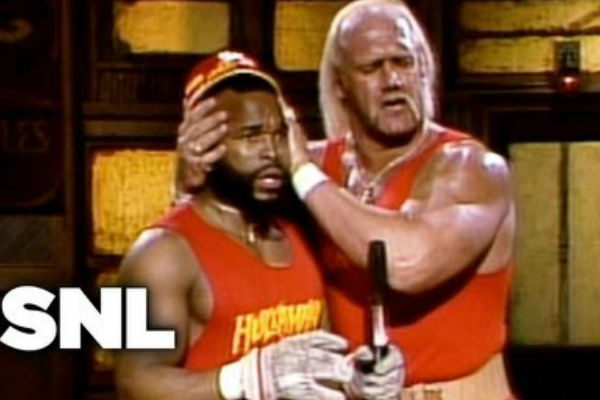
There was a stroke of good luck too. In the final days leading up to WrestleMania, Vince caught an unexpected break when Hulk Hogan and Mr. T were drafted in as last minute hosts of NBC’s Saturday Night Live the night before WrestleMania. An enormous publicity boost, the slot put Hogan and T in front of millions of viewers in the ideal market at the perfect time. It was an unplanned but incredibly fortuitous situation that helped push the show's rising visibility into the stratosphere.
Though rocky, risky and not without controversy, the long journey had reached its destination as all the clichés were becoming truisms - the time for talk was over, and WrestleMania now had to deliver on everything Vince McMahon had promoted and promised.
(CONT'D)
On March 31, 1985 was going to be the night that changed everything, regardless of the success or failure of the show. Fortunately for The McMahons, the former looked likely before the first bell rang,
Madison Square Garden was packed and jacked, and thousands more gathered in theatres and arenas across the country to watch on closed-circuit television. The atmosphere was electric even if there was an understandable sky-high tension behind the scenes. Despite all the potential pitfalls though, WrestleMania was a triumph. The show combined spectacle, star power, and entertainment in a way wrestling never had before.
The first ever WrestleMania match saw Tito Santana take on The Executioner (played, this time, by Buddy Rose under the hood). Santana was a popular babyface, coming off a recent run as Intercontinental Champion, and his win was a well-received start to proceedings. One of the shortest matches in WrestleMania history and and an easy talking point from the undercard for WWE to promote came next, King Kong Bundy's squash win over S.D. Jones was announced as going just nine seconds, even though in reality, it was closer to 23. Its role in establishing Bundy as a main event threat was crucial, as he would go on to headline WrestleMania II. Later on, Andre The Giant slammed Big John Studd to win a gimmicked $15,000 prize in a match featuring two more monsters for Hulk Hogan to eventually defeat. The match doesn't hold up now but the spectacle of seeing the two behemoths collide was exactly what the New York casuals were going to have their eyes widened by.
This was the modus operandi. David Sammartino's stinker with Brutus Beefcake was only there for those who'd been in the Garden all along to tell the newbies about David's Da, and the likes of Ricky Steamboat, Junkyard Dog and The US Express were better wrestling babyfaces than the breakout stars the McMahons needed in that moment, but all played their part in between the biggest headlines. One of which was the crowning of Wendi Richter as Women's Champion with victory over Lelani Kai, alongside semi-regular star Cyndi Lauper. The match was heavily tied into the phenomenally successful "Rock ‘n’ Wrestling Connection", with Cyndi Lauper’s presence and the MTV ties continuing to provide monster dividends. At this point, Richter was positioned as the female counterpart to Hulk Hogan - a neon crossover star-in-the-making. The match itself wasn’t technically great, but the crowd were, and the presentation of the finish soared as a result. The challenger won with a roll-up, reclaiming the belt in a moment that would have been more significant in the years to come had Richter's run not ended in a money disagreement and a screwjob that returned the gold to a masked Fabulous Moolah.
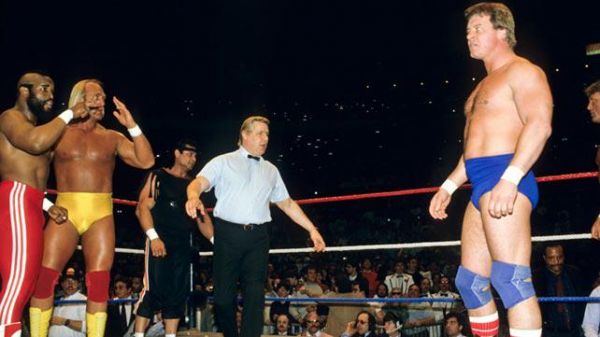
Ultimately, WrestleMania still had to stand up as something resembling a thoroughbred wrestling show, and like all staple wrestling classics, the main event needed to deliver. Hogan and T vs Piper and Orndorff was always going to be the the match that made or broke WrestleMania. Despite the aforementioned backstage drama between some of the combatants and the multiple moving parts thanks to involvement from cornermen Jimmy Snuka and Bob Orton, the match itself was a wild, chaotic brawl that set the 'World's Most Famous Arena' on fire. Muhammad Ali served as a special guest enforcer, and Liberace and the Rockettes adding to the glitz beforehand. The babyfaces won (though notably Hogan didn't pin Piper, saving further disputes for future hot houses) the event ended on a high note, with the heroes victorious and the crowd ecstatic. Business being done the proper way, and this way doing proper business. The numbers came in - WrestleMania was an enormous financial success. WWE had survived and thrived, and the long path to monolithic supremacy had been paved.
But what was the legacy of the gamble?
(CONT'D)
The official WWE narrative treats WrestleMania I as a destiny fulfilled.
In truth, it was a near-death experience for the company. The financial risks were astronomical, the potential pitfalls were everywhere, and Vince McMahon’s dream of wrestling as mainstream entertainment could have ended in disaster. Instead, WrestleMania became the foundation for WWE’s empire. But the lesson of WrestleMania I is clear: WWE’s biggest successes have often come from its biggest risks, regardless of the damage they may inflict on other aspects of the industry. In another universe, WrestleMania flops, the company collapses, and wrestling remains a fragmented regional business. History remembers the winners. But before WrestleMania won, it almost lost everything.
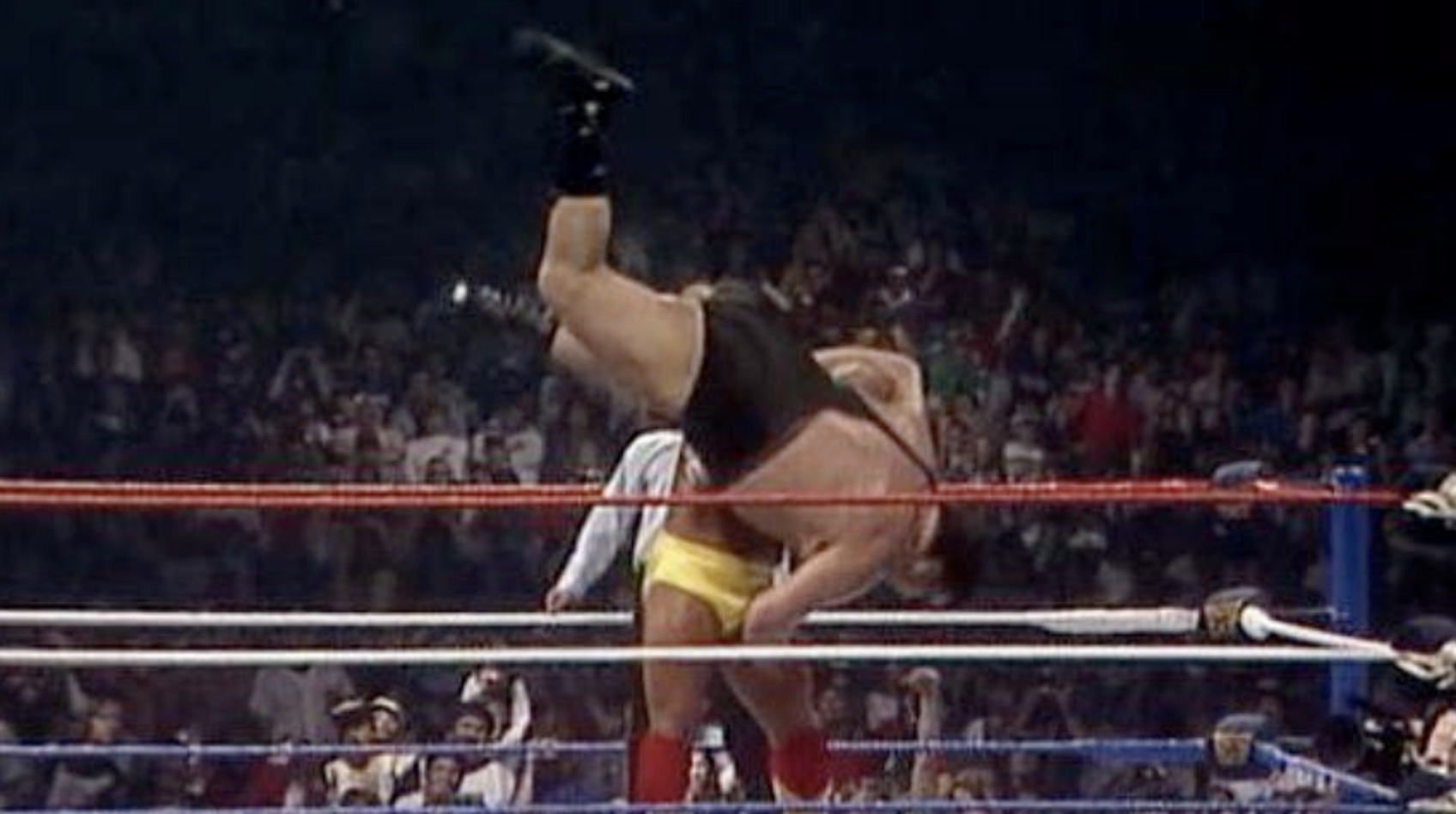
While the inaugural event proved to be a landmark achievement, not every edition of the event would be an unqualified success. The following years saw varying degrees of triumph and failure, both creatively and financially. WrestleMania II was an ambitious but flawed attempt to scale up the brand’s reach by broadcasting from three separate locations. Though the New York, Chicago, and Los Angeles destinations succeeded in adding grandeur to the show, the concept made for a disjointed viewing experience, with dead crowds and weak, abbreviated in-ring action in some arenas. WrestleMania III, however, was a defining moment. Held in the Pontiac Silverdome in front of a (contested but nonetheless massive) announced attendance of 93,173 fans, it set a new standard for wrestling as a North American major stadium event. Hulk Hogan’s bodyslam of Andre the Giant became one of the most iconic moments in wrestling history, and the show was both a critical and commercial triumph.
The event solidified WrestleMania as wrestling’s Super Bowl. However, the hype became harder to harness. WrestleMania IV struggled under the weight of its tournament format. While it had historical importance, its real success was in how it kickstarted the story that made WrestleMania V was another financial hit. The reliance on the long-building feud between Hulk Hogan and Randy Savage overshadowed an otherwise average undercard. The 1990s brought a similar mix of high points and missteps. WrestleMania VI saw the landmark passing of the torch moment between Hulk Hogan and The Ultimate Warrior, but it hid the commercial iceberg on the horizon. WrestleMania VII was advertised for the Los Angeles Coliseum in order for the company to break 100,000 sold, but the opposite was true of WWE's business, and the event was moved to the arena next door amidst a line about Sgt Slaughter's pro-Iraq gimmick being a security threat in an open-air setting. WrestleMania VIII looked visually like the bloom had never left the rose, but the it proved to be the final bow of the company's golden era. The talent turnover between the show and the Hoosier Dome and the Caesers Palace car park was best displayed by the visual disparity between the two shows, and when the company returned to Madison Square Garden ten years on from WrestleMania I, the vibes couldn't have been more different.
(CONT'D)
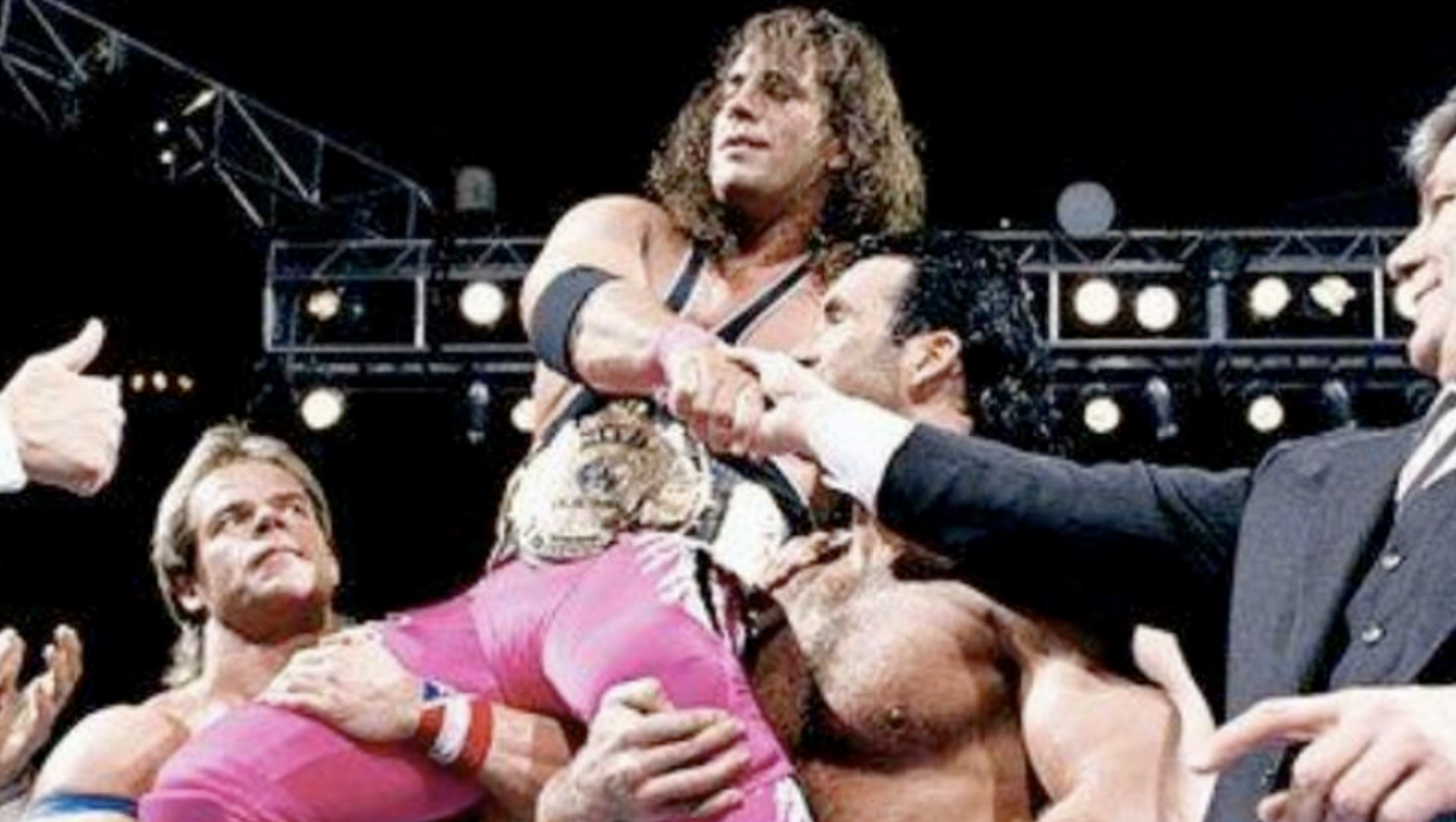
Vince McMahon crowned Bret Hart WWE Champion for a second time at WrestleMania X, but it was the first time Vince McMahon categorically went with 'The Hitman' as his post-Hulkamania guy after a debacle that saw Hogan politick his way to a fifth title reign at the 'Show Of Shows' the prior year. It was the same night Shawn Michaels leapt forward as a next top guy thanks to the instantly iconic Intercontinental Championship ladder match with Razor Ramon, and the two were key maintaining core audiences in the lean years ahead.
WrestleMania XI in 1995 showed the company’s creative and financial struggles in full view, headlined as it was by a celebrity match between NFL star Lawrence Taylor and Bam Bam Bigelow that lacked the true crossover magic of the original celebrity-heavy era and felt more like a desperate attempt to regain mainstream attention rather than own a spotlight already shone upon it. Hart and Michaels took centre stage for an hour the following year, but in respectively making and launching Stone Cold Steve Austin in 1998, the two were able to be as integral to the company's commercial salvation as they were all the critical acclaim. There have been more words donated to the Attitude Era than any other, but the explosion of 'The Rattlesnake' proved to be the rising tide raising all ships. The WWE sky was full of stars once again, and after two more WrestleManias in arenas, the company arrived back in the stadium for 2001's X-Seven - a still-critically lauded show that nonetheless was rapidly revised as the boom's beginning of the end.
After mixing the vibes in the intervening years, WWE made the permanent decision to hold every WrestleMania in a stadium, beginning with WrestleMania 23 at Ford Field in Detroit. This call was a declaration that the event was no longer just the company'’s biggest event - it was a global spectacle, bigger not just than the world it inhabited, but indeed the one we all did. It was PR swing on par with the decision to go with the original WrestleMania, and yet another one that initially paid insane dividends. Larger crowds meant more ticket sales, and the grandeur of guaranteed stadiums and "host cities" made the event feel evem more special. Production values skyrocketed, with elaborate stage designs, massive LED screens, and pyrotechnics budgets that topped anything else in the company calendar. However, this shift also came with an unintended downside - by increasing the scale of WrestleMania’s presentation, WWE was also magnifying its creative missteps on the biggest stage possible. As 'The Grandest Stage continued to grow in scale, the quality of storytelling direction under the worst of Vince McMahon autocracy continued to decline. Raw and SmackDown as television entities had become inconsistent, plagued by repetitive feuds, endless questionable booking decisions, and a reliance on part-time wrestlers at the expense of full-time talent.
This issue became glaringly apparent in events like WrestleMania 32 in 2016, which, despite being held in front of a then-record (heavily worked) 101,763 fans at AT&T Stadium in Texas, was widely criticised for its marathon runtime and unsatisfying booking. Roman Reigns’ coronation as the new top babyface fell flat with the crowd, who rejected him as the company’s latest Hulk Hogan-like figure. The card exposed the market leader's struggles with pacing and match placement, making the spectacle feel exhausting rather than exhilarating. By WrestleMania 34 in 2018, WWE’s booking problems were impossible to ignore. The show featured a match between Brock Lesnar and Roman Reigns that was meant to cement 'The Big Dog' as the face of the present and future, but the crowd vocally rejected it, hijacking the match with chants of "This is awful" and "CM Punk." Meanwhile, WrestleMania 35 in 2019 suffered from a bloated runtime of over seven hours, making it the longest WrestleMania ever and causing damaging fatigue by the time the historic first ever women's main event hit the ring.
Reality bit in 2020, but oddly enough, left a mark that once again took the 'Show Of Shows' from death's door back to the promised land.
(CONT'D)
As the world locked down due to the COVID-19 pandemic, Vince McMahon stubbornly insisted on running the event in Raymond James Stadium in Tampa until he legally couldn't. It eventually went down in an empty Performance Center, spread over two nights, and while it was initially WWE made the best of a bad situation, the universal response to the move was to keep it that way when crowds eventually came back. The decision exponentially improved the pacing of the shows, and made it easier to showcase more talent without exhausting the audience.
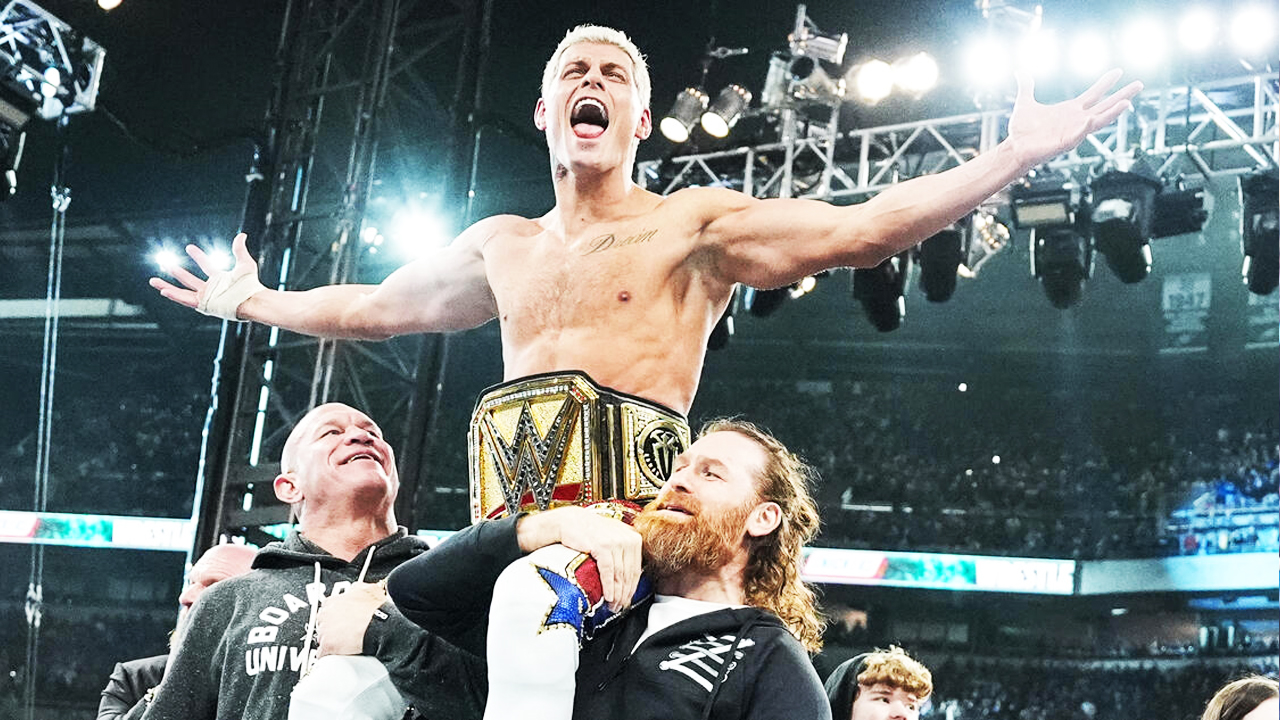
Two-nighters meant two main events, freeing up - for example - Stone Cold Steve Austin to headline a WrestleMania on the same weekend as Roman Reigns despite the two having nothing canonically to do with one another. However, the core issue of WWE’s creative struggles remained until the summer after that specific event - Vince McMahon resigning in disgrace in July 2022 made 2023's card look like the first without his fingerprints, until it was revealed that he was at the heart of a coup back in to the fold in order to drive forward a merger with UFC under the TKO umbrella the day after WrestleMania 39. His second disgraced resignation in 2024 was the true tipping point, and WrestleMania 40 - with its constant references to new eras and bold and decisive crowning of Cody Rhodes as the company's undisputed top star - allowed Paul Levesque to claim the creative throne from his Father-In-Law while more power players in power suits did the rest.
The rest, as of right now, is unknown. WrestleMania 41 from Las Vegas, Nevada will draw the company's two biggest gates in history, but that's as much down to aggressive price hikes as how hot the product is. The product is "on fire", as Triple H has enjoyed parroting on the road to the latest 'Show Of Shows'. But once again as it was in 1985, WrestleMania remains the constant acid test. A card seemingly made up of compromises in order to accommodate the massive slate of stars is not going to determine the financial future of WWE in the way it might have done once before. WrestleMania cannot kill WWE now because just about nothing can or ever will. But the worst thing to do with a hot hand is crash and burn, and as with WrestleMania IV, WrestleMania VIII, WrestleMania X-Seven and half of the events in the 2010, sometimes even the biggest stage only does so good a job of obscuring lots of tiny problems.
The gambles have ostensibly never been smaller, but the more things change, the more they stay the same. With WrestleMania, the stakes will always be sky high.