The Evil History Of Pro Wrestling | WWE’s Treatment Of Howard Finkel
The cruel life of a lovely man.
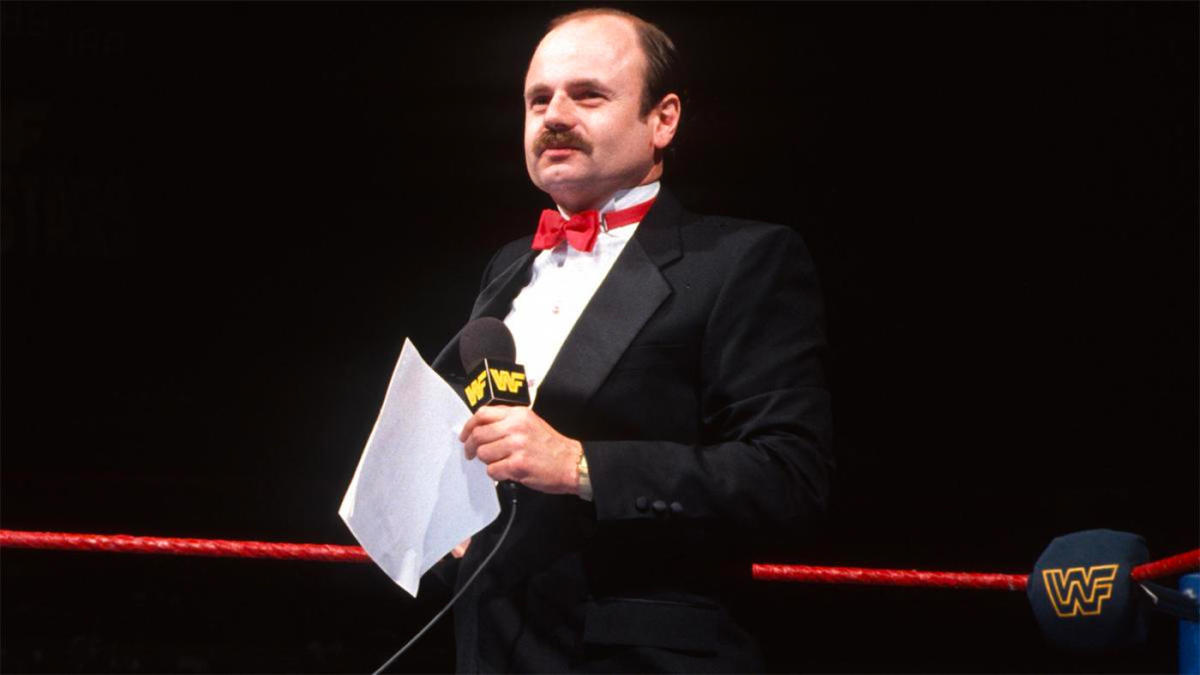
To older WWE fans, Howard Finkel was one of the most warmly-remembered characters in the history of the promotion.
You don’t get a nickname if people don’t really like you, and people really liked ‘The Fink’. They loved him. He was a short, bald ring announcer who radiated a sweet, gentle charm, but he was also authoritative. He wasn’t just the voice behind several important announcements; he was the exclamation point. Finkel’s gravitas, the sense of importance he imbued, made a new champion feel official, worthy, in a way that none of his successors have quite managed. That might be a very subjective take warped by nostalgia. When you’re young, and more easily fooled, every new champion is going to feel credible - but his iconic, protracted “...and new!” proclamation did almost as much to elevate a new champion as their first opponent. Each of his successors stretched the announcement out for almost exactly as long as he did for a reason. None do it with the same phonoaesthetic beauty, nor the same sense of pacing. The Fink treated the art of crowd psychology like a wrestler would, saving his booming, most drawn-out announcements until the main event.
There was just something wonderful about The Fink’s manner. He was so dutiful about his responsibility; eyes fixed straight ahead, putting on a deeper, solemn voice, he played it like everything he was about to say was the most important collection of words imaginable. The WWF wasn’t a kid-friendly wrestling racket with barbers, roosters, and anthropomorphic marine vessels running around: to Fink, it was the the majestic height of sporting achievement, and he was visibly, fiercely proud of it.
When you were a kid, and this is a laugh, you thought the WWF was a great, upstanding institution. A not inconsiderable part of that was the Fink’s doing. He was mourned, profoundly, when he passed away on April 16, 2020. He was 69.
Finkel was not merely an on-air talent. He was in fact the first WWE employee, signed to that landmark deal in April 1980, though his association with what was then the WWWF stretched back to 1975. In addition to working in the talent relations department, Finkel, who was the first person in the office every single day, would also report to Vince McMahon and Pat Patterson about the various goings-on in the wider industry - compiling Wrestling Observer-informed dossiers that became known internally as The Finkel Report. As best exemplified by the fact that Finkel came up with the name ‘WrestleMania’ - quite obviously better than Vince McMahon’s ‘Colossal Tussle’ idea - Finkel was an invaluable thread in the WWE fabric.
CONT'D...(1 of 5)
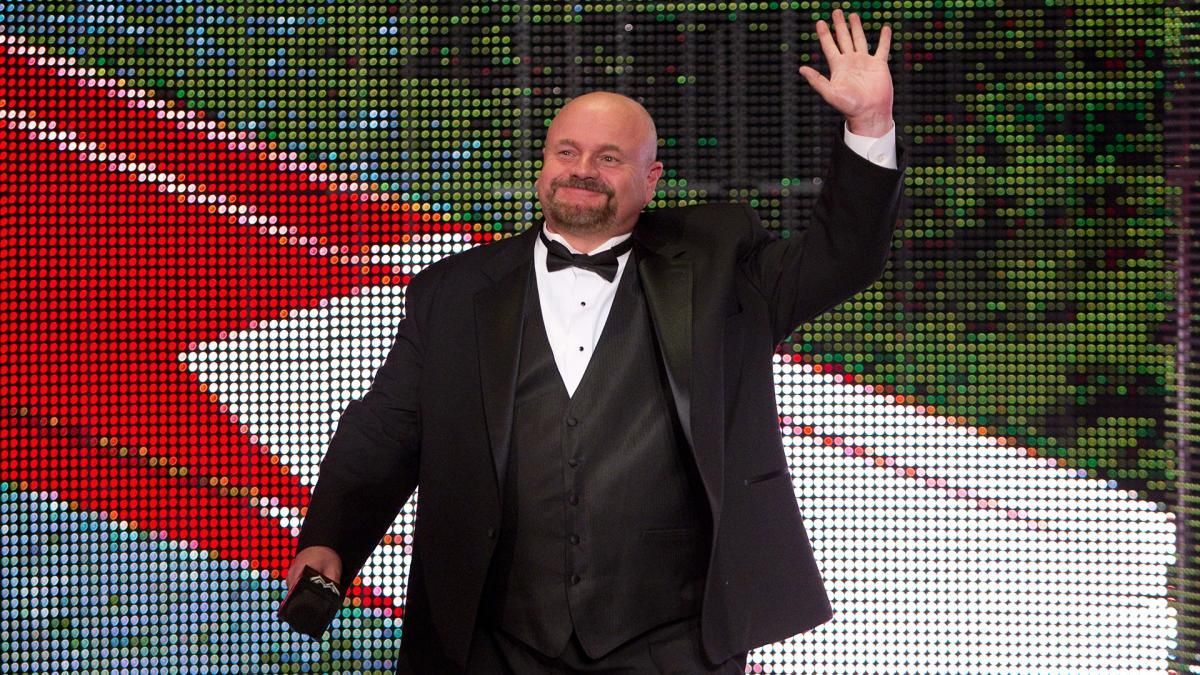
In later years, after being phased offscreen, the Fink organised travel arrangements for the touring talents. In a wonderful anecdote often shared online, Luke Gallows told the story of Finkel explaining his itinerary. Finkel said that Gallows would be wrestling Kane on the next loop, signing off the call with “Watch out for that chokeslam!” Finkel was a mega-fan until the end.
Finkel wasn’t just beloved by fans; at Survivor Series 2011, at the behest of the man himself, CM Punk brought out the long-retired Finkel as his personal ring announcer. Finkel, in Madison Square Garden, his happy place, the arena that made him famous, was visibly overwhelmed by the huge ovation he received. He was so moved and teary-eyed that he couldn’t get the words out. Punk was nice; he mimicked pointing at an imaginary watch with an understanding “come on, man” expression on his face. On commentary, Michael Cole was toxic. It should be mentioned that Cole, inexplicably, was doing a heel play-by-play gimmick at the time, rendering every second of every broadcast insufferable - but this was especially unpleasant. At one point, Fink motioned to speak, but couldn’t do it. His mouth opened, but no words followed, and he froze. Cole pissed himself laughing. He wasn’t working; he was genuinely amused by Fink showing an emotion, and Cole took the opportunity to kick the cat. This happened to Finkel a lot; sometimes you saw it, sometimes you didn’t.
To underscore how well-regarded Howard Finkel was within the wrestling business, Lance Storm’s social media obituary, often a strangely detached source of black comedy, was actually incredibly touching. In the Wrestling Observer Newsletter’s obit, Dave Meltzer somewhat played down the stories of institutional bullying, writing that “[Vince McMahon’s jokes] were never as personal or as cruel [as those endured by Jim Ross]. Meltzer cited an occasion in which McMahon arranged for Finkel’s car to get destroyed, just to see his reaction, but “would, of course, pay for all the damages”.
This is actually bad enough on its own, and using the treatment of JR as the extreme end of an abuse scale doesn’t make it less awful. What Ross endured was despicable; the institutional bullying of Howard Finkel isn’t somehow okay just because it was less severe.
CONT'D...(2 of 5)
Also, even though Vince paid for the damages, that doesn’t erase the fear and anxiety Finkel would have felt in the moment. “Institutional” is no exaggeration either, because within WWE, Finkel went by a second nickname - ‘Mel Cooley’ - based on a character on The Dick Van Dyke Show who was a perennial punchline.
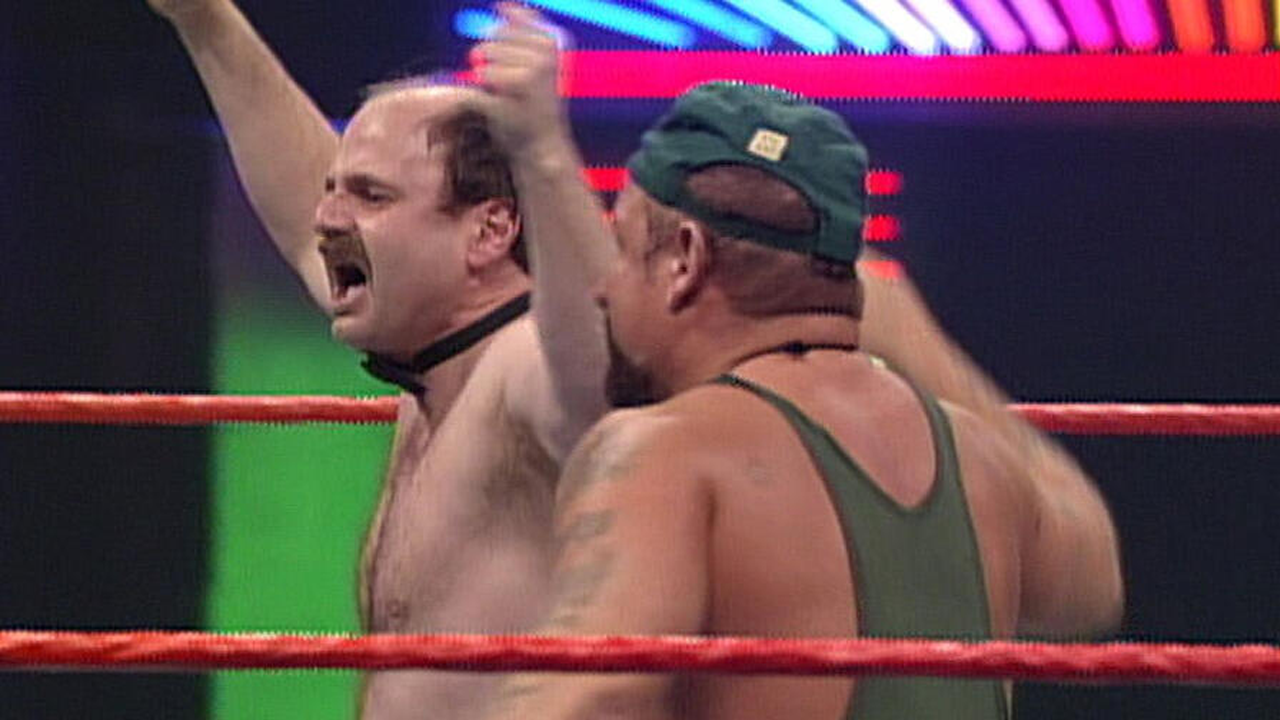
Vince McMahon liked to debase Finkel by booking angles in which his clothes were forcibly removed from him. Finkel feuded with Harvey Wippleman extensively throughout the early ‘90s; three years after Wippleman client Kamala put the Fink on a stretcher, he was allowed his revenge in a Tuxedo match on the January 9, 1995 Monday Night Raw. Except, he wasn’t; Fink “won” the match against Wippleman, but he was ridiculed on commentary and lost almost as many articles of clothing. (This match was trialled on the road, too.)
Finkel lost another Tuxedo match to Tony Chimel in 1999 in a terrible storyline premised on the idea that Fink, brainwashed by Chris Jericho, was jealous of him. Finkel, in the cruelest part of all, had been legitimately removed from television because he was not considered young or telegenic enough.
This time, there was no pretence of a happy ending, of getting the fans behind a loveable underdog. Finkel, the heel, was stripped within seconds. It was a transparently mean-spirited exercise in making the guy look pathetic. The idea that nobody would ever want to see Howard Finkel naked in a million years was the running “joke”. Vince’s obsession with stripping the guy down to his (unflattering) underwear lasted longer than the Invasion. Vince rebooted Howard Finkel: jealous heel announcer more often than he did WCW. WWE revisited this angle in 2002 when Finkel briefly feuded with Lillian Garcia.
CONT'D...(3 of 5)
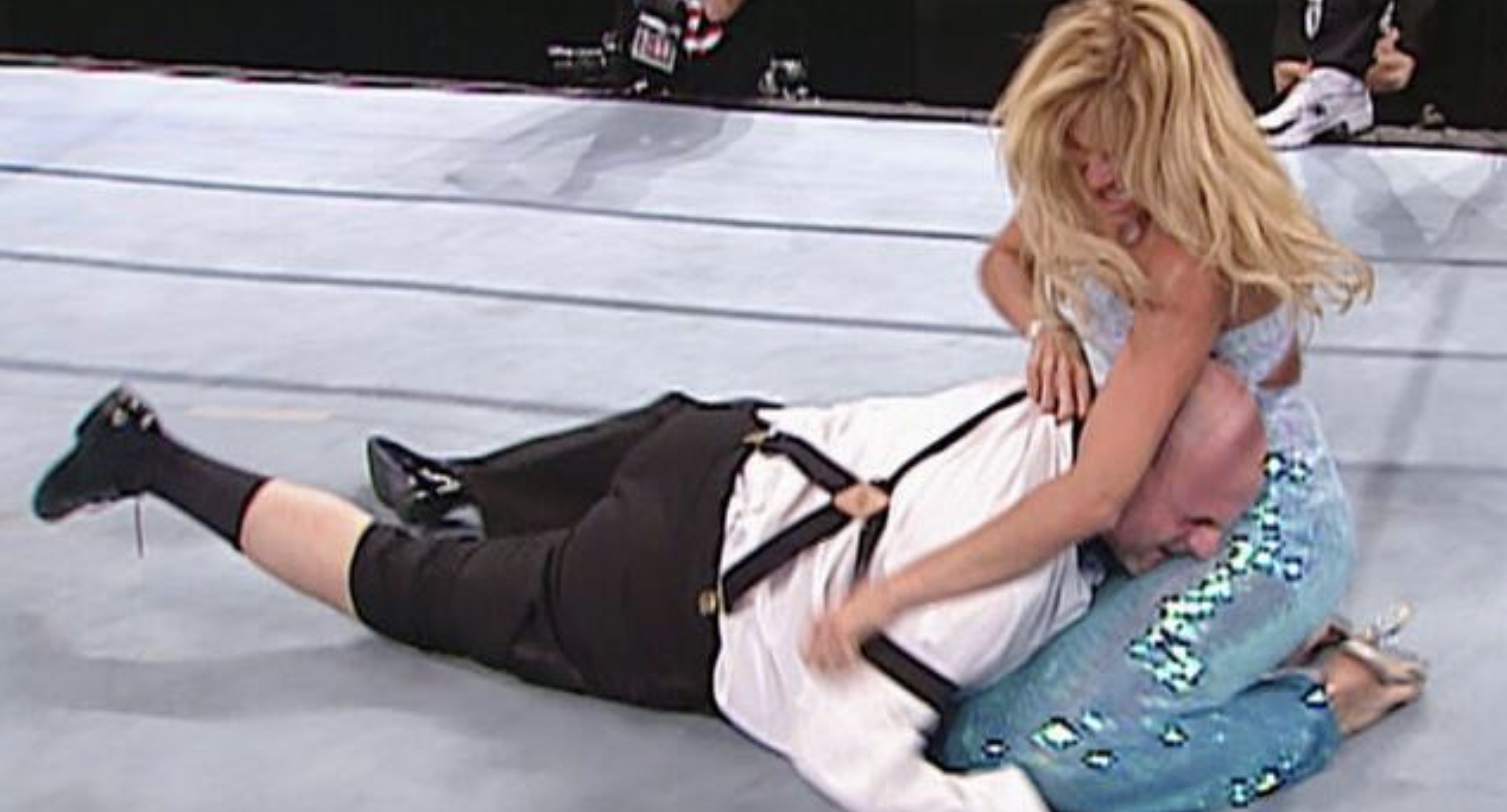
In addition to playing a dirty old man who said that Stacy Keibler was interfering with something in his trousers, Fink played a deranged, slut-shaming has-been. (In reality, Garcia has revealed that Finkel could not have been more helpful to the person who had succeeded him in his dream job).
The Garcia feud was awful. As part of the angle, Trish Stratus stood up for Garcia and slapped Finkel in the face. Finkel flinched in the moment before the slap because he was not a trained professional wrestler. This was execrable stuff. Who cares about how badly it was performed when the idea was so unworkable?
The damn boys, that’s who. According to the April 27, 2020 Observer, Fink was taken to Wrestler’s Court: an exercise in harassment and bullying masquerading as a means of settling disputes beyond the glare of management. What was Finkel’s “crime”: exposing the business? In 2002? Would any of the wrestlers who delighted in this twisted procedure have been remotely good at ring announcing?
The story, which Lance Storm backed up on Wrestling Observer Live in 2024, was that Finkel was used as an example to the rest of the roster, which was in a state of turnover resulting from the purchase of WCW and the promotions from Ohio Valley Wrestling. Storm revealed that he spotted Finkel in tears afterwards, embraced and apologised to him, and felt like a coward for not calling out the “f*cking bullsh*t” that was “just wrong”.
When it came time for Finkel to literally show ass for his crimes in a second angle - in those ever-present big red underpants - Jim Ross mentioned that they were stained. Jerry Lawler said he saw skid marks. Ross, to be fair, was just doing his job. It must have been nice seeing somebody else on the receiving end of it.
In an old ROH shoot interview, William ‘Paul Bearer’ Moody and Jim Cornette also shed light on how Finkel was treated.
CONT'D...(4 of 5)
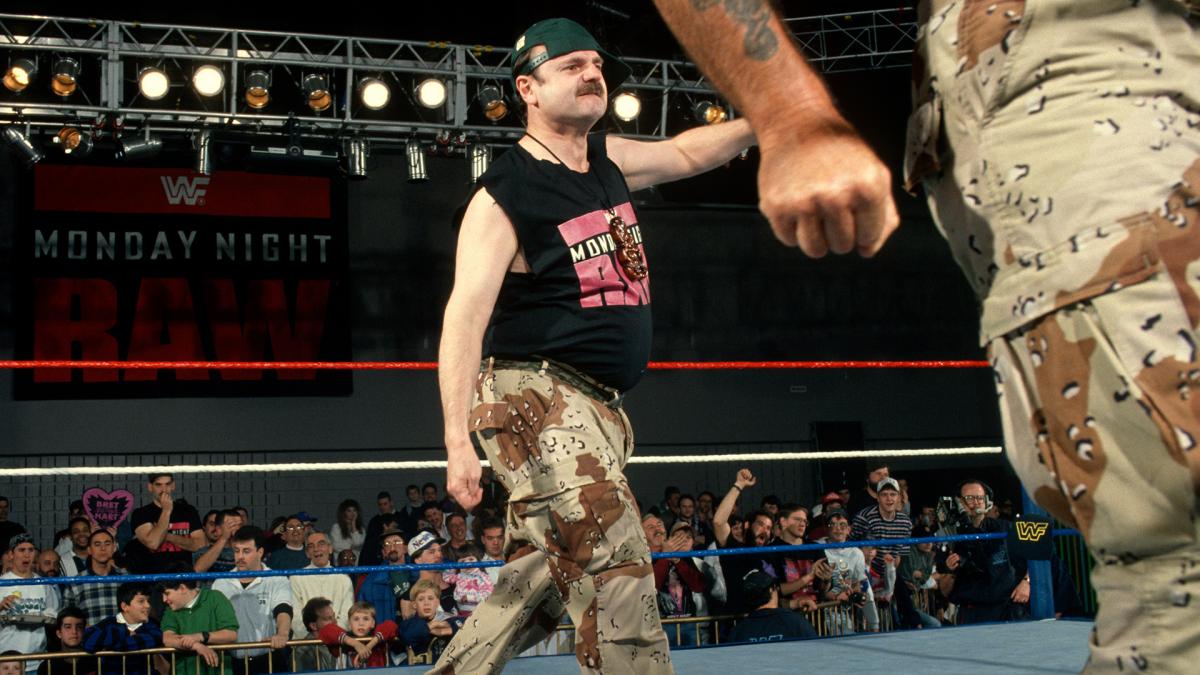
Everybody got “ribbed” during Finkel’s active, full-time era - but Finkel was hardly an alpha male.
He wasn’t built for it, and the higher-ups seemed to take a particularly sick pleasure in tormenting such an easy target. When Moody and Cornette’s conversation turned to Finkel, the tone darkened and Moody lamented “what an abused human being”. He said he had felt so bad for Finkel so many times because the abuse was “24/7”. Finkel loved the business so much that he tried “too hard”. Moody tells a story of Finkel, during an association with the Bushwhackers in 1995, eating sardines in a pre-tape. He was made to perform take after take after take “until he was sick”. Cornette also substantiates the stories of WWE officials smashing his property for a laugh.
Through it all, Finkel’s loyalty and love never wavered. In a little-known fact, Finkel was said to have been almost as good at play-by-play commentary as he was at ring announcing, receiving the opportunity to demonstrate his prowess on a handful of occasions in the mid-1980s as a substitute. He didn’t mind, or didn’t sell it, when he never got the dream gig full-time. He didn’t even mind, at least publicly, when he was replaced in the role he was the best ever at (firstly in 1995, and then all but permanently in 1999 by Lillian Garcia).
WWE retired Finkel years and years before he lost it, but he never lost interest; according to Tommy Dreamer, a visitor to Finkel’s assisted living facility in his final months, the one instruction provided to staff was for them to tune the TV to Raw on Monday nights.
WWE has spent its entire lifespan attempting to rewrite history. If there’s a nice ending here, it’s that they’ll never be able to tell you that Finkel wasn’t the best to ever do it.