Wrestling Psychology 101: Everything You Were Too Afraid To Ask
What is wrestling psychology? And is that even the best word for it?
Wrestling psychology: it’s what we’ve all at some point or another pretended to understand.
It’s a term many of us read when seeking out the latest WWE rumours on message boards. It’s something that we might second guess ourselves about all these years later, even though we’re pretty sure we know. This vague and imposing term doesn’t necessarily describe working over a body part. There might be no such thing as ‘psychology’. The veterans who value the term the most might actually understand it the least. ‘Psychology’ might not even be the best word for whatever it is.
Let’s first discuss what psychology isn’t: it isn’t a synonym of logic. Or at least, not quite. Logic forms part of what is a word with several definitions, depending on who you ask.
No wrestling matches make sense viewed through the lens of actual combat. They only begin to make sense in the minds of those who have attached themselves to a certain style and or promotion. Some, even wrestlers, might say that every AEW match ever lacks psychology through their unwavering hatred of the initials.
Wrestling is a hybrid form that has only aimed for true hold-for-hold realism on the shoot-style circuit - a once-hot, short-lived fad of a scene exposed and banished to the fringe through the emergence of mixed martial-arts. Wrestling is not realistic, nor do many people wish it to be. It can only make sense in its own specific context.
Wrestlers wait for high-flyers to splat onto them and do not, to borrow from Zack Sabre, Jr,. “move”. They catch the exhilarating moves launched by their opponents. Wrestlers agonise in painful, drawn-out submission holds that we know from MMA cannot be withstood for that amount of time. Wrestlers lift themselves up so that they can be slammed. They’re very helpful. Some wrestlers take punches, land on their back, and pop right back up to take another. There is no cryptic, secretive definition pertaining to logic.
Psychology in pro wrestling is situational. What’s important to note about psychology is that, before it entered the lexicon of the “smart fan”, it was used by a different breed of pro wrestler. Nowadays, a professional wrestler goes by many synonyms. They are athletes, sports entertainers, artists. When the term “psychology” entered their shared and coded language, they were carnies. They worked to deceive you, once upon a time, when they thought you half-believed in it.
Crowd psychology, then, from the perspective of the old wrestlers, is best understood as a form of manipulation - the manipulation of making fans care. Perhaps the word “psychology” gained purchase in the first place because it’s shorthand for “getting in the head” of the mark. It’s also helpful to view the term “psychology”, simply, as “distinct from the actual moves”. You might be able to hit a beautiful dropkick (the physicality) but you can’t make the audience care about it (the psychology).
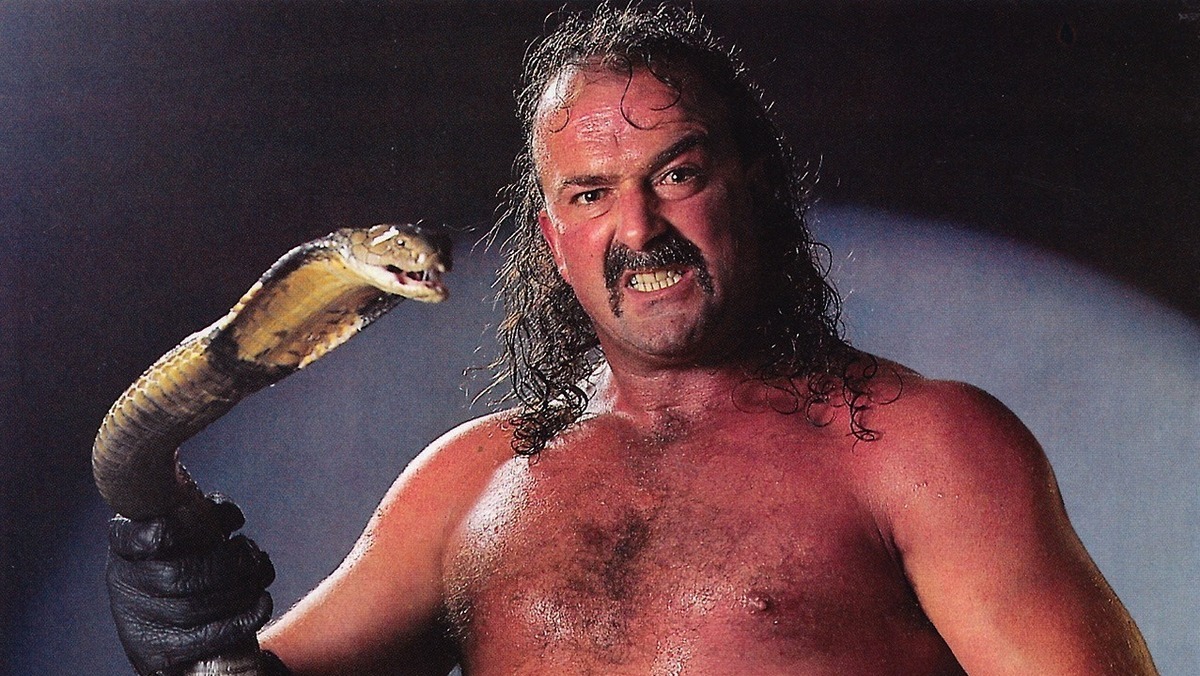
Jake Roberts is considered a master of psychology. His rather graphic definition of it, as told on an old RF Video shoot, is thus:
CONT'D...(1 of 5)