The Really Weird Secret WWE Is ACTUALLY About
WWE is not a parody of pro wrestling. It is actually a parody of...
WWE, in a more normal world, is meant to be a competent pro wrestling company that promotes prestigious championships that its contracted performers pursue and fight for in classic or memorable matches that draw money. Those performers become marketable stars - assets - as a result.
WWE does not operate in a normal world. The WWF used to operate in a normal world, when Jack Tunney presided over it in kayfabe. The television formula was not unlike that utilised by AEW Dynamite today.
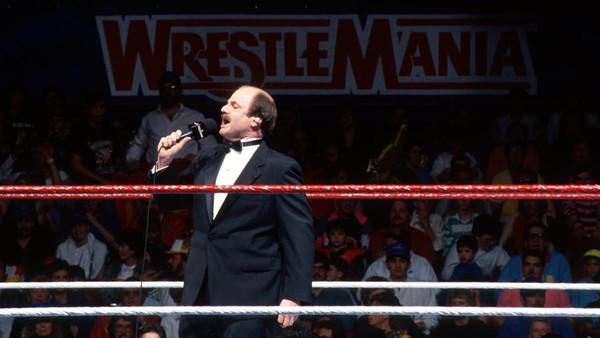
No matches were put together on an impromptu basis. The Federation was an organisation that functioned to promote pro wrestling, even if it was always called sports entertainment. The characters were cartoonish, for sure, but the pursuit of sporting glory and the grudge conflicts that arose from the competitive edge drove the narrative. It was a heightened version of a pseudo-sports broadcast that, through the authoritative tones of Gorilla Monsoon, Gene Okerlund, and Howard Finkel, carried a certain, wonderful gravitas.
The WWF maintained this tone, even when it "starred" voodoo priests, vikings and vulgar obese men. Because it featured such lamentable characters - and, far more importantly, because they never effectively replaced Hulk Hogan as a drawing attraction - the WWF declined badly in popularity as the 1990s took shape.
The Mr. McMahon character was the cause of and, for about two years, the solution to WWE's creative problems.
CONT'D...(1 of 6)

As the WWF motor-boated the tiddy that was edgy late '90s pop culture and abandoned the concept of a sporting emulation almost entirely, McMahon was the sanctimonious, wildly entertaining sociopath who presided over the promotion and attempted to shape it to his liking. He was thwarted by Steve Austin in quite incredible comedy set-pieces as the WWF, the company, slowly developed a self-referential heel persona that outwardly acknowledged itself as an evil entity, and not a governing body backdrop.
RAW and SmackDown are "shows," not cards. WWE is not a wrestling promotion; it's a television show about the production of a television show. When analysed reductively, it's a phenomenally weird thing to happen, but it has unfolded in this way for such a long time that an entire wrestling fandom is simply used to its weirdness. Some younger WWE fans don't know what pro wrestling in its original form even is. Meta storytelling is meant to be niche. In no other field of entertainment is a bizarre self-referential mutation of form the flagship brand. It's demented.
In order to chase this household level of popularity in the years since, WWE continued to use the evil boss formula even when it made less than zero sense. Vince McMahon feuded with Roman Reigns, for f*ck's sake. Twice.
21st century WWE is a show that - depicting it as fake, essentially - often comes together on the night of. The maintenance and quality of the show is a key storyline driver.
CONT'D...(2 of 6)

Countless authority figures throughout almost the entire 21st century were tasked with crafting a good show and securing good ratings.
Several of these General Managers, Interim General Managers, Anonymous General Managers, Commissioners, Constables, Assistant RAW Managing Supervisors, Directors of Operations, Chief Operating Officers, Legal Advisors, Managing Supervisors and 'WWE Officials' feuded with pushed babyface projects, even though it didn't make a lick of f*cking sense. The role and the way in which it was executed were counter-intuitive. How is tormenting and endangering the popular wrestler a means of drawing interest? It's the role of the heel pro wrestler to generate heat over which the babyface prevails. The WWE authority figure isn't a match-maker. They are a detriment to the show they are tasked with producing.
In effect, WWE television is a programme about buffoonish middle management types who invariably allow the power go to their heads, create horrible morale in the workplace, and get fired for being incompetent after scathing performance reviews given out by the real boss: the McMahon family.
WWE being WWE, it is happening again.
CONT'D...(3 of 6)

Adam Pearce was thrust into an as-yet-unnamed role in 2020, following a fairly long stretch in which the format didn't change, but impromptu matches still happened, frequently, and were sanctioned by some unseen entity in the background. Pearce was introduced, ultimately, because the show is more convenient to write when there is somebody around to make matches as punishments. Otherwise, what happens after two sports entertainers talk utter drivel at one another for 10 minutes?
Here's a loose timeline of the latest, lamentable diminished return: Adam Pearce was suddenly asked to grab some signatures for the Payback 2020 Universal Triple Threat match. He subsequently just...existed as a 'WWE Official', taking on the role of a neutral administrator who was overjoyed at the convenient events that allowed him to book matches on the ostensible sporting fixture he hadn't bothered to arrange.
"That gives me a great idea!"
He was assisted in his duties by Sonya Deville in January 2021. Deville started to undermine his decisions and flirted with turning heel, to Pearce's muted consternation. He then turned heel later in the year, following Deville's lead of denying Naomi an opportunity by refusing to allow Drew McIntyre to potentially earn a "championship opportunity".
Why?
CONT'D...(4 of 6)

What's Pearce's issue with Drew McIntyre?
Drew is not a disruption to the show, nor does he hold any values that Pearce can't sanction. McIntyre isn't a convincing underdog, if that's what they're going for. He's f*cking massive. He's neither Steve Austin nor Daniel Bryan. He's Drew McIntyre: a hard-working babyface built in the classic WWE image. Nobody could possibly have a believable issue with him. And yet Pearce does, because one act is a goodie, and the other is a baddie - and because moronic admin staff are the central characters on RAW and SmackDown, a show themed on systemic mismanagement.
In the finale of The Wire, an otherwise seminal TV show, an on-the-nose montage is shown of various characters being replaced by their spiritual successors. The cop who gives a sh*t is replaced by another cop who gives a sh*t toiling in the futility of corruption, which extends to the next shift in a political landscape that does nothing to prevent the next failed generation from succumbing to addiction. Everything proceeds cyclically in a broken system. WWE's TV product from 2002 onwards isn't too dissimilar to it, in a weird, indirect parallel. Between the firings of Vickie Guerrero, Brad Maddox and Baron Corbin, WWE is actually telling a sobering story of its own institutional failings. WWE is a satire of capitalism. F*ck the Mega Powers Exploding; it's the most effective long-term story the company has ever penned.
WWE is also 'Succession', only...not good. A fading force of a founding presence is still clinging to power, and everybody underneath him is a craven dipsh*t with an inability to actually succeed him.
Even the best thing WWE has going for it is an indictment of itself.
CONT'D...(5 of 6)

Roman Reigns is currently playing his 'Head of the Table' persona: a megalomaniac who demands to be acknowledged for his pivotal role.
He has many responsibilities as the Head Of The Table. If he doesn't sit at it, nobody else gets fed. He thinks RAW is sh*te. He functions to save WWE from itself. This is his gimmick, and the gimmick depends on WWE being largely bad to make it viable. He isn't the most dominant athlete in a sporting emulation; he is so good at the meta role of a drawing superstar that he has managed to add a semblance of credibility to an inept organisation. His summer feud opposite John Cena was premised on whether or not he's actually effective at a job that indirectly buries WWE; Cena labelled Reigns a "lifeless egomaniac" on the July 23 SmackDown, on which he also said that he challenged Reigns because "somebody needs to protect the small amount of respect that WWE has left". "SmackDown with Roman Reigns as its champion absolutely sucks," he added.
It was a typical "shoot" Cena line that was rather too precise in its aim: he told the world of WWE's dire reputation and, in the end, he didn't actually win to "save" WWE. So what does that say of WWE?
In actual f*cking canon, WWE is sh*t.
Stupid.
Dumb.
A shell of its former self.
Power-hungry authority figures book terrible television programmes that Reigns, the protagonist, must salvage. He's the one smart operator in a company overflowing with morons who cannot do their job effectively.
In a perplexing show about piss-poor administration, Reigns is the regulator.