The Rise Of Triple H | Wrestling Timelines
September 24, 2000 - But Here’s The Thing
Not everybody believes that, however.
Some fans and some figures within wrestling attribute Triple H’s success to his chief rival the Rock; as Jim Cornette would later opine in a shoot interview, Triple H was “the guy who worked with the guy who made the money”.
That burial, while wittily phrased and not entirely untrue - Rock was a bigger star than Triple H - does the Game a disservice. It’s not as if Rock is drawing that level of money and acclaim in his ill-fated programmes with Billy Gunn and the British Bulldog a year prior.
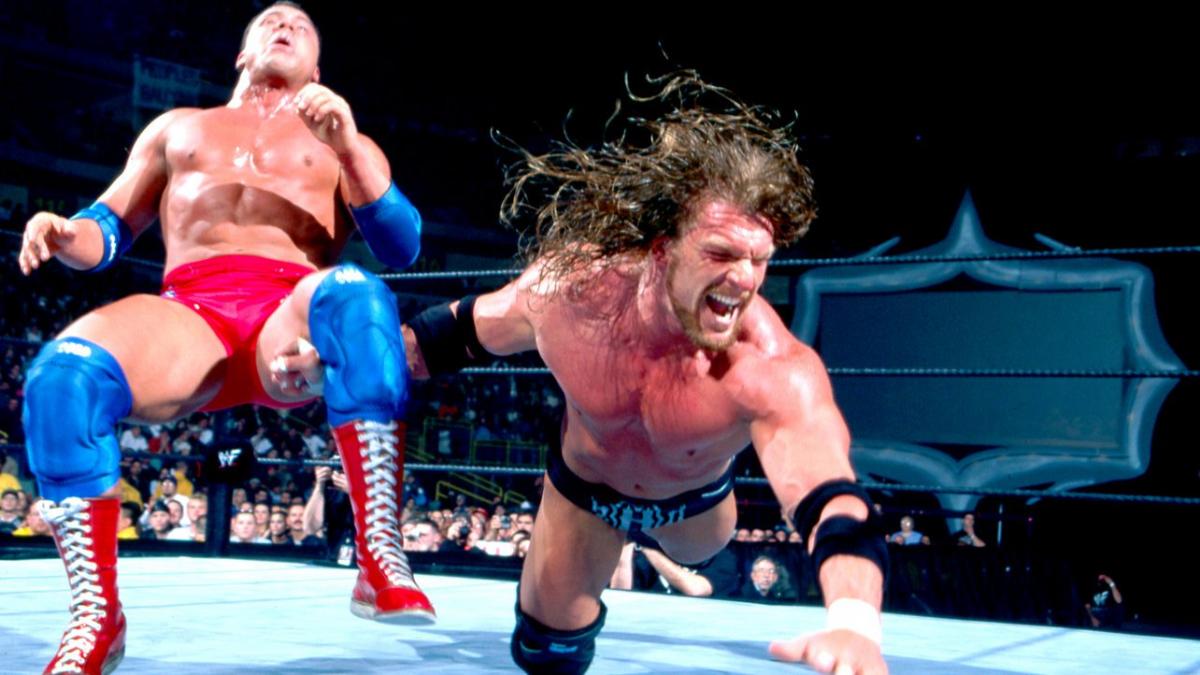
Triple H makes a strategic error at Unforgiven. A love triangle plot arises between himself, “onscreen” partner Stephanie McMahon, and Kurt Angle. It’s a well-plotted and unashamed will they/won’t they soap opera that delights the audience.
It does not delight a defensive Triple H, who, it is alleged, uses his increased creative influence to abandon the programme. The gossip is that Triple H doesn’t believe that the fans “buy” the idea of slithery dork Angle winning Steph’s affection when she has him at home. The twist might solidify him as a top babyface, but the timing isn’t right. He’s clever. Austin has just returned, Rock is still a megastar.
This is the origin story of a self-conscious Triple H getting in his own way despite, ironically, what is best for business.
It won’t be the last time.
Around this time, despite the well-received creative of Chris Kreski and her lack of experience, Stephanie is installed as head booker. Triple H is enabled to look after himself, and after putting Angle in his place, Triple H’s next play is to beat Austin and align with him as a commercially disastrous heel unit - thus weakening WWE’s biggest money-spinner in the eyes of the public.
Stephanie’s role won’t last - she will later experience vastly more success in branding - but Triple H’s influence will.