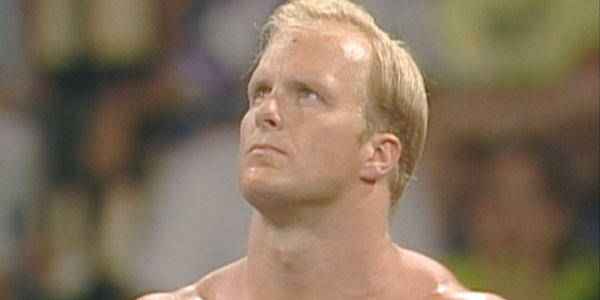
Eric Bischoff did a lot for pro wrestling. He's a polarizing figure. Some fans really like him. Others don't like him at all. The same can be said about most people in the business. Since he's had a 20+ year career in wrestling that saw him work for WWE, WCW, TNA and AWA he's definitely made an impact on how fans view wrestling today. While Bischoff has rubbed people the wrong way with his attitude regarding some things, it's also how you need to be in professional wrestling. It's not an easy business to be successful in. If it was, there would be more than one major American wrestling company that has lasted longer than 20 years. As big as WCW was at its peak, the name WCW really only lasted about 10 years. If you look at TNA, they're in year 12 right now yet they're still having house shows where they have only 400 people in attendance. Are they even profitable? Unlikely. There's no serious competition to WWE anymore, but when Bischoff was running WCW there definitely was. They even surpassed WWE for a couple of years. It's hard to be successful in wrestling, but a guy like Bischoff proved that with hard work you can go from an interviewer with the AWA to the announcer of WCW to the role of Executive Vice President of the company. From there he moved on to WWE where he was arguably the best on screen GM in WWE history and then onto TNA where he was an executive as well. Bischoff helped to innovate a lot of things in the wrestling business, so here's a look at some of those things and why they mattered so much.
6. Releasing Steve Austin From WCW
This may seem like a bit of a reach, but think about it. If Eric Bischoff didn't release Steve Austin from his WCW contract in early 1995 when Austin had a triceps injury, who knows where Austin would be today and where WWE would be today. Nobody made more of an impact during the Monday Night Wars than Steve Austin. Vince McMahon has said many times that Austin is the biggest superstar in the history of WWE largely because of how big of a star he was when WWE needed it the most. The story goes that Bischoff didn't see Austin as a star. For whatever reason, they never believed in him to be a top guy in the business. Was Bischoff wrong about that? Oh hell yeah. As for Austin, it's fair to say that his WCW release lit a fire under his ass. It made him improve in every aspect of his career. The promos that he was doing in ECW in 1995 after his WCW release were explosive in the sense that he wasn't afraid to say anything or mock anybody whether it was Bischoff or Hulk Hogan. When he was signed by WWE he was the Ringmaster, but at King of the Ring 1996 he delivered the infamous "Austin 3:16" promo and then he became the biggest name in wrestling for several years after that. Bischoff did not intentionally set Austin up for stardom in WWE, but because of his release it certainly opened the floodgates for the Austin 3:16 phenomenon. Incidentally, firing Austin would change wrestling forever.
5. The WCW Cruiserweight Division
http://www.youtube.com/watch?v=GUHF2OMu1o8 Eric Bischoff wasn't the first wrestling executive to really feature cruiserweights on his show, but he's certainly the one that gets the most credit. While cruiserweight names like Rey Mysterio, Eddie Guerrero and Dean Malenko were most known from their exposure on WCW TV, they were first known for their work in Paul Heyman's ECW. The problem for ECW was, WCW was a much bigger company and they opened up the check book, WCW was able to acquire all of those top cruiserweights as well as many others. Here's a listing of just some of the famous names that held WCW's cruiserweight from 1996 when the division was pushed the hardest: Dean Malenko, Rey Mysterio Jr., Ultimo Dragon, Syxx (X-Pac), Chris Jericho, Eddie Guerrero and Billy Kidman among others. When WCW was at its absolute best from the summer of 1996 through 1998, cruiserweights had a prominent role on all their televisions. From Eddie Guerrero leading the Latino World Order stable of cruisers to Rey Mysterio losing his mask, cruiserweights were featured prominently throughout WCW's history. A lot of the credit for the growth of cruiserweight wrestling in American wrestling should go to Bischoff. He gave those guys a platform to shine and to give the viewers at home something else to watch instead of the plodding 6'5" guys that throw a bunch of clotheslines. Watching fast paced, high flying action led to a lot of fans turning on WCW television, sticking with it and opening the door for others to be signed too. Bischoff should be very proud of that.
4. The Push Of Bill Goldberg
http://www.youtube.com/watch?v=lTJsD1NIpxg It's unlikely that Bischoff was the only person to think of this angle, but seeing as how he was in charge of WCW in 1997, he deserves a lot of the credit. The rise of Bill Goldberg is one of the best things that WCW ever did. It was so important because WCW kept trotting out the same familiar faces in Hogan, Savage, Nash, Hall, Sting, Flair and guys like that, so fans were clamoring for something new. Goldberg's undefeated streak took on a life of its own. It's amazing that WCW could book something so well considering all of the other bad stuff they were booking. The Goldberg streak took on a life of its own as he racked up a record of 173 wins before his first loss at Starrcade 1998. Of course the 173 win number is bogus, but that's pro wrestling. Even though Bischoff deserves a lot of credit for the rise of Goldberg, Bischoff also made a stupid mistake by giving away Goldberg vs. Hogan on a live edition of Nitro instead of putting it on pay-per-view. They could have made a lot of money off of that match. It was the last truly big match that WCW had and they put it on TV in July of 1998 just to pop a big rating. Part of WCW's demise has to do with Goldberg's loss to Kevin Nash at Starrcade 1998 (it was the wrong time against the wrong guy), but Bischoff and WCW deserve credit for the way they built up Goldberg from a nobody into a top guy. Obviously Goldberg deserves praise as well, but it's also due an executive like Bischoff hand picking him as the guy they could build around. They were right.
3. The Heel Authority Figure
http://www.youtube.com/watch?v=59Nbmm0CFms I think it's fair to say that Vince McMahon is the greatest heel authority figure in the history of pro wrestling. The amount of money he made feuding against Steve Austin, The Rock, Undertaker, Shawn Michaels and so many others shows that he was very successful at it. However, Eric Bischoff is the wrestling executive that did it first on the national stage. When the NWO angle started, every wrestling fan was tuned in to see what would happen next. People were joining the stable all the time while others were turning it down. Bischoff played the role of WCW announcer that was revealed as the President of the company and then he joined the group too. Even though Kevin Nash gave him a Powerbomb of a stage, he still joined the NWO as a guy that was in a position of power. By the time Bischoff joined the group in November 1996, the group was already very strong after four months of terrorizing everybody there. All it took was a simple hug from Hogan to Bischoff to piss everybody off even more. Hogan told the fans that Bischoff was the foundation of WCW, but now he was in the NWO. Fans hated Bischoff in the NWO because they knew he ran the company and his presence meant that nobody could really stop the crowd. It wasn't until a year later when Sting came back to "save" the company from the NWO. Bischoff thrived in his role as a top heel in the NWO. It was perfect for him. Years later, after the NWO died and WWE bought WCW, Vince McMahon brought in Eric Bischoff as the heel GM of Raw in the summer of 2002. He stayed in that role for three years. Bischoff's one of the best authoritative heels in the history of wrestling. He was also one of the first ones to do it.
2. The New World Order Storyline
http://www.youtube.com/watch?v=ZWv3tlgh6ek The formation of the New World Order in WCW in 1996 was the best storyline that WCW ever did. I don't think there's even a question about that. It's the storyline that really propelled WCW to that next level that put them in position to move ahead of WWE for a couple of years. Scott Hall and Kevin Nash came over in the spring of 1996. Then at the Bash at the Beach event in July 1996, a third man joined the group: Hulk Hogan. A heel Hulk Hogan wasn't something wrestling fans were used to seeing since he became the biggest face in wrestling in the early 1980s so when Hogan joined the group it really gave WCW a lot of momentum. Those NWO shirts were everywhere. I had one. If you were watching wrestling at that time you probably had one too. They were also a cool group with those videos that were "paid for by the NWO" and shot in black & white, which were the colors of the original NWO. The idea was this group was there to take over WCW. Once Bischoff joined the group, it gave them office power to go along with the in-ring talent and it wasn't until Sting beat Hogan in December 1997 at Starrcade until the NWO started to slow down. Even that angle, which was an easy one to tell, should have been booked better. Like a lot of things in WCW, they really didn't know how to end the story. The NWO turned into multiple factions with the NWO Black & White going up against the NWO Black & Red with what felt like half the roster being in one of the groups. The whole point of the group was that they were going to take over WCW, not incorporate so many stars from it. With all of that said, Bischoff didn't completely come up with the idea on his own. He thought of it after something similar was done by New Japan Pro Wrestling. Some fans may discredit him for "Stealing" an idea, but is anything in wrestling ever that original idea? I'd like to think Bischoff perfected the angle. Look at all the money they made from it. They obviously did it right.
1. The Creation Of WCW Monday Nitro
http://www.youtube.com/watch?v=TfObFdpnv3Q When talking about WCW Monday Nitro, it's important to remember how ballsy it was for WCW to try to compete with WWE by going with Monday night show. WWE's Monday Night Raw started in 1993 and WCW felt like the only way to compete with them was to go head to head with Nitro, which began on September 4, 1995. The appeal of Nitro, which aired Monday nights on TNT, was that it was live every week. One of the things Bischoff did as WCW President was to give away the results of Raw when the show was taped. It was an unheard of move to acknowledge the competitor and to also give away results on your show. The idea was that if fans knew what was going to happen on Raw then they would be more inclined to stay on Nitro. It worked while Nitro was a hot show and Raw was good, but once Raw became better it backfired like when Mick Foley won the WWE Title in January of 1999. As mentioned previously, once the NWO angle hit and Nitro gained steam it crushed WWE in the ratings for about two years once Hall & Nash showed up in the spring of 1996. They had the live show every week and the product that the fans wanted to see. Remember also that Raw didn't go live every single week (with some exceptions) until WWE started Smackdown in 1999. Nitro was almost always live. That gave them an advantage. Bischoff was the guy that really pushed for it because he knew that without the live show every week it wouldn't have been different. Nitro being live made it stand out. That was the appeal to a lot of people. Where did it all go wrong? Nitro went from a two hour show to three hours. That was just too much. At the same time, they were doing two hours of Thunder every week too. It was just too much WCW. They didn't know how to limit themselves. A lot of those same things can be said about WWE today considering how many hours of TV they have, but the difference is WWE is without a true competitor. When WCW made the mistakes, it hurt them because fans would watch WWE. If WWE makes a mistake it doesn't hurt them due to the lack of competition. Bischoff pushing for Nitro as a live show up against Raw changed the wrestling business. It gave WWE some serious competition, it showed that somebody could beat them (for about two years anyway) and without his influence it's hard to know if there would have even been the "Monday Night War" that fans have come to know over the years. Eric Bischoff's greatest innovation on the wrestling business was definitely the creation of Nitro. It changed the business for the better. No doubt about it.
John wrote at WhatCulture from December 2013 to December 2015. It was fun, but it's over for now. Follow him on Twitter @johnreport. You can also send an email to mrjohncanton@gmail.com with any questions or comments as well.