10 Out Of Character Moments That Annoyed Comic Fans

Wildly out of character writing which drove their fandoms mad with rage.

Pinning down the exact personality traits of a superhero can be a difficult thing at the best of times. Many undergo massive changes in the years since their creation, countless authors have put their own unique spin on the characters involved and then there's all the retcons to keep track of. Sometimes ignoring some of this can work for the better, freeing up an author to try something entirely new or even to correct old mistakes comics had been stuck with for years. Yet for all the good moments where this works in a comic's favour, there are a hundred where this lack of respect or knowledge has utterly torpedoed a character. These failings can be often narrowed down to specific moments or fights. The plot twists which stand out as so wildly out of character they cripple decades of character development, or even demolish the most basic concepts behind a hero or villain. The last few years alone have been a relentless bombardment of contradictory decisions, poor characterisation and even editorial demands by people with no understanding of the characters. Whether it€™s Cyclops betraying everything he stood for, the Punisher suddenly turning into an avenging agent of Heaven or Spider-Man performing deals with the devil; there are the ones so utterly stupid that lifelong readers start to question why they ever supported the comic in the first place. Here's just a few examples of wildly out of character writing which drove their fandoms mad with rage.

10. Hal Jordan - Corps Destroyer
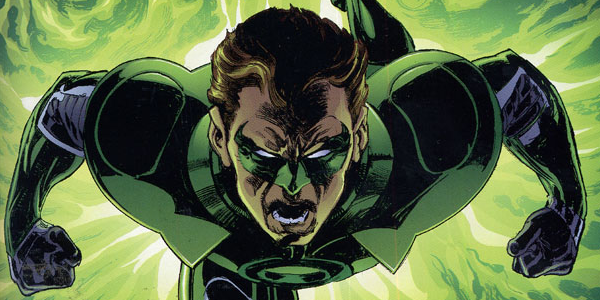
Now more famous for the lengths Geoff Johns had to go to fix this mistake, Emerald Twilight saw the sudden jump from Green Lantern being a hero to full blown villain. Ejecting the original plan for Emerald Twilight to feature the Green Lantern Corps being hijacked by supervillains and Hal forced to go on the run to oppose them, instead fans saw writers flip his switch from good to evil. After walking through the ruins of Coast City and using his powers to remember those he lost, Hal is rebuked by the Guardians for using his ring for personal reasons and goes on a killing spree. No build up, no hints, he just suddenly flips and starts killing Green Lanterns on his way to Oa, eventually draining the power battery for the entire Corps and declaring himself Parallax. Along with snapping the neck of Sinestro, the comic had him personally killing old friends such as Kilowog as they tried to talk him down. By this point any excuses of being made with grief were long gone and Jordan had completely devolved into your common or garden supervillain, prior characterisation and motivations be damned. The story was used as an excuse to introduce younger, hipper Green Lantern Kyle Rayner and Parallax continued to go ever more insane. As if beating the snot out of his friends and leaving them for dead was not enough, he would later go on to serve as a major villain in Zero Hour before seemingly being killed off permanently. Apparently being a staple of the universe and founding hero of the Justice League meant nothing in comparison to getting another big villain.

9. Magneto - Raving Drug Addict

While Grant Morrison's run on the X-Men is near universally praised, there is little to deny that a few specific characters suffered under his penmanship. Chief among these was archenemy and occasional ally Magneto. In an attempt to completely bury the interpretation he believed was wrong, Morrison turned Magneto into the "mad old terrorist t*at" he believed he had always been. As a result, rather than a villain determined to see the survival of his species no matter the cost, suddenly Magneto was a drug crazed loony with no ambitions beyond murdering as many people as he could. Kill-crazy beyond belief, Morrison's writing writing utterly stripped away any reasoning or understandable motivations behind the character. Before being seemingly permanently killed by Wolverine, just to try and cement how evil he truly was (and due to editorial mandate) the villain brutally murdered Jean Grey in a surprise attack. Unsurprisingly, the moment Morrison left the comic Marvel rapidly tried to repair the damage in a convoluted arc of events surrounding his Xorn disguise. While having no place today, the ironic thing was that Morrison's version of the character did once exist comics. Before his turn into begin a more complex character during the 1970s, the original Magneto was a more traditional dictatorial supervillain. Lacking his sympathetic background and with only mutant supremacy in mind, he behaved as a full-blown anti-human terrorist and showed greater extremism than his later incarnations. So the behavior wasn't only out of character, but it was several decades out of date and ignored his development under every single other author to write about the Magneto.

8. Mary Marvel - Servant Of Darkseid

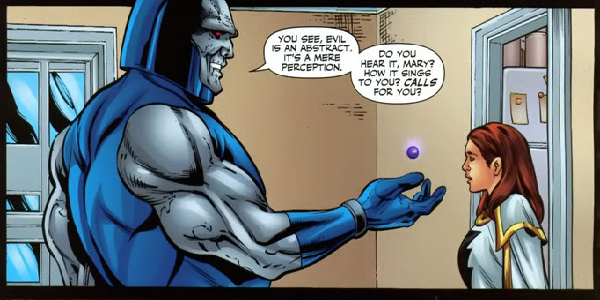
When it comes to determined efforts to turn characters grimmer, darker and less happy, the most common target in DC Comics' seems to be the Marvel family. Whether it's the New 52 reboot trying to turn Captain Marvel into an unsympathetic jerk bereft of all idealism, or the mass depowerment and sidelining of all characters, they always seem to be first in line for horribly out of character behaviour. Easily one of the best known examples of such character assassination took place in Countdown to Final Crisis. Already infamous as a poorly conceived waste of time, money and talent, the final issues of the comic managed to completely blow one of the few story arcs it had working in its favour. After waking up from a coma powerless, Mary took Black Adam's own abilities for herself which began to turn her evil. This is in of itself something contradictory to both characters, but one plot twist of stupidity at a time. After eventually managing to overcome her power's baleful influence and the temptations of Eclipso to ally with her, Mary rejoined the side of good and was rewarded with her original powers restored by the Greek Pantheon. A handful of issues later, Mary is then approached by Darkseid with the offer of turning her evil again. In barely a few panels, with little to no consideration, she accepts and becomes his servant, spending the last few moments of the comic whaling on her friends and allies. It took one page to not only completely ruin a long standing character, but utterly destroy one of the few plotlines Countdown had seen to completion.

7. Emma Frost - Psychic Predator

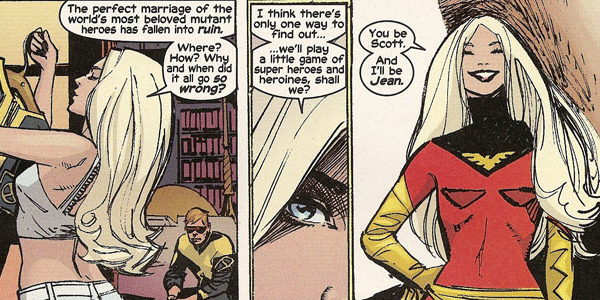
Beyond Magneto, the X character who suffered the most at the hands of Grant Morrison was Emma Frost. Originally presented as a manipulative villain thanks to her ambition and callousness, Frost had undergone considerable changes over the years following the death of her students. Turning into much more of an atoning figure, she was given control of a trainee superhero group known as Generation X along with Banshee. When she appeared again while Morrison was writing E Is For Extinction, this development and characterisation was gone. In its place was a rich snobbish attitude which had long since been toned down along with a new profession as a opportunistic sex therapist. Her first client? Scot Summers. With Scott and Jean undergoing a marital breakdown thanks to Apocalypse hijacking Cyclops' body, Frost promptly took advantage of this by convincing him that the best way to deal with these problems was by sleeping with her. Just to make this absolutely clear: She targeted someone who had undergone severe mental trauma and was having difficulties with his wife, then used it to take advantage of him for sexual activities. All the while she was using her telepathy to assist in accomplishing this goal. This was supposedly excused with the claim that she actually loved him, and her prior characterisation hasn't been mentioned since Morrison's run. As if the knife needed to be twisted further, she's now happily taking the now dead Jean Grey's position at the mutant school. You really have to wonder just what some writers are thinking when they plan story developments like this.

6. Scarlet Witch - Madwoman

Infamously tone deaf when it comes to certain personalities and willing to ignore established history, Brian Michael Bendis is infamous for certain problems with characters, few more so than the Scarlet Witch. While more infamous for almost rendering the entire mutant race extinct, Avengers Disassembled was the first sign of the character devolving into wrecking ball to destroy chunks of the established universe. Suddenly reminded of her long lost children, Scarlet Witch suddenly goes insane and starts killing everyone. With her powers creating everything from a fleet of alien warships to turning the corpses of dead friends into suicide bombers, the ranks of the Avengers are devastated until Magneto comes and takes her away. The big problem here? This was all based upon things she had long since confronted and dealt with. Not only does the story hammer the reader over the head with the fact she was a villain initially (despite having jumped ship the first chance she was given and never looked back) but then there's the matter of her children. Prior to this story, Wanda had remembered her children along with the Vision. They had never forgotten them, and years before Disassembled was written they directly dealt with the pain before eventually moving on. The story not only spits on that very idea, but also the concept that Wanda might have been a strong enough person to eventually recover from that event.

5. Doctor Doom - Satanic Sacrificer And Skin Wearer
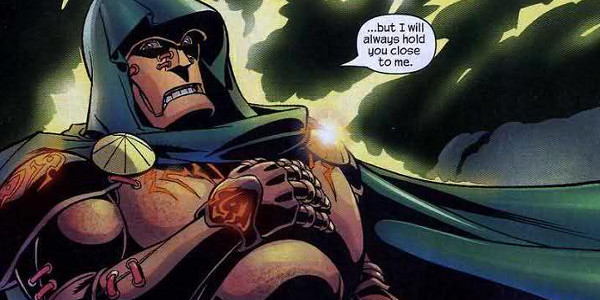
Of all Marvel's big name villains, Doctor Doom is one of the best examples of a foe with strict set of standards. Appealing more towards the Lawful Evil side of the villainy spectrum, Doom has been shown to be a egotistical raging genius, yet has certain laws and a code of honour he will stand by at all times. Apparently tired of this portrayal, Mark Waid promptly took it upon himself to destroy any semblance of Doom's occasional nobility. Deciding that he'd beat Reed Richards by enhancing something he never fully understood, powers of sorcery, Doom traveled to meet with his former love Valeria. A longtime childhood friend and former co-ruler of Latvaria at his side, the two had a long established relationship and she was one of a handful of people Doom truly cared about. Under Waid's writing, Doom trick her into taking a magical amulet by claiming that he gave her "my most solemn word of honor, Valeria: Your love will make me a changed man." The moment she accepted this item her soul was consumed by the Haazareth Three, demons he had forged a pact with for limitless power. As if this wasn't enough, Doom promptly chose to carve a new suit of armour out of her flesh. This was soon followed by sacrificing of children to the Haazareth Three and torturing of heroes, with Doom considering even doing the same to his goddaughter purely drive Richards insane with grief. This wasn't so much crossing a line as it was blasting through it with a rocket launcher.

4. Tony Stark - The Iron Fuhrer

Even among the countless poorly written and heavily contrived event comics Marvel churns out, Civil War has a special place of hatred in many fans' hearts. Between bad writing, and triggering the tedious trend of heroes fighting heroes to the ludicrous point seen today, it's not hard to see why. Even among all this however, the one who easily suffered the most was Iron Man. Selected as the figure who would lead the pro-Superhuman Registration Act against Captain America's forces opposing the decree, Tony Stark was intended to be a major figurehead within the story. Unfortunately, figurehead translated as political straw man in the minds of writers favouring Cap's side. Rather than any even handed portrayal of all involved, writers instead began to turn Stark into a fascist dictator using tactics even his villains had not stooped to. Along with throwing opposing heroes into prison without trial (said prison being a dimension which slowly drains the life-force of its residents), he advocated the use of mind controlled supervillains to help bolster his side's strength and even robot copies of, then dead, lifelong ally Thor. To cap this all off, Stark planned to trigger a war with the technologically advanced Atlantis, use conflict this to forcibly unite the pro and anti-registration sides, and have Stark Industries make a tidy was profit as thousands were killed in the crossfire. While all of this is negative for Stark himself, what makes him truly warrant mentioning is Stark's hatred of government oversight. Of all the heroes present, Iron Man would be the last to side with the government and previously repeatedly fought efforts to control the Avengers. Having witnessed firsthand the problems which come with political meddling, Stark was previously sacrificed personal reputation, influence, vast amounts of his fortune and even dignity to oppose previous attempts to control heroes like this. If he ever did sacrifice his morals such as here, he would turn into an anti-governmental anarchist. It's no small wonder it took Robert Downy Jr. and a total personality reset to even begin fixing the damage Civil War caused him.

3. Spider-Man - Demonic Deal-Doer

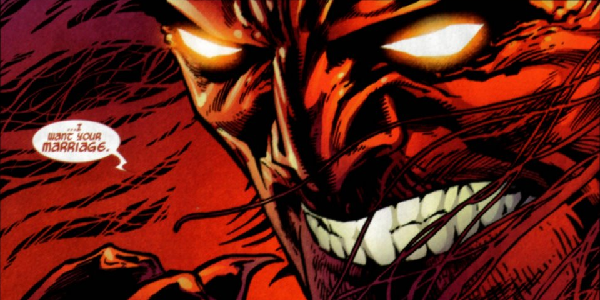
Now we reach the moment which many fans consider to be the death of Spider-Man. The one story which not only did away with decades of Peter Parker's history, rendering countless stories and character developing events meaningless, but spat upon the very lesson the character was built upon. Whilst attempting to flee with his loved ones from the consequences of revealing his identity to the world, Peter witnesses Aunt May being shot by an assassin hired by the Kingpin. After threatening Iron Man to help keep her alive, and finding that everyone from Doctor Strange to Reed Richards cannot fix a simple bullet wound, Peter is eventually approached by Mephisto. In exchange for Peter and Mary Jane's marriage and their happiness, the demon would heal Aunt May and alter history; ensuring her survival but also that their relationship would never develop. Both of them promptly accept this and Peter's life is effectively reduced back to square one. For a character whose driving lesson is that "with great power comes great responsibility" the story only features Peter attempting to dodge responsibility. It features him failing to deal with the repercussions of his unmasking and doing anything besides truly turn himself in to fix the damage, and characters in the comic even call him out on this. This contrived and plot hole ridden sequence of events was so poorly received that writer Joe Michael Straczynski considered having his name removed from the final issues.In fact its only staunch defender seems to be Joe Quesada himself, the chief editor who was behind its creation, who promptly paired up Spider-Man with a character based upon his daughter. Yet even after this, somehow both Marvel and DC are still confused as to why fans cringe every time the words "editorial mandate" are mentioned.

2. The Entire DC Universe - Powerless Incompetents
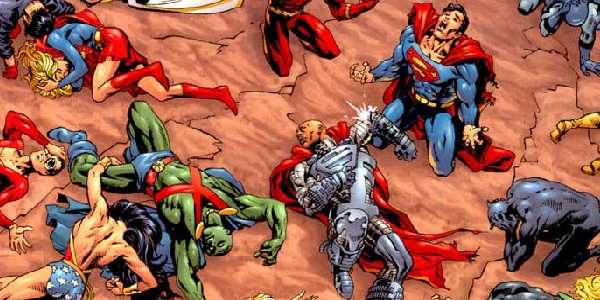
While an Elseworlds story, this one deserves a special place on this list due to the sheer incompetence of the tale. Written to capitalise on the booming success of the JLA series, Act of God was written to explore the idea of every metahuman on Earth suddenly being de-powered, leaving only technological heroes with their abilities. An interesting idea in theory, yet it fell apart within the first issue. A massive fan of Batman and little else, writer Doug Moench turned the story into little more than a glorification of the dark knight. Getting many basic facts about certain heroes wrong (such as Green Lantern's ring being affected despite being a technological weapon), the story promptly turned the entire Justice League into incompetents whining about their lost power. Many were reduced to little more than straw men to help push Moench's message. Martian Manhunter somehow argued this depowering was a good thing, Wonder Woman and Superman both gave up their morals, and many high tech heroes above Batman suddenly became powerless to make him more important. While there was no single scene which truly cemented this out of character behaviour for all involved, each hero had his or her own individual moment. Wonder Woman attempted to commit suicide (while pregnant no less) after being unable cope without her powers, Kyle Rayner went insane in his determined efforts to regain his abilities, and Lois broke up with Clarke after claiming she had only ever loved Superman. The entire thing was one massive love letter to Batman at the cost of everyone else, culminating with the majority of the founding Justice League running to the caped crusader and begging him to train them. Suffice to say, the story is regarded poorly in the eyes of many DC fans.

1. Professor Xavier - Manipulative Sociopath

It's one thing to write a hero in an entirely out of character manner. It's something else entirely to re-write their entire history in what can only be described as an attempt to systematically annihilate any goodwill from fans. For Xavier, this massive act of character assassination came in the form of X-Men: Deadly Genesis, which proceeded to do massive parts of his life and the very way in which he treated his students. Retconning one of their classic adventures where the original team was trapped on the living island of Krakoa, Ed Brubaker re-wrote the entire affair with Xavier suddenly displaying an almost sadistically ruthless streak. Taking another group of young mutants being trained by his former lover Moira MacTaggert, he proceeded to bombard their minds with a crash course in fighting, brainwashing them into thinking they were his students. Hurling them at the island Xavier proceeded to get the majority of the group slaughtered in his failed rescue mission, just barely recovering Cyclops. He then promptly erased all knowledge of them from the distraught minds of Cyke and Moira alike, the former having just learnt that one of those apparently killed was his long lost brother. As a result of this, Xavier's previous characterisation comes of as little more than a poor facade, a performance put on by someone to disguise their true nature and hide their true persona to better take control of the various X teams. Thanks to Deadly Genesis, everything from God Loves, Man Kills to the Onslaughter Saga reads as if it were a lie, a fabrication about a character readers never knew truth behind or saw his true nature. Things would only become worse in later arcs, following this same line of thought in an attempt to emulate the Ultimate Universe's interpretation that Xavier was no better than Magneto. In the face of this, Xavier's death in Avengers Vs. X-Men can be seen as something of a mercy killing. Did we fail to miss a potential great which failed to meet audience expectations? Please leave your own suggestions and thoughts in the comments below.

 
Posted On: 
Contributor
Contributor

A gamer who has played everything from Daikatana to Dwarf Fortress. An obsessive film fanatic valuing everything from The Third Man to Flash Gordon. An addict to tabletop titles, comics and the classics of science fiction, whatever media they are a part of.