10 Comic Villains With The Best Motivations
What do you do when your mortal enemy is also your only hope?

Out of any medium of the past century, it's probably fair to say that comic books have produced the most memorable and indeed compelling villains in popular culture. They're colourful, creative, and at times even disturbing, but there's one thing the best all have in common: a compelling motivation.
From the pages of Marvel and DC, superheroes have had to contend with some truly despicable characters. Some boast a fairly simple set of guiding principles, but there are also those with a truly nuanced portrayal. It's also important to remember that even those villains who are motivated by an easily quantifiable selection of motivations can be compelling in their own right - just ask Batman if you're not convinced.
Some men really do just want to watch the world burn, but then there are those who have a clear and obvious set of principles, ones that are sometimes very sympathetic.
So, whether they were made in the fantastical vestiges of the DC Universe, or made to reflect the world outside our window with Marvel, here are the villains with motivations so compelling, you just can't take your eyes off the page.
10. The Joker

The Joker is a villain of many faces, psyches and - in recent DC continuity - living forms. It makes discerning one clear motivation almost impossible, but whichever one you opt for, you're guaranteed to get a compelling clown.
In the comics, the Clown Prince of Crime has been a jolly prankster, an aimless agent of chaos, or even a man transfixed by his arch-nemesis, the Dark Knight. No supervillain has been remade has many times as he, and the explanation for that was, until recently, that the character was "super-sane", a phrase coined by Grant Morrison during his long-running stint on Batman.
As such, the villain is able to remodel his personality on the fly. Factor that in with an origin story that changes every other second, and you have the very embodiment of an unknown quantity, a figure so unpredictable that not even the World's Greatest Detective can pre-empt his next move.
It's difficult to nail down just one version of the Clown that works best, but they don't come more definitive than the one featured in Denny O'Neil and Neal Adam's Five Way Revenge, which brought the character back to his roots with an iconic story that went on to typify the Joker's most recognisable characteristics.
9. Ra's Al Ghul

On the surface, Ra's al Ghul may just look like another typical criminal mastermind. He's in charge of his own League of Assassins, has lived for centuries thanks to the restorative effects of the Lazarus Pit, and has a feud with Batman. Pretty standard stuff, as far as supervillains go.
However, this isn't just any ordinary feud. Ra's is motivated by several factors: first and foremost his desire to save the world from humanity itself. He is aided in this quest by the League of Assassins (who get up to their own mischief in their own time), and his daughter Talia. Batman is only brought to his attention as he looks for an heir to carry on his struggle, and so he devises a series of tests to determine whether or not the Dark Knight is truly worthy enough to do so.
Eventually, Ra's comes to regard his rival as "detective", and deduces his secret identity. With this knowledge in hand, Ra's asks that Batman assume control over the League so that he can die peacefully, safe in the knowledge that his centuries spent on Earth won't be all for nought. He also requests that he marry Talia, and though Bruce does have feelings for her, he finds the League of Assassins to be too disagreeable; he simply will not violate his no-killing rule.
Thus sparks a decades-long rivalry between the pair, typified by resurrections, a secret birth and constant attempts from Ra's and Talia to get Bruce to see the light. Something more important, perhaps, dominates all of their proceedings however: a profound, mutual respect for the other. Simply iconic.
8. The Kingpin
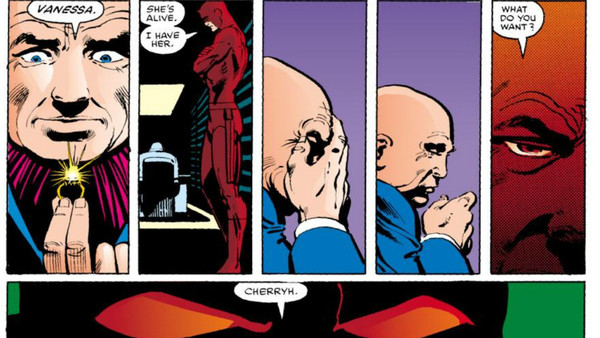
In many ways, the Kingpin, aka Wilson Fisk, is a typical American mobster. First introduced in The Amazing Spider-Man #50 by the legendary Stan Lee and the equally brilliant John Romita Sr, the Kingpin started out life as a scheming baddie who was constantly frustrated by Spider-Man. However, come the 1980s, rising star Frank Miller would forever alter how people perceived Wilson Fisk, by making him the arch enemy of the Man Without Fear, Daredevil.
Miller's run needs no introduction, but it is worth emphasising just how much he changed the character of the Kingpin during his stint on the book. Instead of being a simple schemer who was foiled by everyone's Friendly Neighbourhood Spider-Man, he became something altogether more sinister, resembling the real-life mafiosos of American history, and exemplifying corruption in the extreme.
Fisk was plenty of things, but by recontextualising the character in Daredevil's world - one that depicted a vastly different version of New York to the one seen in the House of Ideas' other comics - Miller conceived of one of Marvel's most effective supervillains. His motivation was greed, anger and love all rolled into one, and his status among New York's elite ensured he was pretty much untouchable.
Ultimately, Kingpin was made by the very city he looked to exploit. He was bullied by its children, adopted by its criminal underworld, and boasted a tenacity that saw him enact unspeakable atrocities against its citizens, even as he looked to leave the life behind with his wife, Vanessa.
7. Kraven The Hunter

Even though Wilson Fisk would later leave the wall-crawler behind in order to torment the borough of Hell's Kitchen, one supervillain who retained synonymy with Spider-Man was Sergei Kravinoff, Kraven the Hunter.
Kraven tried but constantly failed to hunt Peter Parker during Stan Lee and Steve Ditko's original run on The Amazing Spider-Man, but eventually found success in one of the web-slinger's darkest stories, dubbed Kraven's Last Hunt.
The book, written by J. M. DeMatteis and illustrated by Mike Zeck and Bob McLeod, was published during a dark period for Peter. He had recently parted ways with the symbiote, but had opted to retain the black costume as a symbol of his newfound maturity, with the character even set to marry longtime girlfriend Mary Jane Watson.
Such a tone prompted a reappraisal of Kraven's motivations, prompted by DeMatteis stumbling across an entry on the character in the Official Handbook of the Marvel Universe. The character, until then a relatively clichéd supervillain, was imbued with an unrelenting obsession to defeat Spider-Man, to become him and, in essence, prove to himself and his mortal adversary that he was superior in every way.
6. Magneto

To call Magneto a supervillain in the traditional sense would be disingenuous, but given how he's fought against the X-Men on numerous occasions - a group of superheroes - he fits the bill. Besides, aren't the best antagonists the ones that make us reappraise our own beliefs?
To begin with, the X-Men started out life as an allegory for the Civil Rights Movement, with Professor Xavier taking on the role of an MLK-esque figurehead in the struggle for mutant equality, and Magneto that of Malcolm X, a slightly more radical intellectual of the period. The important thing to remember here, however, is that even though Magneto has certainly done evil things before, he did it all for a valuable cause - to safeguard mutants from humanity's vile prejudices.
Over the years, Erik Lensherr's goals have shifted from simply protecting mutants by any means necessary (the issue here is... ?), to waging a campaign of resistance in favour of what he dubs 'homo-superior'. There is nothing remotely evil about either approach, and though he adopted a more radical method in order to safeguard mutants, it's fair to say that Xavier's unwavering dedication to passive resistance hasn't always achieved results.
Magneto has experienced unspeakable horrors throughout his lifetime, even surviving the Holocaust as a child, and it is partly this experience that has informed him over the years. Passive resistance did nothing during the Second World War, and with humanity persecuting the world's mutants, it's fair to say that, even if you disagree with the character's methods, it is very easy to see where he's coming from.
5. Loki

There are few characters in Marvel's library that are as Shakespearean as Loki Laufeyson, and though he was treated somewhat one-dimensionally before Tom Hiddleston burst onto the scene in 2011's Thor, there's no denying his motivations have always been compelling.
Since the beginning, Loki has struggled with the nature of being the God of Mischief, versus the nurture of being raised on Asgard. He is the son of both Laufey, the King of the Frost Giants, and of Odin, his adoptive father. He's being pulled towards one destiny whilst wrestling with his own identity, and for someone who believes he's the rightful heir to Asgard, that's a lot to deal with.
It is this conflicting personality that has more recently seen Loki act as an anti-villain of sorts, operating on both the side of good evil, but no matter how hard he tries he always seems to get pulled towards the wrong side of the divide, whether out of jealousy for Thor, his ties to Laufey, or even his very title.
Yes he holds a soft spot for his mother, and even his brother on occasion, but there's a tragic sense of inevitability surrounding the character, one that's been explored to immense success in Kieron Gillen's Journey into Mystery, as well as Jason Aaron's stint on The Mighty Thor.
4. Lex Luthor
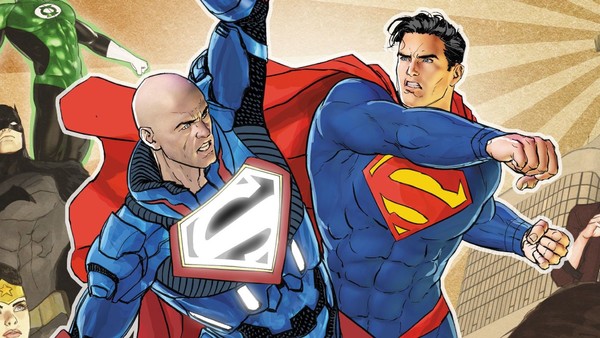
Lex Luthor might be the poster boy for standard super-villainy, but there's a whole lot more to him than just a simple hatred of Superman.
Yes, in a great many ways, Lex Luthor is actually the ultimate comic book supervillain. He's rich, corrupt and resourceful, but he's also highly motivated, intelligent, and possesses the know-how to make his schemes work. The key to that motivation? Superman's presence - more specifically, what the Man of Steel's arrival could imply.
Lex Luthor, for all his skills, smarts and influence, is still a deeply insecure individual. He considers most people to be beneath him, but Superman is better; Kal-El is more powerful and more revered than Lex, and it is this jealousy, as well as Lex's own difficult upbringing, that fuels him to take on Earth's heroes.
Despite this, Luthor is also a pragmatist. He knows when to sit down and cooperate, and will do anything to safeguard his own interests. It's this determination that enables him to go toe-to-toe with the best and worst the DC Universe has to offer, and why he's remained so compelling since his original introduction back in 1940.
3. Black Manta

After years spent on the periphery of the DC Universe, mocked for his fishy scales and telepathy, Aquaman is finally getting the respect he deserves. Sure, DC seem to have done away with the hook hand used in the nineties (for why, I'll never understand), but for all intents and purposes King Arthur Curry is back, and is currently making one heck of an impression at the box office.
By now, most will have also grown accustomed to Black Manta, Aquaman's arch enemy who turns to the ocean in the face of a world that doesn't really understand him. Multiple origins have been optioned, but all begin on land, with the most recent of which having depicted the character as having been held in Arkham Asylum at a young age, diagnosed with autism and mistreated by its staff.
Driven to the ocean by an obsession with Aquaman, as well as a fondness for the cold depths themselves, Manta resolves himself to master the waves and, in one instance, even to build a sanctuary for black people in the sea, having been persecuted and oppressed for centuries. While that stated aim has been debated, Manta himself has long been obsessed with conquering Atlantis, which has sparked a bloody feud with its ruler that has lasted for years.
Whatever you think of Aquaman, there's no denying just how interesting a character Black Manta is, or just how unique his motivations are compared to his contemporaries.
2. Doctor Doom
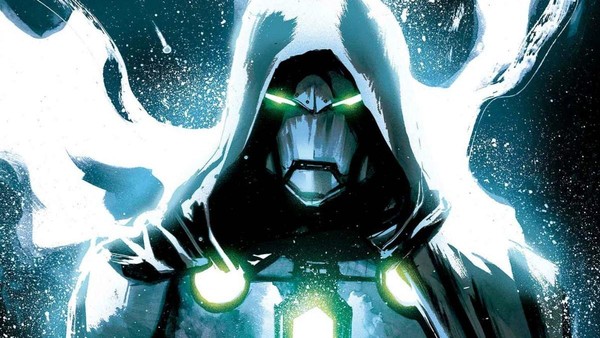
Much like the venerable Lex Luthor and Ra's al Ghul before him, it's easy to label Doctor Doom as being a somewhat generic supervillain. He's a tyrannical dictator who commands a fictional Eastern European nation, commands a mastery over both science and magic and squares off against the Fantastic Four - Marvel's first family - while attempting to conquer the world. It's a winning, if not entirely predictable premise to get behind.
However, the magic of Doom lies in how they all come together and connect to his decision making. Ever-present is Jack Kirby's legendary design, but after he and Stan Lee departed the Fantastic Four the gauntlet was left to other creators, who responded by digging even deeper into Marvel's most iconic antagonist, and what exactly makes him tick.
By far one of the most interesting angles to have been explored in recent decades has been Doom's connection to his mother, and to his Romani heritage. Victor masters the worlds of science and magic in order to protect the Romani group under attack in his native Latveria, and ascends to a level of power that sees him take control of the country.
Unfortunately for Victor, this exact path was spurred on by a series of tragic circumstances. First his mother, a witch by the name of Cynthia Von Doom, is taken by Mephisto, and then his father passes away in the cold Latverian winter. These two tragedies specifically are what spur Doom to villainy, believing himself to be the only one capable of commanding humanity's destiny, and it's partly why the character just keeps on getting better.
1. Amanda Waller

Amanda Waller may not be the greatest supervillain of all time - or even a villain in the traditional sense - but she absolutely does have one of the best motivations going.
The handler of Task Force-X, aka the Suicide Squad, Waller presides over one of the US Government's most secretive black ops units and does so because she believes it's in her country's best interests. All Waller wants to do is safeguard her nation's security, but of course, it's the way she goes about it that proves to be an issue.
Supervillains though they may be, Waller's treatment of DC's Dirty Dozen violates every law in the book and promises the false hope of a pardon in exchange for embarking on near-impossible missions. Not only that, but should they disobey in the field, they get treated to an explosive collar, killing them in an instant.
Never mind the fact she's matched wits with Batman, the fact Waller straddles a moral grey area makes her all the more compelling, whether or not you deem her brand of evil necessary.