10 Greatest Comic Book Tragedies Of All Time
Things were truly never the same again.
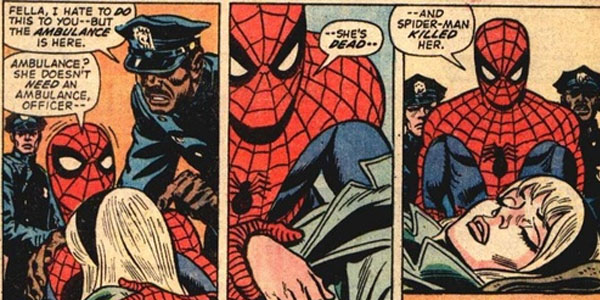
10. Batman & Robin - Issue 23

9. 30 Days Of Night - Issue 3

8. Green Lantern - Issue 0
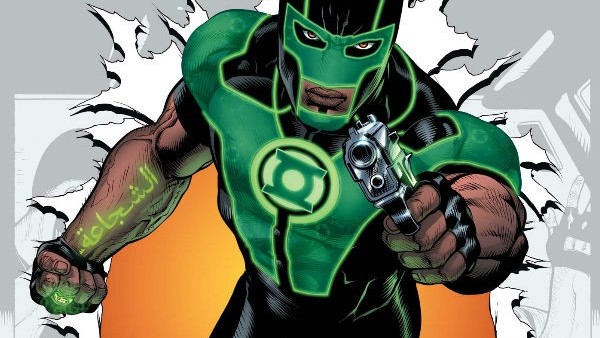
7. Amazing Spider Man - Issue 121
 Did she fall...Or was she pushed? To this day, the ambiguity surrounding the death of Peter Parkers girlfriend Gwen Stacy seems to trouble readers almost as much as it continually troubles Peter himself. Did his web line snap her neck as he tried to save her from that bridge, or had The Green Goblin already disposed of her beforehand? The events of Amazing Spider Man 121 still resonate to this day and have inspired more great storytelling than could be mentioned here (although special mention must go to Jeph Loeb & Tim Sales masterful Spiderman: Blue and a personal favourite, Peter Parker: Spider Man 44 47, by Paul Jenkins & Humberto Ramos).
6. Jungle Action - Issue 14
 In this 1970s series, which starred The Black Panther as he roamed the jungles of Africa fighting enemies with names like Erik Killmonger and Venomm, writer Don McGregor crafted one of the most tragic, yet unerringly mundane, incidents ever to grace a comics page. As The Panther struggles to subdue a rampaging T. Rex (no, really), we are given small glimpses of a tiny, helpless bird trapped in some tar near to where the action is taking place. The bird struggles to free itself, but is unable to do so and fails to be noticed by any other character in the story, including the hero. Eventually, the poor creature slips under the tar and dies, something which happens every day in nature, but is given a special importance by McGregor. Comics are weird; up until 1975, you may have seen superheroes fighting dinosaurs a million times, but youd never seen a poor, trapped little bird become the centre of attention and elicit so much reader sympathy with its final, exhausted breath.
5. Daredevil - Issue 181
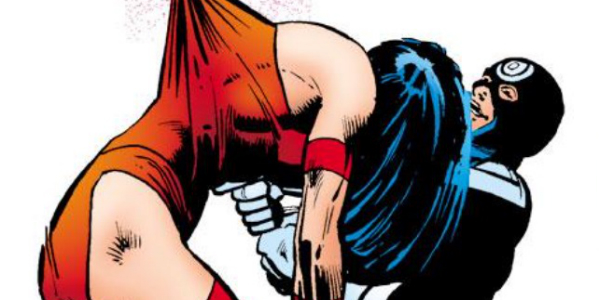
4. Irredeemable - Issue 11
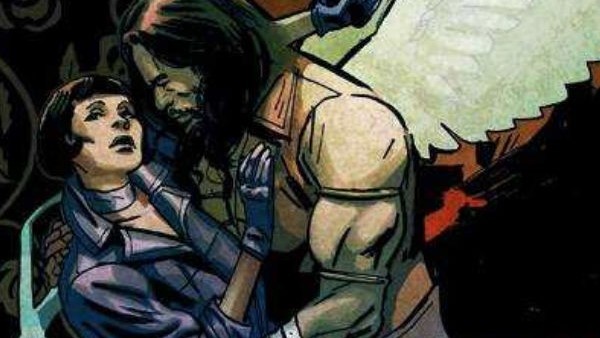
3. Sandman - Issue 17
 The one-off short story Calliope, written by Neil Gaiman and pencilled by Kelley Jones, is easily as disturbing as it is tragic, and its hard to tell which quality it possesses in greater supply. Richard Madoc, a writer that is suffering from severe writers block following a bestselling debut, becomes the keeper of Calliope, formerly muse to the poet Homer. The muse, half starved and bound by dark majicks, is then kept as a slave and repeatedly raped by Madoc, her presence in his house inspiring him to many great ideas over a period of several years. Eventually, Oneiros attempts to persuade Madoc to release his captive muse, but he refuses and so is cursed with an abundance of ideas, so many, in fact, that he ends up losing his mind completely. Finally, once she is freed, the merciful Calliope asks that Madoc be freed from his curse. This allows him to regain his sanity, but leaves him never to have another idea again. The tragedy here is not the fate that befalls Madoc, but the awful lengths the writer would go to in order to be successful, and the shocking abuse that his muse endures as a result.
2. Daredevil - Issue 228
 The second chapter of Frank Miller and David Mazzucchellis masterful Daredevil: Born Again may indeed be the roughest. Matt Murdoch, homeless, penniless and thoroughly depressed, has had his life systematically destroyed by The Kingpin. To make matters worse, it was the love of his life Karen Page, now a drug addicted porn star, that sold his secret identity for a hit, thus causing all the trouble in the first place... Matt then becomes terrified of facing the outside world, especially seeing as his best friend, Foggy Nelson, is now shacked up with his girlfriend Glori. Eventually, Matt sums up the courage to take the fight to Kingpin, but in a stunning reversal of the usual fare, he is roundly beaten and left for dead. ...It gets worse from there.
1. Maus - Volumes 1&2
 The real, lasting tragedy of Maus is that it actually happened. Art Spiegelman, an insanely gifted cartoonist, turned his fathers recollections of The Holocaust into a Pulitzer Prize winning graphic novel, as well as one of the most moving stories, in any format, ever written. Depicting the Jews (including both himself and his father) as mice and the Nazis as cats, Spiegelman uses cartoon imagery to craft a harrowing and thoroughly disturbing tale. The atrocities depicted are somehow just as lasting and unconscionable for having been committed upon cartoon characters - and the effect that this has on the imagination is thoroughly visceral and profoundly upsetting. Having said that, Maus still manages to be uplifting in places and, at times, is even very funny. The Human spirit is indomitable after all and maybe that was the point that Spiegelman was trying to make. Whatever type of comic books you like, or however much you may be hesitant about reading a Holocaust-themed comic, we unswervingly recommend this book as one of the greatest pieces of graphic storytelling ever produced, as well as one of the finest books on the Holocaust that has yet been written.