10 Inexplicable Examples Of Comic Book Retconning

Remember what Jason Todd's death meant for all of comics? Yeah, DC would rather you didn't.

Retroactive Continuity - or retcon for short - is something of an anomaly in the world of fandom regardless of whether they happen in film, television or comic books, as they change the known history of the world within the franchise. Retcons in the comic book industry happen on a fairly frequent basis too, bringing with them changes that can refresh a superhero title while simultaneously making their history too convoluted for even the most dedicated fans to follow. Sometimes retcons can work out well by adding to the characters mythology and open up a vast amount of potential for new stories, such as Geoff Johns€™ work in Green Lantern: Rebirth which created a deeper history of the Green Lantern Corps in a story that spanned nine years. Other retcons don€™t work out nearly as well and create a polarising and often negative reaction amongst the fans; just look at the many changes George Lucas has inputted in the Star Wars saga over the years to get an idea of how fans take to drastic changes within an established history. Though there are many comic book examples, some stand above others for being for being completely devoid of logic, repeated contradictions, or being a little too out there for readers to fully get behind. Performing a retcon seems to be a tricky business as the reaction can go either way, but the following ten stand out as the most confusing or offending ones within the genre thanks to a near unanimously response from the fans.

10. Beyonder's Retooled Origin

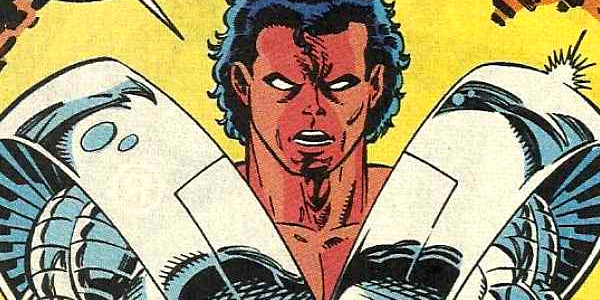
The Beyonder was an omnipotent being whose powers dwarfed anything else in the Marvel universe, being so powerful he transported several of Earth€™s mightiest heroes and villains to a world he created himself. The purpose of this was to watch them fight so he can examine and better understand the nature of good and evil€™s constant fight - a battle everyone has called The Secret War. Beyonder was largely feared by both sides as he could destroy the universe with a single thought, but he suffered a significant power downgrade and changed history thanks to a retcon. Charles Xavier revealed that during the Secret War he detected a strange presence within Beyonder and scanned his mind, discovering he was actually an Inhuman, a race of alien superhumans evolved from primitive homo-sapiens. Not only this, but Beyonder€™s godlike powers were actually because he held mutant genes, making him a hybrid of the mutant and Inhuman species. This revelation significantly took away much of the mystery and allure from The Beyonder, making him a less notable threat now that he was no longer an omnipotent cosmic entity.

9. The Clone Saga

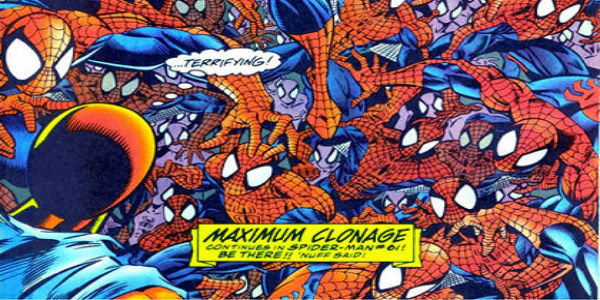
Anyone who knows comics knows the 1990€™s was a dark time for the industry as it was faced with low sales, poor storytelling and crossover after crossover. Batman€™s Knightfall saga and Superman€™s Death and Return stand-out among the 90€™s fiascoes, but its Spider-Man€™s Clone Saga which is the most prime example of the industry€™s stagnation during this decade. The Clone Sage ran throughout the majority of Spider-Man titles for two years with almost no end in sight, but it wasn€™t just the length of this story or the numerous delays which upset fans, but the constant retcons within the story. First it was revealed a clone of Peter Parker had survived an encounter with The Jackal years earlier, then fans learnt Parker himself was the clone and Ben Reilly the original, then Peter quit being Spidey and left New York before revealing Norman Osborn was in fact alive and had orchestrated the whole thing, including faking the lab results to trick Peter into thinking he was the clone in order to break his spirit. Marvel had to force their way out of a corner they put themselves in by opening the floor to all their writers in an effort to end The Clone Saga and restore Peter Parker as the one true Spider-Man, but only after several writers and editors either quit or were fired. This wouldn€™t be the first time Marvel meddled with Spider-Man€™s history either, as later entries will show.

8. The New 52

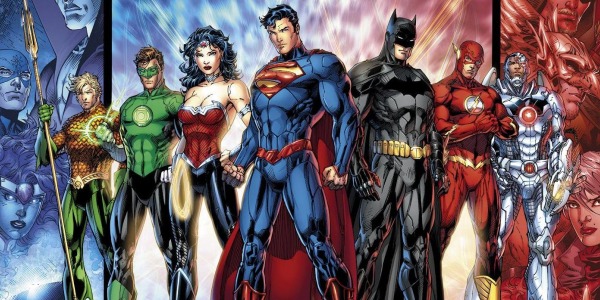
DC€™s decision to largely wipe the slate clean with all of their titles and reboot the history of the DC Universe at the end of Flashpoint caused a huge amount of controversy in the months leading up to the beginning of The New 52. Fans were quite upset many of their favourite stories would no longer be in-continuity and their heroes would be undergoing drastic changes to their characteristics or history or, in some cases, both. The most prominent retcons fans cried foul about was the dissolution of Superman and Lois Lane€™s marriage and fan-favourite characters, namely Stephanie Brown and Wally West, getting swept out of the DC Universe. There€™s also the very confusing aspect that, within The New 52€™s history, superheroes have only existed for a little over five years which means Batman has somehow gone through four different Robin€™s throughout his short career as Batman, nearly all of whom went from being children or pre-teens to full grown adults during that time. Not to say that The New 52 doesn€™t have some silver linings; for one, it did streamline a lot of DC€™s convoluted history which made it much more accessible for new or casual readers; with the exception of Grant Morrison€™s Batman Incorporated or Geoff John€™s Green Lantern, readers didn€™t have to read up on several years worth of stories to understand the characters' backstory. Because of this it reinvigorated DC and its stable of superheroes by attracting a slew of new readers and has largely been quite successful, but nonetheless remains quite controversial.

7. Lex Luthor Did/Did Not Grow Up In Smallville

A popular element of Superman€™s Silver Age incarnation was his time as Superboy when he was still a teenager in Smallville and befriended a young, rich scientist named Lex Luthor. Lex€™s youth in Smallville has been a factor which has repeatedly been contradicted throughout Superman€™s history with writers going back and forth on the idea Lex had grown up in Smallville to never having set foot in the small town his entire life. DC often utilises this backstory whenever they feel like it adds to his and Superman€™s relationship, but it is usually only a matter of time before its removed from canon once again. After the Smallville television series, which featured Michael Rosenbaum as Lex Luthor, became a success, DC decided to put his time in Smallville back into the main continuity. In Mark Waid€™s Superman: Birthright, the Luthor€™s moved to Smallville for a time where Lex became friends with Clark Kent, though he still held dark ambitions even then. This was then once again taken out of continuity, only to be added back during Geoff John€™s run on Superman, where he not only grew up in Smallville, but his sister still lived there. This change didn€™t last long as Lex once again never grew up in Smallville in the current New 52, another sign that DC can€™t make up their minds regarding this aspect of Superman€™s history.

6. Joe Chill Is/Is Not The Wayne's Murderer

Much like Lex Luthor€™s contradictory youth, DC has gone back and forth on the decision to have murderous thug Joe Chill be the man who essentially created Batman. More often than not, the Waynes€™ murderer is an unnamed crook who is never caught; audiences never learn his name or who he was and Batman never catches him. When Batman was first introduced in 1939, the identity of the killer was unknown until a 1948 story where he discovers and confronts their killer. Since then DC has retconned Joe Chill€™s identity at various points, but for the majority of the Golden and Silver Age of comics, Chill was the murderer. After Crisis on Infinite Earths, DC rebooted their line of comics and re-introduced Chill in the godawful Batman: Year Two, but because of that story€™s poor reception it was largely ignored and then wiped from continuity in 1994€™s Zero Hour for a little over a decade until Infinite Crisis re-established Chill's role in 2006. Grant Morrison played with the idea that Chill had become a small-time mob boss who Batman tormented every night in the early days of his career, driving Chill to the point of suicide once he found out who Batman was under the mask. Chill has largely been left out of The New 52, only being featured in a story focusing on a young Bruce Wayne just prior to leaving Gotham for his training. That being said, most people often find the tragedy Bruce went through much stronger when the murderer remains anonymous, representing the idea of crime and the unknown lurking around the corner than being a flesh and blood man. It somewhat lessens the impact of Thomas and Martha€™s deaths when a face and name are given to the infamous killer, a solid reason as to why DC doesn't fully commit to making Joe Chill the perpetrator actual canon.

5. Xorn Is Not Magneto

Grant Morrison is well known in the comic industry for planning long-term stories which often go on for years, creating one cohesive story from his very first issue to last, the most recent example being with Batman. Before jumping onto Batman though, Morrison was the writer on New X-Men for several years where he introduced the mutant Xorn; a character shrouded in mystery for much of the story until it was revealed Xorn was actually Magneto, thought to have been dead since the start of Morrison€™s run, all along. Clues to Xorn€™s true identity are left in the character's very first appearance and are laid out every so often during Morrison€™s story, making his reveal possibly the biggest development in New X-Men since Genosha was wiped out at the very beginning of the story. Magneto went on a rampage throughout New York, destroying much of the city and killed Jean Grey until he was permanently stopped by Wolverine with a swift decapitation. It was all over for Magneto as Morrison intended that to be the character's end until Marvel decided to retcon Morrison€™s twist just a few months later since Magneto is one of their most recognisable anti-heroes. Marvel revealed that Xorn was an entirely separate person who impersonated the Master of Magnetism before introducing Shen Xorn, the twin brother of the original Xorn who was then revealed to have been under the influence of the entity known as Sublime. The explanation is just as confusing as it sounds as it baffled X-Men fans, forcing Marvel to make contradictory statements regarding Xorn - in the Official Handbook of the Marvel Universe they claim Xorn was in fact a duplicate of Magneto caused by his reality-bending daughter Scarlet Witch, causing further confusion amongst both the fans and publishers. All this to say Marvel messed up Grant Morrison€™s vision and convoluted his story when they didn€™t need too.

4. Gwen Stacy's Affair

The death of Gwen Stacy is one of the most well known, shocking and memorable moments in the history of comics and is perhaps, outside of Batman and Spider-Man€™s origins, the very first time the villain struck an ultimate victory against the hero in comics. Gwen€™s death definitively marked the end of the Silver Age, the bright, campy era of the 60€™s and early 70€™s, and ushered in darker and more serious superhero adventures for both DC and Marvel. Gwen Stacy was a beloved character by all fans, which not only made her death all the more tragic, but made Marvel€™s retcon all the more enraging. In J. Michael Straczynski€™s Spider-Man story €˜Sins Past€™, it is revealed Gwen gave birth to a set of twins shortly before she died. Straczynski€™s original plan was to make Peter Parker the father, but Marvel feared readers wouldn€™t relate to him anymore as they might think of him as a much older man since he'd be a father (even though he had graduated from college and was already married). Instead, they made the decision to make Norman Osborn (the Green Goblin) the twin€™s father after revealing Gwen had a brief affair with Spider-Man€™s nemesis. Gwen was adamant however, that her kids have nothing to do with Osborn and before she could tell Peter the truth, was killed. Green Goblin killed her to cause emotional pain for Spider-Man, prevent her from creating a scandal and raise the kids as his own, true heirs. This twist did not go over well at all with Spider-Man fans as Marvel took a beloved, fan-favourite character and made her do something so wildly out of character, even with her explanation to MJ that Osborn seduced her with his charisma and manipulation. The fact that MJ never once brought this up to Peter after she found out he was Spider-Man was also ludicrous; granted, she promised Gwen she wouldn€™t reveal it due to their shared fear Peter would never look at Gwen the same way again, but to continue keeping it a secret once the events of Gwen€™s death became fully clear to her was very out of character for MJ. The fact that Marvel decided to keep this in continuity after One More Day only twisted the knife in the sides of fans.

3. Jason Todd's Resurrection

Much like the death of Gwen Stacy, the death of Jason Todd - the second Robin to serve under Batman€™s wing - from the hands of The Joker sent waves through comic fandom, even making national news due to the way DC allowed fans to vote on whether or not Jason should survive his encounter beforehand. It held dire consequences for Batman comics, putting the character through a depression that lasted several years which didn€™t fully end until Knightfall€™s conclusion. For a long time, Jason Todd was one of the few characters whose death was permanent, until Judd Winick€™s €˜Under The hood€™ arc. It was heavily implied during Jeph Loeb€™s €˜Hush€™ that Jason Todd had somehow come back to life, but Winick was the writer who took control of his actual return. Jason donned the guise of The Red Hood, the mask several high level criminals used, including one who met his fate in a special chemical bath. After his resurrection, Jason trained with Talia al Ghul and monks to become a better fighter in the hope he could replace Batman, dealing out a much harsher brand of justice than his old mentor. Many people - then and still now - believe Jason should have remained dead as it took a lot of significance away from his death, but it was the manner in which Jason returned that sparked the most controversy. In a world where men can live for centuries through Lazarus Pits or come back as cyborgs, its very perplexing Jason Todd€™s resurrection was the result of...

2. Superboy-Prime's Retcon Punch

To make this convoluted explanation very simple, alternate universe versions of Superman, Lois Lane, Superboy and Alexander Luthor were trapped in an extra-dimensional bubble after €˜Crisis on Infinite Earths€™. Upset over their continued existence in this bubble, Alexander Luthor and Superboy-Prime, as he became known as, enacted a plan to restore their original worlds. To do this, Superboy-Prime punched the walls of their bubble so hard it reverberated throughout the universe and reality itself, causing changes to many characters histories which included Jason Todd€™s return from the grave. And that is the birth of what is commonly known as The Retcon Punch. Further changes to the DC Universe brought about by The Retcon Punch included several of Superman€™s origins, including the previously mentioned flip-flopping of Lex Luthor€™s time in Smallville, streamlined into one cohesive origin, members of the Doom Patrol returned to life as well and the exclusion of Hal Jordon€™s time as an ex-con among other changes. What is so staggering about The Retcon Punch is there were many simple solutions to the changes DC wanted to make, such as the case with using a Lazarus Pit for Jason Todd, but they went with a reason that was completely outside the norm. DC obviously felt they could hit several birds with one stone in an attempt to simplify the changes, but it not only felt forced, it came off as incredibly silly and ill-thought. The Retcon Punch is still mocked as one of the most ludicrous examples of retconning within the industry.

1. One More Day

For their arguably flagship superhero, Marvel has really given Spider-Man the short end of the stick as he€™s appeared on this list three times now, however €˜One More Day€™ without a doubt takes the top spot due the unanimous amount of negativity from the fanbase and a huge betrayal of both Peter Parker and Mary Jane€™s core traits by completely dissolving their marriage. Aunt May was dying due to a gunshot she had received in the aftermath of Marvel€™s €˜Civil War€™, inadvertently caused by Peter€™s actions. Spidey searches for every which way to save her life, but came up with nothing to save her until Mephisto - a demon from Hell - offered to give May her life back on the condition he remove Peter and MJ€™s marriage from history because their happiness disgusted him. After going back and forth on the deal, they both agree to it - if Mephisto also erased the knowledge of Spider-Man€™s identity from the world since he revealed it during 'Civil War'. This is entirely uncharacteristic of both these characters as they essentially made a deal with the devil, especially when Aunt May would have given her life to ensure Peter and MJ€™s happiness. Marvel€™s decision angered many fans and creators alike, nearly forcing writer J. Michael Straczynski to take his name off the final two issues because he didn€™t agree with Marvel€™s editorial mandate. Editor-in-Chief Joe Quesada had long been outspoken about his dislike of Spider-Man€™s marriage, feeling it aged him too much and made him less relatable for most Spider-Man readers. Reaction to €˜One More Day€™ was so bad, in fact, that Quesada was booed off-stage at several comic-cons following the story€™s conclusion and still faces that amount of treatment today. Because of all this, €˜One More Day€™ stands as the most inexplicable and hated of all retcons for what it did to everyone€™s favourite wall-crawler. Are there any glaring retcons that made you leave an arc or character in disgust? Let us know in the comments!

In this post: 
Batman
 
Posted On: 
Contributor
Contributor

Richard Church has a Bachelor of Arts in English and a diploma in Television Writing and Producing. He is an aspiring writer for short stories, novels and screenplays. He is also an avid fan of comic books and graphic novels.