10 Insanely Detailed Comic Book Worlds That Blew Fans' Minds
Could you honestly find richer settings than in comics?

No other medium is able to spirit someone away to another world as well as comics. Creatives have been trying their hand conjuring all sorts of weird and wonderful realities for nearly a century, and most - if not all - have managed to succeed in whisking readers away and immersing them in a fully developed, intricate and captivating mythos.
Of course, there's a delineation to be made here. There are great comic book universes that sustain multiple mythologies, as well as individual worlds that feature within those realities. This list shall focus on the latter, the kinds of worlds that could - and have - sustained multiple series and spin-offs due to the fact they're so rich.
Naturally, then, readers can expect multiple 'worlds' from both the Marvel and DC universes to feature here, but also those from independent publishers too. The medium doesn't exactly have a shortage of fascinating lore to draw from - much to the delight of comic book readers - and it's a testament to the variety on display that these worlds range from large, expansive, cosmic dimensions, to just plain old ordinary American cities.
All are unique though, and also utterly engrossing. Here are the ones that managed to capture everyone right from the off...
10. Dakotaverse - Milestone

Milestone Media's Dakotaverse may have ultimately joined the DC universe years after its creation, but it's still a unique and beloved wing of the publisher's arm all the same.
Created by the late, great Dwayne McDuffie along with co-founders Derek Tingle, Denys Cowan and Michael Davis, Milestone shone a spotlight on marginalised voices at a time when the industry was really quite ambivalent towards the topic. From Milestone emerged characters like Icon, Rocket and Static, the latter of whom went on to star in a cult-favourite cartoon in the early noughties, also co-produced by McDuffie.
So, yes, even though Milestone was ultimately integrated into the DC universe, the Dakotaverse still remains a unique entity within that property. It manages to exist effortlessly within that wider world, but it's still distinct enough to be its own thing.
Centred entirely within the fictional city of Dakota, Milestone's Dakotaverse comics brought readers a modern, relevant city into the superhero genre. It's a setting that's been criminally under-utilised in the years since Milestone's acquisition, but one no less compelling all the same.
9. Cybertron - Marvel, IDW Etc.

The Transformers might be best known by the general public for their toys, TV shows and big blockbuster films, but one thing that most tend to forget is that they started out first in the pages of Marvel Comics - kind of.
Although the concept for the Transformers was created years before they hit the American market, it fell to Dennis O'Neil and Jim Shooter to create the line of characters. O'Neil was the one who came up with the name of Optimus Prime, while Bob Budiansky would go on to flesh out the remaining Transformers and the overarching conflict between the noble Autobots and their sinister rivals, the Decepticons. It was Marvel who first established the tenets that the TV series would follow, and it's largely comics where the robots in disguise have been best explored.
More recently the task of expanding the mythology of the Transformers has fallen to IDW. They've done so in two universes - both of which are also connected into the wider Hasbro Comic Book Universe (which, yes, is genuinely a thing) - and Transformers fans will waste no time at all in singing its praises.
The premise of two sentient robot groups waging war against each other is simple, but readers will attest to the depth and intricacy in which comics publishers have been able to explore these characters.
8. Green Lantern - DC
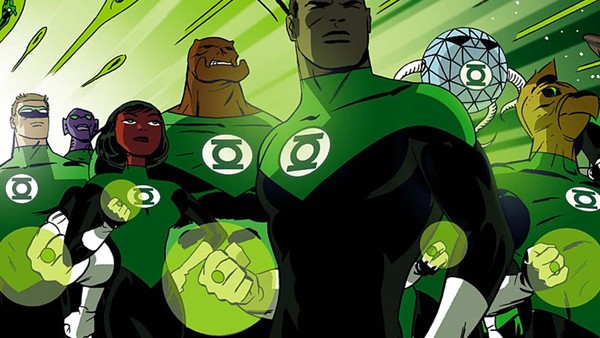
The Green Lantern mythos is effectively DC's very own version of Star Wars. Storylines are epic, and all tend to lean into some of the more zany elements of the sci-fi genre. Factor in an entire corps-full of brilliant space cops to choose from, and it's little wonder that Green Lantern and its surrounding titles have sustained themselves for as long as they have.
The Green Lantern line of comics spans the entire DC universe, from sectors-2814 (where Earth is) to 3600. In that sense it might be considered cheating to include them in a list of the best comic book 'worlds', but in terms of building a recognisable organisation and style of story, DC's Green Lantern books are second to none.
It's just one of those comics and mythologies so rich that writers and artists are practically able to cover whatever kind of territory they wish within its pages. We've seen procedural Green Lantern comics; big, expansive stories surrounding conflict between different forces, and even interpersonal tales of ring-bearers coming to terms with their newfound responsibility.
At its core, though, is a rich and vibrant premise visually bright as it is narratively sound. It may not always hit the mark, but GL remains one of the Silver Age's greatest ever experiments.
7. Mega-City One - 2000AD
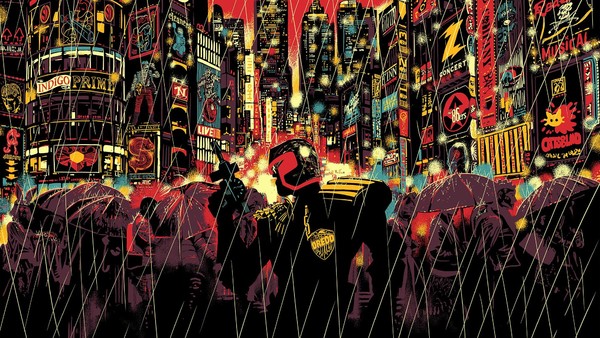
Regardless of the fact Judge Dredd tends to be misconstrued literally all of the time (satire, folks - it's satire), one thing everyone can appreciate is how vibrant the comic's dystopian setting actually is.
Forged in the fires of nuclear armageddon, the Mega-Cities of 2000AD are crime-ridden and imposing, spanning hundreds of miles at a time. Readers can thank the late Carlos Ezquerra in pioneering Dredd's dystopian locale, as it was his initial sketches for the comic that forced a rethink from setting Dredd in a future version of New York and shifting it to a whole other kind of city.
But why is Mega-City so captivating? What sets it apart from the deluge of dystopias that populate the medium? Well for one, stylistically, the megalopolis is all-encompassing; it represents the be-all and end-all of life on the eastern seaboard. Then there's the social and judicial framework sported within its towering buildings. The Judges are feared, and operate with no oversight whatsoever. They represent a horrifying, fascistic future of what a police state could become, and it's from that premise that the comic extracts its appeal, inverting the image of the hero into something horrifying.
The stories are grim, and the world even grimmer. It's Dredd pure and simple, and that's why it works.
6. Fables - Vertigo
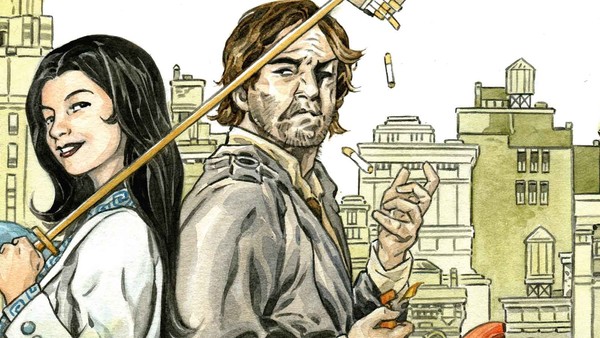
Bill Willingham's Fables comic gained mainstream recognition in 2013 with the release of Telltale's The Wolf Among Us, but comics fans have known for a while just how great the world the writer constructed actually is.
Taking the fables and folklore stories of centuries past and giving them a modern makeover, Fables brings readers to a world where myth and reality co-exist. The likes of Snow White and the Big Bad Wolf (named Bigby Wolf in the comic) are all alive in the modern day, and they all live in a place called Fabletown, where the latter works as the sheriff.
Featuring tales with a noir focus, Fables broaches all kinds of genres and manages to reappraise literature's most established heroes and villains in a worthwhile manner, providing new spins on these characters by constantly pushing them forward, rather than dwelling on the fables and tales readers will undoubtedly be familiar with.
The concept of taking old folklore tales and outfitting them with a modern makeover isn't exactly new, but the architecture of Willingham's comic is. It's all fully realised from top to bottom, and as most readers will attest, the more detailed the setting, the more immersive the story.
5. New York City - Marvel

It would've been easy enough just to say 'the Marvel universe' and just be done with it, but there are certain aspects of the main Marvel mythos that are more interesting than others. New York City, commonly seen as the foundation of the publisher's 616 continuity, is also one of the greatest worlds the medium has seen.
What makes Marvel's version of NYC so absorbing is peculiar, because so much of its charm stems from the fact it's a real-life city. New Yorkers and visitors can walk through Times Square and recall reading a story where Spider-Man fought Electro or the Fantastic Four fended off Galactus - there's a charm to setting these stories in a real life locale that almost legitimises them, in a strange way.
But of course, let's not pretend that Marvel's version of New York isn't distinct from the real thing. The ratio of heroes-per-block is probably bonkers, and the fact this New York can sustain so many different kind of tones and moods is also curious, but no Marvel fan would change it for the world.
Whether Daredevil's parading the streets of the perennially noir Hell's Kitchen, or Spider-Man's swinging across the city trying to find the best pizza, Marvel's New York is both distinct and wonderful, as reflective of the world outside our window as it is a mythological bastion of heroes and villains.
4. The Ten Realms - Marvel

If Jack Kirby had a key hand in developing Marvel's New York, then he was instrumental in laying the foundations of the Ten Realms.
Kirby, Larry Lieber and Stan Lee co-created Thor in 1962 and kickstarted one of the most compelling worlds in the entire comic book medium. First there was Asgard, then Jotunheim and Nidavellir, and then countless others. The likes of Roy Thomas, John Buscema, Steve Englehart and Walt Simonson would all leave their mark by adding more realms to Marvel's version of the Norse Aesir, with the comic's ability to marry sci-fi with fantasy a key pillar behind its success.
Thor combines the worlds of science and magic to impart something truly special, that transcends just ordinary myth and legend. Yes, Marvel have Norse mythology to thank for this particular world, but the way it's been realised over the last five decades has been nothing short of spectacular, with each realm retaining its own unique look, flavour and tone.
It scarcely ever looks boring, and with Thor and his supporting characters being as compelling as they are, it's little wonder that Marvel's Old Gods have persisted for as long as they have.
3. Gotham City - DC

Gotham City is the DC universe's little slice of gothic Europe, and a locale that's managed to sustain a world of its own for decades.
Pioneered by the likes of Bill Finger, Gardner Fox and others, no city has undergone as big a transformation in the DCU than Gotham. It's been an ordinary American hub, a modern day metropolis and even Victorian in design on occasion. For my money's worth though, the definitive version of Gotham will always be gothic and timeless, a surreal mix of retrofuturism and nineteenth century-era horror that coalesced to impart something special.
Tonally, Batman's world is almost peerless. Although derivative in certain respects, the city's changing landscape and inhabitants has ensured it never feels stale. The Dark Knight and his supporting characters, meanwhile, help ensure the locale's many contradictions somehow make sense; Batman can be tussling with the Joker after a murder-spree, for instance, while at the same time the Boy Wonder could be pursuing a task far less macabre in nature.
It doesn't work for everyone, but the marriage between light and dark - as well as past and present - has left readers with one of the most enjoyable settings in comics to date.
2. The Hellboy Universe - Dark Horse

The world of Mike Mignola's Hellboy is, by all means, one of the greatest ever conceived. The fact it's been the subject of so many adaptations since only being introduced 25 years ago is impressive in itself, but it's the fact the material in question is consistently fascinating that distinguishes the 'Mignolaverse' of titles over others in the medium.
Hellboy and its surrounding comics are quintessentially gothic. They also operate under a fixed, linear timeline; characters age, history progresses, and there's a beginning, middle and an end. Compared to the sliding timelines of the Marvel and DC universes it ends up being a major breath of fresh air, with that element of finality reiterating the importance of each story.
Mignola is by no means the only creator to have produced great things in the Hellboy universe, but his work laid the visual and narrative foundations of what would follow. So much of Hellboy's story is told through visuals alone, and the writer/artist's understanding of old myth and legend ensures it remains authentic.
Add to that the deluge of wonderful supporting characters - many of whom have gone on to lead various spin-off books over the years - and you're left with one of the richest comic book worlds ever published.
1. Fourth World - DC

Jack Kirby is the king of comics for a reason. From the 1940s through to the 1970s, the writer/artist masterminded dozens of characters and worlds that would later form the bedrock of the superhero genre. From his mind came the likes of Captain America (alongside Joe Simon), the Fantastic Four (with Stan Lee), and most of Marvel's most beloved heroes.
He did also, however, have a brief stint with DC. Leaving the House of Ideas at the beginning of the seventies, Kirby went to work for the Distinguished Competition and quickly fashioned a whole new world of his own - a Fourth World, filled with New Gods, monsters, and some of the most inspired characters and environments put to print.
During this period, Kirby fashioned a new myth - that of the warring planets of New Genesis and Apokolips. Head of New Genesis - a planet that stood for all that was good in the universe, ostensibly - was Highfather, while his polar opposite Darkseid ruled over Apokolips with an iron fist. Central to this conflict were their sons, who they traded in a bid to end the conflict once and for all.
And from that, Kirby created a self-sustaining mythology that consistently manages to capture DC's readers. Whether they're reading the adventures of the Forever People or that of Mister Miracle and Big Barda, Kirby's signature style has ensured the Fourth World remains at the medium's pinnacle. Long may its reign continue.